Precision
Metal Stamping
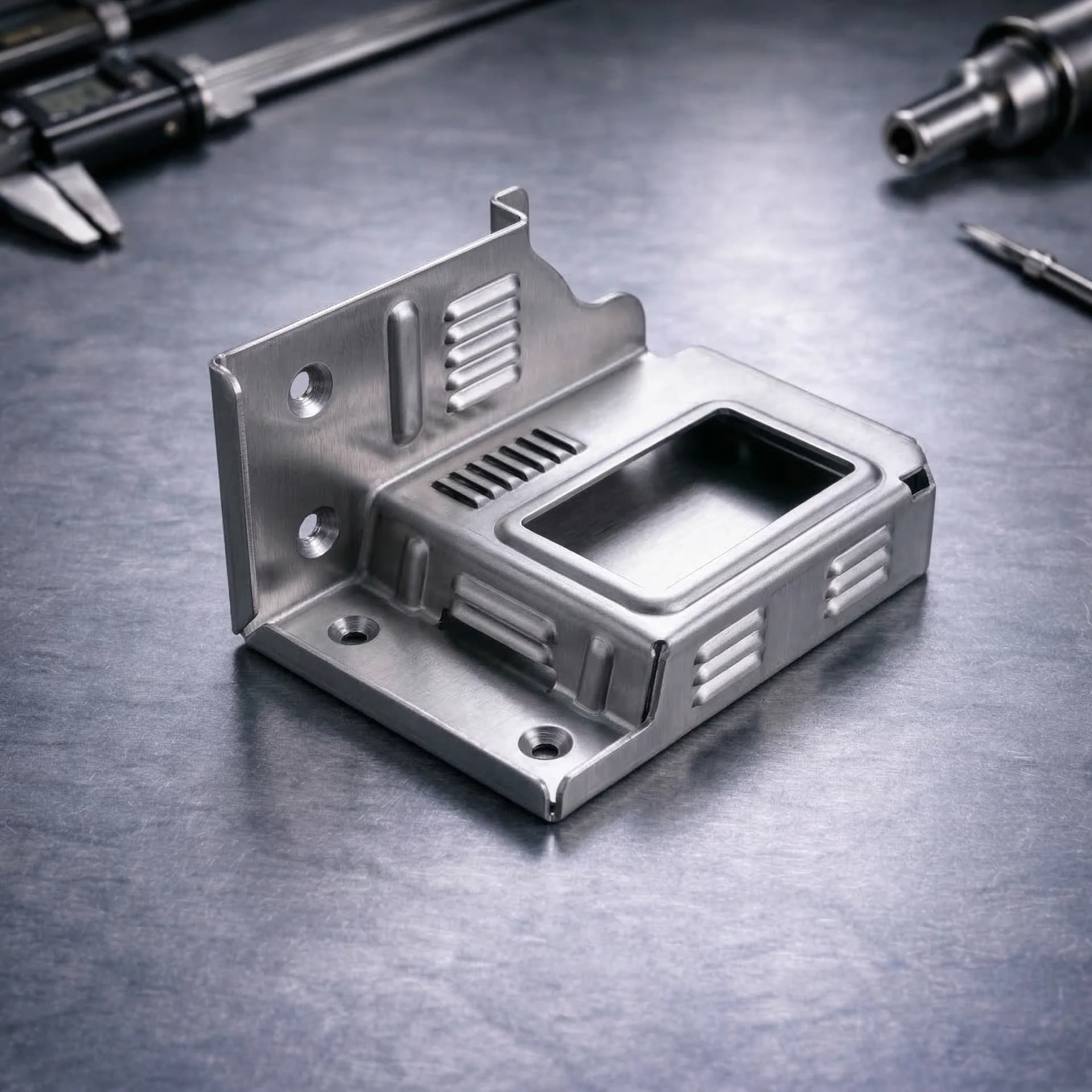
Metal stamping for brackets, plates, clips, covers, and formed components. Controlled cut edges, repeatable hole locations, and scalable production—supported by die strategy, tonnage planning, and CTQ-driven inspection—built for prototypes and high-volume programs.

Hole Location
±0.005 in (typ.)
Fast-Track
10–20 Days
Processes
Blank / Pierce / Form
Metal Stamping Services
Press-Ready Parts Built for Repeatability, Burr Control, and Scale
PREMSA delivers metal stamping designed around production stability: controlled burr direction, repeatable hole location, and formed features that assemble correctly in fixtures. We validate stamping intent early to prevent scrap from infeasible feature sizes, poor hole-to-edge ratios, or under-defined datums and CTQs.
Our approach is grounded in real press and die constraints: tonnage limits, strip layout, piercing clearance, residual stress/warpage, and forming strain by alloy and thickness. We focus on the critical dimensions that matter to assembly—without over-constraining prints that drive cost.
From prototype builds to high-volume programs, PREMSA supports control plans, dedicated gauges, part marking, and kitting. We prioritize CTQ features such as hole patterns, edge conditions, formed geometry, flatness, and fit interfaces to keep yield high and inspection efficient.
What is Metal Stamping?
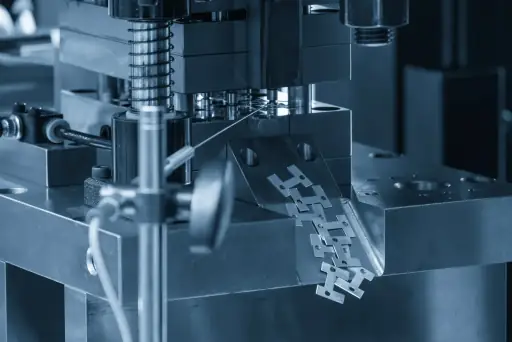
Metal stamping is a high-speed press forming process that uses dies to cut (blank/pierce) and form sheet metal into repeatable parts. It’s ideal for brackets, clips, covers, stiffeners, and other components that require consistent dimensions at scale.
Depending on geometry and targets, stamping may involve blanking and piercing, forming/flanging, embossing/coining, or deep drawing when applicable. A successful stamping program balances thickness and feature feasibility, burr management, flatness/warpage control, springback in formed features, and CTQ inspection aligned to assembly interfaces.
The Metal Stamping Workflow
A controlled engineering process optimized for repeatability, yield, and production stability.
1. File Intake & CTQ Definition
We review drawings/models and confirm material, thickness, finish requirements, CTQ features, datums, and functional interfaces that drive assembly.
2. DFM Review for Feature Feasibility
We validate minimum feature sizes, hole-to-edge rules, bend/form feasibility, burr direction needs, and flatness expectations.
3. Die Strategy & Strip Layout
We define the most stable approach (single-op, compound, or progressive) and optimize strip layout for yield and consistent part control.
4. Tonnage Planning & Press Setup
We plan press tonnage, shut height, and handling strategy. For critical geometry, we align forming sequence to reduce distortion.
5. First-Article Validation (FAI)
We run first parts, tune die setup, and validate CTQs—especially hole patterns, edge condition, formed features, and flatness.
6. In-Process Controls
We verify key features at defined frequency using gauges/fixtures. Adjustments are made early to protect yield and consistency.
7. Secondary Ops & Part Identification
If required, we deburr, tap, install inserts, apply markings, and kit parts to streamline downstream assembly.
8. Final Inspection & Release
CTQ features are verified per control plan and released with traceability and packaging aligned to handling and assembly requirements.
Stamping Processes & Capabilities
Progressive Die Stamping
Best for high-volume repeatability—multiple stations cut and form features with stable part control.
Blanking & Piercing
Efficient cut operations with planned clearance and burr direction control for assembly and safety.
Forming / Flanging
Creates bend features and flanges with controlled springback considerations for mating interfaces.
Embossing / Coining
Adds stiffening ribs, identification features, or definition—reviewed per thickness and tooling feasibility.
Deep Drawing (When Applicable)
Supports cups and drawn shapes where material and geometry meet draw feasibility constraints.
Gauging & Control Plans
CTQ-focused gauging strategy for hole patterns, edge condition, formed geometry, and flatness.
Technical Advantages
Low Unit Cost at Scale
Stamping is optimized for throughput—once tooling is validated, cost per part stays stable for production volumes.
Repeatable Hole Patterns & Features
Die-controlled geometry improves consistency for assemblies that rely on hole location and feature alignment.
Burr Direction Control
Planned punch/die clearance and process flow supports safer handling and consistent assembly orientation.
Stable Formed Geometry
Forming sequence and springback awareness reduce variation in flanges, bends, and formed interfaces.
Reduced Scrap Risk
Early DFM catches infeasible feature sizes, hole-to-edge issues, and warpage risks before release.
Inspection Aligned to CTQs
Verification focuses on what drives function: hole location, critical edges, formed geometry, and flatness.
Press Capacity & Part Envelope
Press Tonnage, Bed Size & Shut Height
Capacity depends on tonnage demand by thickness, perimeter length, and forming operations. Bed size and shut height requirements are reviewed per part and tooling approach.
Reviewed per program
Material Thickness & Strip Width
Feasible thickness and strip width depend on alloy, feature density, and die strategy. Thin material may require extra support to protect flatness and cut quality.
Case-by-case
Repeatability, Gauging & Control Plan
Tight CTQs may require dedicated fixtures and in-process checks. Control plan scope is aligned to functional assembly interfaces.
CTQ-driven per print
Tight Hole Patterns or Critical Flatness Requirements?
If your part has dense hole patterns, strict flatness, or formed interfaces, request a die strategy + CTQ review before final release.
Quality, Tolerances & Burr Control
Stamping outcomes depend on material, thickness, die clearance, forming strain, and residual stress. Defining critical-to-quality (CTQ) features (hole location, edge condition, formed geometry, flatness) helps protect assembly while keeping cost controlled.
| Category | Technical Capability | Engineering Notes |
|---|---|---|
| Cut Edge Quality & Burr Direction | Cut edges are influenced by clearance, punch condition, and material. Burr direction can be managed by process orientation and die strategy to support handling and assembly. | Call out burr direction if it matters to assembly or safety. Overly strict edge requirements can increase cost—specify what is functionally necessary. |
| Flatness, Warpage & Residual Stress | Flatness is affected by piercing density, forming sequence, material stresses, and coil variability. Stabilizing features and sequence can reduce warpage risk. | Identify functional flatness zones and how they are measured. Dense hole patterns may require additional control steps. |
| Hole Positioning, Piercing & Clearance | Hole accuracy depends on die condition, strip control, and clearance strategy. Tight patterns may require dedicated gauging and stable strip guidance. | Tolerance what drives assembly. Define datums that reflect the real mating condition to avoid inspection ambiguity. |
| CTQ Inspection, Traceability & Lot Control | Inspection is aligned to CTQs using gauges, fixtures, or CMM as needed. Traceability can be maintained via labeling, lot control, and controlled packaging. | Provide a control plan expectation (FAI, in-process frequency, final). Align CTQs to real assembly interfaces. |
Sheet Metal Materials
Choose from production-grade sheet metals commonly used in metal stamping for brackets, clips, terminals, shields, and structural components. Material selection impacts formability, springback behavior, surface finish, and corrosion resistance.
Stampable Sheet Metals
Post-Stamp Secondary Ops
After stamping, secondary operations ensure safe edges, corrosion protection, proper threading, and part traceability for downstream assembly.
Finish Options
Metal Stamping DFM Guidelines (DFM)
Stamping manufacturability is driven by thickness, feature geometry, clearance strategy, forming strain, and strip stability. Following these DFM rules reduces scrap, improves consistency, and helps protect cost targets.
| Design Feature | Recommendation |
|---|---|
| Thickness vs Feature Size | Avoid ultra-small slots/holes relative to thickness. Thin webs can distort and increase burr/edge roll risk. Define minimums around real die feasibility. |
| Forming Limits, Radii & Strain | Specify feasible inside radii and formed features based on alloy and temper. Tight forming increases strain and may require process sequence adjustments. |
| Piercing Clearance & Hole-to-Edge Rules | Use feasible hole-to-edge distances and spacing to protect die life and part integrity. Clearance strategy impacts burr and hole quality. |
| Grain Direction & Springback | Call out grain direction if forming performance or fatigue matters. Springback varies by alloy, temper, and geometry—plan for tuning on first-article. |
| Tooling Strategy: Prototype vs Production | For low volumes, consider simpler tooling or staged operations. For scale, progressive dies improve cost and repeatability—define expected volumes early. |
| Drawing Notes, Datums & CTQ Checklist | Provide datums that match assembly, CTQ callouts, burr direction requirements, flatness zones with measurement method, formed feature tolerances, and revision/ID marking needs. |
Applications & Industries
Metal Stamping Applications

Brackets, Tabs & Mounting Plates
Repeatable hole patterns and formed features designed for fixture-based assembly.

Clips, Retainers & Spring Features
Stamped geometries where edge quality and consistent forming matter for performance.

Covers, Shields & Stiffeners
Flat and formed parts with controlled edges and stable geometry for builds and protection.
Metal Stamping Industries
Automotive
High-volume stamped brackets, clips, shields, and structural components used in vehicle assemblies and mechanical systems.

Electronics and Semiconductors
Precision stamped terminals, shielding components, and metal contacts used in electronic and semiconductor equipment.
Consumer Products
Stamped metal components used in appliances, consumer devices, and high-volume manufactured products.

FAQs & Knowledge Base
Metal Stamping FAQs

Ready to launch a stable metal stamping program?
Upload drawings and requirements for a press-ready quote. We’ll review feature feasibility, die strategy, tonnage planning, burr direction, flatness risk, CTQ callouts, and secondary ops to deliver stamped parts that assemble right—at scale.
Engineering Review: Under 2 Hours