Selective Laser Sintering
(SLS)
Production-grade nylon printing built for functional performance and repeatable fit. Powder-aware DfAM, packing/orientation planning, controlled depowdering, finishing, and CTQ-first verification—so parts assemble predictably across builds.

Precision Focus
Functional Fits + Clearances
Typical Lead Time
Days
Build Mode
Prototype → Low Volume
Selective Laser Sintering (SLS) Services
Why Choose PREMSA for SLS
PREMSA delivers SLS (selective laser sintering) for nylon parts where functional strength, stable geometry, and complex features matter. We start by defining CTQs (datums, fits, hole quality, sealing/mating faces) and then plan packing/orientation so warpage risk, powder escape, and assembly-critical interfaces are controlled and repeatable.
SLS success depends on managing the core variation drivers: wall thickness uniformity, long-flat warp/curl, powder entrapment, and finish effects on clearances. We align build planning, depowder discipline, and finishing programs to reduce drift and deliver consistent outcomes.
From functional prototypes to low-volume runs, we support repeatable programs, traceability when required, and secondary ops (heat-set inserts, tapping program-based, drilling/reaming CTQ holes, and light machining of critical datums). You get nylon parts that fit right and repeat—not builds that vary from lot to lot.
What is SLS?
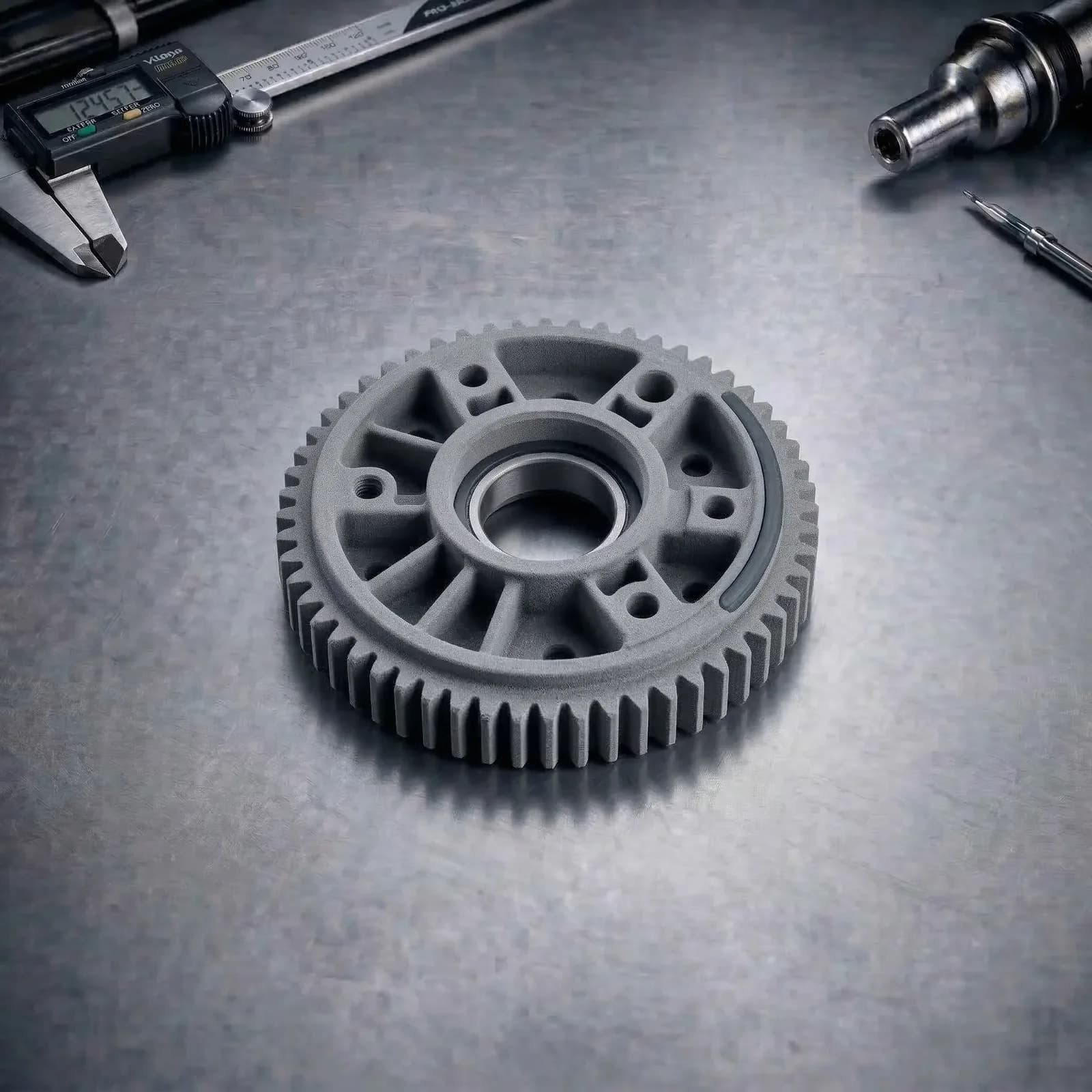
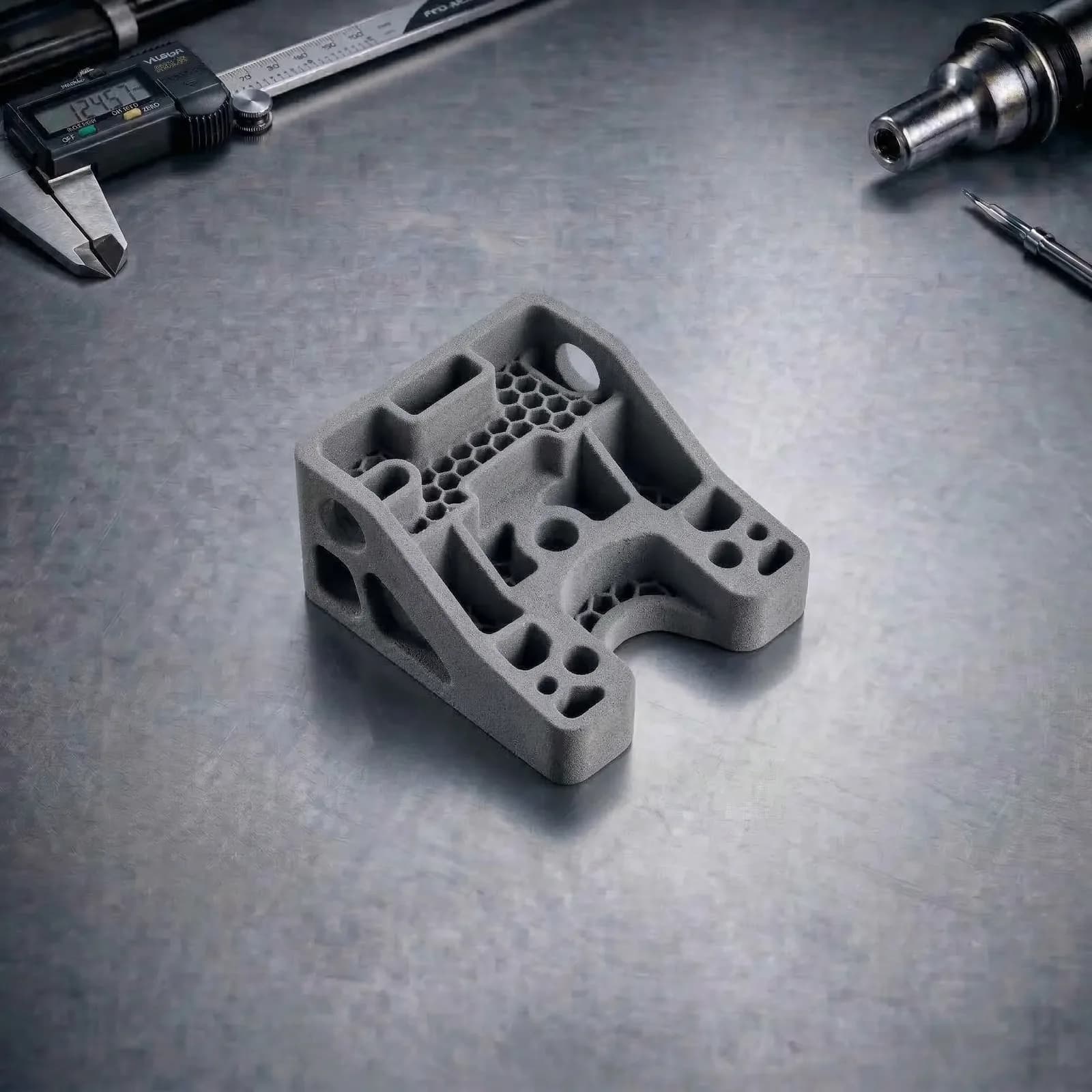
SLS is an additive manufacturing process that produces parts by fusing polymer powder (commonly nylon) with a laser layer-by-layer in a powder bed. Because surrounding powder supports the part, SLS can build complex geometry without support structures.
Final outcomes depend on packing/orientation, thermal behavior (warp control), powder escape/cleanout, and finishing. A successful SLS program balances these controls to hit fit, function, and repeatability requirements.
The SLS Workflow
A DfAM-first workflow that controls warpage risk, powder cleanout, and CTQ outcomes.
1. File Intake & Requirements Definition
We review CAD + drawings and confirm CTQs, target quantity, finish requirements, and functional clearance strategy.
2. DfAM Review (Powder Escape + Warp/Thickness Strategy)
We evaluate wall uniformity, trapped powder risk, clearance targets, warpage drivers, and tolerance strategy around mating datums.
3. Material Selection + Program Plan
We align nylon family (PA12/PA11 and program-based variants) with environment, loads, and finishing requirements.
4. Build Planning (Packing + Orientation)
We set packing density and orientation to protect CTQ faces, control warp, and ensure cleanout access where needed.
5. Printing & In-Process Monitoring
Parts are produced with controlled parameters aligned to stability and repeatability targets.
6. Depowder + Cleaning
Program-defined depowdering steps guided by escape paths and access features to reduce retained powder.
7. Finishing & Secondary Ops
Bead-blast/shot-peen and optional dye; inserts/tapping/drilling as required for assembly durability.
8. Inspection & CTQ Verification
We measure CTQs against agreed datums (fits, holes, mating faces) and document results per program maturity and risk.
Powder Escape, Cleanout & Repeatability Control
Powder Escape Paths for Hollow Geometry
We plan escape holes and cleanout access to prevent trapped powder and ensure consistent weight and function.
Wall-Uniformity & Warp Control
We reduce curl risk by avoiding thick-to-thin jumps, using ribs, and orienting long/flat parts to protect datums.
Clearance Strategy for Assemblies
We define functional gaps for moving parts and mating features, accounting for finish steps that change effective clearance.
CTQ Datums Protected by Planning
We prioritize orientation and handling around CTQ faces and alignment features to improve repeatability across builds.
Threads & Holes as Secondary Features
For durable assembly, we use inserts and post-ops for CTQ holes rather than relying on printed threads alone.
Repeatability for Batch Programs
We lock key parameters (material, packing/orientation, depowder steps, finishing) to reduce part-to-part variation.
Technical Advantages
Durable Nylon Performance
Tough, functional parts suitable for real assembly checks and many end-use applications.
Complex Geometry Without Supports
Internal channels, lattices, and complex forms without support-witness concerns.
Efficient Low-Volume Production
Batch-friendly builds enable short-run manufacturing without tooling.
Consistent Matte Finishes
Bead-blast/shot-peen programs produce uniform appearance with optional dye for color.
Assembly-Ready Secondary Ops
Heat-set inserts, tapping program-based, and CTQ hole finishing deliver reliable assemblies.
Repeatable Programs & CTQ Verification
Stable planning and inspection approaches support predictable fit across builds.
SLS Capacity & Envelope
Part Size & Geometry Range
Feasibility depends on warp control, powder escape/cleanout access, and CTQ strategy. Long flat parts may require ribs, segmentation, or orientation changes.
Reviewed by CTQ
Functional Clearances & Assembly Features
Assemblies depend on clearance strategy and finishing. Critical pins/bores or alignment datums may require post-ops for repeatability.
Fit-focused
Throughput & Nesting
Nesting density drives throughput. We balance packing with warp risk, depowder access, and finishing targets.
Prototype → Low Volume
Not sure if SLS is the right fit?
Send CAD + requirements and request a powder-escape + clearance DfAM review. We’ll align nylon choice, finish targets, and CTQs before you commit.
Quality & Process Control
SLS quality depends on controlling packing/orientation, thermal distortion (warp), depowder discipline, and finish effects on functional interfaces. Defining CTQs, datum strategy, mating faces, functional clearances, finish class, and expected quantities up front enables repeatable planning and stable outcomes.
| Category | Technical Capability | Engineering Notes |
|---|---|---|
| CTQs, Datums, Metrology & Capability Targets | SLS programs are structured around CTQs that drive assembly: datum faces, hole location/size, sealing/mating faces, and functional fits. Capability depends on part size, geometry, and whether CTQ interfaces are post-finished. | If a face is a datum in assembly, protect it via orientation and consider post-ops when alignment is critical. |
| Warp Control, Shrink Compensation & Dimensional Stability | Nylon parts can warp or curl based on geometry and thermal behavior. Program-defined build planning reduces distortion and improves repeatability for batch programs. | For tight fits, define functional clearances and consider secondary finishing on CTQ interfaces rather than pushing print-only limits. |
| Surface Finish: As-Printed, Bead-Blast/Shot-Peen & Dye | SLS surfaces are naturally matte/grainy. Bead-blast/shot-peen improves uniformity and may change effective clearances; dye programs add color without changing the base geometry intent. | Specify finish class and cosmetic expectations; for assemblies, account for finishing in clearance strategy. |
| Powder Handling, Depowder Discipline & Consistency | Powder removal and cleaning are part of the process spec. Cleanout access and escape paths improve consistency, reduce retained powder, and protect functional performance. | Treat depowdering as a requirement: if cavities must be powder-free, design escape holes and access features up front. |
Materials
Material selection drives strength, thermal resistance, chemical compatibility, surface quality, dimensional stability, and long-term performance. Share your environment, loads, tolerances, and critical features so we can recommend the right additive process and material family.
SLS / MJF Polymers
Powder-bed polymer processes support complex geometry without support structures and are well suited for functional end-use parts.
Post-Processing & Secondary Operations
Additive parts require controlled post-processing to achieve cosmetic grade, interface accuracy, and mechanical performance. Workflows are selected based on geometry, material, and end-use requirements.
Secondary Operations & Surface Options
SLS DfAM Guidelines (DFAM)
SLS is won or lost on powder escape, wall uniformity, and warp control. These DfAM rules reduce variation, protect fit, and improve repeatability across builds.
| Design Feature | Recommendation |
|---|---|
| Wall Thickness & Uniformity | Keep walls as uniform as possible and avoid thick-to-thin transitions that drive warp. Use ribs and generous fillets to add stiffness without creating thermal mass. |
| Hollowing, Powder Escape & Cleanout | If hollow, add powder escape holes and cleanout access. Avoid trapped cavities that retain powder; use multiple escape paths for deep or complex volumes. |
| Clearances, Gaps & Moving Features | Design functional gaps intentionally and keep them consistent. Account for finishing (bead-blast/shot-peen) which can affect effective clearance on tight fits. |
| Holes, Threads, Bosses & Inserts | Use inserts for durable threads under repeated torque cycles. Plan drilling/reaming for CTQ holes and support bosses with fillets to prevent ovality and cracking. |
| Orientation, Warp Control & Datums | Orient to protect datum faces and mating surfaces from distortion. Long flats and thin beams are warp-prone—use symmetry, ribs, and orientation to minimize curl. |
| Surface Finish, Cosmetics, Text & Detail | SLS is naturally matte/grainy; uniformity improves with bead-blast/shot-peen and optional dye. Use larger emboss/deboss text and protect edges with chamfers/fillets. |
| Drawing & Specification Checklist (SLS) | Define CTQs, datums, mating faces + functional clearances, finish class (as-printed / bead-blast / dyed), nylon preference (PA12/PA11 and approved equivalents), target quantity, environment exposure, and any needs for inserts, machining, inspection evidence, or traceability. |
Applications & Industries
SLS Applications

Functional Prototypes
Nylon parts for fit, strength, and real assembly checks—ideal when function matters more than a glossy cosmetic surface.

End-Use Nylon Components
Low-volume production components like brackets, housings, clips, and ducts with repeatable geometry and durable performance.

Lattice & Lightweight Structures
Support-free geometry for lightweighting, internal channels, and complex forms that are difficult to machine or mold.
SLS Industries
Supply Chain
On-demand spare parts, legacy components, and distributed manufacturing solutions for supply chain resilience.

Government
Functional prototypes, technical components, and specialized parts used across government and public sector programs.

Education
Research prototypes, engineering models, and functional components developed in universities and technical institutions.

FAQs & Knowledge Base
SLS FAQs

Ready to build durable nylon SLS parts that fit right and ship fast?
Upload CAD + requirements for a DfAM-first review. We’ll align nylon choice, packing/orientation, powder escape/cleanout, finishing, and CTQ verification to deliver reliable SLS parts for functional prototypes or low-volume production.
Engineering Review: Under 2 Hours