
Production
3D Printing
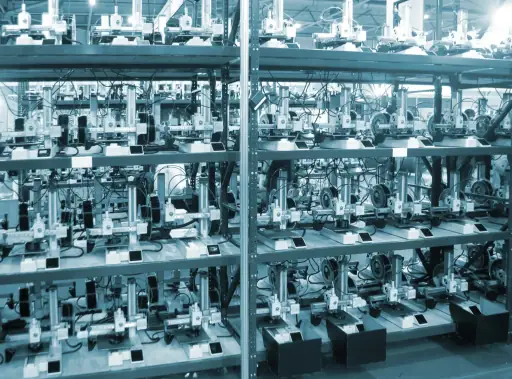
End-use additive manufacturing with process qualification and lot control. We lock orientation/parameters, control finishing, and verify CTQs—so your batches assemble consistently and perform in the field.
Lot Control
CTQ Verified
Typical Lead Time
Batch-based
Build Mode
Mid → High Volume
Production 3D Printing Services
Why Choose PREMSA for Production 3D Printing
PREMSA delivers production 3D printing for end-use components where repeatability, finish consistency, and CTQ performance matter. We start by defining CTQs (datums, mating faces, holes, sealing lands, fastener interfaces) and qualifying the right process for your requirements: FDM, SLA/DLP, SLS/MJF, or metal additive when needed.
Production success depends on controlling what causes drift: parameter changes, material lot variation, orientation/support differences, thermal history, and post-processing variability. We lock build strategy and finishing programs so your batches test and perform like the real thing—consistently.
From low-volume end-use production to pilot builds that ramp, we support change control, revision tracking, lot documentation, and secondary ops (inserts, drilling/reaming CTQ holes, and light machining of critical datums) to ensure assemblies remain stable across runs.
What is Production 3D Printing?
Production 3D printing is additive manufacturing used to deliver end-use or production-intent parts in repeatable batches. The program is not just about printing—it’s about qualifying a process and locking the build + finishing strategy so performance and fit remain stable across lots.
Outcomes depend on process qualification, parameter lock, controlled handling, finishing class control, and CTQ verification. A successful program balances throughput with the controls required for consistent field and assembly performance.
Production Workflow
A qualification + parameter-lock workflow designed for stable lots, repeatable quality, and controlled changes.
1. File Intake & End-Use Requirements
We review CAD + drawings and confirm end-use intent: environment, loads, interfaces, cosmetic class, target quantity, and service life expectations.
2. CTQs + Process Selection
We define CTQs and select the best production process (FDM/SLA/SLS/MJF/Metal) based on mechanical behavior, tolerance needs, surface requirements, and cost/throughput targets.
3. Qualification Plan (Capability + Finish Class)
We align acceptance criteria: CTQ measurement plan, finish class definition, and any required documentation or sampling strategy.
4. Locked Build Planning (Orientation + Supports / Nesting)
We lock orientation and supports (or nesting for powder-bed processes) to protect CTQ faces and stabilize outputs across lots.
5. Batch Production (Controlled Handling)
Parts are produced in lots using locked parameters and handling controls aligned to the qualified program.
6. Post-Processing Programs
Support removal, washing/curing (resins), depowdering (powder-bed), bead-blast/dye/surface prep as specified—controlled by finish class.
7. Secondary Ops (If Required)
Heat-set inserts, tapping program-based, drilling/reaming CTQ holes, and light machining of critical datums for assembly realism and repeatable fits.
8. Inspection, Sampling & Change Control
CTQ verification against datums, structured sampling plans, lot documentation, and controlled updates to preserve repeatable batch performance.
Process Selection Guide (Production Use-Cases)
FDM: Cost-Effective End-Use (Program-Based)
Best for fixtures, covers, housings, and functional parts where layer texture is acceptable and the program can lock material + parameters.
SLA/DLP: High-Detail End-Use (Controlled Resins)
Best for smooth, cosmetic, and fine-feature parts where resin selection, curing control, and finish class drive consistency.
SLS/MJF: Durable Nylon Production
Best for end-use nylon parts and assemblies needing support-free printing, stable mechanical behavior, and batch repeatability.
Metal Additive: End-Use Metal Behavior
Used when production parts require metal stiffness, thermal behavior, or corrosion performance—often paired with controlled heat treatment and machining on CTQ interfaces.
Finishing Must Be Locked
In production, finishing is part of the process. We control finish classes and account for any dimensional impact on fits.
CTQ Interfaces as Post-Ops
For precision holes, datums, sealing lands, and durable threads, we plan inserts and machining/reaming instead of pushing print-only limits.
Production Advantages
Repeatable Lot-to-Lot Output
Locked parameters and build strategy reduce variation across batches.
CTQ-First Assembly Confidence
Programs are structured around datums, mating faces, and functional fits so assemblies remain stable.
Finish Class Consistency
Controlled post-processing programs deliver predictable cosmetics and dimensional impact.
Secondary Ops for Real Interfaces
Inserts and post-ops enable durable threads, precision holes, and reliable datum faces.
Change Control & Traceability
Revision tracking and controlled updates protect performance as programs evolve.
Flexible Supply for Mid → High Volume
Batch production supports ramps, spares, and end-use supply without tooling lead times.
Capacity & Production Envelope
Part Size & Geometry Range
Feasibility depends on process choice, distortion risk, and support accessibility. Large thin shells may require segmentation, ribbing, or a process change to protect yield.
Reviewed by CTQ
Functional Clearances & Assemblies
Production assemblies depend on a locked clearance strategy and finish class. CTQ bores, pins, and datums may require post-ops for repeatable fit.
Assembly-focused
Throughput & Batch Planning
We plan lot sizes, nesting/orientation, and finishing capacity to align throughput with quality and delivery targets.
Batch-controlled
Not sure which production 3D printing process to choose?
Send CAD + requirements and request a production process qualification + CTQ review. We’ll align process, material behavior, build lock, finish class, and inspection plan before you scale.
Quality & Process Control
Production quality is about repeatability. Defining CTQs, datum strategy, functional clearances, finish class, lot size, and sampling up front enables parameter lock, controlled post-processing, and stable lot-to-lot results.
| Category | Technical Capability | Engineering Notes |
|---|---|---|
| CTQs, Datums & Lot Inspection Strategy | Production programs are structured around CTQs that drive assembly: datum faces, hole location/size, sealing/mating faces, and functional fits. Capability depends on process physics, geometry, and whether CTQ interfaces are post-finished. | If a face is a datum in assembly, protect it via locked orientation and consider post-ops when alignment is critical. |
| Parameter Lock, Change Control & Traceability | Repeatability improves when process/material/parameters and finishing steps are locked with documented change control. Material lot, orientation/support changes, and finishing variability are managed to prevent drift. | Lock key parameters (process, material, orientation/supports, finishing) and manage changes through controlled re-qualification when needed. |
| Surface Finish & Cosmetics: Controlled Finish Classes | Surface outcomes depend on process and finish class. SLA/DLP delivers smooth surfaces; powder-bed nylon is matte; FDM shows layer texture. Post-processing refines cosmetics but can change fit—so it must be controlled. | Specify finish class and cosmetic expectations; for assemblies, account for finishing in clearance strategy and control it lot-to-lot. |
| Repeatability: Batch Programs, Sampling & Documentation | Repeatability improves with batch-based planning, sampling plans, gauges, and documentation. This matters when assemblies must be consistent across lots and time. | Use sampling plans and lock the program once the design and requirements are stable. |
Materials
Material selection drives strength, thermal resistance, chemical compatibility, surface quality, dimensional stability, and long-term performance. Share your environment, loads, tolerances, and critical features so we can recommend the right additive process and material family.
FDM Thermoplastics
FDM is widely used for engineering prototypes, fixtures, jigs, manufacturing aids, and low-volume functional parts. Mechanical performance depends on material family, wall design, infill strategy, and build orientation.
SLA / DLP Resins
Photopolymer resins provide excellent surface quality and high feature resolution. Final properties depend on resin chemistry and post-curing.
SLS / MJF Polymers
Powder-bed polymer processes support complex geometry without support structures and are well suited for functional end-use parts.
Metal Additive Materials (DMLS / SLM)
Metal additive manufacturing supports complex geometries and internal channels. Secondary heat treatment and finish machining are often required.
Post-Processing & Secondary Operations
Additive parts require controlled post-processing to achieve cosmetic grade, interface accuracy, and mechanical performance. Workflows are selected based on geometry, material, and end-use requirements.
Secondary Operations & Surface Options
Production DfAM Guidelines (DFAM)
Production success is won by locking what matters: build strategy, datum protection, clearance strategy, and finishing controls. These DfAM rules improve yield, stability, and lot-to-lot repeatability.
| Design Feature | Recommendation |
|---|---|
| Wall Strategy, Supports & Yield Protection | Avoid extreme thin features without a locked support strategy. Keep walls consistent, add fillets/ribs, and design for stable yield across batches. |
| Clearances, Fits & Assemblies | Design functional gaps intentionally and keep them consistent. Account for finish class dimensional impact so assemblies remain stable across lots. |
| Holes, Threads, Inserts & Load Paths | Use inserts for durable threads under repeated torque cycles. Plan drilling/reaming for CTQ holes and design bosses with fillets to reduce cracking and drift. |
| Locked Orientation, Datum Surfaces & Feature Protection | Lock orientation to protect datum faces and mating surfaces from support scars and distortion. If a face is a datum in assembly, treat it as protected and consider post-ops. |
| Drawing & Specification Checklist (Production 3D Printing) | Define end-use intent, CTQs, datums, mating faces + functional clearances, finish class, preferred material family, target lot size/EAU, environment exposure, and any needs for inserts, machining, inspection evidence, or traceability. |
Applications & Industries
Production 3D Printing Applications

End-Use Housings & Covers
Guards, covers, enclosures, and protective housings where repeatable fit and consistent cosmetics matter.

Fixtures, Jigs & Tooling Aids
Production-support parts designed for durability, repeatable alignment, and stable performance in the shop.

Functional Nylon Assemblies
Support-free powder-bed parts for assemblies with consistent interfaces and stable mechanical behavior.
Production 3D Printing Industries
Consumer Products
End-use parts, custom components, and low-volume production parts for consumer products and product launches.

Industrial Equipment
Production-ready components, spare parts, and custom mechanical components for industrial machinery.

Electronics and Semiconductors
Production housings, structural components, and custom mounting hardware for electronics and semiconductor equipment.
FAQs & Knowledge Base
Production 3D Printing FAQs

Ready to scale production 3D printing with repeatable lot control?
Upload CAD + requirements for a production qualification + CTQ review. We’ll align process selection, parameter lock, finishing control, and inspection planning to deliver end-use parts with repeatable lot-to-lot performance.
Engineering Review: Under 2 Hours