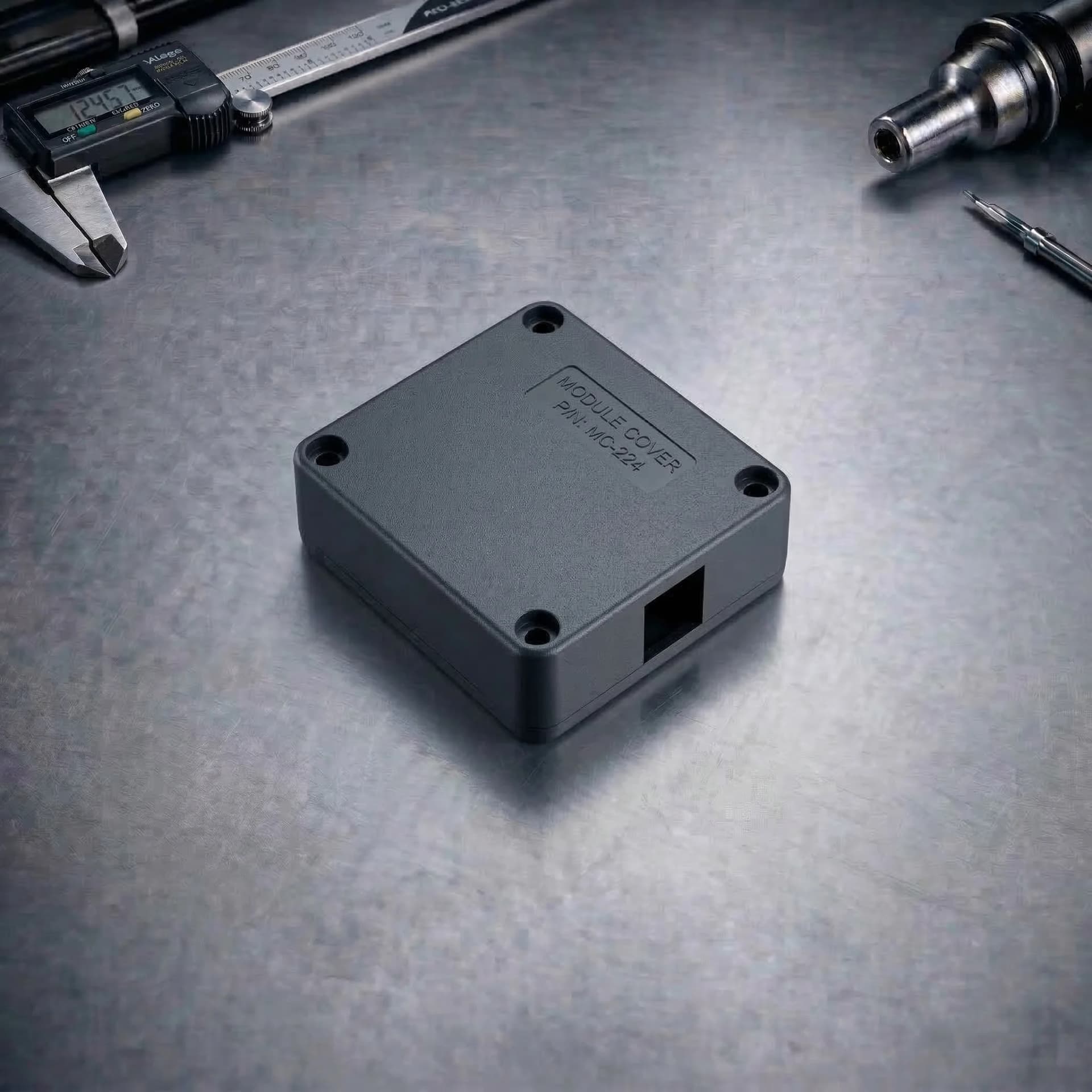
Stable Series Production, Controlled Quality

Production
Molding

Production molding built for repeatability at scale. Durable multi-cavity tooling, validated process windows, CTQ-first quality plans, and lot traceability to control shrink/warp, weld lines, cosmetics, and throughput—while optimizing total cost per part.

High-volume injection molded plastic parts with controlled quality, cosmetics, and repeatability

Quality Focus

CTQs + Capability

Tooling + Validation

Program-based

Program Stage

Ramp-Up → Series

Production Molding Services

Why Choose PREMSA for Production Molding

PREMSA delivers production injection molding for programs that must run consistently—day after day, lot after lot. We align tooling design, process validation, and quality planning around your CTQs (datums, sealing lands, snap features, bearing surfaces, cosmetic faces) so performance and appearance stay stable as volume scales.

Production molding success is driven by control and discipline: material handling and drying, robust venting and gating, stable ejection, and a validated process window with defined limits on critical parameters. This reduces scrap drivers like burn/short shot sensitivity, flash drift, sink/warp from packing imbalance, and cosmetic variation across cavities.

We treat production as a system: tooling longevity + process window + inspection plan + traceability. The goal is predictable throughput, controlled risk during start-ups and restarts, and a clear change-control path when resin, finish, or requirements evolve.

What is Production Molding?

Production molding is a manufacturing program optimized for repeatability at scale. Unlike prototype programs focused on learning, production programs are engineered to meet ongoing output, cost-per-part targets, cosmetic class expectations, and dimensional capability requirements.

A strong production program connects tooling intent (cavitation, cooling balance, venting, wear management), process validation (defined window and limits), and quality systems (CTQs, sampling plans, traceability) so performance remains stable through ramp-up and series production.

The Production Molding Workflow

A control-driven workflow that validates the process, stabilizes quality, and scales throughput predictably.

1. Requirements Intake (CTQs, Cosmetics, Volume, Environment)

We confirm CTQs, datums, functional requirements, cosmetic faces and acceptable witness zones, volume forecasts, resin intent (or approved equivalents), and documentation expectations.

2. Production DFM Review (Repeatability & Cycle Time)

We evaluate walls, ribs/bosses, draft, undercuts/side actions, gate and vent strategy, ejection witness zones, and datum strategy—focused on dimensional stability and cycle time.

3. Tooling Strategy (Steel, Cavitation, Cooling, Ejection, Serviceability)

We define cavitation, steel selection, wear points, cooling balance, ejection robustness, and maintenance/serviceability intent based on program life and output goals.

4. Build + Debug (Cavity Balance, Venting, Cosmetic Control)

We debug early stability: fill balance across cavities, venting to reduce burn/short-shot sensitivity, gating/vestige control, and ejection witness management.

5. Process Validation (Window, Limits, Start-Up Stability)

We establish a robust process window and define critical parameter limits. We plan for stable start-ups, re-starts, and material condition control.

6. CTQ Measurement Plan + Sampling Strategy

We define CTQs, datums, gauge/fixture needs, and a risk-based sampling plan (in-process checks, periodic dimensional, and cosmetic verification).

7. Ramp-Up (Yield, Throughput, Scrap Driver Elimination)

We focus on yield and throughput: cycle time tuning, cavity-to-cavity consistency, scrap root causes (flash, shorts, sinks, warp), and consistent cosmetics.

8. Stable Production + Change Control

We support ongoing production with lot traceability, controlled changes (resin/finish/tool updates), and program documentation aligned to your requirements.

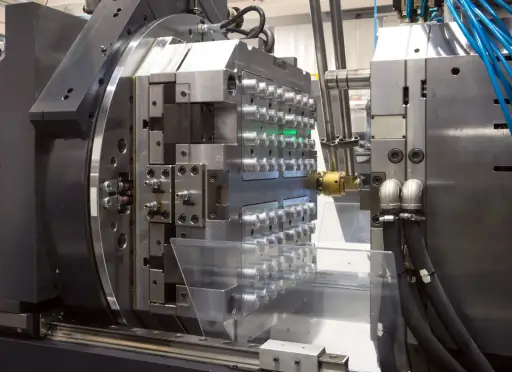
Production Tooling, Cavitation & Durability

Durable Tooling for Program Life

Production tooling is engineered for longevity—appropriate steels, wear-point protection, robust shutoffs, and serviceability to keep output stable over time.

Cavitation & Balance Strategy

We plan cavitation to hit output targets while maintaining cavity-to-cavity balance for dimensions and cosmetics.

Cooling and Cycle-Time Control

Balanced cooling is critical to reduce warp and stabilize dimensions while supporting predictable cycle time.

Ejection Built for Stability

Robust ejection reduces cosmetic witness drift and prevents part damage during high-rate production.

Gate/Vent Robustness for Process Window

Gating and venting are planned for stability—not just “it fills once.” The goal is a wide, repeatable window that survives real production variation.

Maintenance-Friendly by Design

We emphasize serviceability so preventive maintenance can be performed without destabilizing the program or increasing defect rates.

Technical Advantages

Stable Quality at Scale

Validated process windows and CTQ-driven control plans keep performance consistent across lots, shifts, and ramp-up phases.

Lower Total Cost per Part

Throughput tuning, yield improvements, and disciplined change control reduce scrap and variability—protecting total program cost.

Controlled Cosmetics & Witness Zones

Cosmetic faces, parting lines, gate vestige, weld line placement, and ejector witness are managed as production requirements—not afterthoughts.

Better Dimensional Capability Planning

Capability targets start with datums and CTQs that match assembly reality, supported by measurement plans and sampling discipline.

Traceability & Controlled Changes

Lot traceability and change control reduce risk when resin, color, texture, or tooling maintenance evolves over the program life.

Production Readiness for Assembly

Secondary ops, labeling, and packout are planned up front to reduce downstream handling errors and improve line throughput.

Production Benchmarks

Production Molding Capacity & Envelope

Press Selection & Shot Capacity (Production)

Press sizing is selected to maintain a stable process window: projected area, clamp margin, flow length, resin behavior, and cavitation intent—so fill/pack stability holds during real production variation.

Sized for stability

Part Envelope & Program Feasibility

Production feasibility considers geometry, cosmetic class, tolerance targets, cavitation strategy, and cycle time. Large flats and long slender features are reviewed for warp drivers and cooling balance needs.

Reviewed by CTQs

Throughput & Ramp-Up Strategy

We plan ramp-up around yield and repeatability: cavity balance, material conditioning, start-up stability, and scrap driver elimination—then scale to series throughput targets.

Ramp → Stable series

Need a stable process window for series production?

Send your CAD + CTQs + cosmetic requirements and request a production DFM + process planning review. We’ll align cavitation intent, gate/vent strategy, cooling, and inspection planning for stable output.

Quality & Process Control

Production molding quality comes from a validated process window, disciplined material handling, and CTQ-driven control plans. Defining datums, CTQs, cosmetic class, and sampling expectations up front enables capability targets and stable series output.

CategoryTechnical CapabilityEngineering Notes
CTQs, Control Plans & Capability TargetsProduction programs are structured around CTQs with defined datums, inspection scope, and sampling frequency. Capability targets depend on resin behavior, geometry sensitivity, and cavity-to-cavity balance.

Tolerance the interfaces that drive assembly. Define CTQ priority tiers and inspection frequency by risk and functional impact.

Cosmetics, Witness Control & Appearance StandardsCosmetic stability requires controlling gate vestige, parting lines, weld line placement, ejector witness, gloss/haze sensitivity, and texture/finish intent across cavities and lots.

Define cosmetic faces, acceptable witness zones, and a visual standard early. Cosmetics should be treated as CTQs when appearance is critical.

Lot Traceability & Change ControlProduction stability depends on traceability: resin lots, colorants/additives, process settings, and controlled updates to tooling or parameters. Changes are managed to prevent drift and requalification surprises.

Set rules for resin equivalents, color changes, regrind usage (if allowed), and maintenance interventions that require verification.

Drying, Handling & Material Discipline (Production)Material condition variation can dominate defects (splay, brittleness, dimensional drift). Drying/handling discipline ensures results reflect tooling and process control—not uncontrolled moisture or contamination.

For moisture-sensitive resins, treat drying as a production CTQ. Define storage, hopper time, and handling controls.

Baseline Standard: Production control plan + validated process window, unless formal customer documentation requirements specify additional records

Polymers & Materials

Polymer selection drives strength, impact performance, temperature resistance, chemical compatibility, dimensional stability, and cosmetic quality. Share your environment, load case, regulatory needs, and end-use requirements so we can recommend the best material family and grade for your program.

Commodity Polymers

Engineering Polymers

High-Performance Polymers

Elastomers (TPE / TPU)

Secondary Operations & Finishing

Beyond molding, production programs often require controlled cosmetic finishes, trimming, assembly steps, hardware installation, traceability, and packaging support to deliver production-ready parts that integrate cleanly into downstream operations.

Secondary Operations & Finishing

Production Molding DFM Guidelines (DFM)

Production molding is won or lost on repeatability: stable fill/pack, controlled cooling, robust ejection, and cavity-to-cavity consistency. These DFM rules reduce variation, protect cycle time, and improve long-term capability.

Design FeatureRecommendation
Wall Strategy, Ribs & BossesUse consistent walls and ribs for stiffness; avoid thick mass that drives sink and warp. Bosses should be rib-supported and designed to reduce differential cooling and ovality. Stable geometry improves capability and reduces cavity-to-cavity drift.
Draft, Side Actions & Cycle TimeAdequate draft reduces scuffing and sticking that can drift over time. Side actions add cost, cycle time, and maintenance risk—use them only when required by function, and design for robust shutoffs and wear management.
Gating, Venting & Fill BalanceGating strategy should support a wide process window and consistent cavity balance. Venting prevents burn and false short-shot sensitivity; aim for stable fill without pushing the process to the edge.
Ejection, Parting Lines & Cosmetic FacesDefine cosmetic faces and witness zones early. Production programs require repeatable ejection without witness drift. Parting line placement, ejector strategy, and gate vestige must match the cosmetic class expectation.
Shrink, Warp & Capability PlanningPlan datums and CTQs around what matters in assembly. Large flats and asymmetric ribs drive warp; design for balanced stiffness and predictable cooling. Capability targets should be set on interfaces, not free-form surfaces.
Tooling & Drawing Checklist (Production)Provide resin intent (and approved equivalents), CTQs + datums, cosmetic faces + witness rules, texture/finish intent, regrind policy (if allowed), traceability needs, expected annual volume, and any documentation expectations (inspection evidence, change control, lot records).

Applications & Industries

Production Molding Applications

Series-Production Housings & Covers

Series-Production Housings & Covers

Stable cosmetics and repeatable fit for enclosures, protective covers, and assemblies where witness zones and alignment features matter.

Functional Mechanisms & Interfaces

Functional Mechanisms & Interfaces

Bosses, snaps, latches, bearing surfaces, and precision interfaces designed for repeatable assembly at scale.

Insert/Overmold Production Programs

Insert/Overmold Production Programs

Programs with molded-in inserts or overmolded grip/seal features where bonding, shutoffs, and cosmetics must remain stable lot-to-lot.

FAQs & Knowledge Base

Production Molding FAQs

PREMSA Industries

Ready to scale a stable production molding program?

Upload CAD + CTQs + cosmetic requirements for a production-first quote. We’ll define tooling intent, validate a robust process window, and align inspection + traceability so you can ramp up and run stable series production with controlled cost per part.

Engineering Review: Under 2 Hours