
When a part arrives late, the problem is rarely the CNC machine.
In most projects, delays start long before material touches a cutting tool. An ambiguous drawing, an incomplete RFQ, a late DFM review, a poorly specified material, or a quote built on assumptions can add days — even weeks — to the schedule without anyone noticing at first.
That is why, if you are evaluating how to reduce manufacturing lead times, the answer is rarely “run production faster.” The real opportunity is removing technical uncertainty and operational friction before you release the job.
In product development, NPI, functional prototypes, and low-to-medium-volume production, lead time depends less on installed capacity and more on how quickly whoever designs, buys, and makes the part can make the right decisions. Every open clarification, every revision change, and every undefined requirement creates waiting that accumulates long before the shop floor.
Teams with the shortest delivery times do not necessarily have more machines. They have clearer processes. They prepare better RFQs, review manufacturability before approving production, identify risks while they are still easy to fix, and align expectations with the supplier from day one.
At PREMSA Industries we work under that same philosophy. We combine human DFM review, early risk validation, and real capacity planning across our CNC machining services to help projects move forward with less friction and more predictability.
To go deeper on the factors that most affect execution speed, also see fast CNC machining and lead times, CAD files for CNC machining, and our CNC machining design guide.
- How to reduce lead times without adding risk — why compressing downstream schedules fails
- The quoting bottleneck — clean RFQs, early DFM, and fewer back-and-forth cycles
- Standardize what you can — materials, drawings, inspection, and part families
- Capacity planning — speed with real visibility into load and decision-making
- Coordination — align design, purchasing, and quality from the start
- Fewer suppliers, better response — consolidate flows and nearshore advantages
- Planned inspection — quality integrated into the process, not a final brake
- Metrics that actually matter — operational KPIs to improve lead times consistently
How to reduce manufacturing lead times without adding risk
When a project slips, the usual reaction is to try to speed up what happens inside the shop. Programming gets pressured, inspection gets compressed, or urgent shipping is forced. Yet most delays are not born in production. They are born much earlier.
An ambiguous drawing, an incomplete RFQ, a poorly specified material, or a pending technical decision can consume more time than machining itself. The problem is that these losses often go unnoticed until the committed date starts closing in.
That is why teams with the shortest lead times are not necessarily the ones with the most machines. They are the ones that remove uncertainty before releasing production. They review manufacturability early, validate critical requirements, align expectations from the start, and resolve risks while they are still fast and inexpensive to fix.
There is also a common misconception about speed in manufacturing: assuming everything should be accelerated equally. In reality, each part requires a different level of review depending on complexity, tolerances, functional criticality, and regulatory requirements.
Reducing lead times does not mean skipping controls. It means applying the right level of analysis at the right time. A DFM review during quoting usually saves far more time than any effort to rush an order once it is already in production. Sustainable speed comes from better decisions earlier — not from running harder later.
The shortest lead times are not achieved by working faster. They are achieved by removing uncertainty before it becomes delay.
The real bottleneck is usually in the quoting phase
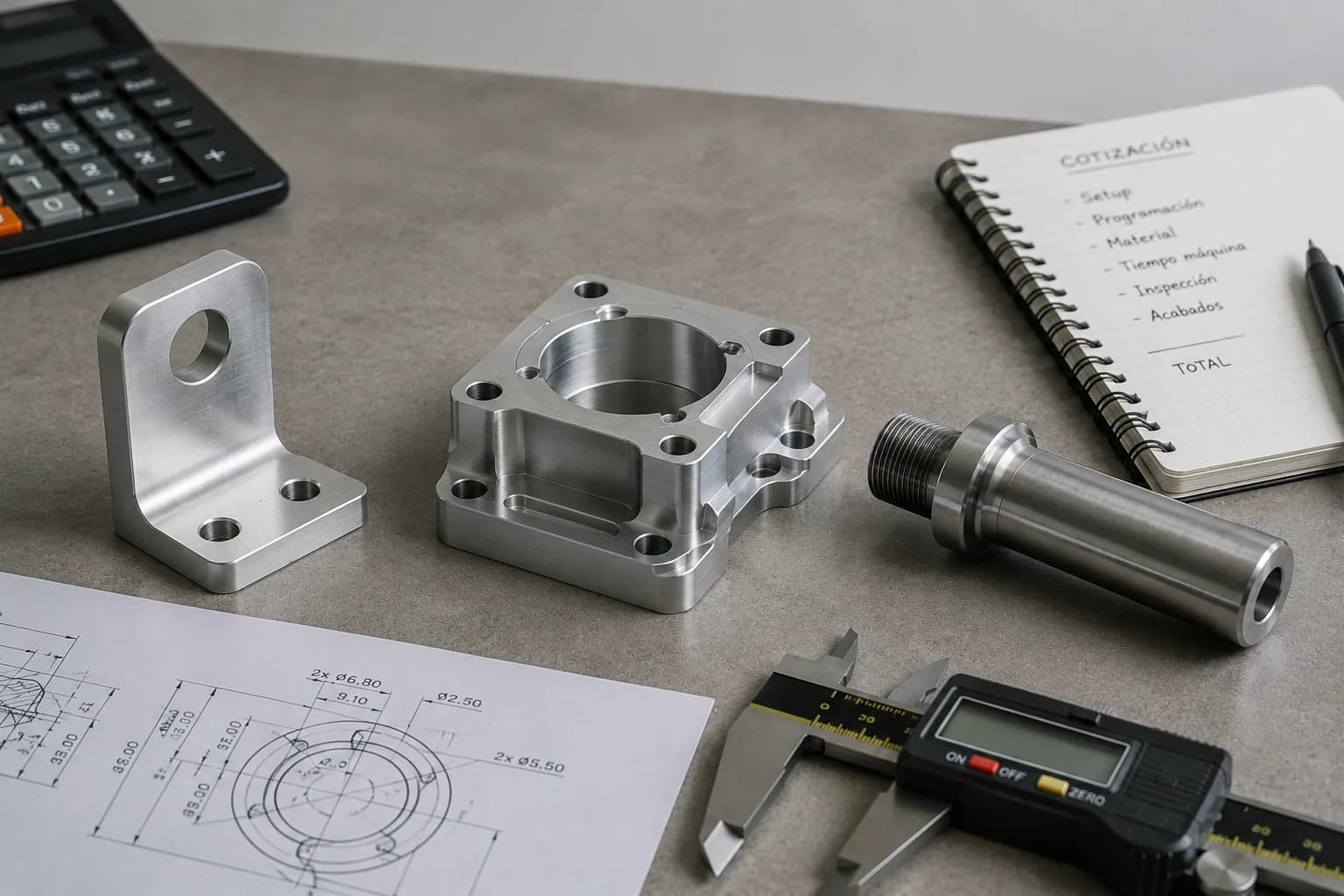
In many organizations, the biggest time loss happens before a purchase order is issued. An incomplete RFQ triggers multiple rounds of clarifications, revisions, and corrections. The correct STEP file is missing, the model and drawing disagree, critical characteristics are not identified, or inspection requirements are undefined.
Each of these questions seems minor on its own, but together they can add full days to the project. As a result, quoting speed should not be measured only by how fast a price arrives — but by how quickly the unknowns that could stop production later are eliminated.
That is why a good quote is also an engineering activity. A supplier that reviews manufacturability, validates assumptions, and flags risks before committing to a date usually creates fewer delays than one that responds immediately without questioning anything. A fast quote can be useful. A technically sound quote is usually far more valuable.
| Element | What to include | Impact if missing |
|---|---|---|
| 3D model | Clean STEP, current revision, correct units | Engineering rework and CAM programming delays |
| 2D drawing | Functional tolerances, threads, and defined finishes | Different interpretations between customer and supplier |
| Material | Alloy, condition, and required certifications | Purchasing delays or process changes |
| Quantity | Initial volume and expected demand | Inefficient capacity planning |
| Inspection | CTQs and acceptance criteria | Rework or holds at the end of the process |
| Application | Function, assembly, and special requirements | Undetected manufacturing risks |
The most agile projects usually start with more complete RFQ packages. When CAD files, drawings, materials, quantities, and quality requirements arrive aligned from the start, quoting becomes a transition into production instead of an endless chain of clarifications.
Early DFM: the most effective tool for shortening lead times
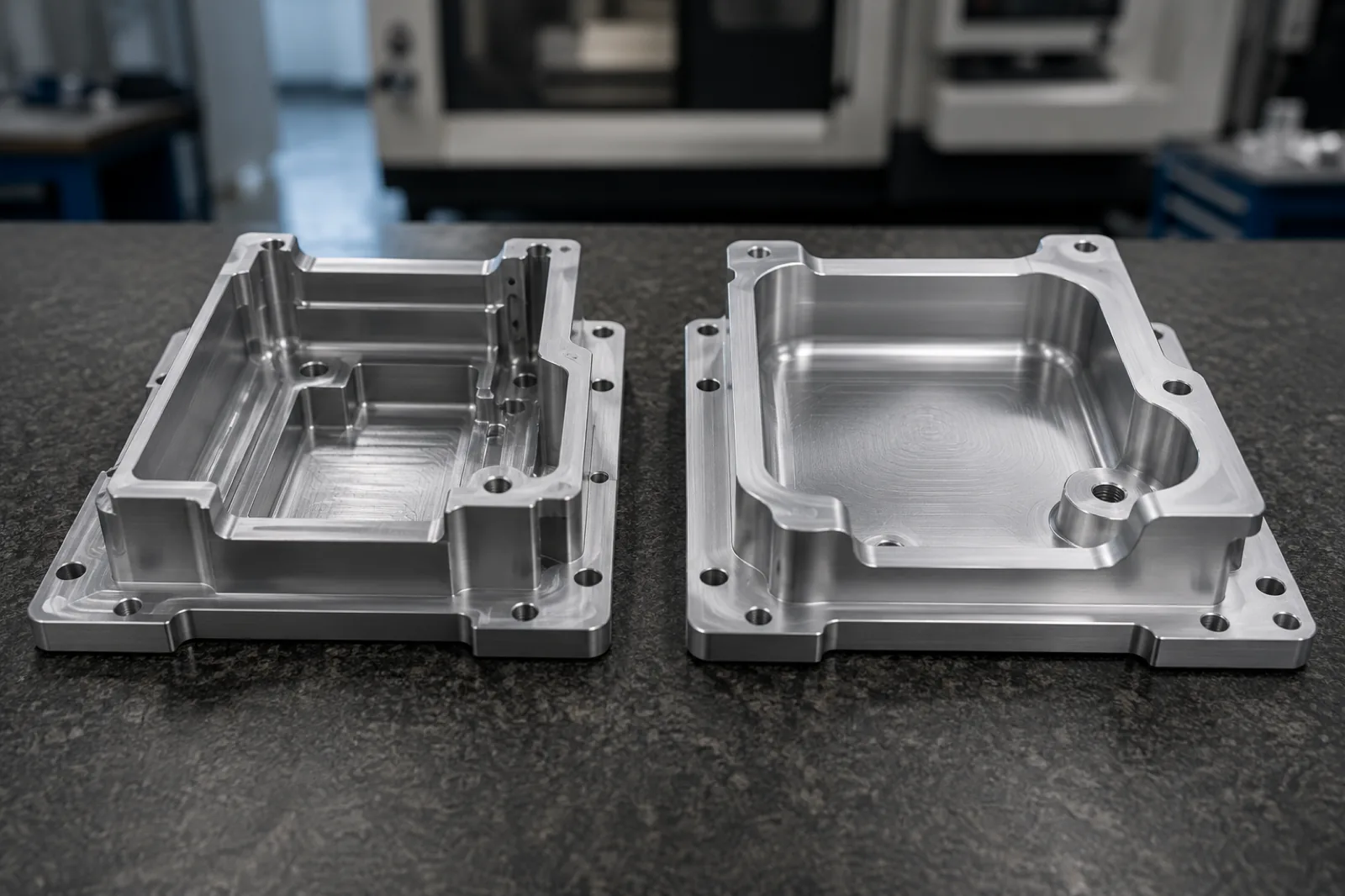
Early DFM review is one of the most effective ways to reduce delivery times. Its benefit is not limited to cost. It also prevents a design from moving into production with features that create workholding difficulties, special tooling, excessive cycle times, or inspection problems.
It is common to find internal radii incompatible with standard tools, excessively deep pockets, unnecessarily tight tolerances, or finishes specified without a clear functional justification. None of these items usually looks critical during design, but all of them can add days of programming, validation, or rework when discovered too late.
That is why the real advantage of a fast DFM review is allowing technical decisions to be made while there is still room to act. Adjusting a radius, simplifying a pocket, or redefining a tolerance during quoting often takes minutes. Doing it after production is released can mean new approvals, program changes, and unnecessary delays.
In custom manufacturing, the most valuable speed does not come from automating generic responses. It comes from identifying risks early and resolving them before they become operational problems.
Standardize what you can standardize
Many companies try to reduce lead times by negotiating more aggressive dates with suppliers. However, one of the most effective improvements often lies elsewhere: reducing the number of decisions that must be made over and over again.
Every time a team has to clarify materials, reinterpret nomenclature, confirm revisions, or discuss basic inspection criteria, the project consumes time that adds no value to the final product. Individually these look like minor details. Accumulated across dozens or hundreds of orders, they become a constant source of delay.
That is why organizations with more agile processes usually standardize everything that does not represent a competitive advantage. Approved materials, drawing formats, document revisions, quality criteria, and inspection expectations should be consistent whenever possible. The goal is not to limit engineering, but to stop teams from spending energy solving the same basic problems on every project.
When a common baseline exists, engineering can focus on decisions that truly affect performance, manufacturability, and cost.
- Approved materials — less time validating alloys, availability, and equivalents on every RFQ.
- Drawing format and nomenclature — clear revisions, document traceability, and fewer interpretation errors.
- Inspection criteria — CTQs defined consistently for similar part families.
- General tolerances — use ISO 2768 where appropriate instead of individually tolerancing non-critical features.
- Finishes by function — specify only finishes that deliver real technical or commercial value and avoid unnecessary cosmetic requirements during early stages.
The fastest teams do not make more decisions. They make fewer repetitive decisions.
Standardization does not remove the need for technical analysis. It makes analysis more efficient. Instead of spending time clarifying basic information, everyone can focus on resolving real risks and accelerating the transition into production.
Capacity planning: speed without empty promises
Another common mistake is assuming lead time depends exclusively on the number of machines available. Installed capacity matters, but it is rarely the only limiting factor.
Two suppliers can have similar equipment and achieve completely different results. The difference usually lies in how they manage priorities, how they respond to technical changes, and how quickly they can turn an engineering decision into action on the shop floor.
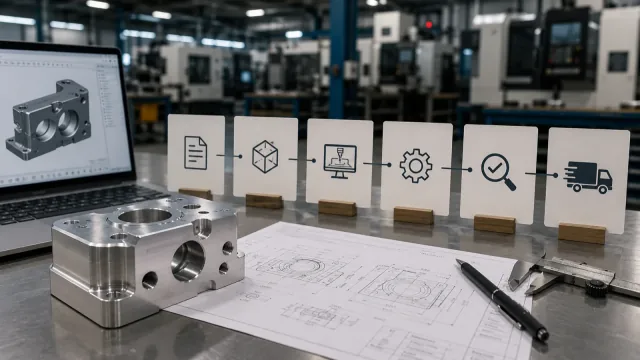
Waiting between quoting, CAM programming, purchasing, production, and inspection can add more time to the project than the machining cycle itself. When these areas work in isolation, any technical question becomes a chain of emails, approvals, and validations that slows the entire flow.
By contrast, when there is real visibility into capacity, clear priorities, and direct communication across functions, projects move with far less friction.
| Stage | What causes delays | How to reduce them |
|---|---|---|
| RFQ and quoting | Incomplete files, technical questions, inconsistent assumptions | Complete technical package and DFM review from the start |
| CAM programming | Complex geometry or hard-to-machine features | Design optimized for manufacturing before release |
| Setup and workholding | Multiple orientations and improvised fixtures | Reduce setups from the design stage |
| Machining | Difficult materials, unnecessary tolerances, or excessive finishes | Prioritize functional requirements and real CTQs |
| Inspection | Undefined critical characteristics or late documentation | Inspection plan agreed during the RFQ |
| External processes | Heat treatment, anodizing, or coatings not planned | Integrate secondary operations from the quote |
This changes how suppliers should be evaluated. Beyond asking for a standard lead time, it helps to understand how they handle urgencies, how they respond to design changes, how quickly they return actionable technical feedback, and how they scale from prototypes to repeatable production.
Sustainable speed does not come from promising aggressive dates. It comes from processes capable of identifying risks, making fast decisions, and keeping the flow moving without unnecessary interruptions.
How to reduce manufacturing lead times with better internal coordination
When a project is late, it is common to assume the problem is the supplier. Yet many delays are born before the part reaches the shop. Revision changes after order approval, conflicting priorities between departments, slow approvals, or quality requirements added mid-process can consume more time than machining itself.
The reality is that lead time does not belong to manufacturing alone. It is the result of how design, purchasing, and quality work together. When these functions operate with different goals or different information, even the most capable suppliers end up working inside a system designed to create delay.
Projects that move faster usually share one trait: critical decisions are made early and with the right stakeholders involved. If engineering defines functional requirements, purchasing understands real project priorities, and quality participates before the RFQ is released, the odds of rework, clarifications, and late changes drop dramatically.
Effective coordination does not remove technical complexity. It prevents complexity from appearing at the wrong moment.
- Define from the RFQ which requirements are truly critical — distinguishing functional characteristics from preferences reduces later debate.
- Freeze the document revision before releasing production — every late change restarts decisions already made.
- Centralize technical communication — a single responsible contact speeds clarifications and avoids contradictory versions.
- Communicate real priorities — partial delivery, functional validation, or full production require different strategies.
- Involve quality from the start — especially when CTQs, PPAP, FAI, or regulatory requirements apply.
Speed does not depend only on how fast a supplier machines. It depends on how fast an organization can make correct decisions.
Fewer handoffs, fewer delays
Every time a project changes hands, there is an opportunity to lose time. Information requests, approvals, priority changes, interpretation errors, and administrative waiting tend to multiply when too many independent players are involved.
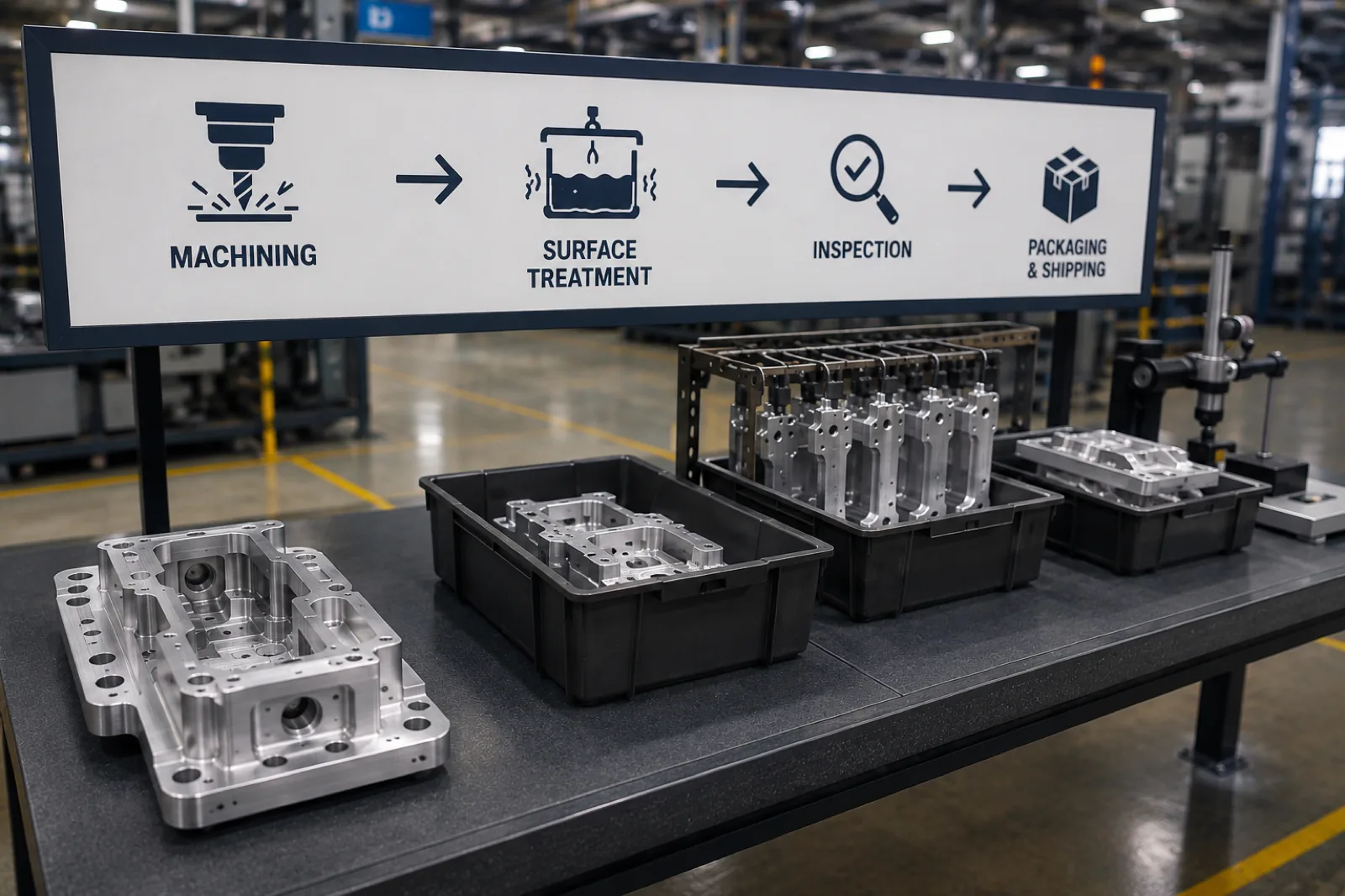
In custom manufacturing this happens constantly. Machining is at one company, surface treatment at another, specialized inspection at a third, and overall coordination falls on the customer. Each handoff adds complexity, communication, and risk.
That is why many programs achieve better delivery times when the full flow is better coordinated. Not necessarily because each operation is faster, but because there are fewer interruptions between stages. Visibility improves, problems are detected earlier, and decisions can be made more quickly.
In projects where the cost of a delay far exceeds a marginal difference in unit price, reducing handoffs usually creates more value than chasing the cheapest individual supplier for each operation.
The same logic applies to nearshoring. Geographic proximity does not speed up a part by itself, but it does reduce logistics friction, simplify technical communication, and allow faster reaction to priority changes or unexpected requirements. When design, manufacturing, inspection, and logistics operate within a closer, coordinated chain, total time from RFQ to final delivery usually drops significantly.
Quality should not become the final bottleneck
Many organizations discover too late that their quality strategy was designed to find problems, not prevent them. When critical characteristics are not defined from the RFQ or during the initial technical review, inspection ends up working as a corrective barrier at the end of the process instead of a preventive tool integrated into manufacturing.
The result is usually the same: held parts, additional validations, interpretation discrepancies, and urgent decisions when the delivery date is already committed.
Programs that combine speed and consistency usually take a different approach. They define from the start which characteristics are truly critical to part function, which measurement method will be used, and what the acceptance criterion will be. This allows inspection resources to be concentrated where they create real value, avoiding the same level of control on secondary surfaces as on functional dimensions.
The most efficient inspection is not the one that finds the most problems. It is the one that prevents problems from reaching the end of the process.
This distinction matters because it removes a false choice that still appears frequently in manufacturing: speed or quality. In reality, the best lead times usually appear when quality is integrated from design, quoting, and process planning. The later you try to resolve critical requirements, the greater the impact on schedule, cost, and capacity.
That is why early definition of CTQs, functional tolerances, and verification methods usually has a much larger effect on delivery times than any later effort to rush inspections.
Which metrics actually help reduce lead times
Many companies evaluate performance by looking only at whether an order arrived on time or late. The problem is that metric appears after the project is finished and usually does not explain why the delay happened.
If the goal is to reduce lead times systematically, you need to measure what happens before the problem shows up. The best indicators are usually found in response speed, quality of initial information, and the ability to close technical decisions before releasing production.
When these points are monitored consistently, it becomes much easier to identify where time is really being lost: whether the bottleneck is in the RFQ, DFM review, CAM programming, internal approvals, or external processes. Improvement stops relying on perceptions and starts relying on operational data.
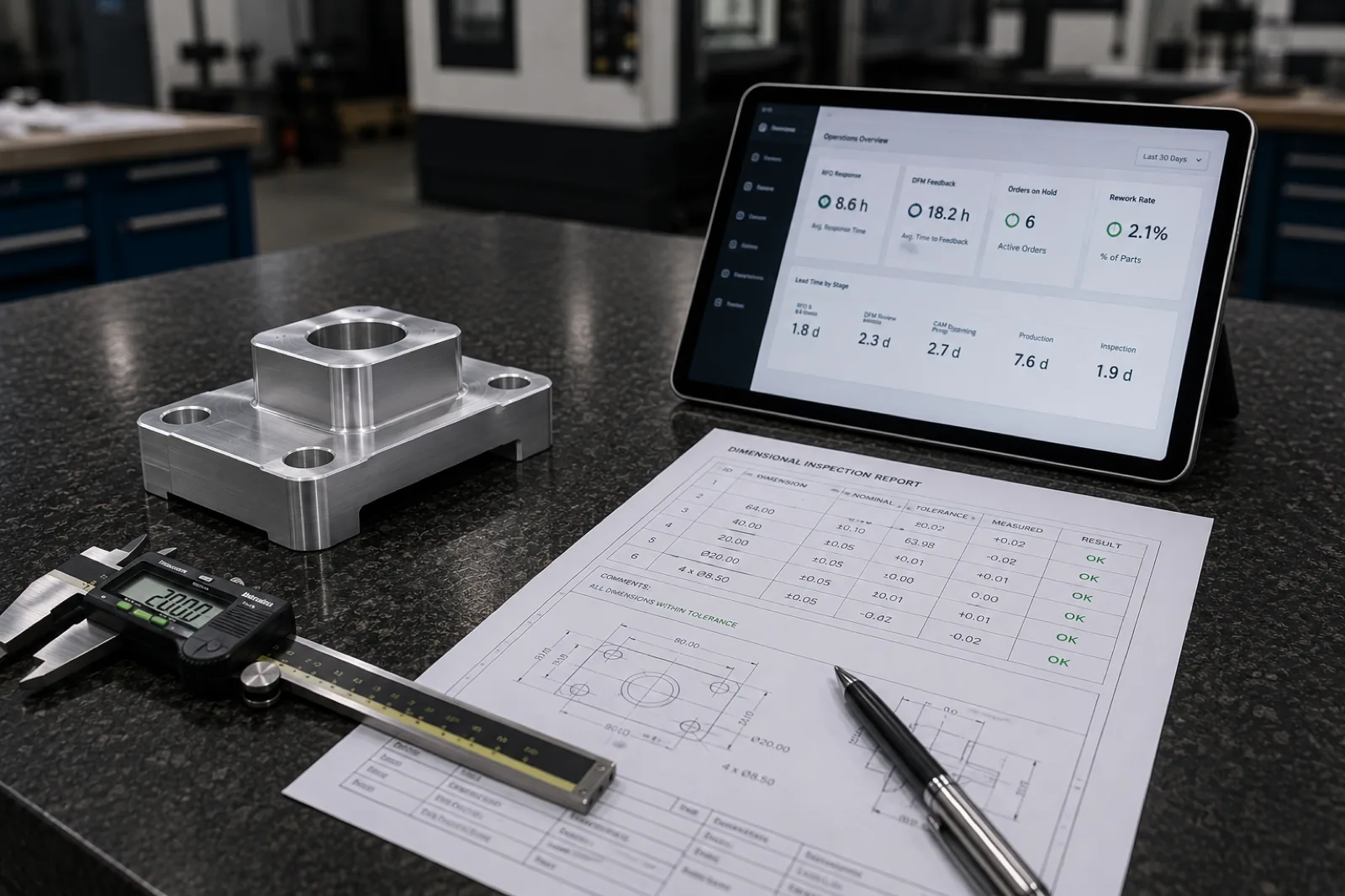
| Metric | What it reveals | Why it matters |
|---|---|---|
| RFQ response time | Speed to turn a request into an actionable quote | Detects friction before the project enters production |
| Time to DFM feedback | How quickly manufacturability risks are identified | Reduces iterations, late changes, and rework |
| Orders on hold for technical questions | Number of jobs blocked for clarifications | Signals communication or requirement-definition problems |
| Rework rate | Frequency of reprocessed or repeated parts | Connects speed with execution quality |
| Revision changes after production release | Design stability and document discipline | Measures how much work is unnecessarily restarted |
| Lead time by stage | Time spent in quoting, CAM, production, and inspection | Helps find the real bottleneck |
Organizations that reduce lead times consistently usually have something in common: visibility. They understand where time is lost, which decisions create delays, and which activities deliver real value to the flow. Without that information, any attempt to speed up production becomes a gamble.
By contrast, when there is fast technical feedback, clear processes, and tracking of relevant metrics, it is possible to shorten lead times without sacrificing quality or increasing operational risk.
Conclusion: short lead times are designed, not improvised
Companies with the most competitive delivery times do not necessarily have more machines, more staff, or more aggressive calendars. What they usually have is less uncertainty.
Their RFQs are clearer, their DFM reviews happen earlier, their quality criteria are defined from the start, and their teams make technical decisions while there is still room to correct. As a result, they spend less time reacting to problems and more time moving toward production.
That is why reducing lead times is not about demanding that everything happen faster. It is about building a process where fewer things can stop. When design, purchasing, quality, and manufacturing work from the same information with aligned expectations, lead time stops being an optimistic commercial promise and becomes a repeatable operational capability.
In other words: sustainable speed is not born at the machine. It is born in the decisions made before you turn it on.
The best lead times are not the result of running faster. They are the result of having fewer reasons to stop.
If you want to reduce lead times on CNC machining projects, start by improving RFQ quality, incorporating early DFM reviews, defining inspection criteria from the start, and eliminating unnecessary handoffs between stages. Most delays can be prevented long before production begins.
- CNC machining design guide — DFM rules, tolerances, and manufacturability practices.
- CAD files for CNC machining — what information speeds up a technical quote.
- Fast CNC machining and lead times — factors that affect real lead time.
- How to compare CNC machining quotes — evaluate technical scope beyond price.
- ISO 2768 tolerance chart — general tolerances to avoid over-specification.
- CNC machining services — CNC milling, CNC turning, and precision manufacturing.
Frequently asked questions about reducing manufacturing lead times
Answers if you're looking for shorter, more predictable lead times on your parts.
- What is lead time in manufacturing?
- Lead time is the total elapsed time between order release and delivery of finished parts. It includes technical review, quoting, purchasing, programming, production, inspection, and secondary processes — not just machine time.
- What is the main cause of manufacturing delays?
- In many projects, delays begin before production. Incomplete RFQs, revision changes, ambiguous specifications, undefined materials, or manufacturability questions usually create more delay than machining itself.
- How can I reduce lead time on a CNC part?
- The most effective actions are usually sending a complete RFQ, incorporating early DFM review, using commercially available materials, limiting unnecessary finishes, and freezing revisions before releasing production.
- What should an RFQ include to speed up quoting?
- Updated STEP model, PDF drawing, exact material, quantity, target date, functional tolerances, finishes, and inspection requirements. The less information is missing, the less time is lost in clarifications.
- What is DFM and why does it help reduce lead times?
- DFM (Design for Manufacturability) is the process of reviewing a design to identify features that complicate fabrication. Detecting these risks before production avoids late changes, reprogramming, rework, and delays.
- Do materials affect delivery time?
- Yes. Common materials such as aluminum 6061, 1018 steel, or 304 stainless steel are usually available quickly. Special materials, heat treatments, or specific certifications can add days or weeks to lead time.
- Do surface finishes increase lead time?
- Often yes. Processes such as anodizing, powder coating, passivation, heat treatment, or external coatings add stages outside machining and can significantly extend schedules.
- Is it possible to reduce lead times without sacrificing quality?
- Yes. The key is removing uncertainty and rework — not skipping controls. Good planning, clear inspection criteria, and early technical review usually improve both speed and quality at the same time.
- Which metrics help improve lead times?
- RFQ response time, time to DFM feedback, orders on hold for technical clarifications, rework rate, post-release revision changes, and lead time by process stage.
- What impact do design changes during production have?
- Changes after release are usually one of the biggest causes of delay. They can require new CAM programming, additional approvals, tooling adjustments, or even manufacturing parts again.
- Is it better to consolidate operations with fewer suppliers?
- In many cases, yes. Reducing handoffs between machining, inspection, treatments, and logistics cuts coordination time, communication errors, and waiting between stages.
- Does nearshoring help reduce lead times?
- Generally yes. Geographic proximity reduces transit time, simplifies technical communication, and allows faster response to priority changes or urgent needs.
Lead time is the total elapsed time between order release and delivery of finished parts. It includes technical review, quoting, purchasing, programming, production, inspection, and secondary processes — not just machine time.
In many projects, delays begin before production. Incomplete RFQs, revision changes, ambiguous specifications, undefined materials, or manufacturability questions usually create more delay than machining itself.
The most effective actions are usually sending a complete RFQ, incorporating early DFM review, using commercially available materials, limiting unnecessary finishes, and freezing revisions before releasing production.
Updated STEP model, PDF drawing, exact material, quantity, target date, functional tolerances, finishes, and inspection requirements. The less information is missing, the less time is lost in clarifications.
DFM (Design for Manufacturability) is the process of reviewing a design to identify features that complicate fabrication. Detecting these risks before production avoids late changes, reprogramming, rework, and delays.
Yes. Common materials such as aluminum 6061, 1018 steel, or 304 stainless steel are usually available quickly. Special materials, heat treatments, or specific certifications can add days or weeks to lead time.
Often yes. Processes such as anodizing, powder coating, passivation, heat treatment, or external coatings add stages outside machining and can significantly extend schedules.
Yes. The key is removing uncertainty and rework — not skipping controls. Good planning, clear inspection criteria, and early technical review usually improve both speed and quality at the same time.
RFQ response time, time to DFM feedback, orders on hold for technical clarifications, rework rate, post-release revision changes, and lead time by process stage.
Changes after release are usually one of the biggest causes of delay. They can require new CAM programming, additional approvals, tooling adjustments, or even manufacturing parts again.
In many cases, yes. Reducing handoffs between machining, inspection, treatments, and logistics cuts coordination time, communication errors, and waiting between stages.
Generally yes. Geographic proximity reduces transit time, simplifies technical communication, and allows faster response to priority changes or urgent needs.

Written by
Adrian Cavazos and the PREMSA Engineering Team
Adrian Cavazos, founder of PREMSA Industries, leads a manufacturing engineering team specialized in CNC turning and milling, 3D printing, and production-ready solutions. The team works closely with each customer to shorten lead times through DFM review, real capacity planning, and reliable manufacturing from prototypes through volume production.