
Asking how much a CNC prototype costs seems like a simple question, but in practice it produces very different answers between suppliers. The reason is technical: in prototypes, a large share of cost comes from manufacturing preparation (CAM programming, fixturing, first-article validation), not only raw material.
Two parts with the same size and material can be quoted with 2x or 3x differences if one requires more setups, smaller tools, tighter tolerances, or additional inspection. That is why a weight-based estimate almost always fails for engineering and procurement.
As a quick reference, a simple aluminum prototype usually falls between $60 and $180 USD at quantity 1, while complex parts with multiple faces, demanding tolerances, or difficult materials can exceed $600 USD per part. In this guide, we break down real ranges and, most importantly, the logic behind those ranges so you can quote with criteria.
| Prototype type | Typical range qty 1 |
|---|---|
| Simple aluminum | $60 - $180 USD |
| Medium complexity | $180 - $420 USD |
| High complexity | $420 - $1,100+ USD |
Ranges by geometric complexity
The table below summarizes typical 2026 ranges for CNC prototypes in North America, using aluminum 6061 as baseline, as-machined finish, and quantities from 1 to 5 parts. It is not a fixed rate card: it is a reference to position your project before requesting a formal quote.
| Complexity | Technical profile | Typical range per part |
|---|---|---|
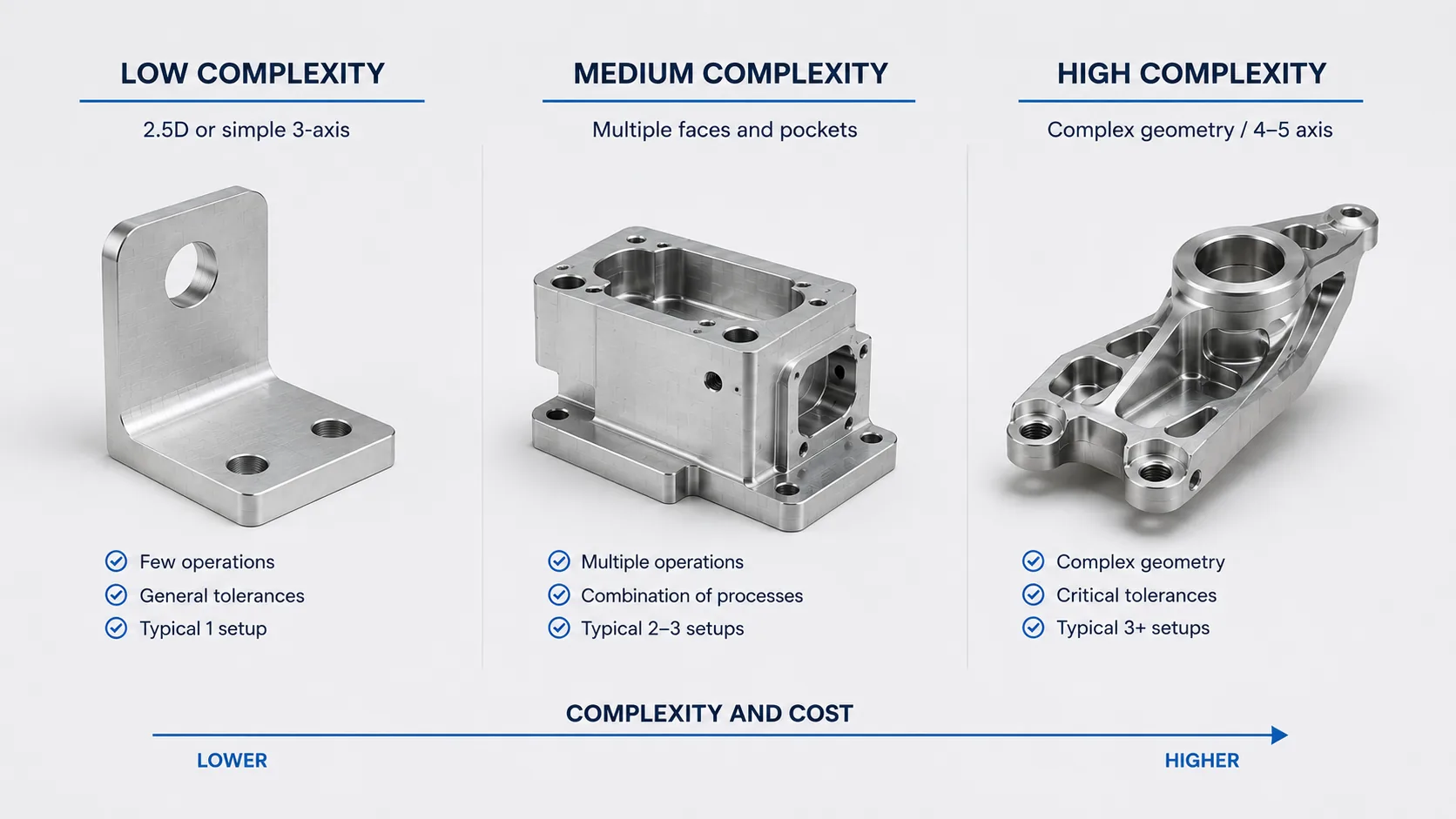
| Low | Simple 2.5D or 3-axis, few operations, general tolerances | $60 - $180 |
| Medium | Multiple faces, cavities, combination of drilling and contouring | $180 - $420 |
| High | Complex geometry, more setups, critical tolerances, or 4/5-axis | $420 - $1,100+ |
What makes a prototype more expensive
A CNC prototype quote usually moves around six variables. Understanding how they impact cost helps prioritize design changes before negotiating price.
| Factor | How it impacts cost | Typical impact |
|---|---|---|
| Setup and programming | Fixed cost per design, dominant at qty 1 | Very high |
| Cycle time | More operations and toolpaths = more machine minutes | Very high |
| Material | Stock price + machinability | Medium-high |
| Tolerances | Finishing passes and additional inspection | High |
| Finishes | Secondary operations and batch handling | Medium |
| Quantity | Defines how fixed cost is distributed | High |
If you want a full breakdown of these drivers, review what affects CNC machined part cost most.
Material and multipliers vs aluminum 6061
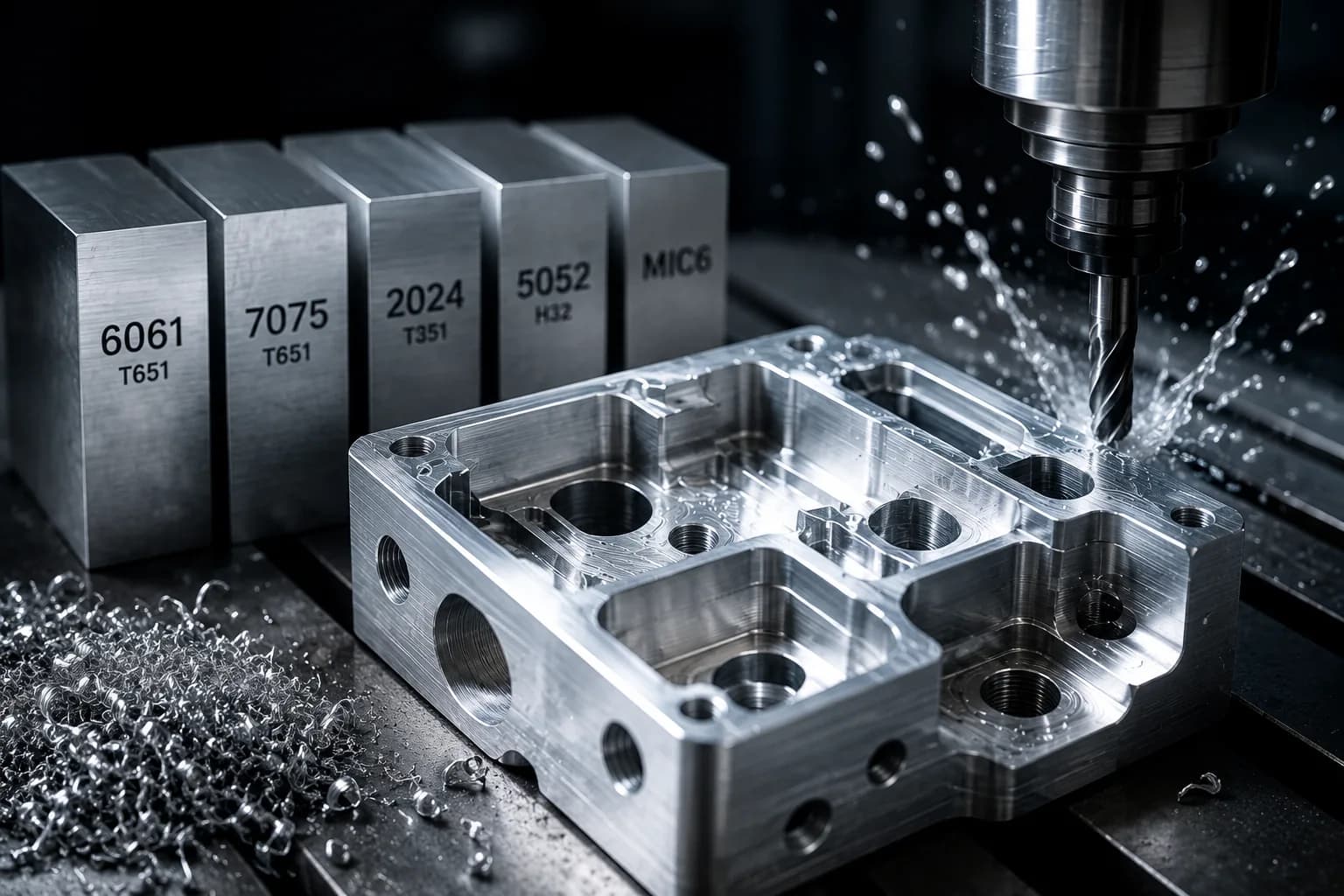
With the same geometry and process strategy, material changes cost for two reasons: raw stock value and machining difficulty. We use 6061 = 1.0x as reference.
| Material | Multiplier | Comment |
|---|---|---|
| Aluminum 6061-T6 | 1.0x | Cost reference for prototypes |
| Aluminum 7075-T6 | 1.1x - 1.3x | Higher alloy cost |
| Steel 1018 | 1.2x - 1.5x | More cutting time |
| Stainless steel 304 | 1.5x - 2.1x | Slower machining and higher tool wear |
| Stainless steel 316 | 1.8x - 2.5x | Higher cutting difficulty |
| Titanium grade 5 | 3.0x - 5.0x | Slow cycles and high-cost tooling |
| Acetal | 0.8x - 1.1x | Good machinability for functional parts |
To compare how each material affects an RFQ, see CNC machining material cost.
Quantity and setup amortization
In prototypes, setup is often the most penalizing cost when you order one part. As quantity increases, that fixed cost is spread out and unit price drops visibly even without changing the design.
| Quantity | Setup cost per lot | Variable cost per part | Estimated unit price |
|---|---|---|---|
| 1 | $120 | $95 | $215 |
| 5 | $120 | $82 | $106 |
| 10 | $120 | $78 | $90 |
| 25 | $120 | $72 | $77 |
This dynamic explains why a prototype part can seem expensive and then drop significantly in low volume without changing material. If you need that approach, see low-volume CNC machining without MOQ.
Real prototype cost examples
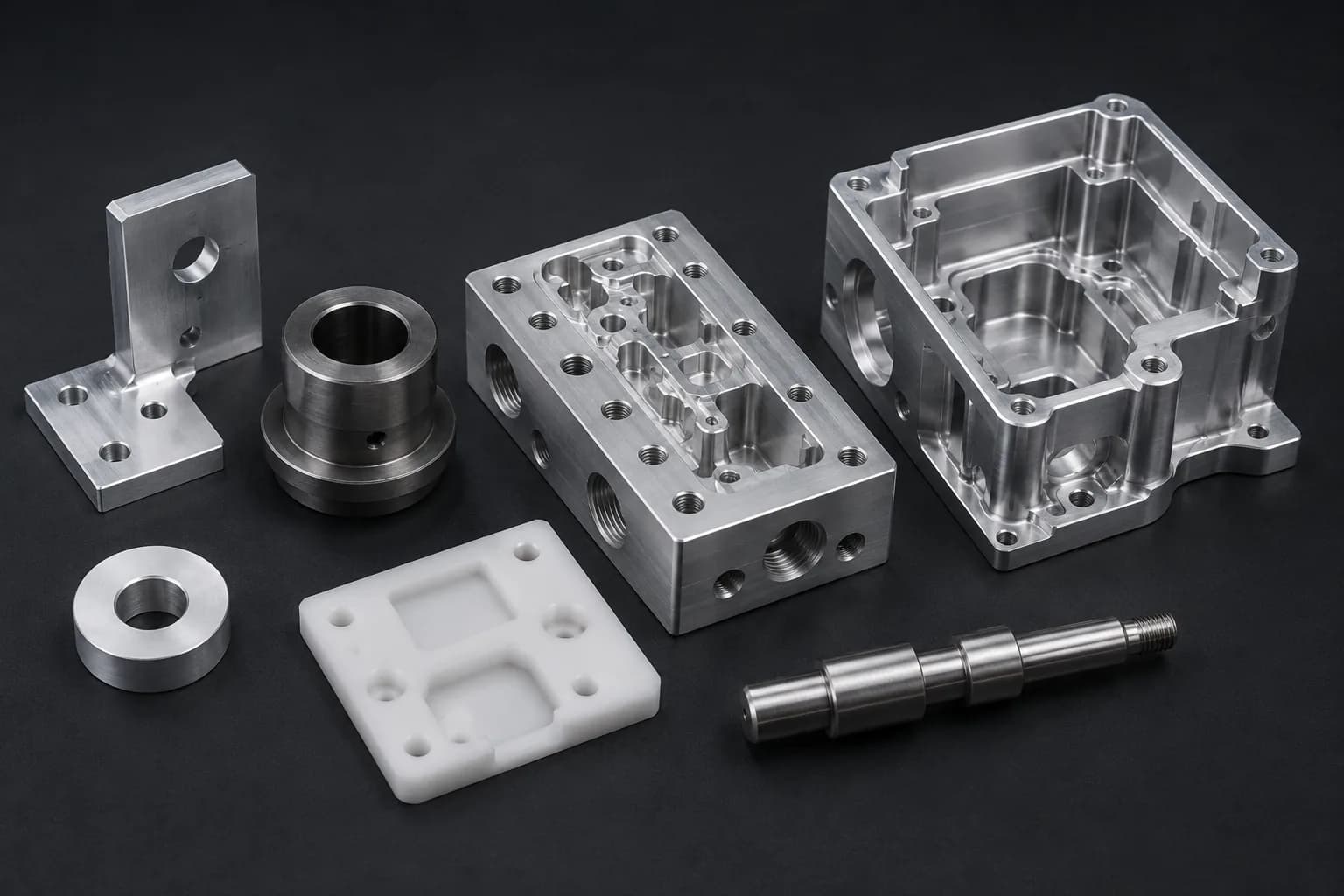
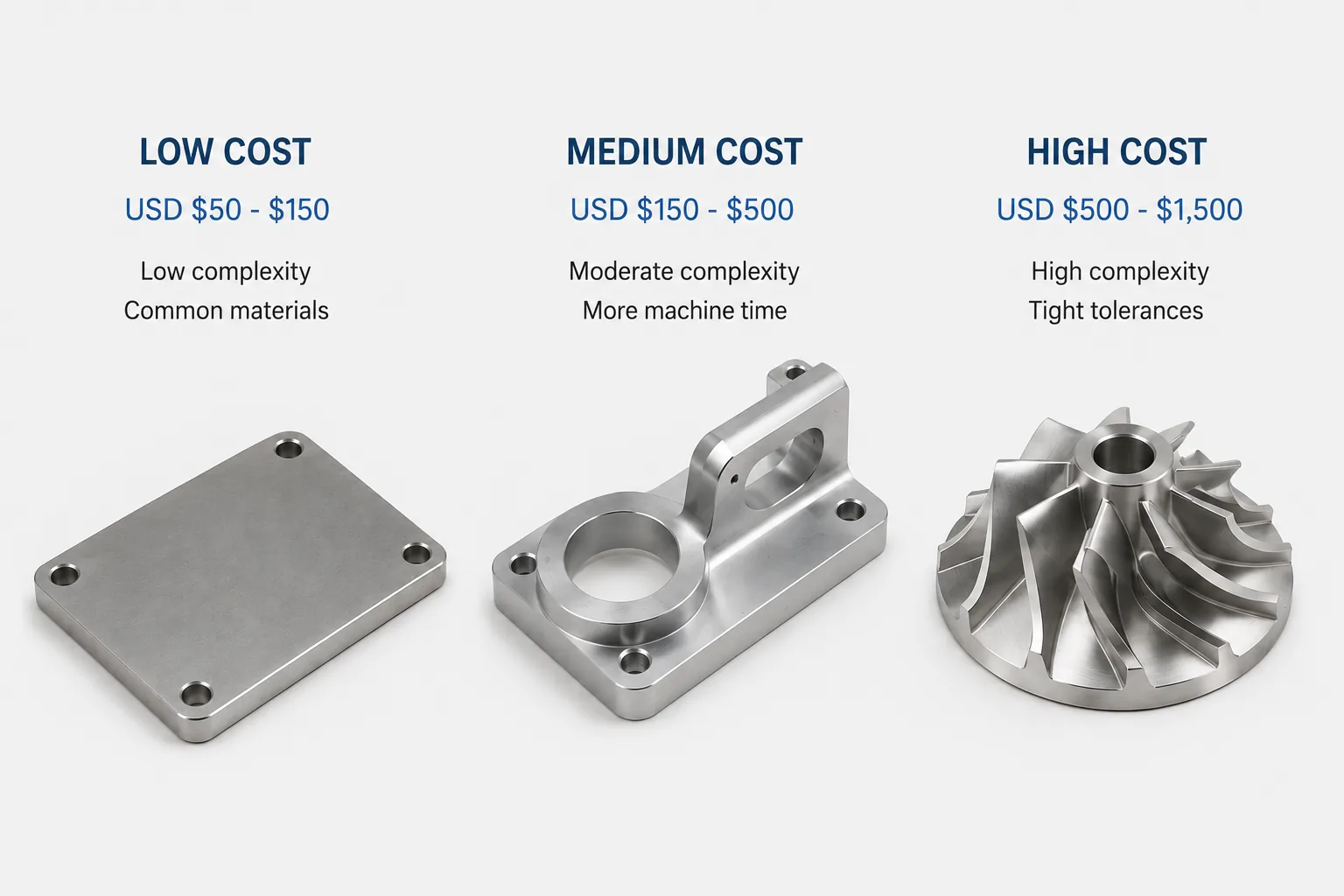
To ground ranges in concrete parts, here are four representative quantity-1 cases. If you want more examples with images and full comparisons, see real CNC part examples with pricing.
| Case | Material and process | Typical range |
|---|---|---|
| Sensor bracket | 6061, 3-axis milling | $80 - $170 |
| Stepped shaft | 304, CNC turning | $95 - $210 |
| Functional plate | Acetal, 2.5D milling | $45 - $120 |
| Mini manifold | 6061, multi-face + threads | $180 - $420 |
How a CNC quote is built
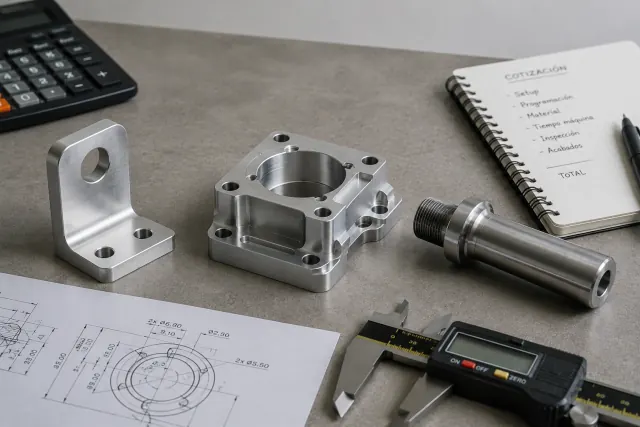
Although each shop uses different methodologies, most CNC quotes follow a similar logic. First, they analyze CAD geometry; then they define manufacturing strategy, estimate setup and machining times, calculate required material, and finally add inspection, finishes, and other secondary processes. Understanding this flow helps explain why two suppliers can return different prices for the same part.
| Line item | Cost |
|---|---|
| Setup and programming | $120 |
| Material (includes scrap) | $38 |
| Machine time | $320 |
| Deburring and inspection | $45 |
| Lot total | $523 |
| Unit price | $104.6 |
- Process is defined: orientations, tools, and fixturing in CAM.
- Setup is calculated: programming, machine preparation, and first good part.
- Cycle time is estimated per part and multiplied by machine rate.
- Real material is added considering stock and scrap.
- Secondary operations are added: deburring, inspection, and finish if needed.
- Total is divided by quantity to get final unit cost.
Why two shops can quote the same part differently
A price difference does not automatically mean one quote is right and the other is wrong. Two shops can analyze the same part and make different manufacturing decisions. One may produce it in two setups using standard tools, while another may require three setups, special tooling, or additional inspection. Both prices can be technically valid.
| Factor | Supplier A | Supplier B |
|---|---|---|
| Number of setups | 2 | 3 |
| Tooling | Standard | Special |
| Inspection | Sampling | 100% of critical features |
| Lead time | 10 days | 5 days |
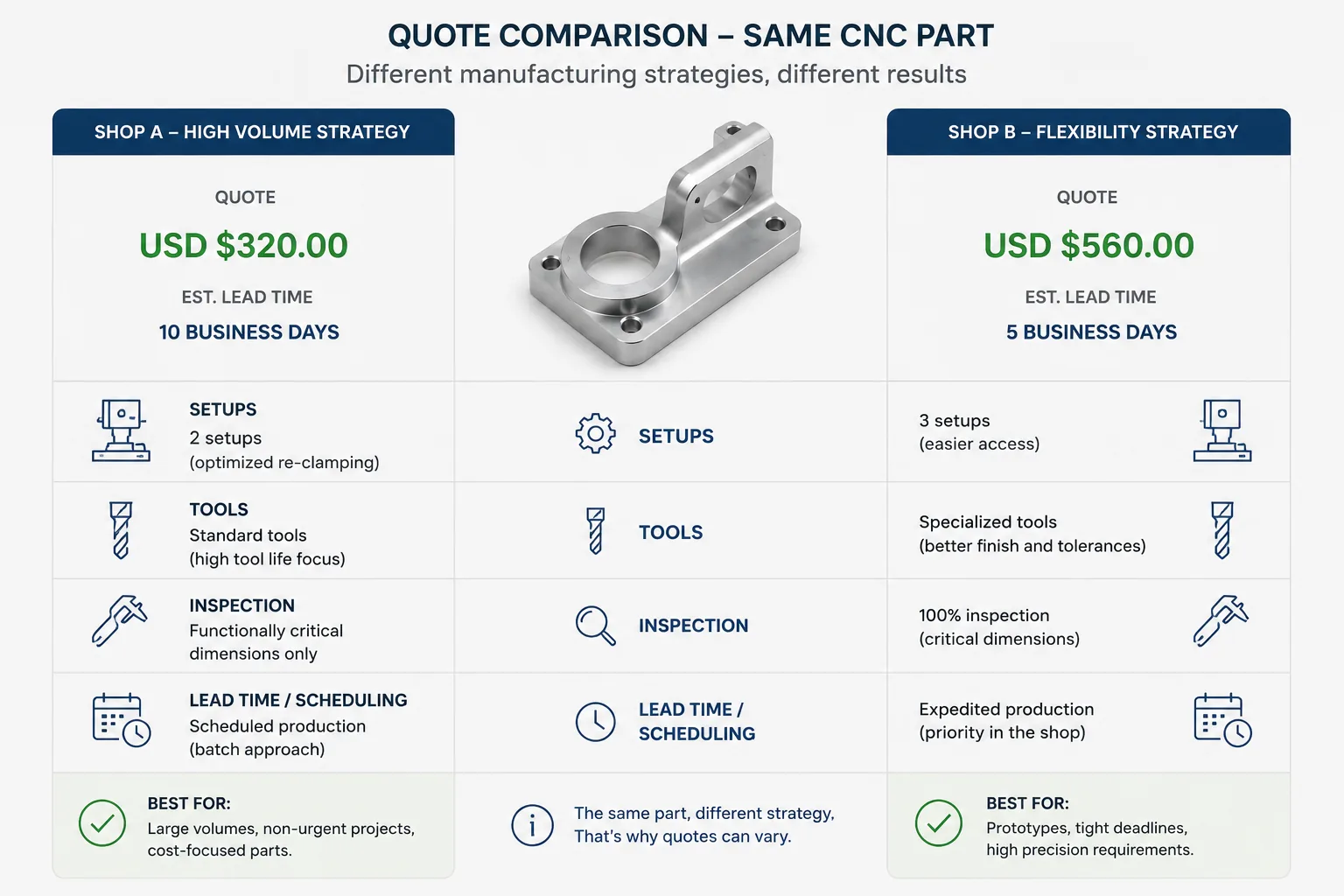
For this reason, comparing quotes only by price can lead to incorrect conclusions. It is also important to review scope, lead time, inspection strategy, included finishes, and manufacturing assumptions used by each supplier.
Prototype vs serial production
| Factor | Prototype | Serial production |
|---|---|---|
| Goal | Validate design and function | Reduce unit cost and ensure repeatability |
| Fixture | Simple or flexible | Dedicated and optimized |
| Programming | Fast and adaptable | Cycle-optimized |
| Inspection | Focus on first parts | Repeatable lot control |
| Unit cost | High due to setup | Lower due to amortization |
Prototyping prioritizes learning speed and design validation; production prioritizes repeatability and unit cost. That is why you should not directly compare qty 1 pricing with a 500-part run: strategy, fixturing, and fixed-cost distribution all change.
How to reduce cost without changing function
- Limit tight tolerances to functional surfaces; keep general tolerances elsewhere.
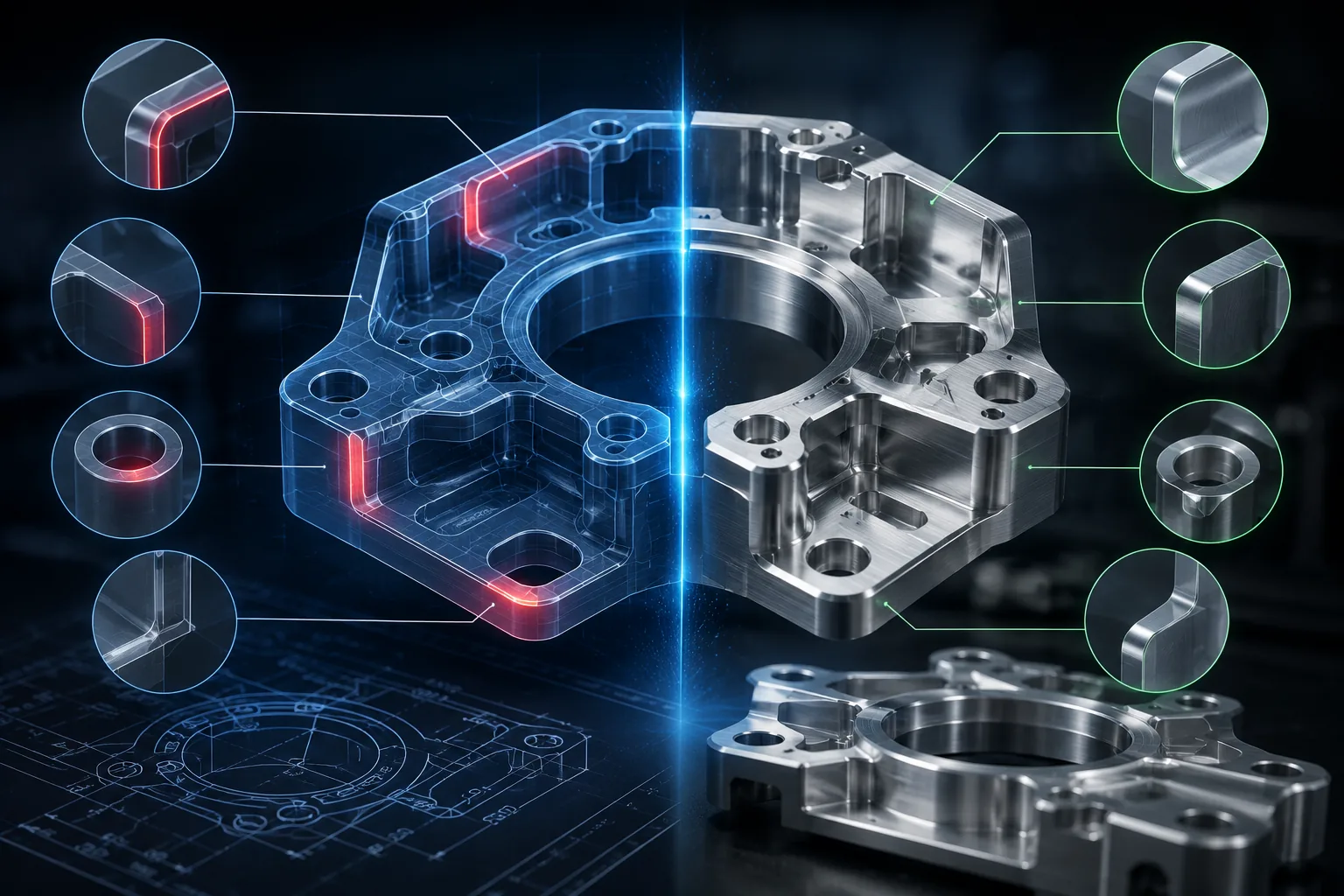
- Increase internal radii to use standard tooling and reduce cycle time.
- Avoid unnecessary deep cavities and reduce orientation changes.
- Standardize threads and drilled holes to simplify setup and inspection.
- If project stage allows, order 5-10 parts to amortize setup and validate process variation.
More practical tactics in how to reduce CNC part cost with design and in the CNC machining design guidelines.
Lead times for CNC prototypes
A standard prototype usually falls between 5 and 10 business days, depending on complexity, material, and shop load. Express options can reduce time, but usually with a premium and a narrower technical scope. For better schedule and risk planning, see fast CNC machining and lead times.
| Complexity | Typical lead time |
|---|---|
| Simple | 3 - 5 business days |
| Medium | 5 - 10 business days |
| High | 10 - 20 business days |
| Express | 2 - 4 business days with premium |
Conclusion
CNC prototype cost cannot be understood with a generic number or material weight. It is understood by analyzing setup, cycle time, machining difficulty, tolerances, finishes, and quantity. When that framework is clear, quoting stops being a guess and becomes a technical decision.
For most projects, understanding these drivers helps teams make better decisions before releasing an RFQ. In many cases, small design, quantity, or tolerance adjustments create more economic impact than changing suppliers or negotiating a few percentage points on price.
A good prototype price is not the lowest one on paper; it is the one that correctly reflects process, risk, and part function.
What information a shop needs to quote a CNC prototype
One of the fastest ways to get an accurate quote is to send all required information from the start. When key data is missing, the supplier must assume conditions or request clarifications, which usually delays the process.
- CAD model in STEP format or equivalent.
- PDF drawing if critical tolerances or notes exist.
- Material and specific grade.
- Required quantity.
- Surface finish if applicable.
- Critical or functional features.
- Target delivery date.
A complete RFQ reduces iterations, accelerates response time, and yields more consistent quotes across suppliers.
Frequently asked questions about CNC prototype cost
Quick answers for engineering and procurement teams preparing a prototype RFQ.
- How much does a CNC prototype cost on average
- As a reference, a simple aluminum prototype at qty 1 is usually between $60 and $180 USD; medium geometries between $180 and $420; and complex parts can exceed $600. Variation depends on setup, cycle time, tolerances, and material.
- Why can a small part cost more than a large one
- Because price is not calculated by visual volume. A small part with deep cavities, fine tools, and multiple setups can consume more machine time than a larger, simpler part.
- What weighs most in a prototype quote
- Usually initial setup and cycle time. Material matters, but it is often not the dominant factor. This is explained in what affects CNC machined part cost most.
- Is it better to order one part or several
- If possible, ordering 5-10 parts usually improves unit cost because setup is amortized. It also lets you validate repeatability before scaling to low volume.
- How does material affect prototype cost
- Aluminum 6061 is used as the cost reference due to good machinability. Stainless steel and titanium tend to increase multipliers due to cutting time and tool wear.
- What should I send to get quoted faster
- A clean STEP model, material grade, quantity, critical tolerances, finish, and target date. The fast CNC machining quote guide helps you structure it.
- Can surface finish significantly move price
- Yes. Processes such as anodizing, passivation, or controlled roughness requirements add cost per part and per lot. It is best to apply them only where they add function.
- What is the typical lead time for a prototype
- In most projects, between 5 and 10 business days. Express options can drop to 2-4 days with a premium, depending on material, complexity, and available capacity.
- How do I know if a quote is within a reasonable range
- Compare against similar parts and drivers, not only final price. You can use real CNC part examples with pricing and how to compare CNC machining quotes.
As a reference, a simple aluminum prototype at qty 1 is usually between $60 and $180 USD; medium geometries between $180 and $420; and complex parts can exceed $600. Variation depends on setup, cycle time, tolerances, and material.
Because price is not calculated by visual volume. A small part with deep cavities, fine tools, and multiple setups can consume more machine time than a larger, simpler part.
Usually initial setup and cycle time. Material matters, but it is often not the dominant factor. This is explained in what affects CNC machined part cost most.
If possible, ordering 5-10 parts usually improves unit cost because setup is amortized. It also lets you validate repeatability before scaling to low volume.
Aluminum 6061 is used as the cost reference due to good machinability. Stainless steel and titanium tend to increase multipliers due to cutting time and tool wear.
A clean STEP model, material grade, quantity, critical tolerances, finish, and target date. The fast CNC machining quote guide helps you structure it.
Yes. Processes such as anodizing, passivation, or controlled roughness requirements add cost per part and per lot. It is best to apply them only where they add function.
In most projects, between 5 and 10 business days. Express options can drop to 2-4 days with a premium, depending on material, complexity, and available capacity.
Compare against similar parts and drivers, not only final price. You can use real CNC part examples with pricing and how to compare CNC machining quotes.
Related resources
If you are evaluating prototype cost, lead times, and manufacturability, these cluster resources will help:
- Real CNC part examples with pricing - comparable cases by part type.
- What affects CNC machined part cost most - technical price drivers.
- Fast CNC machining quote - what to include in your RFQ.
- How to compare CNC machining quotes - methodology for procurement and engineering.
- CNC machining material cost - multipliers by alloy.
- How to reduce CNC part cost with design - high-impact DFM changes.
- Fast CNC machining - lead-time planning.
- CNC machining cost - overall cost panorama.
- DFM feedback before manufacturing - early technical validation.

Written by
Adrian Cavazos and the PREMSA Engineering Team
Adrian Cavazos, founder of PREMSA Industries, leads a manufacturing engineering team specialized in CNC machining, metal fabrication, and production-ready solutions. The team works closely with customers to optimize designs, improve manufacturability (DFM), and ensure reliable, scalable production from prototypes to volume manufacturing.