
When someone asks how much a CNC part costs, they usually get the same answer: *it depends*. And technically, that is true. Final price changes with material, geometry, tolerances, quantity, and manufacturing process.
The problem is that answer does not help you know whether a quote is in a reasonable range or identify which design choices are driving cost up.
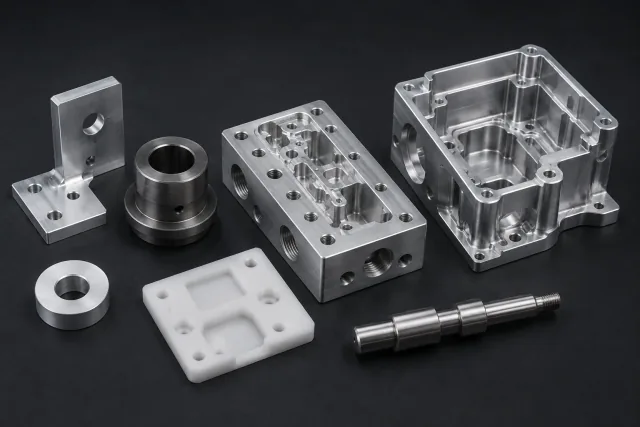
To make it tangible, we compiled seven representative examples of common CNC parts — spacers, bushings, brackets, plastic plates, shafts, manifolds, and housings — along with typical price ranges for prototypes and small batches in North America.
These are not fixed prices or a rate card. They are references based on typical geometries, commercially available stock materials, and standard manufacturing requirements.
If your part resembles one of these examples, you get a quick reference for where cost should land. If your design is different, the final sections explain the factors that actually determine the price of any machined component.
The most important takeaway: two parts of the same size can have completely different prices. In CNC, geometry, setups, and machine time usually matter far more than how much material is used.
| Part | Material | Qty | Approx. price (USD) |
|---|---|---|---|
| Spacer | 6061-T6 | 1 | $15–35 |
| Bushing | 1018 | 1 | $25–70 |
| Bracket | 6061-T6 | 1 | $40–120 |
| Delrin plate | Acetal / Delrin | 1 | $35–90 |
| Shaft | 304 SS | 1 | $50–150 |
| Manifold | 6061-T6 | 1 | $150–400 |
| Housing | 6061-T6 | 1 | $300–1,000+ |
The ranges shown assume commercially available stock material, standard CNC machining, and basic finishing such as deburring and conventional dimensional inspection. They do not include anodizing, paint, heat treatment, grinding, full CMM inspection, or special quality requirements.
Assumed tolerances correspond to general precision manufacturing (equivalent to ISO 2768 in many cases), without advanced GD&T requirements. In each example we explain what factors can move a quote up or down — the same type of analysis performed during a manufacturability review or DFM (Design for Manufacturability) before releasing a part to production.
7 CNC part examples with approximate pricing
CNC parts are not quoted by weight or size. They are quoted by machine time, required setups, and manufacturing risk. The following examples use geometries that appear frequently in real RFQs and show typical ranges for prototypes or small batches manufactured in North America.
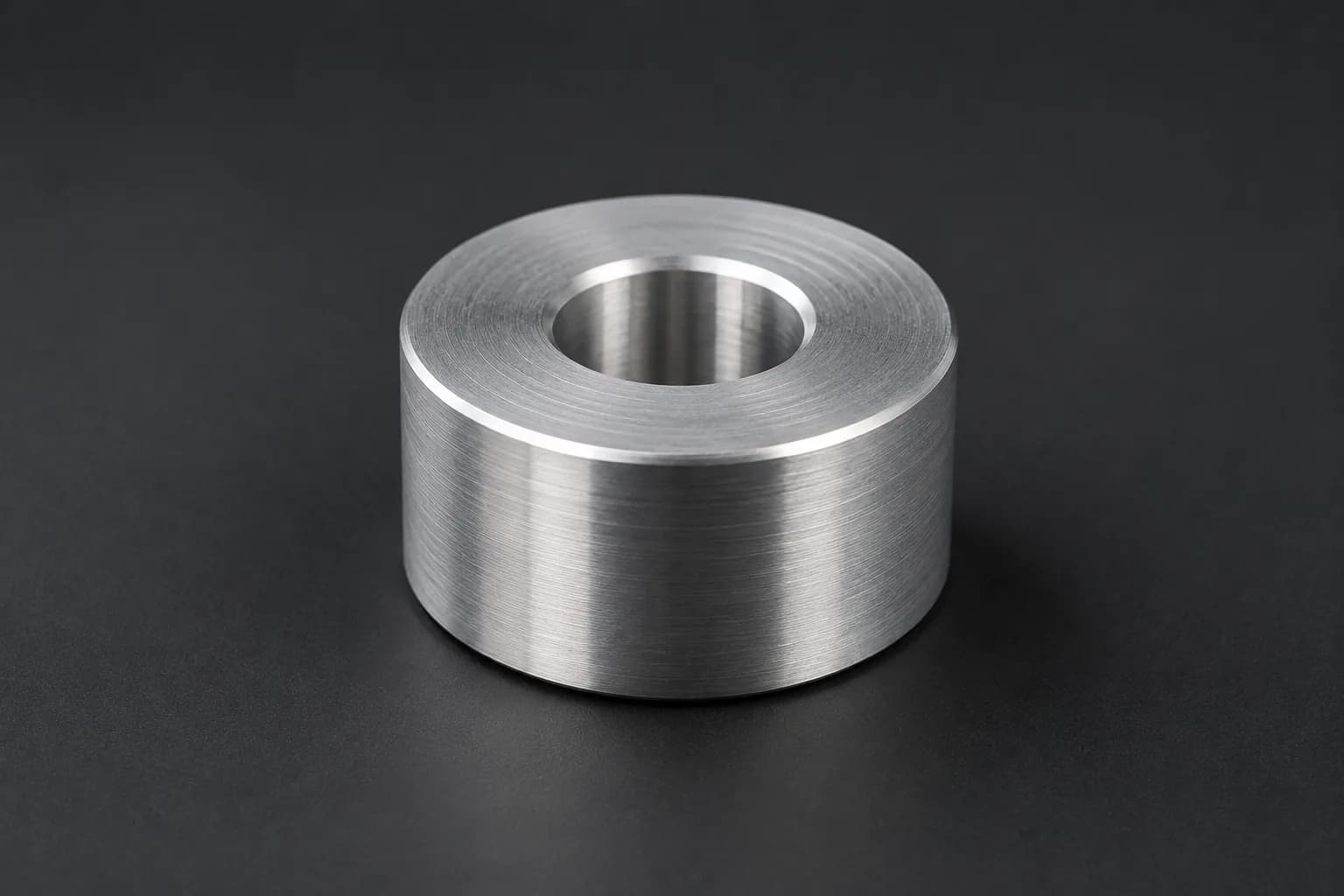
1. Aluminum spacer (6061-T6)
Spacers are among the most economical CNC parts to manufacture. They usually consist of a simple cylindrical body with a through hole and few critical dimensions. This geometry is ideal for CNC turning, since it can be produced in a single orientation with few tools and very short cycle times.
When built in 6061-T6 aluminum, material cost is often a relatively small portion of the final price. In many cases, programming, setup, and part handling have greater economic impact than raw material consumed.
| Material | Qty | Approx. range (USD) | Price impact |
|---|---|---|---|
| 6061-T6 aluminum | 1 | $15–35 | Baseline — fast machining, economical stock |
| Acetal | 1 | $12–30 | −10 to −20% — faster cutting, lower material cost |
| 1018 steel | 1 | $20–45 | +20 to +35% — longer cycle time than aluminum |
| 12L14 steel | 1 | $18–40 | +10 to +25% — excellent turning machinability |
| 304 stainless steel | 1 | $25–55 | +40 to +60% — lower cutting speeds |
| 7075-T6 aluminum | 1 | $18–42 | +5 to +15% — pricier alloy, similar cycle |
What would push the price up?
- Tight tolerances on outer diameter or thickness (±0.025 mm or better)
- Fine surface finishes required on multiple faces
- Threads, countersinks, or secondary features off the main axis
- Material certification, traceability, or additional quality documentation
What would bring the price down?
- General ISO 2768 tolerances
- Fully cylindrical geometry with no secondary operations
- Quantities of 10 or more to spread turning setup
- Standard functional finish with no cosmetic requirements
2. Steel bushing (1018)
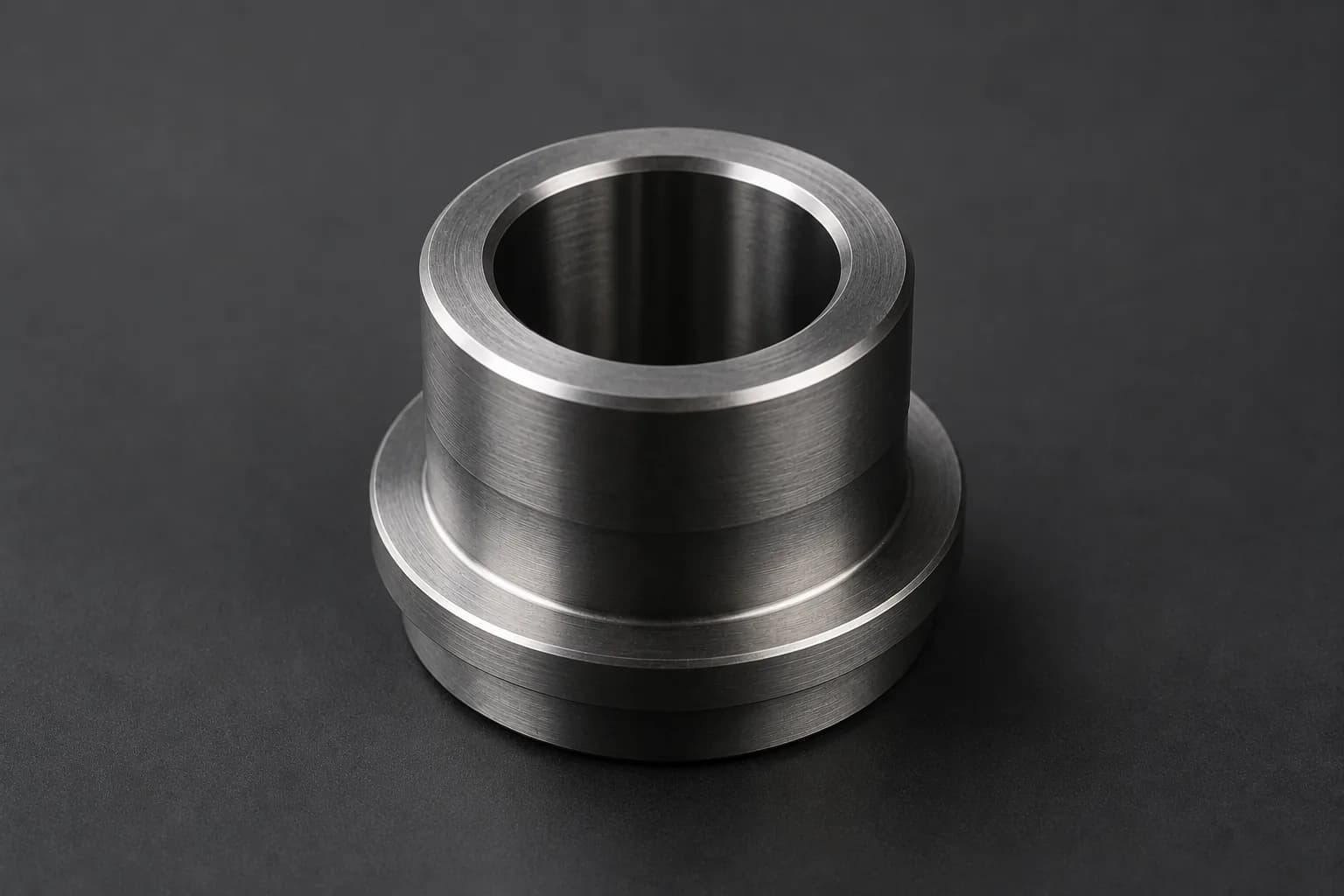
Bushings are common in industrial machinery, transmission systems, automation, and OEM equipment. A typical geometry is a hollow cylinder in 1018 steel, with outer diameters of 15–50 mm and lengths of 20–60 mm. Although they look simple, they often include functional surfaces that work directly with shafts, bearings, or pins, so internal tolerances are usually more important than outer geometry.
Most can be produced by CNC turning from round bar, which keeps preparation costs low. 1018 steel is one of the most used materials for this type of component thanks to availability, moderate cost, and predictable machining behavior.
| Material | Qty | Approx. range (USD) | Price impact |
|---|---|---|---|
| 1018 steel | 1 | $25–70 | Baseline — cost/availability balance |
| 12L14 steel | 1 | $22–65 | −5 to −15% — shorter turning cycle time |
| 1045 steel | 1 | $28–75 | +10 to +20% — higher strength, slower machining |
| 6061-T6 aluminum | 1 | $20–55 | −15 to −25% — only if the application allows |
| 304 stainless steel | 1 | $35–95 | +35 to +50% — corrosion resistance + machine time |
| 932 bronze | 1 | $40–100 | +40 to +55% — pricier stock, good sliding contact |
What would push the price up?
- Precision fits (H7, sliding, or interference) on the internal diameter
- Post-machining grinding to improve concentricity or surface finish
- Keyways, lubrication grooves, cross holes, or secondary features
- Heat treatments such as hardening, carburizing, or induction hardening
What would bring the price down?
- General tolerances with no precision-fit requirements
- Fully turned geometry with no additional milling operations
- Material from standard commercial bar stock
- Repeat quantities that allow setup and programming to be amortized
3. Aluminum bracket (6061-T6)
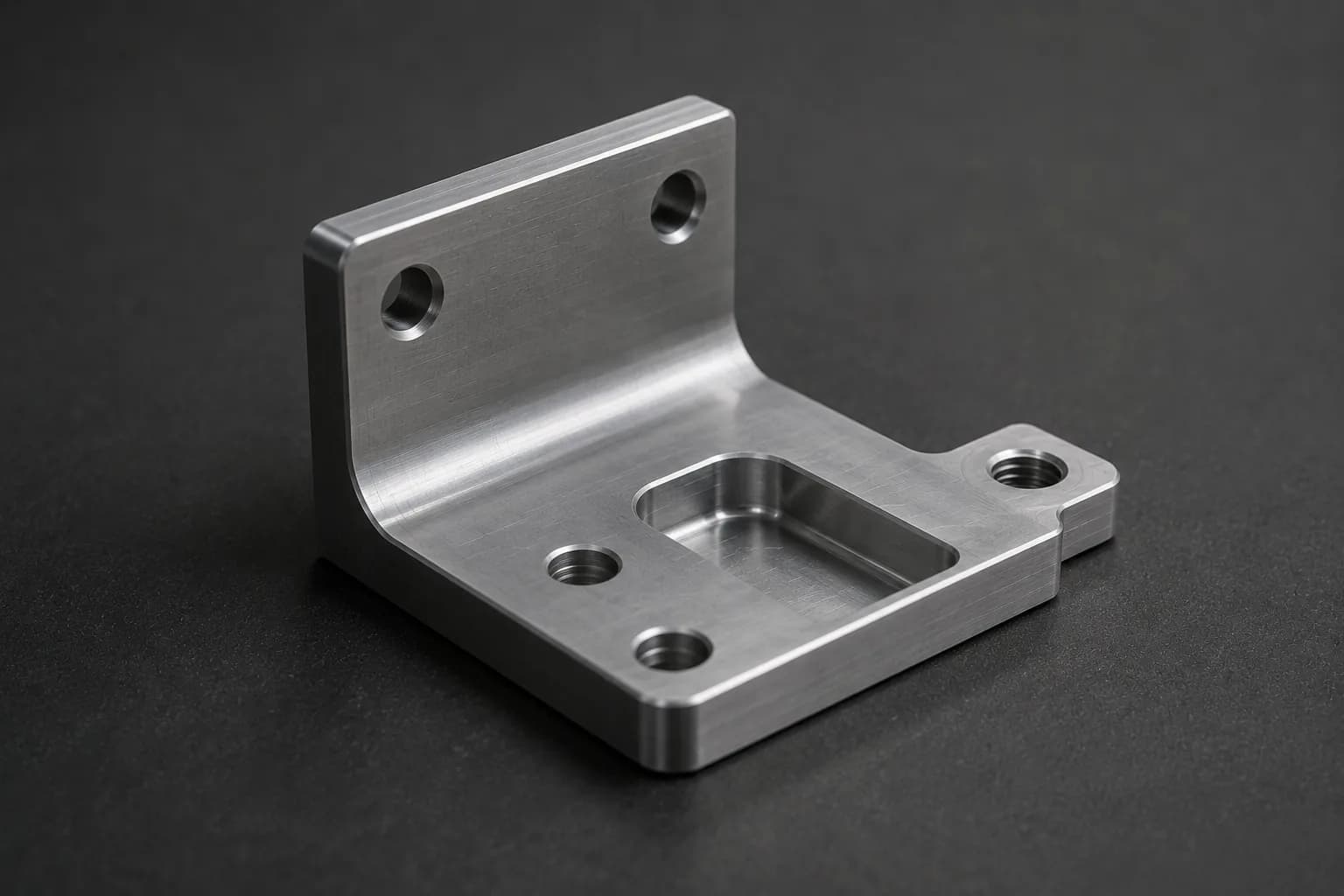
Brackets are probably one of the most quoted parts in CNC manufacturing because they appear in nearly every industry: automation, industrial machinery, robotics, medical devices, electronics, and tooling. A typical geometry is an L-shaped plate or support in 6061-T6 aluminum, with mounting holes, simple pockets, and outer dimensions between 50 and 150 mm.
Unlike purely turned parts, brackets usually require CNC milling, where cost is heavily influenced by the number of orientations needed, tool accessibility, and complexity of machined features. That is why two brackets of similar size can have significant price differences depending on how they were designed.
| Material | Qty | Approx. range (USD) | Price impact |
|---|---|---|---|
| 6061-T6 aluminum | 1 | $40–120 | Baseline — commercial plate, good balance |
| Acetal | 1 | $35–100 | −5 to −15% — fast milling, no post-treatment |
| 1018 steel | 1 | $55–150 | +30 to +40% — more cut time and tool wear |
| 304 stainless steel | 1 | $70–180 | +50 to +70% — slow cycle + premium material |
| 7075-T6 aluminum | 1 | $50–140 | +15 to +25% — higher alloy cost |
| Nylon | 1 | $38–105 | Similar — economical plastic, moisture sensitivity |
What would push the price up?
- Multiple setups or reorientations to access all faces
- Small internal radii that force reduced-diameter tooling
- Tight tolerances on hole location, perpendicularity, or flatness
- Secondary finishes such as anodizing, paint, laser marking, or additional inspection
What would bring the price down?
- Standard internal radii compatible with Ø6 mm or larger end mills
- Design accessible from one or two faces without complex reorientation
- Commercial plate stock with minimal material waste
- General tolerances without advanced position or GD&T requirements
4. Delrin plate (acetal)
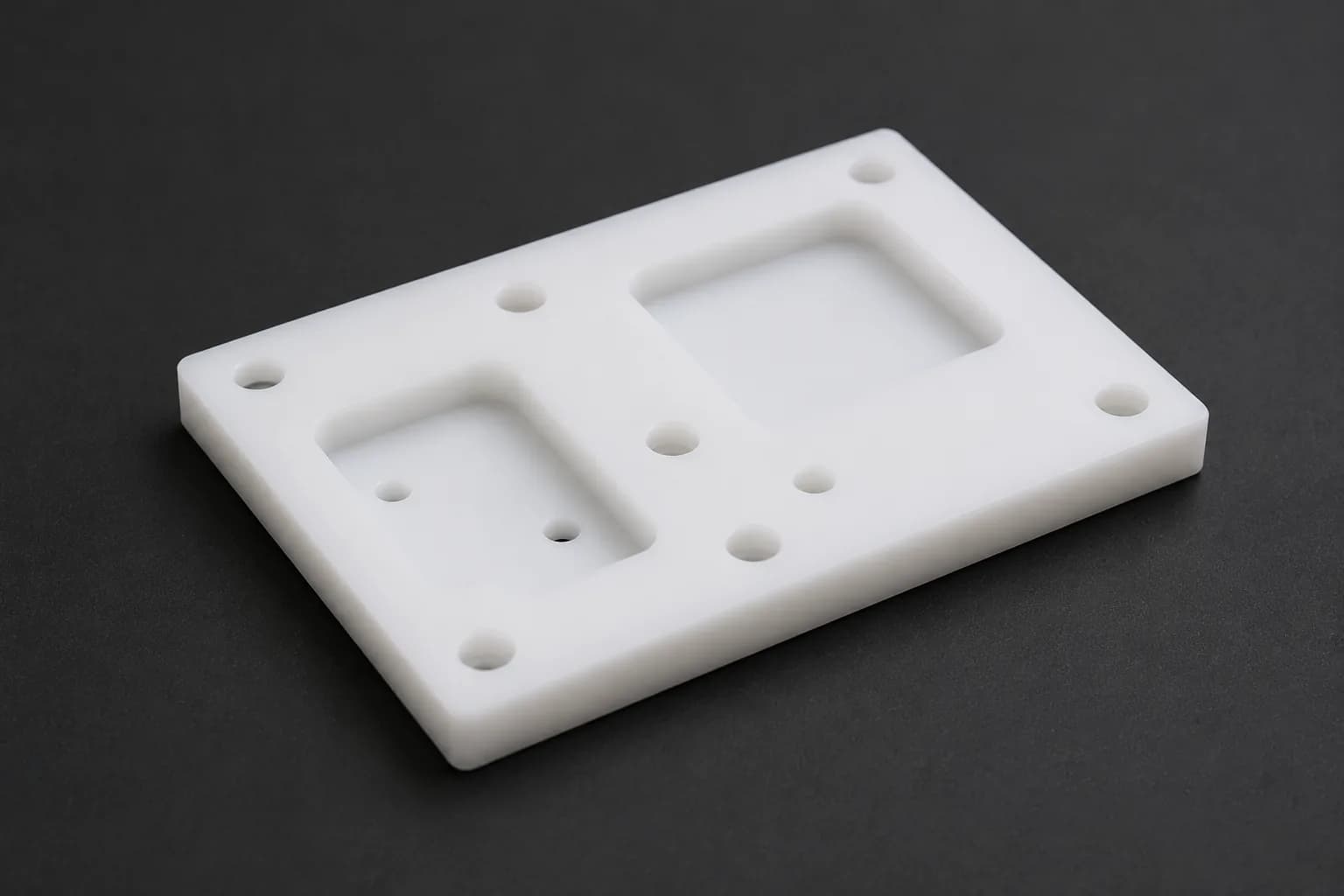
Machined plates in Acetal / Delrin are common in automation equipment, packaging machinery, medical devices, product-handling systems, and applications that require low friction without constant lubrication. A typical geometry includes 2.5D contours, pockets, mounting holes, and thicknesses between 10 and 25 mm.
Although Delrin machines considerably faster than most metals, cost does not always drop proportionally. Engineering plastics require different workholding strategies, thermal distortion control, and cutting parameters that avoid burrs or material movement during machining. In many applications, dimensional stability and wear resistance fully justify the cost over lower-performance plastics.
| Material | Qty | Approx. range (USD) | Price impact |
|---|---|---|---|
| Acetal / Delrin | 1 | $35–90 | Baseline — dimensionally stable, low friction |
| Nylon | 1 | $30–85 | −5 to −10% — similar machinability, absorbs moisture |
| 6061-T6 aluminum | 1 | $45–110 | +20 to +30% — slower than plastic, higher rigidity |
| UHMWPE | 1 | $32–88 | Similar — excellent wear, demanding workholding |
| PEEK | 1 | $80–200 | +100 to +150% — high performance, material and tooling |
| 1018 steel | 1 | $55–130 | +40 to +55% — only when metal is required |
What would push the price up?
- Deep pockets with thin walls prone to deformation
- Tight tolerances on critical assembly features
- Cosmetic finishes or visible surfaces with aesthetic requirements
- Certified material for food, medical, or regulated applications
What would bring the price down?
- 2.5D geometry accessible from a single orientation
- Uniform thickness and internal radii compatible with standard tools
- Commercial material with no special certification requirements
- Sufficient quantity to optimize plate nesting
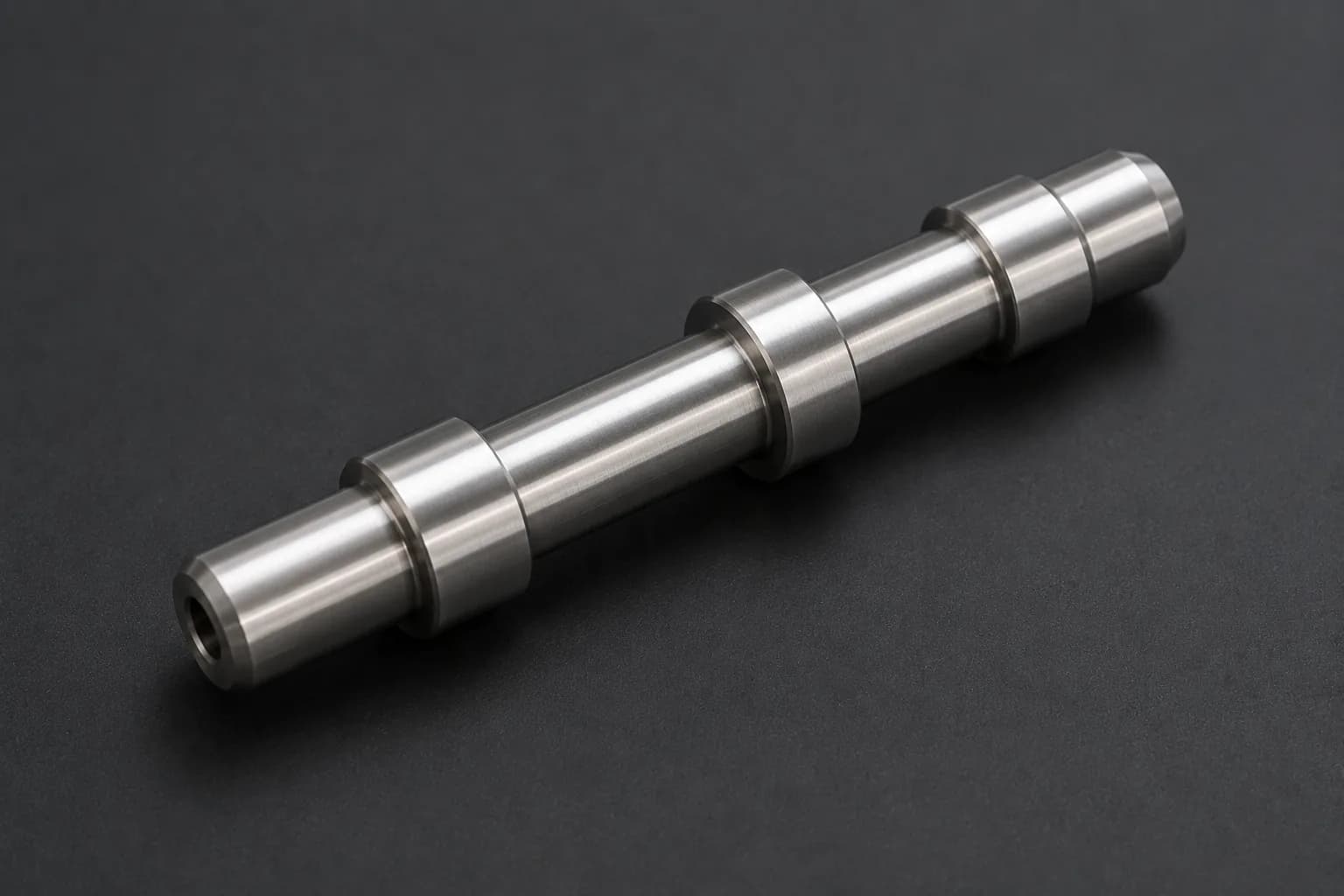
5. Stainless steel shaft (304)
Machined shafts are fundamental in rotating systems, automation, processing equipment, industrial machinery, and applications where motion or load transmission depends on precise cylindrical surfaces. A typical geometry includes multiple stepped diameters, shoulders, chamfers, grooves, and occasionally threads or retention features.
When built in 304 stainless steel, cost is usually higher than equivalent carbon steel parts. The material generates more heat during cutting, work hardens under deformation, and requires more conservative machining parameters, which increases cycle time and tool wear. For this reason, many initial estimates underestimate how much material affects the final price of a CNC shaft.
| Material | Qty | Approx. range (USD) | Price impact |
|---|---|---|---|
| 304 stainless steel | 1 | $50–150 | Baseline — corrosion + conservative cycle |
| 1018 steel | 1 | $35–100 | −25 to −35% — faster turning |
| 12L14 steel | 1 | $32–95 | −30 to −40% — ideal for non-extreme load shafts |
| 1045 steel | 1 | $40–115 | −15 to −25% — more strength than 1018 |
| 4140 steel | 1 | $55–140 | +10 to +20% — alloy steel, slower to cut |
| 6061-T6 aluminum | 1 | $30–90 | −35 to −45% — lightweight, lower load capacity |
What would push the price up?
- Precision diameters with h6, g6, or equivalent fits
- Multiple steps, small radii, and frequent tool changes
- Fine threads, retaining grooves, or critical secondary features
- Passivation, material certification, or additional inspection requirements
What would bring the price down?
- Simple geometry with few diameters and standard transitions
- General tolerances with no precision-fit requirements
- Fully turned operation with no subsequent milling or grinding
- Repeat production that amortizes setup and programming
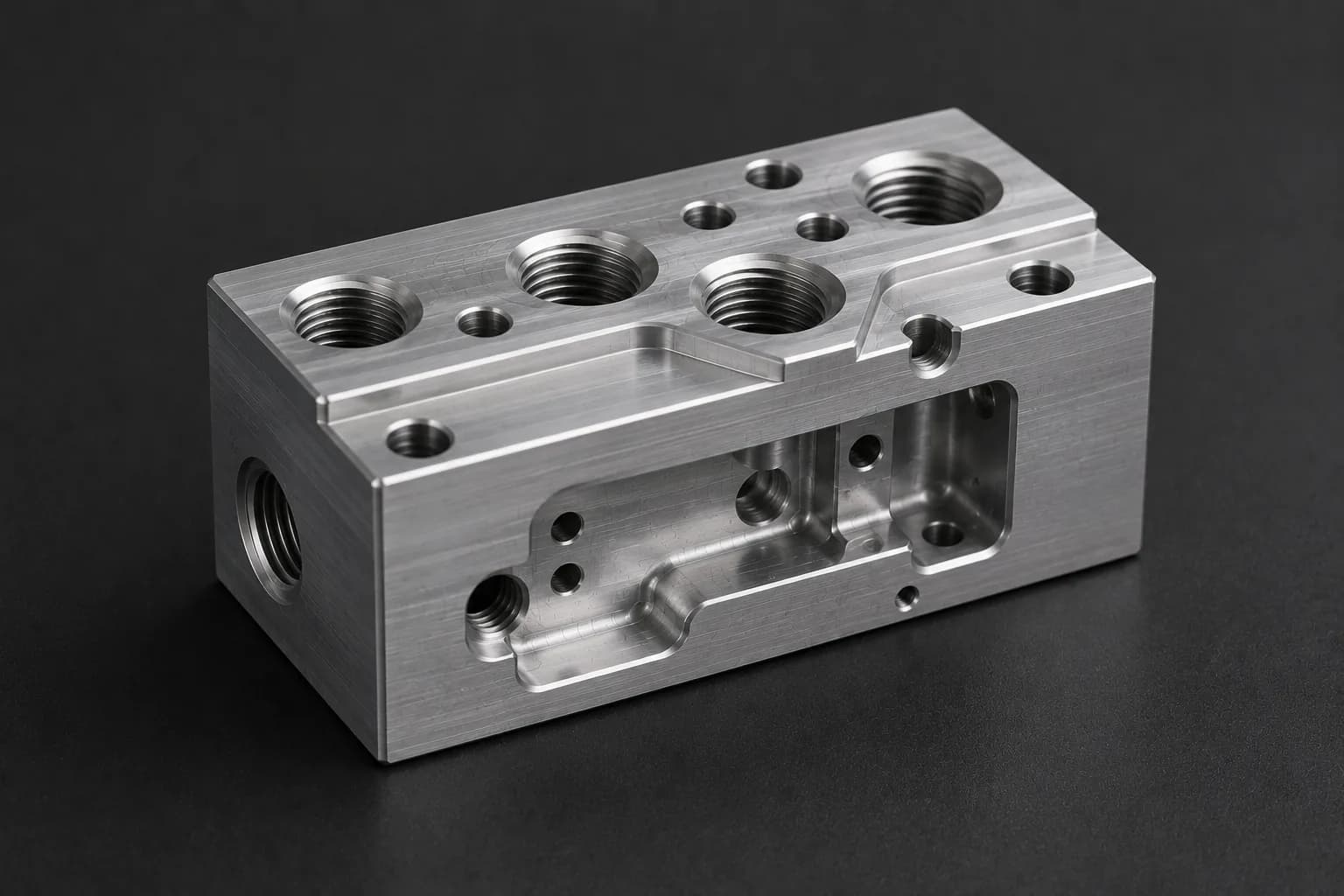
6. Aluminum manifold (6061-T6)
Manifolds are an excellent example of how geometric complexity can dominate CNC part cost. Although they often look like relatively simple blocks of 6061-T6 aluminum externally, internally they incorporate multiple interconnected channels, threaded ports, cross-drilled holes, and sealing surfaces that require careful manufacturing planning.
Unlike conventional brackets or plates, manifolds usually require several machining orientations, deep drilling operations, and tighter dimensional controls to ensure proper flow and leak-free performance. Small differences in the number of ports, connections, or functional surfaces can generate significant changes in final price.
| Material | Qty | Approx. range (USD) | Price impact |
|---|---|---|---|
| 6061-T6 aluminum | 1 | $150–400 | Baseline — lightweight, good machinability |
| Acetal | 1 | $120–320 | −15 to −25% — non-aggressive fluids, lower pressure |
| 1018 steel | 1 | $180–480 | +15 to +25% — heavier stock, longer cut time |
| 304 stainless steel | 1 | $250–650 | +50 to +70% — corrosion + multiple setups |
| 7075-T6 aluminum | 1 | $170–450 | +10 to +15% — higher mechanical strength |
| 316 stainless steel | 1 | $270–680 | +55 to +75% — demanding chemical environments |
What would push the price up?
- Multiple machining orientations to access all ports and channels
- Sealing surfaces with strict flatness or surface finish requirements
- Deep channels, complex cross-drills, or geometries difficult to inspect
- Pressure testing, specialized cleaning, or functional validation after machining
What would bring the price down?
- Design accessible from few orientations using standard tools
- Channels and cavities compatible with common commercial end mill diameters
- Standard threads without advanced position or alignment requirements
- Repeat production that allows dedicated fixtures and fewer setups
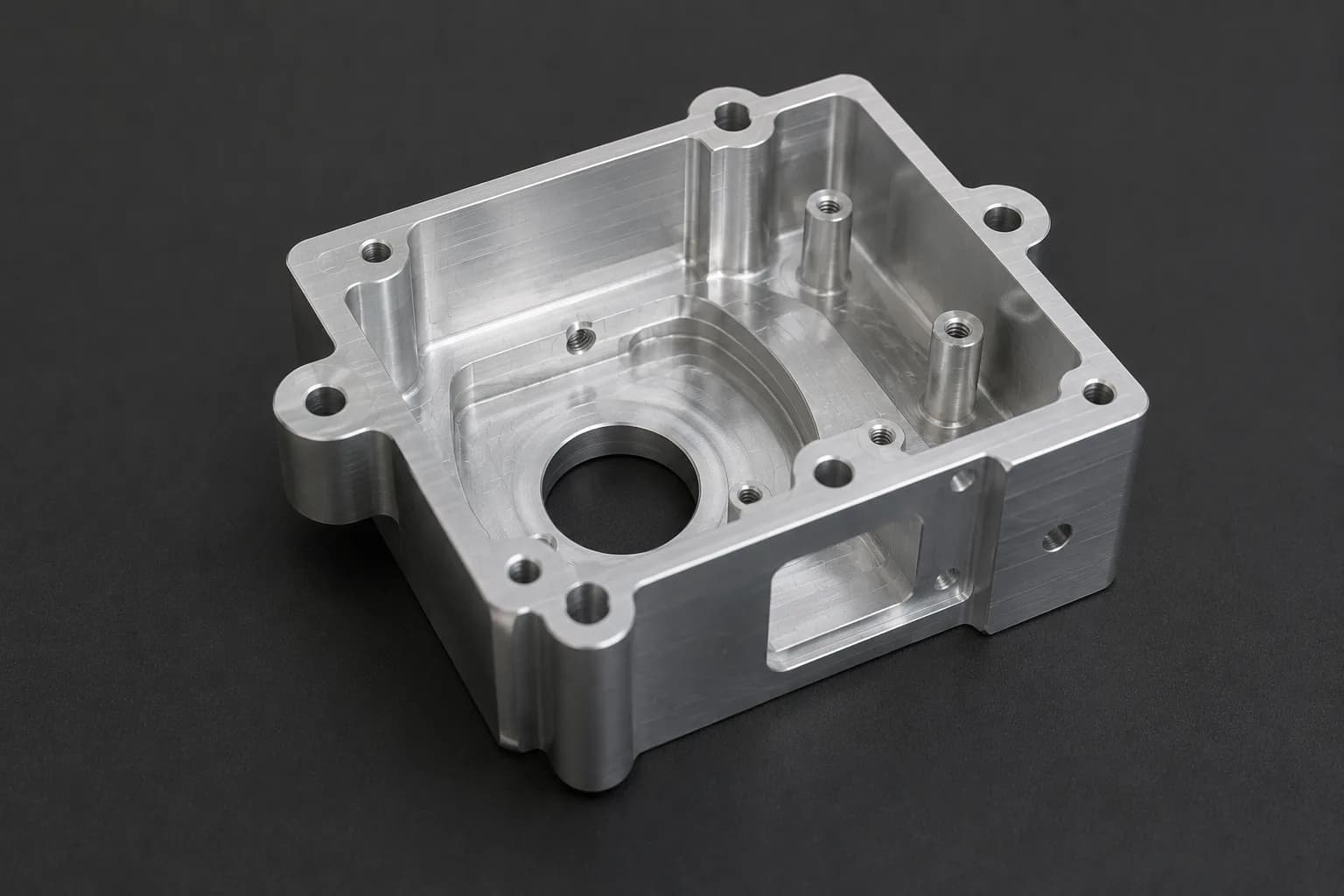
7. Aluminum housing (6061-T6)
Housings are often among the most expensive CNC parts within aluminum-fabricated components. Although they may look like relatively simple boxes or enclosures externally, they usually incorporate deep cavities, thin walls, threaded bosses, assembly surfaces, and multiple internal features that significantly increase machining time.
Commonly built in 6061-T6 aluminum, these components are typical in industrial electronics, control systems, automation, robotics, medical devices, and specialized equipment. A large part of the cost comes from how much material must be removed to create internal cavities and the difficulty of maintaining dimensional stability as walls get thinner.
| Material | Qty | Approx. range (USD) | Price impact |
|---|---|---|---|
| 6061-T6 aluminum | 1 | $300–1,000+ | Baseline — deep cavity, good balance |
| Acetal | 1 | $250–800 | −15 to −25% — non-structural electronics enclosures |
| 1018 steel | 1 | $400–1,200 | +20 to +35% — high material removal, long cycle |
| 304 stainless steel | 1 | $450–1,400+ | +40 to +60% — corrosive environments |
| 7075-T6 aluminum | 1 | $350–1,100 | +10 to +20% — higher strength, same process |
| Nylon | 1 | $260–820 | −10 to −20% — prototypes, lower rigidity |
What would push the price up?
- Deep cavities requiring long tools and multiple roughing passes
- Thin walls or tall bosses prone to vibration and deformation
- Visible cosmetic finishes such as uniform bead blast, anodizing, or engraving
- Multiple assembly surfaces with strict position and flatness requirements
- Geometries that force additional orientations or advanced machining strategies
What would bring the price down?
- Robust walls and internal radii compatible with standard tools
- Cavities accessible from few machining orientations
- Design with clear datums and general tolerances on non-critical features
- Split body and lid when cavity depth allows
- Repeat production that justifies fixtures and CAM strategy optimization
How to interpret these price ranges
The seven examples above are not a price list or standard market rate card. They are references designed to help engineering, procurement, and manufacturing teams validate whether a quote seems reasonable before issuing a purchase order or starting a redesign.
The key is understanding that CNC part price rarely depends only on material or size. The factors that usually create the largest differences are setups, tolerances, tool accessibility, volume of material removed, and inspection requirements.
For example, a simple spacer quoted well above its typical range often indicates special tolerances, incomplete documentation, or perceived supplier risk. Conversely, a complex part with a surprisingly low price may mean certain finishes, inspections, or quality requirements were not included in scope.
| If your part… | Typical range | Worth reviewing if the quote… |
|---|---|---|
| Is a spacer or simple turned component | $15–35 USD | Significantly exceeds the range without special tolerances or additional quality requirements |
| Is a bushing or shaft with functional surfaces | $25–150 USD | Does not specify fits, finishes, or inspection method |
| Is a bracket machined in one or two orientations | $40–120 USD | Seems too low to include material, setup, and complete machining |
| Is a manifold or housing with multiple cavities | $150–1,000+ USD | Does not mention orientations, internal complexity, or sealing requirements |
Factors that move price on any CNC part
Although the seven parts above have different geometries, materials, and processes, most CNC quotes ultimately depend on the same fundamental drivers. Understanding them helps explain why two suppliers can return different prices for the same part and where real cost-reduction opportunities exist without compromising function.
This article shows concrete price examples. To understand the logic behind those numbers, see what affects CNC machined part cost most, where we analyze in greater depth how each variable impacts final cost.
| Factor | Impact at qty 1 | Impact at qty 100+ |
|---|---|---|
| Setup and programming | Very high | Low |
| Cycle time | High | Very high |
| Material | Medium | Medium–high |
| Tolerances and inspection | High | Medium |
| Secondary finishes | High | Medium |
A practical rule: prototypes are often dominated by fixed costs such as programming, machine preparation, and initial inspection. As quantity increases, those costs spread across more parts and cycle time becomes the main driver of unit price.
That is why seemingly small decisions — eliminating a setup, increasing an internal radius, or relaxing an unnecessary tolerance — can generate larger savings than changing material or negotiating a few percentage points on hourly rate.
To go deeper on how material affects a quote, see CNC machining material cost. If you are evaluating proposals from multiple suppliers, the guide on how to compare CNC machining quotes can also help.
How to reduce cost without changing function
When a CNC part costs more than expected, the solution rarely comes from negotiating a few dollars per machine hour. In most cases, the largest savings come from design decisions that reduce cycle time, simplify manufacturing, or eliminate operations that add no functional value.
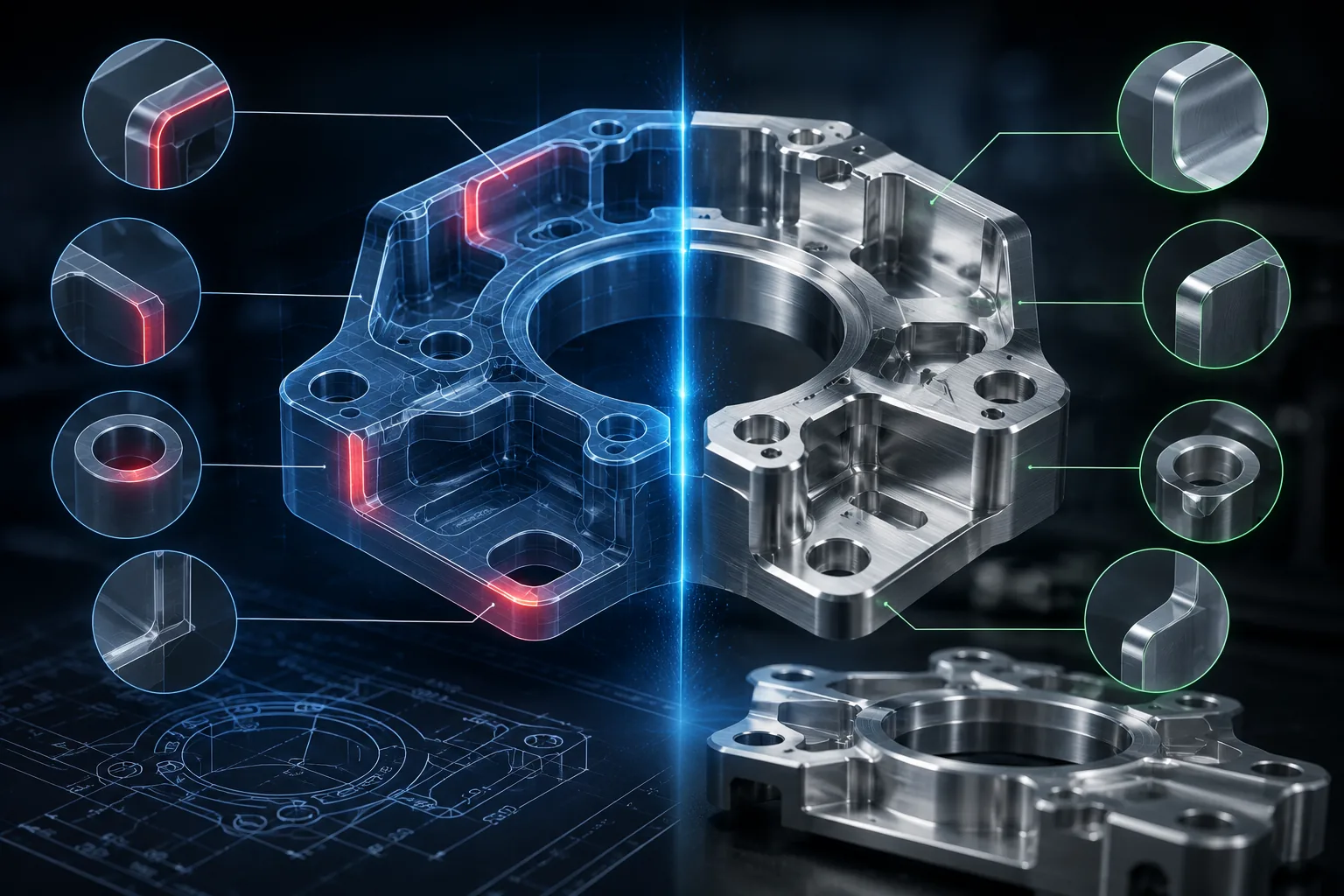
This approach is part of DFM (Design for Manufacturability): design with how the part will be built in mind before releasing it to production. Small changes in geometry, tolerances, or material selection can significantly reduce cost without affecting final component performance.
- Reduce setups — each additional orientation adds preparation, alignment, and inspection time.
- Use standard internal radii — larger tools usually cut faster, are more rigid, and generate lower cost.
- Apply tolerances only where they add value — functional surfaces need precision; everything else can stay at general tolerances.
- Select the right material for the application — over-specified materials often increase cost without improving real performance.
- Send complete documentation and clean CAD models — reduces uncertainty, avoids conservative assumptions, and speeds quoting.
Conclusion: real examples, not vague answers
Most people searching for CNC part cost do not expect an exact formula. What they really want is a reasonable reference to know whether a quote makes sense before approving a purchase, requesting a second bid, or investing time in a redesign.
The seven examples in this guide span from simple components worth a few tens of dollars to complex parts that can easily exceed one thousand dollars in prototype. More importantly, they show which factors usually push price up and which help keep it under control.
If your part does not fit exactly into any example, use the ranges as a starting point, not a final price. In CNC manufacturing, a quote based on real geometry will always be more accurate than any generic table.
The best CNC cost references do not replace a quote. They help you identify when a quote seems reasonable and when it is worth reviewing geometry, tolerances, or scope before approving it.
Frequently asked questions about CNC part pricing
Direct answers for engineers, buyers, and manufacturing teams trying to understand what drives CNC part cost.
- Are these official PREMSA prices?
- No. The ranges shown are market references for prototypes and small batches manufactured in North America. Actual price depends on geometry, material, tolerances, finishes, and project-specific quantity.
- Why is there so much price spread within the same category?
- Because two seemingly similar parts can require completely different processes. Number of setups, geometric complexity, tolerances, and finishes often create much larger cost differences than physical part size.
- How much does it cost to CNC machine an aluminum part?
- Geometry is the main driver. A simple component in 6061-T6 aluminum may cost a few tens of dollars in prototype, while a complex housing in the same material can exceed several hundred dollars.
- How much does an aluminum CNC bracket cost?
- A typical bracket in 6061 aluminum with one or two machining orientations usually falls between $40 and $120 USD for qty 1 in North America, depending on size, tolerances, and finishes.
- How much does a CNC manifold cost?
- An aluminum manifold with threaded ports, cross-drilled holes, and sealing surfaces usually falls between $150 and $400 USD in prototype. More complex designs or special requirements can far exceed that range.
- Does quantity significantly affect unit price?
- Yes. In prototypes, much of the cost comes from programming, setup, and initial inspection. As production volume increases, those costs spread across more parts and unit price drops considerably.
- Why does stainless steel usually cost more than carbon steel?
- Because the material is more expensive and generally requires lower cutting speeds, which increases machine time and tool wear. That usually shows up directly in the quote.
- Do the ranges include anodizing, paint, or heat treatment?
- Not necessarily. The examples in this guide assume standard machining and finishing. Secondary processes such as anodizing, passivation, paint, heat treatment, or grinding are normally quoted separately.
- How can I tell if a CNC quote is reasonable?
- Compare geometry, material, quantity, and scope with similar examples. If the price seems too high or too low, ask for details on setups, estimated cycle times, finishes, and inspection included in the proposal.
- Can PREMSA review my design before manufacturing?
- Yes. When you request a quote we can review manufacturability, identify DFM opportunities, and provide feedback that helps reduce risk, cost, or lead time before releasing the part to production.
No. The ranges shown are market references for prototypes and small batches manufactured in North America. Actual price depends on geometry, material, tolerances, finishes, and project-specific quantity.
Because two seemingly similar parts can require completely different processes. Number of setups, geometric complexity, tolerances, and finishes often create much larger cost differences than physical part size.
Geometry is the main driver. A simple component in 6061-T6 aluminum may cost a few tens of dollars in prototype, while a complex housing in the same material can exceed several hundred dollars.
A typical bracket in 6061 aluminum with one or two machining orientations usually falls between $40 and $120 USD for qty 1 in North America, depending on size, tolerances, and finishes.
An aluminum manifold with threaded ports, cross-drilled holes, and sealing surfaces usually falls between $150 and $400 USD in prototype. More complex designs or special requirements can far exceed that range.
Yes. In prototypes, much of the cost comes from programming, setup, and initial inspection. As production volume increases, those costs spread across more parts and unit price drops considerably.
Because the material is more expensive and generally requires lower cutting speeds, which increases machine time and tool wear. That usually shows up directly in the quote.
Not necessarily. The examples in this guide assume standard machining and finishing. Secondary processes such as anodizing, passivation, paint, heat treatment, or grinding are normally quoted separately.
Compare geometry, material, quantity, and scope with similar examples. If the price seems too high or too low, ask for details on setups, estimated cycle times, finishes, and inspection included in the proposal.
Yes. When you request a quote we can review manufacturability, identify DFM opportunities, and provide feedback that helps reduce risk, cost, or lead time before releasing the part to production.
Related resources
Articles from the CNC cost cluster and guides to go deeper after reviewing these examples:
- Request a CNC quote — upload STEP, material, and quantity for pricing based on real geometry.
- What affects CNC machined part cost most — machine time, setup, tolerances, and material.
- How to reduce CNC part cost with design changes — high-impact DFM improvements.
- CNC machining material cost — 6061, 1018, 304, acetal, and more.
- DFM feedback before manufacturing — technical validation during quoting.
- Fast CNC machining quote — what to send to quote without friction.
- CNC machining design guidelines — DFM principles for milling and turning.
- CNC machining cost — overview of the CNC pricing cluster.

Written by
Adrian Cavazos and the PREMSA Engineering Team
Adrian Cavazos, founder of PREMSA Industries, leads a manufacturing engineering team specializing in CNC machining, metal fabrication, and production-ready solutions. The team works closely with customers to optimize designs, improve manufacturability (DFM), and ensure reliable, scalable production from prototypes through volume manufacturing.