
In product development, the time between a CAD model and a physical part can determine whether a prototype makes a competition deadline, whether a startup validates its idea before competitors, or whether a production line avoids days—or weeks—of delay.
Fast CNC machining is not only about making parts faster. It is about reducing friction: less time waiting on quotes, fewer bottlenecks in programming and setups, less rework, and better communication between design and manufacturing.
Today, digital manufacturing can take you from a STEP file to functional parts in a matter of days when design, material, and process are optimized correctly. In this guide we explain what lead time means in CNC machining, why some shops take weeks, what factors speed up or delay a project, and how to design parts that can be made faster without compromising quality.
From screen to your hands in record time
Why time matters in prototypes and production
Every day lost waiting on a machined part can delay assemblies, functional testing, customer validations, or full product launches. In prototyping, lead time determines how many iterations you can test before freezing the design. In pilot production, it can define whether you hit a delivery date, an audit, or a commercial window.
Teams that shorten manufacturing times often build better products because they learn faster with real parts—not only with simulations, renders, or digital models.
How rapid manufacturing changed the industry
For years, making custom parts meant slow processes: visiting shops in person, waiting on manual quotes, depending on high minimum order quantities, and having little visibility into the real status of a project.
Digital manufacturing changed that model. Today you can quote CNC parts from anywhere, upload CAD files online, and produce prototypes or small lots without needing mass production.
That opened industrial manufacturing to students, makers, startups, engineering departments, and companies that need to validate geometry, assembly, and functionality quickly before scaling production.
CNC manufacturing for students, makers, startups, and enterprises
- Students and makers: functional prototypes, fixtures, and custom parts without industrial minimum buy quantities.
- Startups and product development: fast iterations before tooling or mass production.
- Companies and manufacturing: urgent parts, bridge production, and low-volume components.
- Projects on a deadline: less time between quote, validation, and parts ready to use.
What is lead time in CNC machining?
Definition of lead time in manufacturing
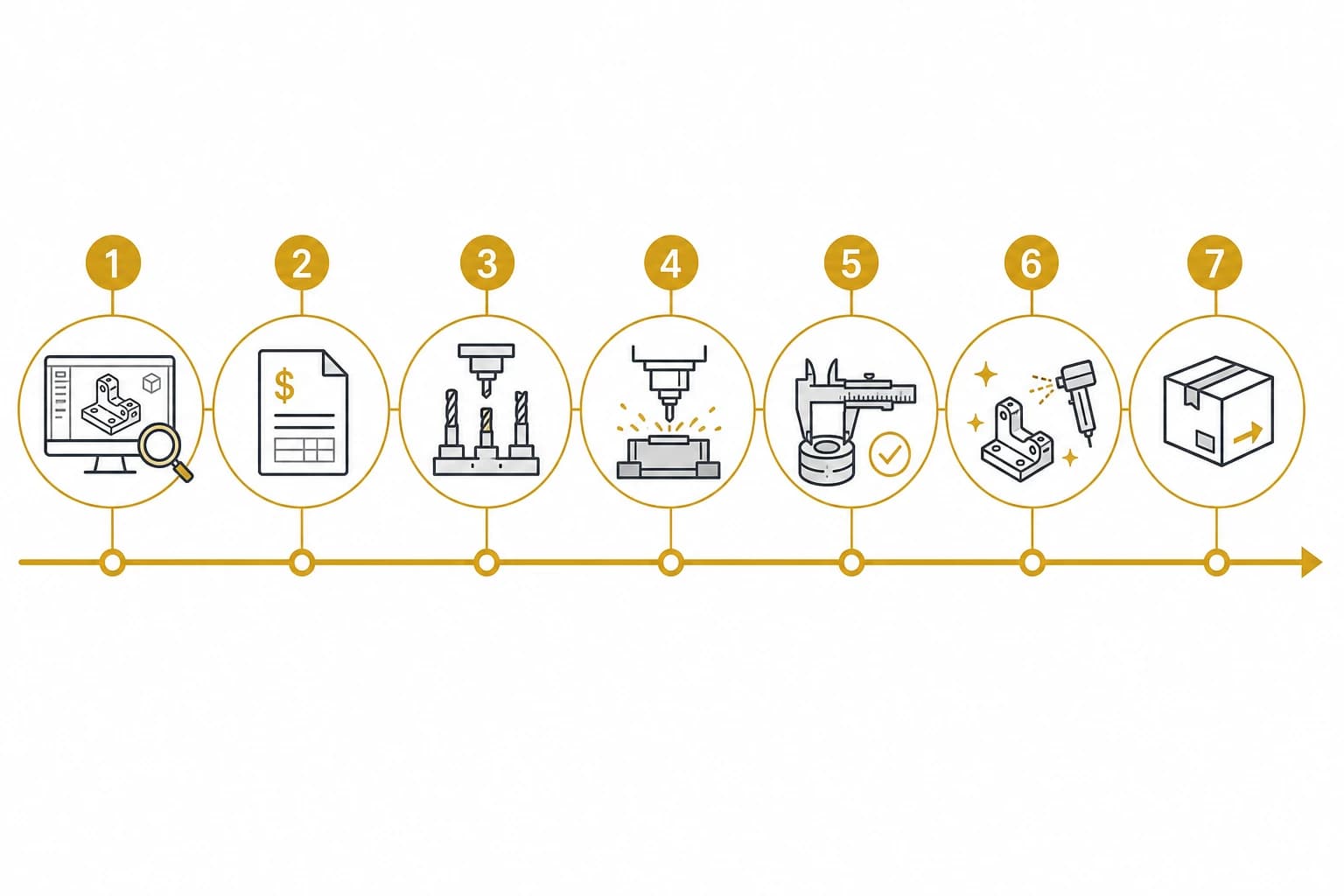
Lead time (manufacturing delivery time) is the total elapsed time between project approval and finished parts leaving production.
In CNC machining, lead time includes technical review, CAM programming, setups, machining, inspection, and finishes. Shipping also affects when you receive parts, but it is usually considered separate from manufacturing lead time.
What is included in CNC part delivery time
| Stage | What happens | Impact on time |
|---|---|---|
| CAD review | DFM, material, tolerances, processes | Delays if data is missing or geometry is difficult |
| Quoting and planning | Pricing, capacity, operation sequence | Manual = slower; digital = faster |
| Setup | Workholding, tools, CAM program | Critical on prototypes (one part) |
| Machining | Roughing, finishing | Depends on material and complexity |
| Inspection | CTQs, reports, adjustments | More time with tight tolerances |
| Finishes | Anodizing, paint, etc. | Can add days outside the shop |
| Final release | Internal packaging, validation, and production release | Last stage before shipping or pickup |
Why do some CNC shops take so long?
When a CNC project is delayed, the problem is often not machine speed. The real bottleneck is usually before the first cut: slow quotes, manual processes, lack of capacity, or communication issues.
On urgent projects, even small administrative delays can turn into full days lost before production starts.
This is especially common on prototypes, small lots, or low-volume projects, where some shops prioritize large orders and leave urgent parts waiting in queue.
- Slow, manual quoting: email chains, lengthy technical reviews, and low automation before approving production.
- Priority on mass production: many shops put prototypes or small lots at the back of the line.
- Material not immediately available: certain alloys, thicknesses, or specialty plastics can delay the entire project.
- Capacity bottlenecks: relying on a single machine, operator, or shift limits response times.
- Outside processes: anodizing, heat treatment, grinding, or EDM can add extra days outside the shop.
- Rework and manufacturing errors: mismatches between drawing, STEP, or ambiguous tolerances drive adjustments and repeat parts.
- Lack of project visibility: many customers do not know whether their part is in review, setup, production, or inspection.
That is why modern digital manufacturing workflows aim to reduce friction from the start: early DFM review, better technical communication, faster planning, and more transparent processes.
When design, engineering, and manufacturing are better connected, delivery times can drop significantly—even on complex parts or urgent projects.
How CNC part manufacturing time is calculated
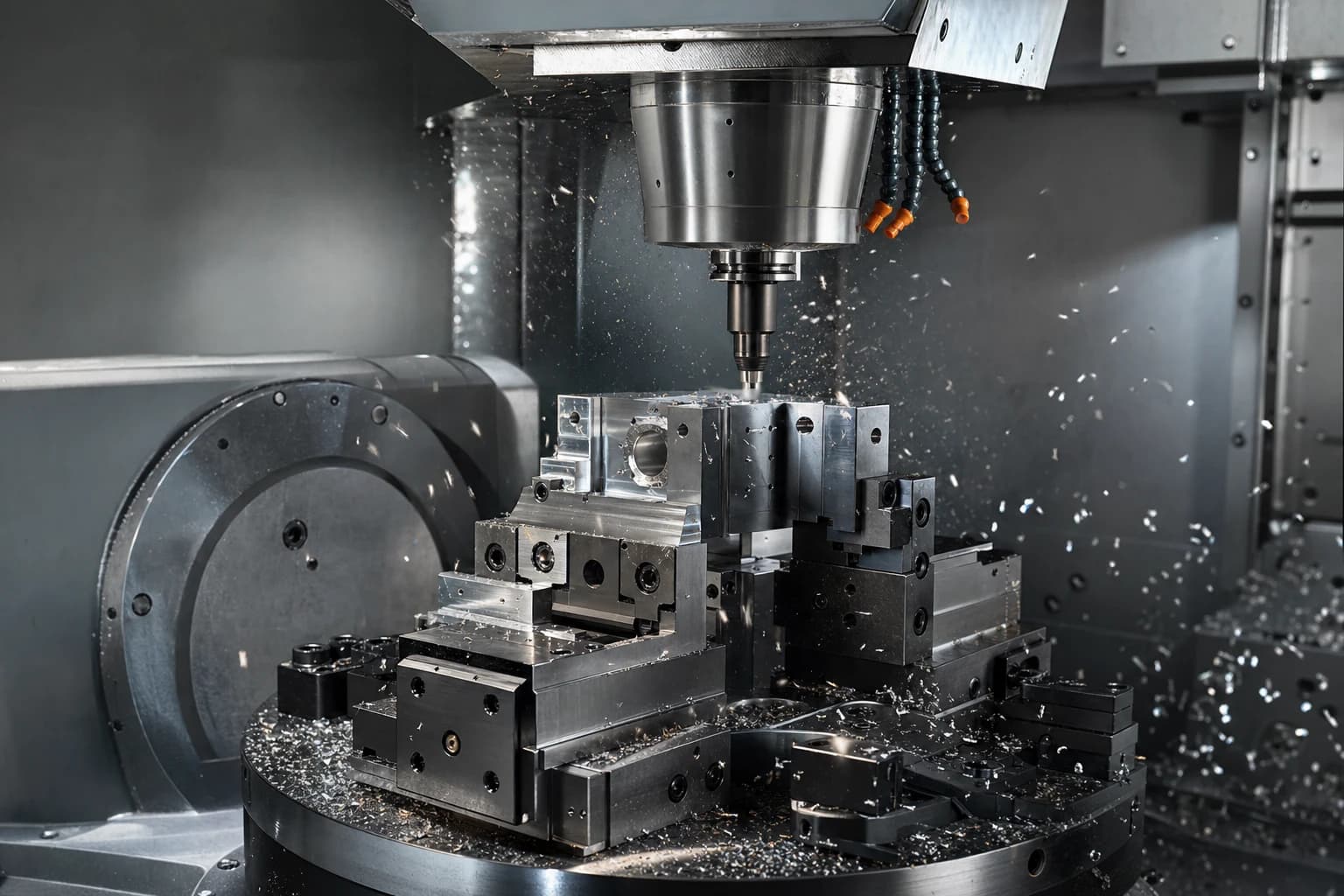
When a part enters production, total manufacturing time depends on more than how long the machine spends cutting material. Before the first cut there are engineering, preparation, and validation stages that directly impact lead time.
On prototype and low-volume manufacturing projects, the largest share of time is often not machining itself, but everything required to prepare the project correctly from the start.
Design review and manufacturability
Before generating CAM programs or loading material on a machine, engineering evaluates whether the part can actually be made efficiently with available processes.
Factors such as tool access, cavity depth, internal radii, tolerances, material, machining orientation, and overall manufacturing strategy are reviewed here.
Good DFM (Design for Manufacturability) analysis can eliminate full days of rework, technical clarifications, and programming changes before production starts.
Setup: the slowest part of the process
One of the biggest myths about CNC machining is that most of the time happens while the machine is cutting.
In reality—especially on prototypes or one-off parts—a large share of time goes into preparation: mounting vises, loading tools, adjusting offsets, establishing zeros, validating CAM programs, and making sure everything is ready before the first cycle.
That is why making a single part can require almost the same setup as making ten or twenty. On repeat production, that time is spread across more parts and the process becomes far more efficient.
Actual machining time
Actual cutting time depends on many variables: volume of material to remove, geometric complexity, tools used, CAM strategies, and material machinability.
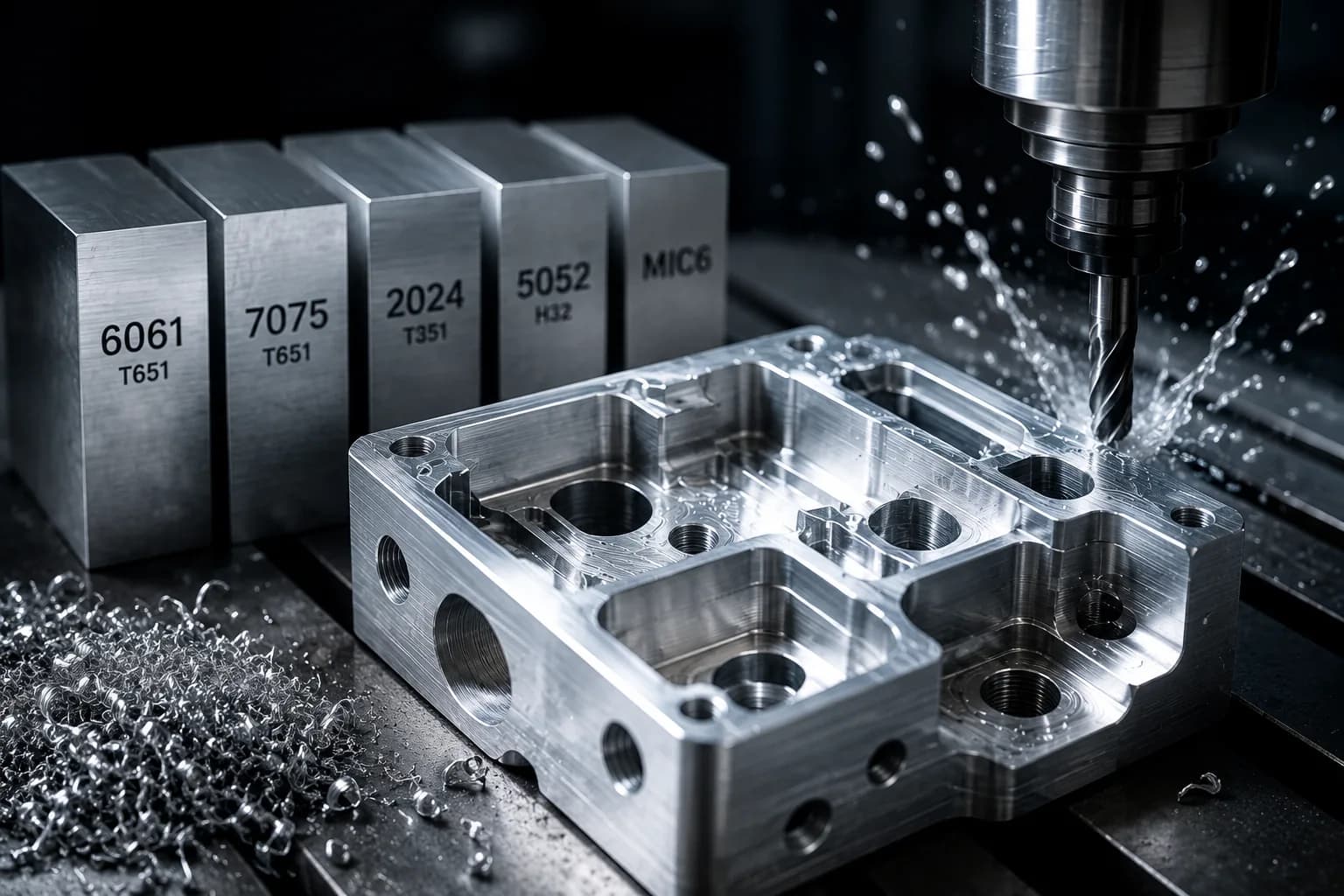
Materials such as Aluminum 6061-T6 or some engineering plastics are usually machined much faster than stainless steel or titanium because of higher cutting speeds and lower tool wear.
Factors such as deep cavities, thin walls, critical tolerances, or fine surface finishes also matter—they typically require more passes, special tools, and more conservative cutting strategies.
Inspection and final finishes
After machining, many parts need dimensional inspection, CTQ validation, or secondary processes before release from production.
Although these stages add time to the project, they also reduce risk during assembly, validation, or final production.
That is why it helps to define at quoting which features truly need formal inspection and which finishes are critical for the application.
Production release
Once manufacturing operations are complete, parts go through final validation, cleaning, protection, and internal preparation before leaving the facility.
On urgent projects, good planning from the quote onward helps reduce dead time between engineering, production, and final part release.
Factors that affect CNC machining delivery times
The material you select has a direct impact on manufacturing speed, availability, tool wear, and total production time.
Some materials are extremely common and easy to machine, while others require special tools, lower cutting speeds, or even wait times for availability.
| Material | Machinability | Typical impact on lead time |
|---|---|---|
| Aluminum 6061-T6 | High | One of the fastest, most common materials for prototypes and production |
| Steel 1018 | High | Widely used for mechanical and structural parts; usually available in stock |
| Stainless Steel 304 | Medium | Slower to machine with higher tool wear |
| Stainless Steel 316 | Medium-Low | Common in corrosive and industrial applications; requires longer machining times |
| Aluminum 7075-T6 | High | Widely used in fixtures, aerospace, and high-performance parts |
| Acetal / Delrin | High | Fast-machining engineering plastic common in functional prototypes |
| Nylon | Medium-High | Widely used in industrial components; some geometries can deform easily |
| Titanium Grade 5 | Low | High-performance material with considerably longer machining times |
Part geometric complexity
Part geometry has a huge impact on programming time, setup, and machining. The more complex the geometry, the more tools, CAM strategies, and machine configurations are usually required.
In many cases, small design changes can remove full hours of programming and manufacturing.
- Deep cavities: require long tools, more conservative strategies, and longer cut times.
- Thin walls: increase vibration, deformation, and scrap risk during machining.
- Undercuts and difficult geometry: usually need special tools, multiple setups, or secondary processes.
- Multiple machining setups: each re-clamping adds setup time and increases dimensional variation risk.
- Very small features: tiny holes, tight internal radii, or fine details often reduce cutting speeds.
- Multi-sided parts: components machined from several sides usually need more preparation time.
Tolerances and finishes
Extremely tight tolerances and secondary finishes can significantly increase manufacturing lead time.
The more precision a part requires, the slower the process tends to be: more conservative tools, extra inspections, and tighter dimensional control.
The same applies to external finishes such as anodizing, powder coating, bead blasting, or surface treatments—they usually add off-machine steps before production release.
When possible, define CTQs (Critical to Quality) only on critical dimensions and leave the rest under general tolerances such as ISO 2768.
You can also review our industrial finishes compatible with different materials and processes.
Part quantity and production volume
The ideal manufacturing strategy changes completely depending on whether you need a single part, a functional prototype, or repeat production.
On one-off or low-volume manufacturing projects, response speed and flexibility are usually prioritized. On repeat production, the focus shifts to cycle optimization, lower time per part, and process stability.
That is why it is important to communicate at quoting whether the project is a prototype, a pilot run, or ongoing production. That allows setups, tools, and overall manufacturing strategy to be optimized.
Design tips to make parts faster and reduce cost
Often, small design changes can significantly reduce manufacturing time, machining complexity, and total project cost.
Designing for manufacturability from the start helps reduce setups, simplify CAM programming, and avoid unnecessary processes.
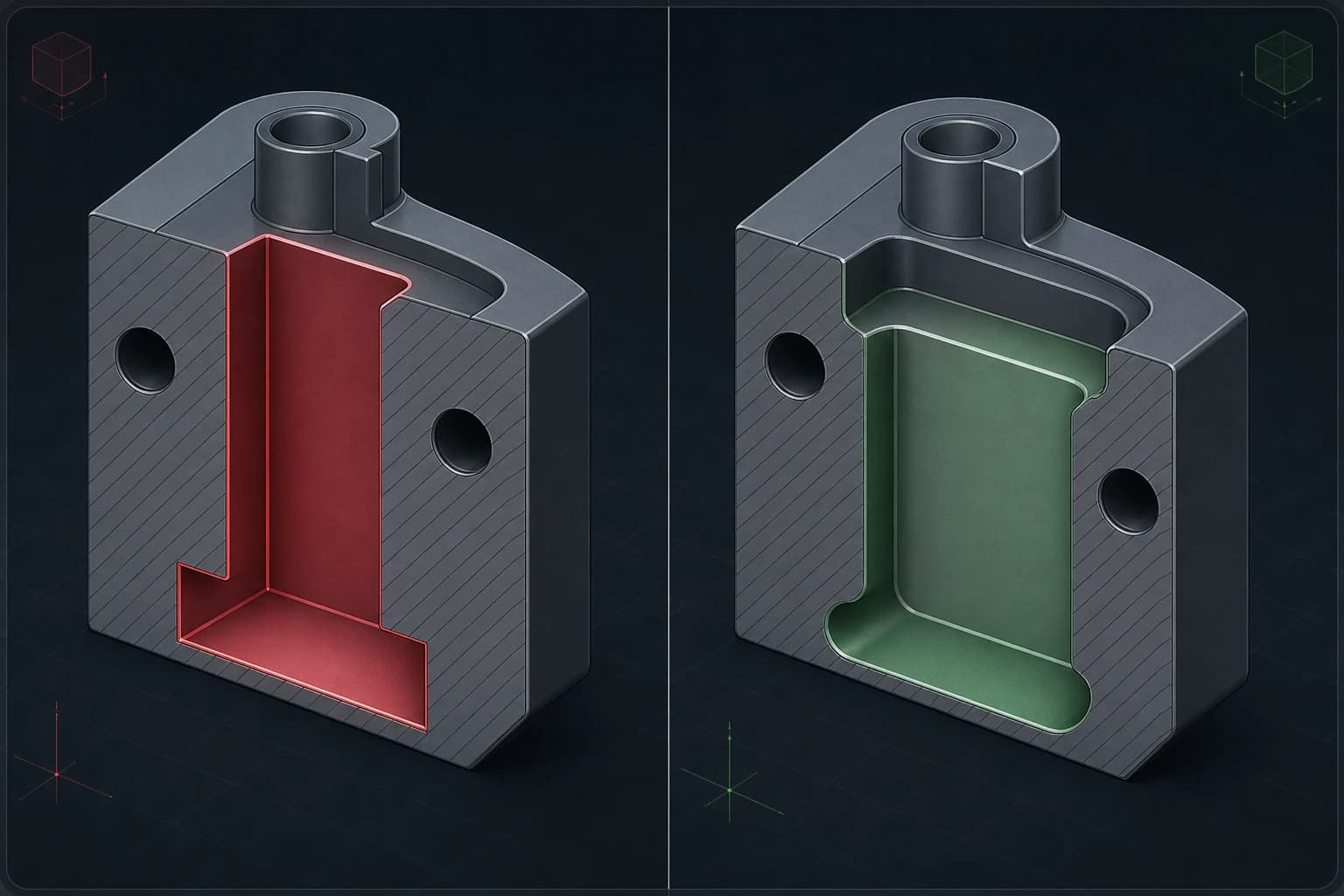
- Avoid perfectly square internal corners: cutting tools are round; appropriate internal radii speed up machining.
- Use reasonable wall thickness: extremely thin walls increase vibration, deformation, and scrap risk.
- Simplify unnecessary geometry: fewer complex details usually mean less CAM time and faster cycles.
- Design internal radii compatible with standard tools: radii that are too small require special tools and slower speeds.
- Apply tight tolerances only where they matter: many dimensions can stay under general standards such as ISO 2768.
- Select common, easy-to-source materials: widely available materials usually reduce wait times and cost.
- Reduce secondary operations when possible: fewer finishes or extra processes usually mean faster delivery.
- Apply DFM principles from CAD: reviewing manufacturability before quoting helps avoid costly changes during production.
How finishes affect delivery times
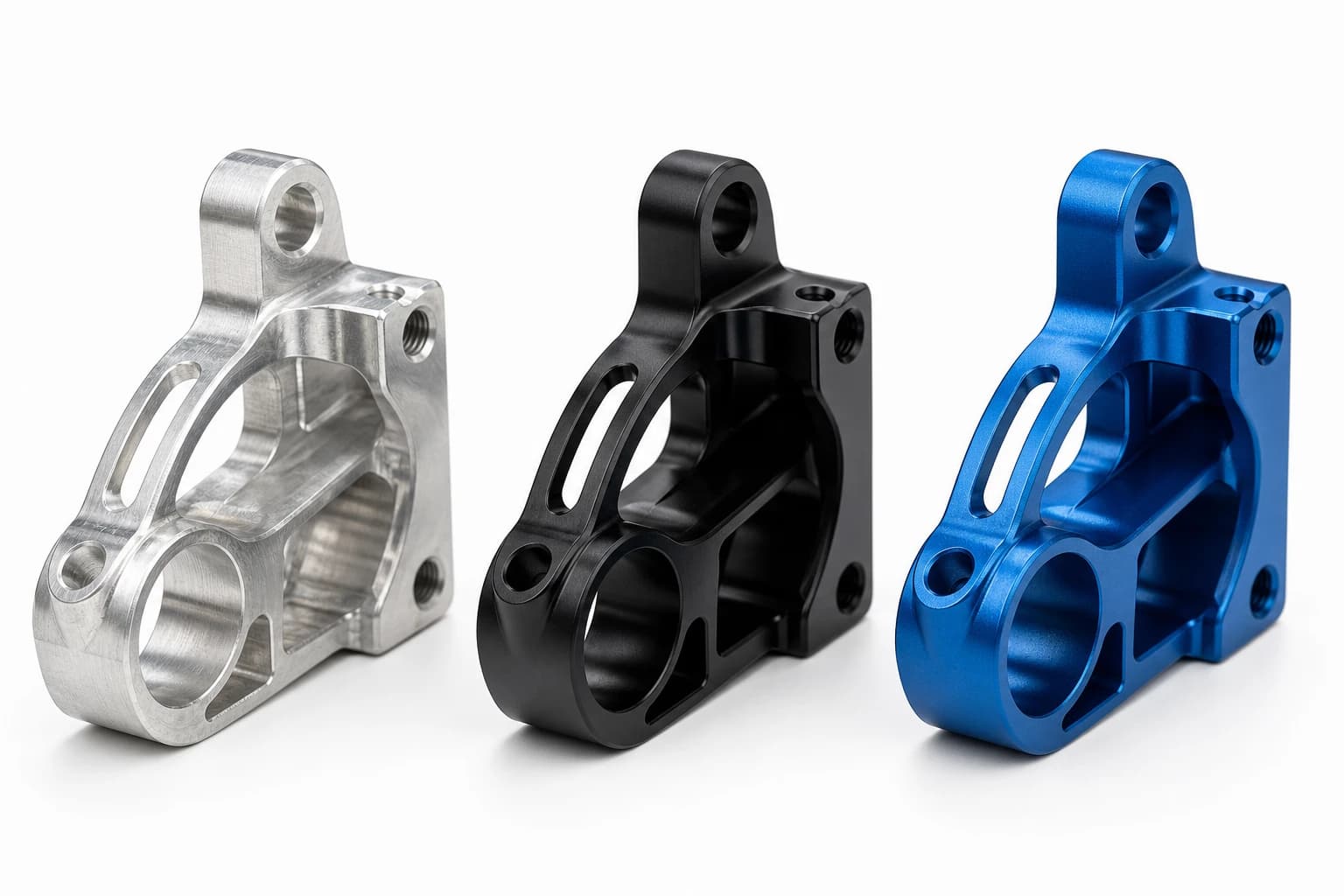
On many CNC projects, the part may be fully machined in one or two days… but secondary finishes are what really extend lead time.
Processes such as anodizing, painting, or specialty coatings usually require extra preparation, visual validation, and—in many cases—outside vendors beyond the machining shop.
What as-machined finish means
The as-machined finish is usually the fastest option for making CNC parts.
The part is delivered directly after machining and inspection, keeping the natural tool marks generated during the process.
This finish is often ideal for functional prototypes, fixtures, assembly validation, internal parts, or projects where speed and function matter more than cosmetic appearance.
Why secondary finishes add time
Many finishes require additional steps after machining: cleaning, surface preparation, masking, curing, visual inspection, or even shipment to specialized outside vendors.
That is why—even when machining time is short—total manufacturing lead time can increase significantly depending on the finish selected.
| Finish | Typical impact on lead time | Common applications |
|---|---|---|
| Anodizing | Can add several days for preparation, processing, and production queue | Corrosion protection and cosmetic finish on aluminum |
| Powder coating | Requires surface prep, application, and oven curing | Visible, industrial, or moisture-exposed parts |
| Bead blasting / sand blast | Relatively fast process, but adds extra preparation | Uniform finish and reduced tool marks |
| Polishing | May require manual work or multiple finishing stages | Cosmetic surfaces or visible components |
| Passivation | Usually fast, but depends on outside capacity | Stainless steel with improved corrosion resistance |
| Specialty coatings | Highly variable time depending on specification and vendor | Chemical, medical, or critical industrial applications |
When it makes sense to keep a part in standard finish
If the main goal is to validate geometry, assembly, or functionality as quickly as possible, it usually makes sense to keep the part in as-machined finish during early project stages.
Many teams add aesthetic or surface finishes only after validating the final design and stabilizing production.
When it makes sense to keep a part in standard finish
In many product development stages, speed and functionality matter more than final cosmetic appearance.
If the part will be used for dimensional validation, functional testing, internal assemblies, or fast design iterations, it usually makes sense to keep a standard as-machined finish to reduce manufacturing time and avoid extra processes.
Many teams defer anodizing, painting, or cosmetic finishes to later stages—once the design is validated and ready for final production or customer presentation.
Fast CNC machining vs traditional shops
For years, making custom parts meant depending on slow, opaque processes: phone calls, endless emails, manual quotes, and hard-to-predict response times.
Digital manufacturing changed that model. Today, modern CNC machining platforms can accelerate quoting, manufacturing, and technical validation through faster, connected workflows aimed at prototypes and low-volume production.
| Aspect | Traditional shop | Digital CNC manufacturing |
|---|---|---|
| Quoting | Emails, calls, and manual reviews over days | Faster processes with CAD files and centralized technical review |
| Communication | Information scattered across calls, PDFs, and email chains | Greater project visibility and a more organized technical flow |
| Minimum quantity (MOQ) | Many shops prioritize high volumes | Ability to manufacture from prototypes through low-volume manufacturing |
| Prototypes and development | Often fall behind large orders | Processes optimized for fast iterations and validation |
| Response speed | Depends on manual capacity and shop load | More flexible planning and faster response times |
| Project visibility | Limited tracking once the order is approved | Clearer view of engineering, production, and inspection stages |
| Scalability | Hard to move from prototype to repeat production | Workflows better prepared to evolve from validation to production |
The difference is not only faster machines. The real shift happens when engineering, manufacturing, and communication work in a much more connected flow from the start of the project.
On-demand manufacturing and fast turnaround
On-demand manufacturing changed how products, prototypes, and custom parts are developed.
Before, accessing industrial capacity usually meant high minimum buys, slow quoting processes, and shops focused only on mass production. Today, you can manufacture from a single part using much faster, more flexible digital workflows.
This model lets you go from a CAD file to real parts without committing upfront to large production volumes.
For students, makers, startups, engineering departments, and companies, that means validating designs, testing assemblies, and accelerating product development with much faster response times.
On-demand manufacturing also makes industrial processes such as CNC milling, CNC turning, sheet metal, and low-volume manufacturing accessible without depending on traditional mass-production supply chains.
In other words: making real parts is no longer exclusive to large companies with huge orders and long manufacturing cycles.
How a modern fast CNC machining service works
Modern CNC manufacturing services no longer work like the traditional model of "send a drawing and wait days for a response."
Today, digital workflows can accelerate technical review, quoting, programming, and production to reduce friction between design and manufacturing.
The goal is not only to make parts faster, but to reduce dead time between every stage of the project.
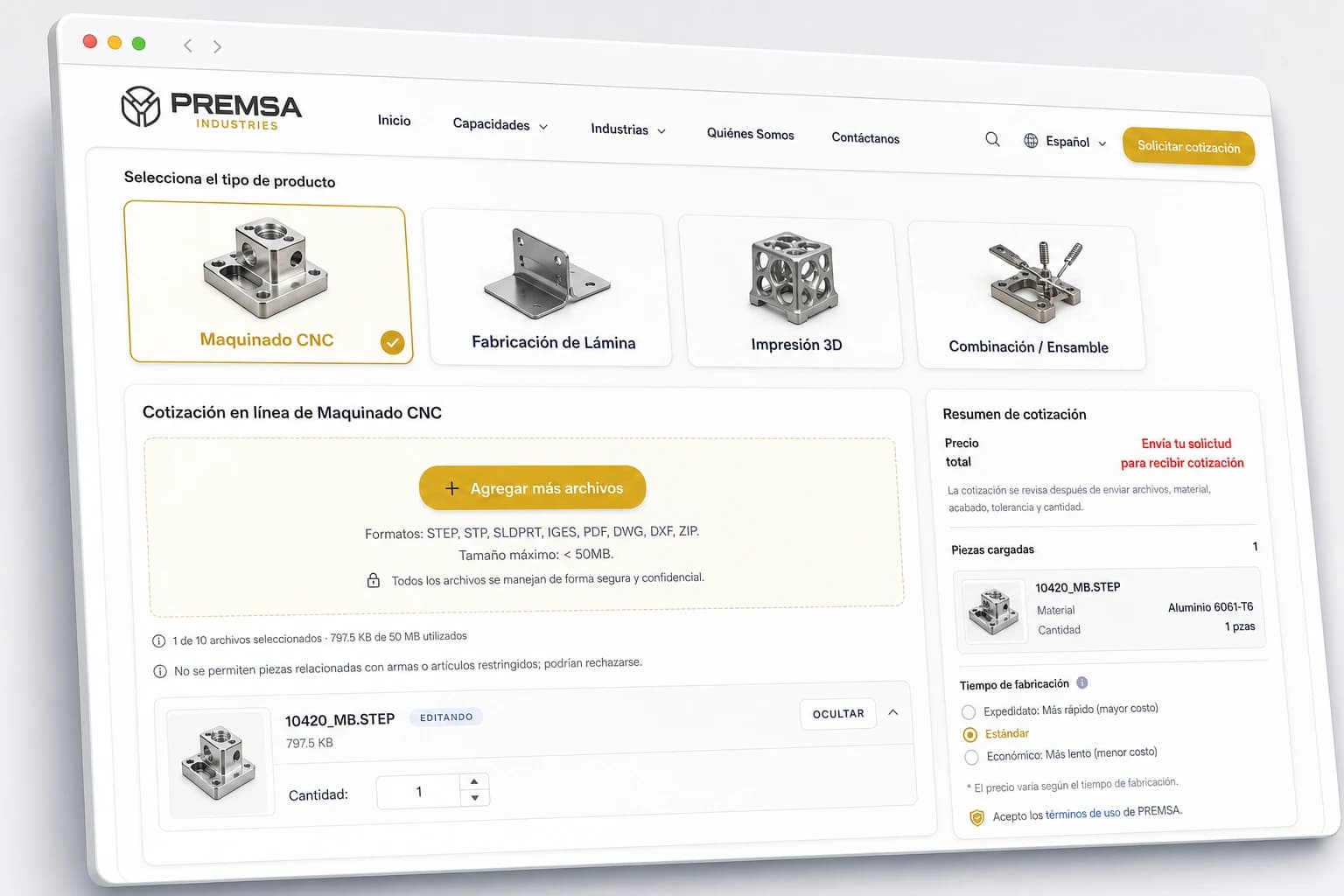
- CAD file upload: usually in STEP format to support review and manufacturability.
- DFM analysis: validation of geometry, tolerances, materials, and manufacturing strategy.
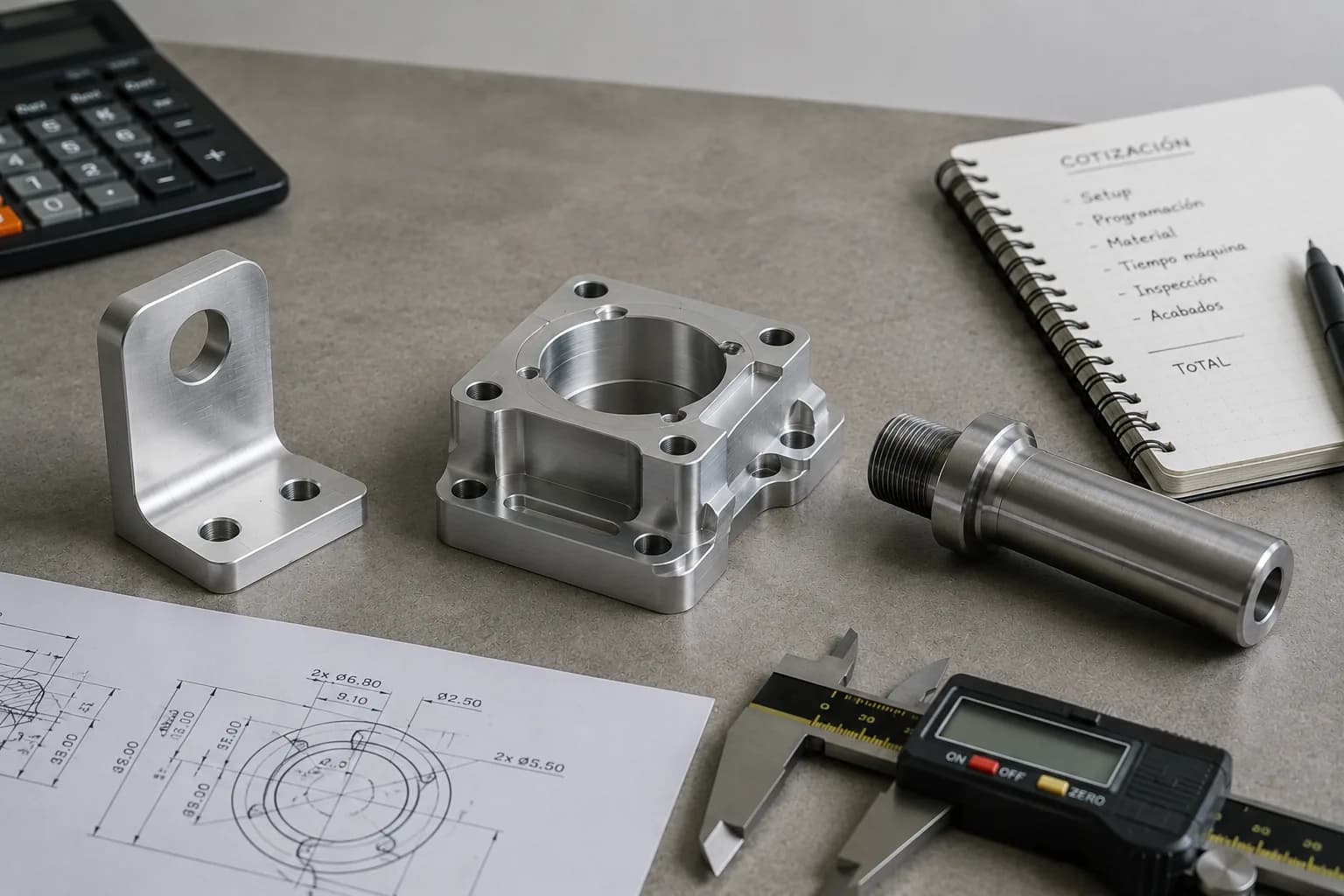
- Technical quote: definition of material, quantity, finishes, and manufacturing process.
- Planning and CAM programming: tool selection, setups, and machining strategy.
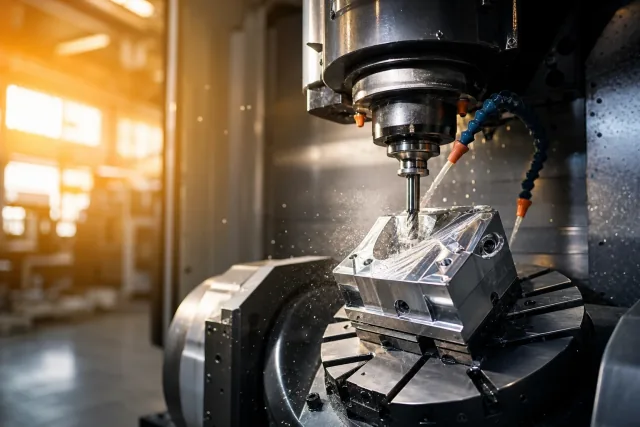
- CNC production: milling, turning, multi-axis, and complementary operations.
- Dimensional inspection: validation of critical characteristics and quality control.
- Production release: cleaning, protection, and final preparation before parts leave the facility.
When engineering, manufacturing, and inspection work in a more connected flow, response times can drop significantly—even on complex or low-volume projects.
Rapid prototyping and low-volume production
Not every CNC project has the same goal. Some aim to validate an idea as fast as possible; others need stability, repeatability, and a gradual path to production.
That is why prototypes, low-volume manufacturing, and repeat production usually require different manufacturing strategies.
Differences between prototypes and production
The main goal of a prototype is to learn fast.
In early development, speed, flexibility, and the ability to iterate are usually more important than optimizing cost per part.
Repeat production, by contrast, seeks process stability, dimensional repeatability, and cycle time reduction.
That is why a design that works well for a single part often needs DFM adjustments before scaling to larger lots.
How to accelerate design iterations
Teams that develop products quickly usually shorten the time between iterations.
Keeping CAD files organized, using clean STEP models, and prioritizing as-machined finishes in early stages helps accelerate validation, reduce rework, and simplify manufacturing.
Each short design-and-validation cycle gets you to a frozen design ready for production faster.
Bridge production before mass manufacturing
Bridge production covers the gap between a validated prototype and mass manufacturing.
Many companies use CNC machining to make tens or hundreds of parts while molds, tooling, or larger-scale production processes are developed.
That allows market, assembly, and real-world performance validation before investing in costly tooling.
Advantages of low-volume manufacturing
- Lower upfront investment and lower financial risk.
- Greater flexibility for design changes and fast improvements.
- Product validation under real conditions before scaling production.
- Faster delivery times compared with mass tooling processes.
- Ability to make complex parts without dedicated molds or tooling.
- Better inventory control and reduced obsolete parts.
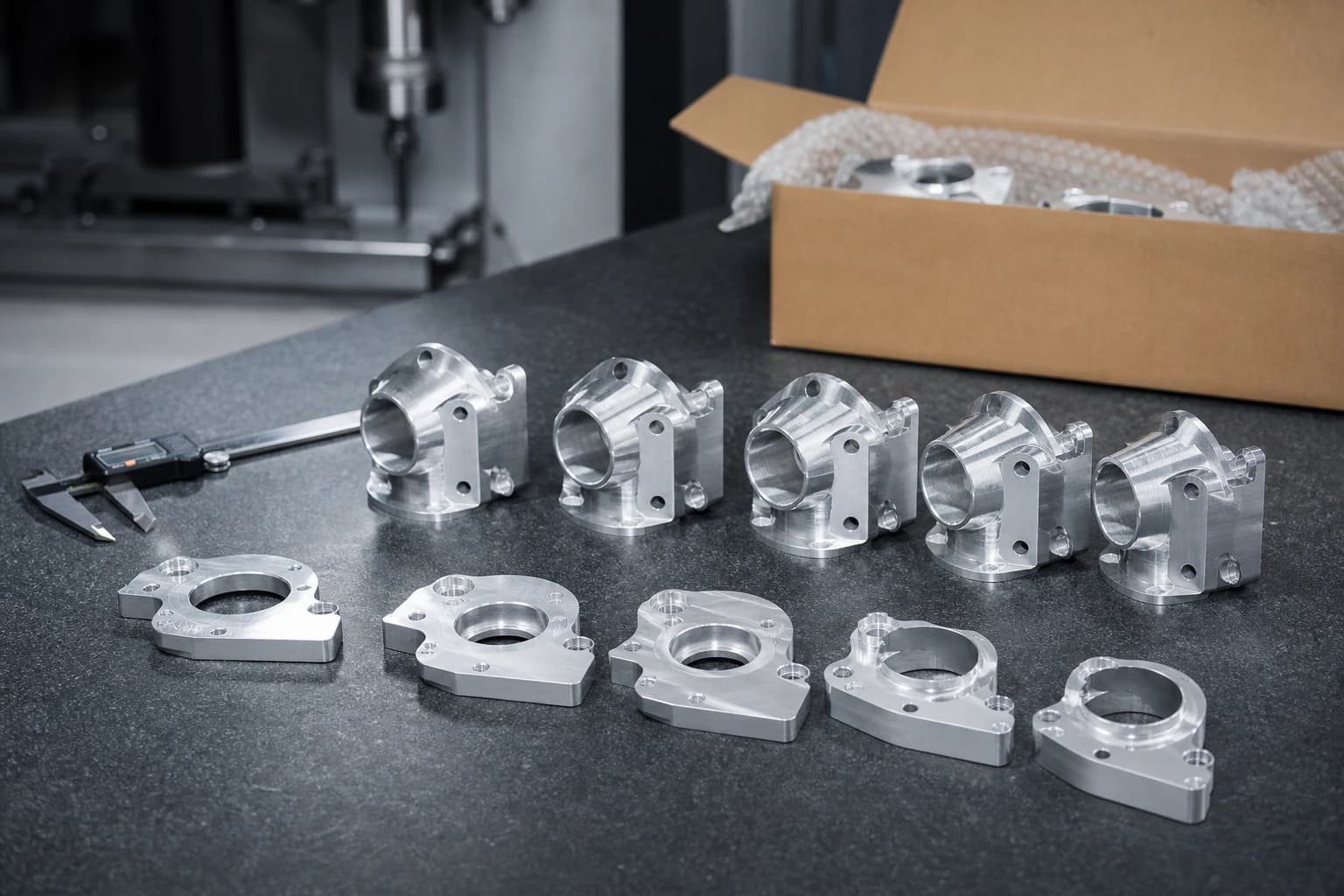
How PREMSA helps accelerate CNC projects
Reducing delivery times depends on more than fast machines. It also requires better technical communication, early manufacturability review, and processes that can adapt to prototypes, low-volume manufacturing, and urgent production.
At PREMSA Industries, we work to reduce friction between design and manufacturing so projects move faster from quoting through production release.
- Technical support and engineering from day one: review of CAD files, materials, and manufacturability before production starts.
- Flexible manufacturing for prototypes and production: from one-off parts through low-volume runs and bridge production.
- DFM analysis to reduce time and cost: early identification of complex geometry, unnecessary tolerances, and processes that can delay the project.
- Capacity for urgent parts: support for projects where delivery time and response speed are critical.
- Clearer communication and technical tracking: better visibility between engineering, manufacturing, and inspection.
- On-demand manufacturing: access to industrial capacity for companies, startups, students, makers, and product development.
We also integrate processes such as CNC machining, metal fabrication, and additive manufacturing to choose the most efficient manufacturing route based on geometry, material, quantity, and project priority.
If you are still preparing files for quoting, you can also read our guide on from CAD file to CNC machining quote.
Frequently asked questions about fast CNC machining
Quick answers on delivery times, prototypes, materials, CAD files, and on-demand CNC manufacturing.
- Can I manufacture just one part?
- Yes. At PREMSA Industries we work from single prototypes through low-volume production. You do not need industrial volumes to make functional CNC parts.
- Which materials usually have the fastest delivery times?
- Common materials such as Aluminum 6061-T6, Steel 1018, and engineering plastics such as acetal or nylon usually allow faster response times when stock is available.
- How can I reduce lead time on my CNC project?
- Using clean STEP files, reasonable tolerances, common materials, and avoiding unnecessary secondary finishes in early stages usually helps speed manufacturing and reduce rework.
- What file do I need to quote a CNC part?
- The preferred format is STEP (.step / .stp) because it supports geometry and manufacturability review. It also helps to include quantity, material, finishes, and a PDF drawing if critical tolerances exist.
- Which finishes usually add the most manufacturing time?
- Processes such as anodizing, powder coating, polishing, or specialty coatings usually add time because they require extra preparation and, in some cases, outside vendors.
- Does PREMSA work with students, makers, and startups?
- Yes. We work with students, makers, startups, product development teams, and industrial companies using the same engineering and manufacturing workflow.
- What if my design has manufacturability issues?
- During DFM review we identify possible risks related to geometry, tolerances, or processes before production starts to help reduce delays and rework.
- What is the difference between a prototype and low-volume production?
- Prototypes usually prioritize speed and fast design validation, while low-volume manufacturing seeks greater repeatability and stability for small lots or bridge production.
Yes. At PREMSA Industries we work from single prototypes through low-volume production. You do not need industrial volumes to make functional CNC parts.
Common materials such as Aluminum 6061-T6, Steel 1018, and engineering plastics such as acetal or nylon usually allow faster response times when stock is available.
Using clean STEP files, reasonable tolerances, common materials, and avoiding unnecessary secondary finishes in early stages usually helps speed manufacturing and reduce rework.
The preferred format is STEP (.step / .stp) because it supports geometry and manufacturability review. It also helps to include quantity, material, finishes, and a PDF drawing if critical tolerances exist.
Processes such as anodizing, powder coating, polishing, or specialty coatings usually add time because they require extra preparation and, in some cases, outside vendors.
Yes. We work with students, makers, startups, product development teams, and industrial companies using the same engineering and manufacturing workflow.
During DFM review we identify possible risks related to geometry, tolerances, or processes before production starts to help reduce delays and rework.
Prototypes usually prioritize speed and fast design validation, while low-volume manufacturing seeks greater repeatability and stability for small lots or bridge production.
Conclusion: Bring your project to life faster
How shorter lead times accelerate product development
Reducing manufacturing time means accelerating learning, validation, and product development.
The less time between one iteration and the next, the faster you can find problems, validate assemblies, and improve designs before moving to production.
The importance of fast manufacturing in modern projects
Today, speed and flexibility are real competitive advantages.
Teams that can make, test, and adjust parts quickly often build better products and reach the market sooner.
Digital manufacturing made that level of industrial access no longer depend exclusively on large companies or massive volumes.
From CAD design to real parts in less time
Whether you need a functional prototype, an urgent part, or a low-volume run, reducing friction between design and manufacturing can significantly accelerate any project.
At PREMSA Industries we combine engineering, CNC turning and milling, and 3D printing to help turn CAD files into real parts with faster response times.
Request a quote and get your project moving.
If you are preparing or optimizing designs, see our CNC machining design guide.

Written by
Adrian Cavazos and the PREMSA Engineering Team
Adrian Cavazos, founder of PREMSA Industries, leads a manufacturing engineering team specialized in CNC turning and milling, 3D printing, and production-ready solutions. The team works closely with customers to optimize designs, improve manufacturability (DFM), and ensure reliable, scalable production from prototypes to volume manufacturing.