
Quote from one part to small batches without slow processes, impossible minimums, or weeks of waiting.
If you only need to validate a design, manufacture a critical spare, or launch a pilot run in Monterrey, you should not be stuck in endless email chains, manual quotes, or suppliers that only work at high volume.
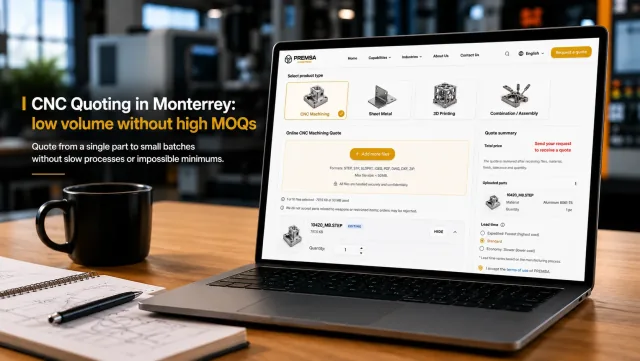
At PREMSA Industries we combine low-volume CNC machining with an online quote tool designed to reduce friction from the first CAD file.
Upload your model, define material, quantity, and process, and receive a review built for prototypes, validations, spare parts, and initial production — without unnecessary industrial MOQs.
To explore flexible manufacturing and low-volume production further, see our guide to low-volume CNC machining without high MOQs and our CNC machining in Monterrey page.
Four steps in PREMSA's CNC quote tool
- Upload CAD files — STEP/STP per part, plus PDF for critical tolerances or special notes.
- Select materials and processes — define material, machining process, and finish for the project.
- Define real quantities — quote from 1 part without inflating order size to meet MOQs.
- Receive review and quote — engineering returns manufacturability feedback, lead time, and next steps.
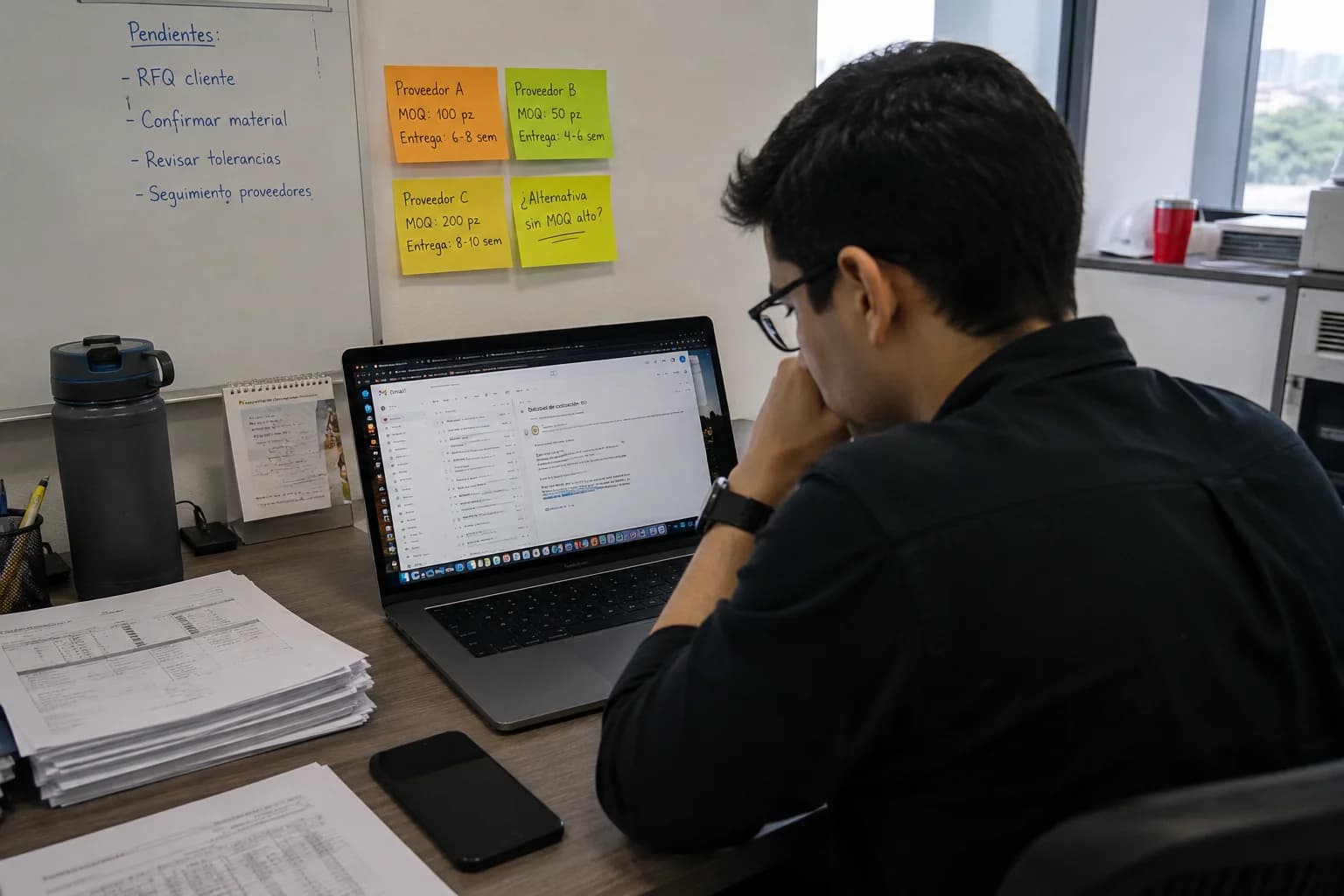
The problem with high MOQs in manufacturing
What usually happens
- Shops that won't take small quantities — many suppliers are optimized for repetitive production, not fast prototypes or validations.
- MOQs that are too high — setups, CAM programming, and material purchases are often justified only at large volumes.
- Slow quoting — manual reviews, fragmented processes, and little visibility into RFQ status.
- Too much friction — every change in material, tolerance, or quantity restarts emails, reviews, and waiting.
How it affects engineering, purchasing, and startups
- Slower validations — without physical parts, development moves forward with uncertainty.
- More expensive prototypes — iterating on design is hard when the supplier demands hundreds of parts.
- Critical spares on hold — a stopped line cannot wait for unrealistic production minimums.
- More financial risk — buying inventory you don't need consumes budget before the project is validated.
- Less flexibility — changing the design or making quick improvements becomes more complex and costly.
How PREMSA makes low-volume CNC machining easier
The practical difference is simple: you should not have to adapt your project to a mass-production model.
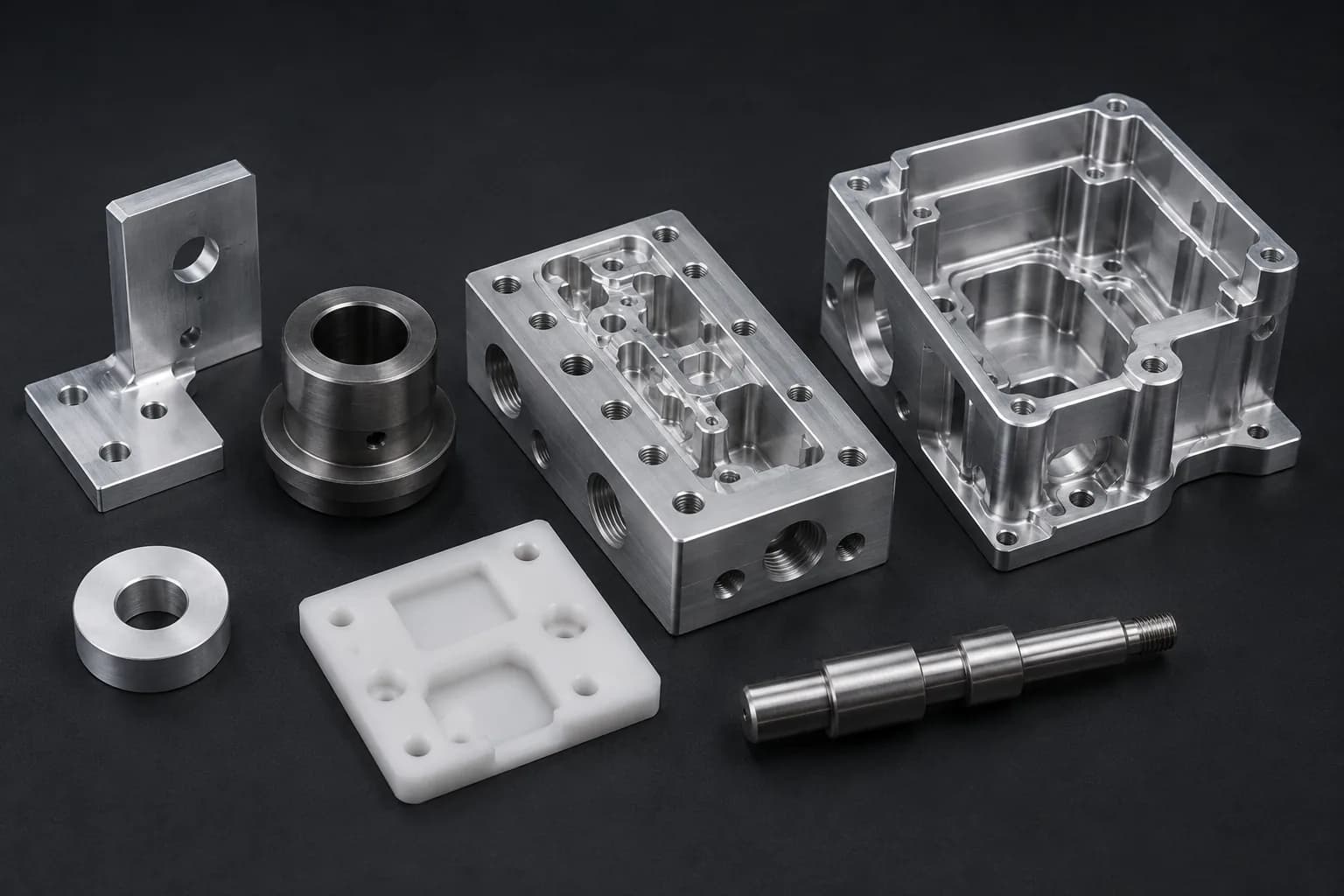
At PREMSA Industries we work with a more flexible approach to low-volume CNC manufacturing, from prototypes and spare parts to pilot runs and initial production.
We combine CNC milling, CNC turning, and complementary capabilities in a flow designed to reduce friction from RFQ through manufacturing.
Instead of forcing you through endless email chains or unrealistic minimums, the goal is to make quoting and manufacturing real parts more accessible for engineering, purchasing, startups, and development teams.
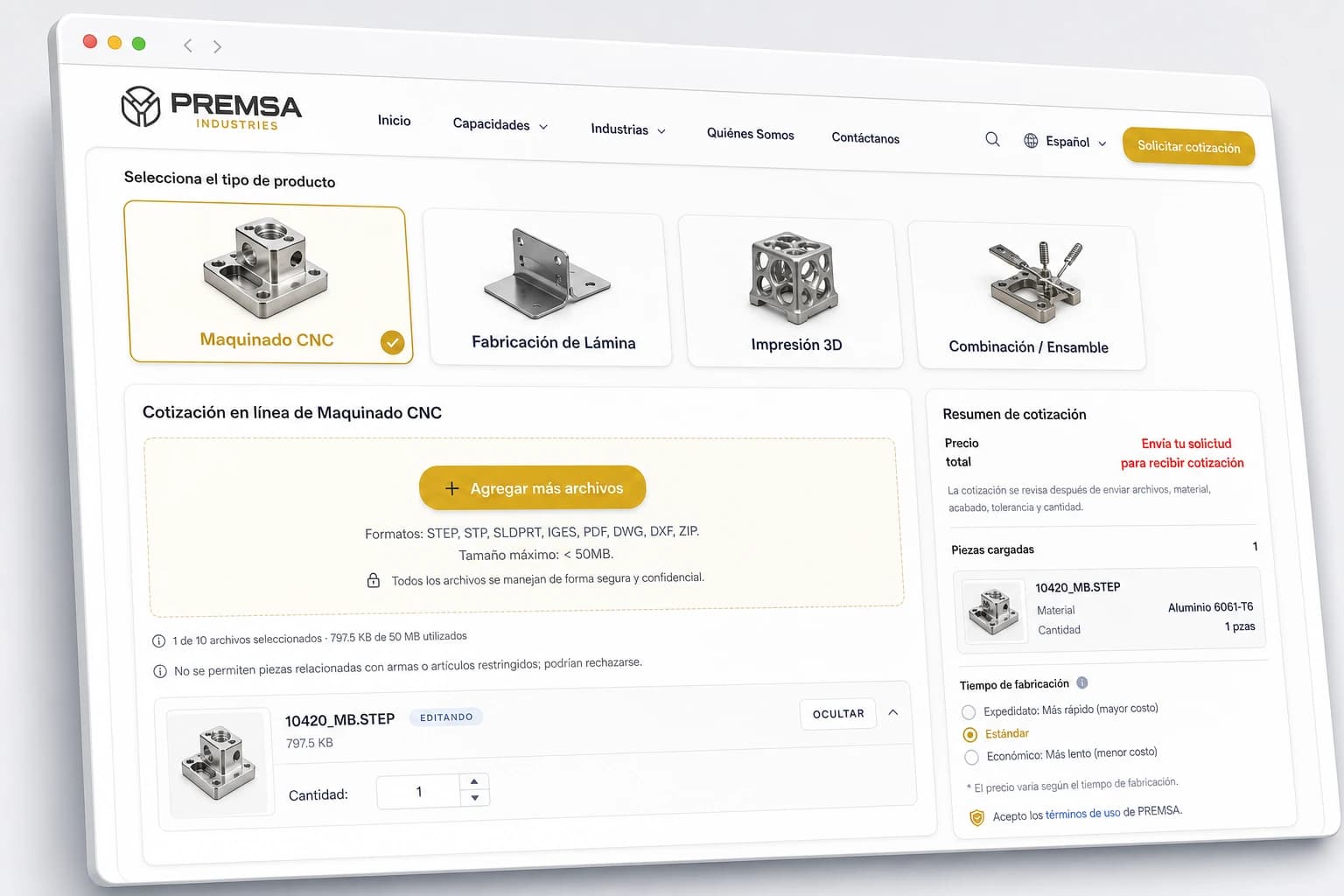
A quote tool built to reduce friction
You upload CAD files, define real quantities and key requirements, and the team reviews manufacturability without making you guess what information is missing.
The flow is designed to accelerate validations, prototypes, and urgent projects where waiting weeks for a quote simply is not viable.
Less bureaucracy, more speed
Fewer email loops. Fewer fragmented processes. Less friction between engineering and manufacturing.
When the technical package is complete, the path from RFQ to fabrication becomes clearer, faster, and more predictable.
We do not promise unrealistic lead times for impossible geometries; we do offer a more transparent, efficient process for low-volume CNC projects in Monterrey, Mexico, and North America.
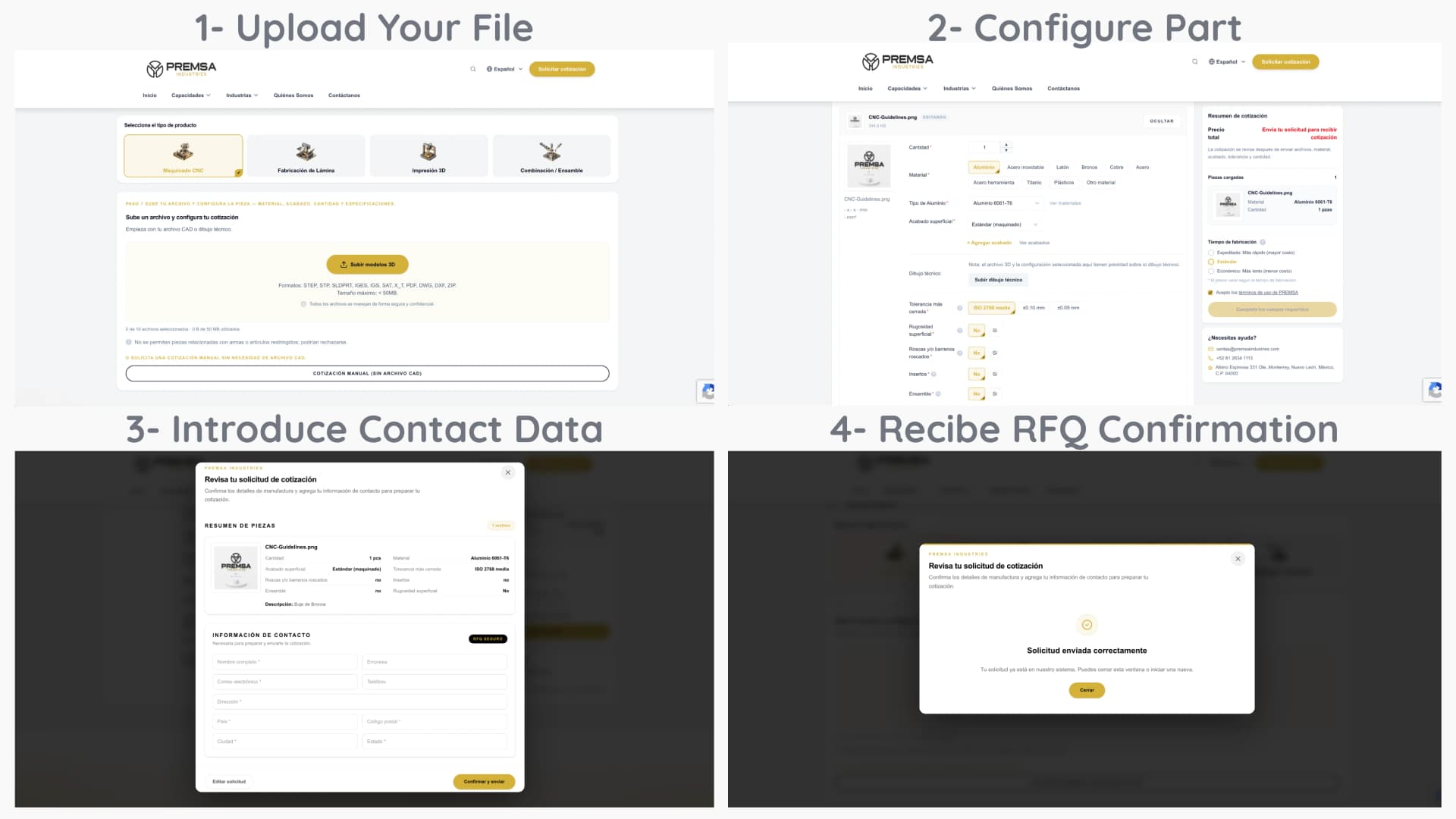
How PREMSA's CNC quote tool works
The flow is designed so engineering and purchasing can move forward in minutes, not weeks of emails and manual reviews.
1. Upload CAD files
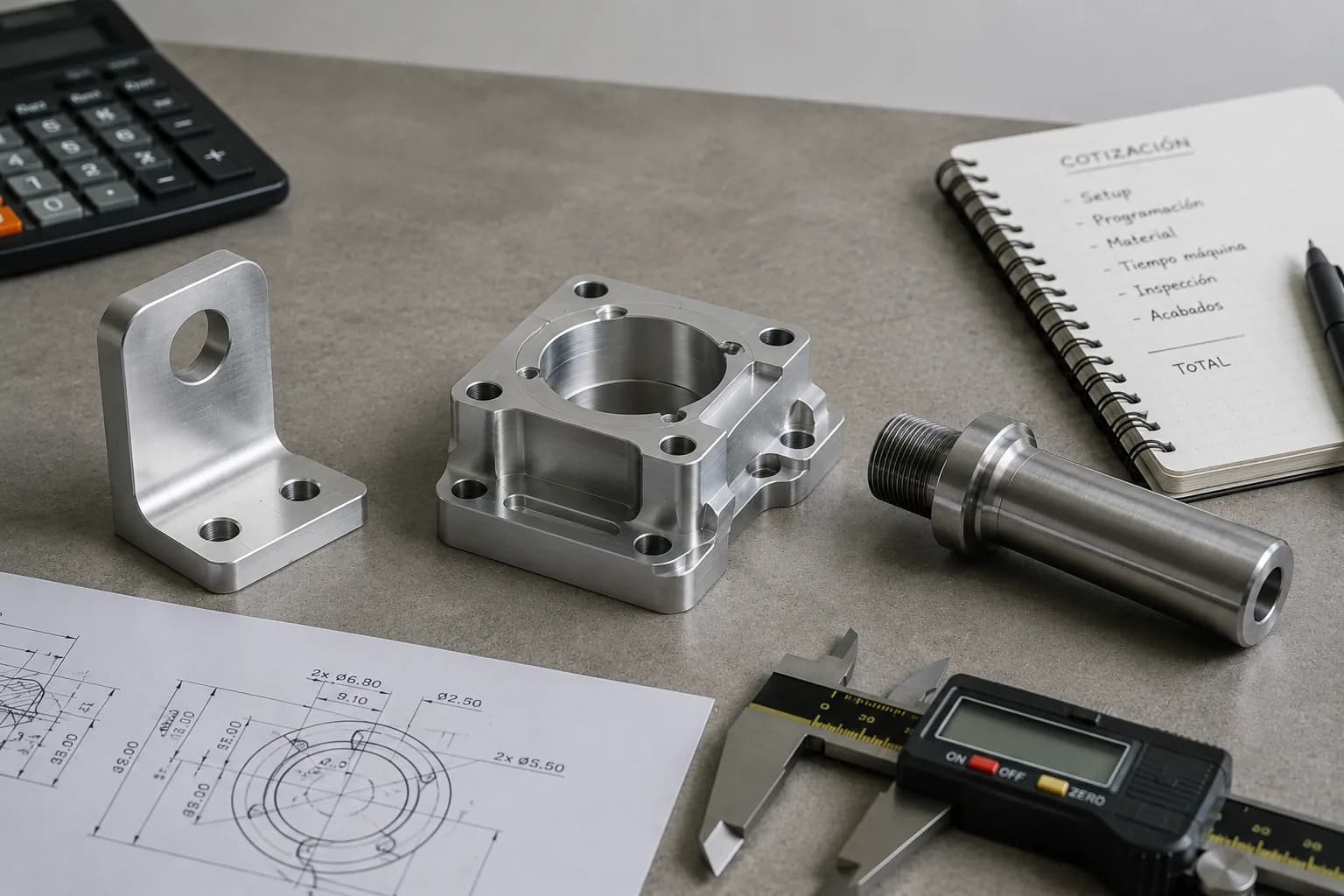
Upload STEP/STP files per part and add a PDF when critical tolerances, inspection notes, threads, or special requirements exist.
If you are getting started with files for manufacturing, see our guide on CAD files for CNC machining.
2. Select materials and processes
Define material, process, and finish based on what the project actually needs.
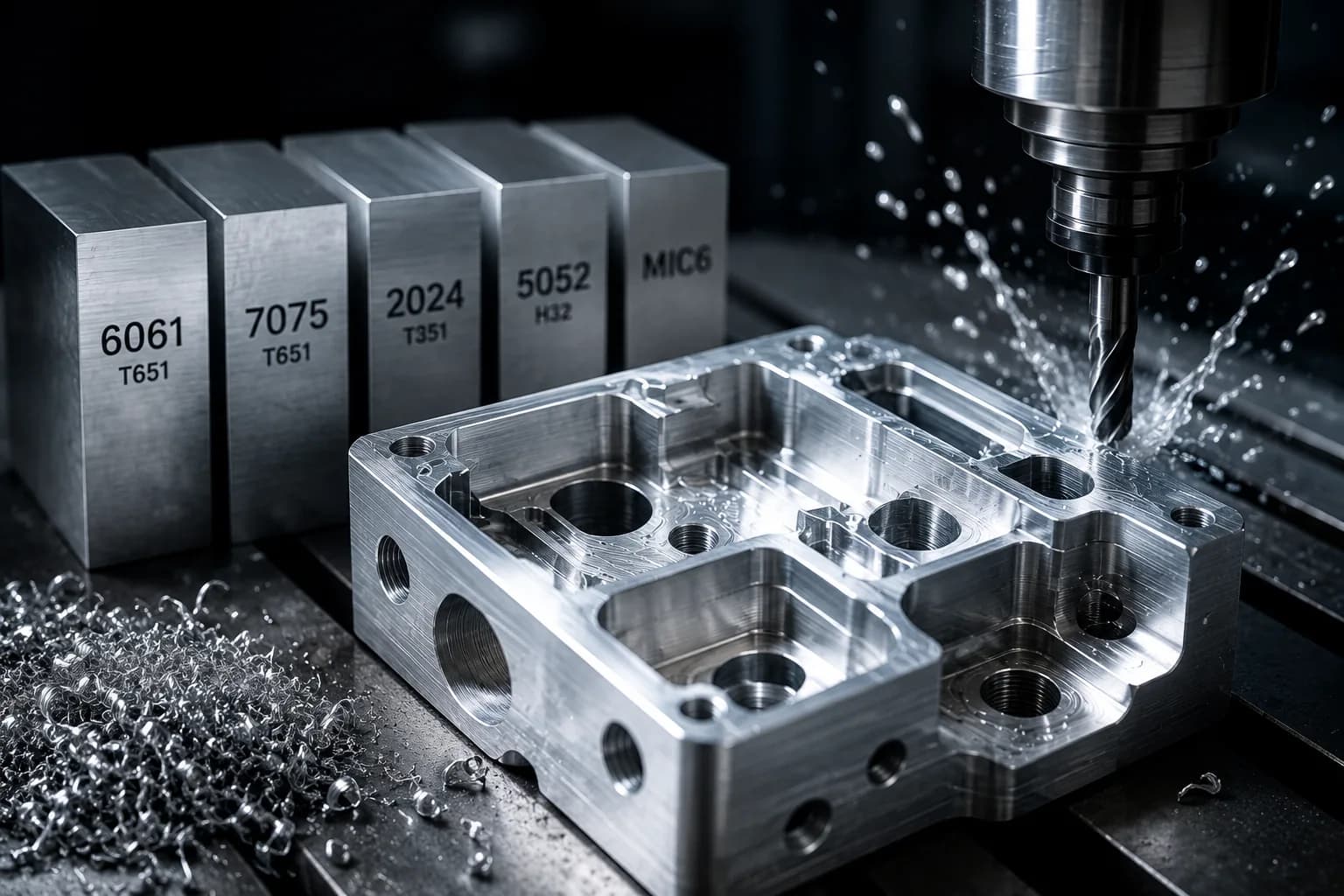
Common materials such as Aluminum 6061-T6, Stainless Steel 304, or Acetal often speed review and availability when local stock exists.
3. Define real quantities
Specify whether you need 1 part, 5, 20, or a full pilot run — without inflating quantities artificially to meet minimums you do not actually need.
4. Receive review and quote
Engineering reviews manufacturability, flags potential production risks, and returns an actionable quote with lead time, technical notes, and clear next steps.
Which projects are ideal for low-volume CNC machining
Low-volume CNC manufacturing is not only for experimental prototypes. It is also a practical solution for companies that need to move fast without tying up capital in unnecessary inventory or mass-production processes that are too early for the project.
- Functional prototypes — validate assembly, ergonomics, tolerances, and performance before investing in tooling or higher-volume production.
- Fixtures and tooling — nests, plates, guides, and shop tooling for production lines, inspection, or automation.
- Industrial spare parts — urgent parts for maintenance, equipment repair, or operational continuity.
- Initial production — small lots for market validation, pilots, or first runs before scaling volume.
- Automation and robotics — brackets, mechanical components, and custom parts for fast integration.
- Product development — design iterations where each revision needs to be manufactured quickly to keep progress moving.
You do not need a massive project to get started.
You need a supplier that understands real quantities, development timelines, and flexible manufacturing for projects that are still evolving.
How to reduce cost and lead time on small orders
On low-volume CNC projects, small design and preparation decisions can significantly reduce response time, manufacturing complexity, and total cost.
- Keep geometries manufacturable — applying DFM principles from the start helps avoid complex setups, special tools, and rework. Our CNC design guide can help.
- Use standard materials — common materials usually speed availability, quoting, and production versus special or hard-to-source alloys.
- Avoid unnecessary tolerances — document only critical CTQs so you do not add inspection and machining complexity where it adds no value.
- Send a clear RFQ — include quantity, material, finish, updated files, and target date to reduce review loops and speed response.
- Group similar parts — when several parts share material or process, manufacturing can optimize setups and programming.
- Define real priorities — stating whether the project prioritizes speed, cost, or finish helps drive better decisions from the start.
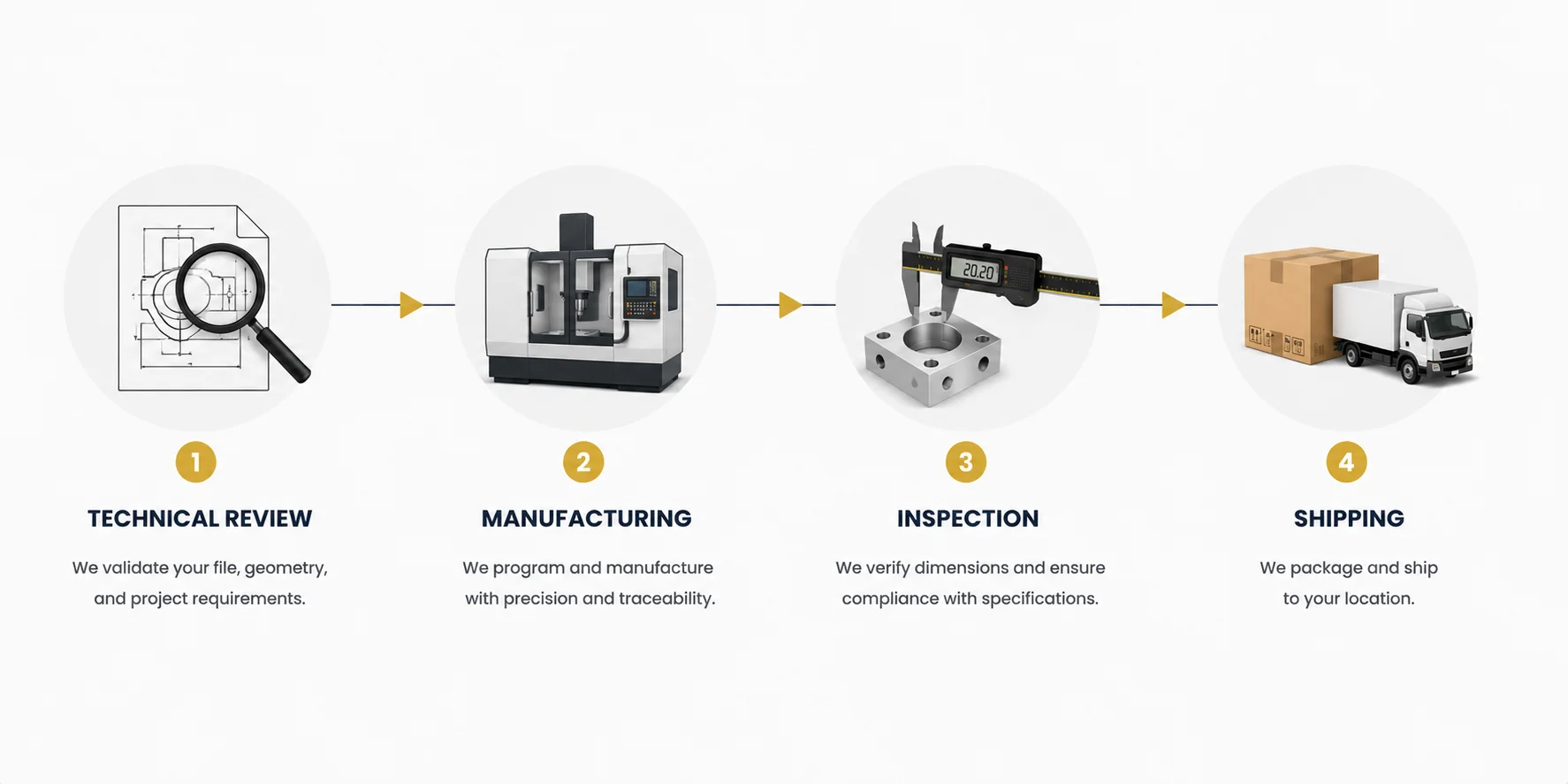
What happens after you submit your RFQ
The goal is not just to receive files: it is to turn a technical package into a manufacturable project with a clearer flow and less friction.
- Technical review — validation of geometry, manufacturability, processes, and potential production risks.
- Manufacturing evaluation — selection of machining strategy, setups, tools, and fabrication flow.
- Quote and lead time — cost definition, estimated timelines, and next steps based on project scope.
- CNC production — CAM programming, setups, and fabrication using integrated capabilities.
- Dimensional inspection — validation of critical requirements and release per project specifications.
- Shipping and logistics — coordination of local delivery in Monterrey or domestic and international shipments.
Frequently asked questions about the CNC quote tool and low-volume manufacturing
Quick answers for engineering, startups, purchasing, and development teams looking to manufacture CNC parts without unnecessary industrial MOQs.
- Can you manufacture a single part?
- Yes. We manufacture projects from one part for functional prototypes, validation, spare parts, and product development when geometry and process are viable in a responsible way.
- Is there a minimum order quantity (MOQ)?
- We do not work with the same rigid MOQ as shops focused only on mass production. Feasibility depends on material, complexity, process, and time required, but the flow is designed for real quantities, not forcing you to inflate orders unnecessarily.
- What files do I need to get a quote?
- Ideally send STEP/STP files per part and add a PDF when critical tolerances, threads, finishes, or special inspection notes exist. To prepare your technical package better, see our guide on CAD files for CNC machining.
- Do you accept prototypes and projects in development?
- Yes. Functional prototypes, design validations, and pilot runs are among the most common cases in our low-volume CNC machining flow.
- Can you help with manufacturability review (DFM)?
- Yes. During RFQ review, engineering can identify geometries that are difficult to manufacture, unnecessary tolerances, or areas where the design can be optimized to reduce cost and lead time.
- Can you scale from prototype to production?
- Yes. Many projects start as prototypes or small lots and later evolve into repeatable production using processes and programs already validated.
- What materials do you work with?
- We work with common industrial manufacturing materials such as Aluminum 6061-T6, stainless steels, engineering steels, and technical plastics such as Acetal, depending on the project and availability.
- How long does a quote take?
- It depends on project complexity and how complete the RFQ is. When files and specifications are clear, many projects can be reviewed and quoted within the same business day or in an approximate range of 24 to 48 hours.
- Do you ship outside Monterrey?
- Yes. We coordinate local delivery in Monterrey and domestic and international shipments depending on project scope and logistics.
Yes. We manufacture projects from one part for functional prototypes, validation, spare parts, and product development when geometry and process are viable in a responsible way.
We do not work with the same rigid MOQ as shops focused only on mass production. Feasibility depends on material, complexity, process, and time required, but the flow is designed for real quantities, not forcing you to inflate orders unnecessarily.
Ideally send STEP/STP files per part and add a PDF when critical tolerances, threads, finishes, or special inspection notes exist.
To prepare your technical package better, see our guide on CAD files for CNC machining.
Yes. Functional prototypes, design validations, and pilot runs are among the most common cases in our low-volume CNC machining flow.
Yes. During RFQ review, engineering can identify geometries that are difficult to manufacture, unnecessary tolerances, or areas where the design can be optimized to reduce cost and lead time.
Yes. Many projects start as prototypes or small lots and later evolve into repeatable production using processes and programs already validated.
We work with common industrial manufacturing materials such as Aluminum 6061-T6, stainless steels, engineering steels, and technical plastics such as Acetal, depending on the project and availability.
It depends on project complexity and how complete the RFQ is.
When files and specifications are clear, many projects can be reviewed and quoted within the same business day or in an approximate range of 24 to 48 hours.
Yes. We coordinate local delivery in Monterrey and domestic and international shipments depending on project scope and logistics.
Conclusion: more accessible CNC manufacturing for real projects
Low-volume CNC machining in Monterrey should no longer depend on exaggerated MOQs, endless email chains, or slow processes that stall development.
When the RFQ is clear and the quoting flow is designed to reduce friction, going from a CAD file to functional parts becomes much faster, more transparent, and more accessible.
At PREMSA Industries we help manufacture everything from prototypes and spare parts to pilot runs and initial production using an online CNC quote tool built for real quantities — not forcing you to buy inventory you do not need.
Upload your files, define material, quantities, and project priorities, and receive technical review oriented to real manufacturing for engineering, purchasing, and product development.
If you are preparing or optimizing designs, see our CNC machining design guide.

Written by
Adrian Cavazos and the PREMSA Engineering Team
Adrian Cavazos, founder of PREMSA Industries, leads a manufacturing engineering team specialized in CNC machining, metal fabrication, and production-ready solutions. The team works closely with customers to optimize designs, improve manufacturability (DFM), and ensure reliable, scalable production from prototypes to volume manufacturing.