
Do you only need 2 parts to validate an assembly and the supplier insists on producing hundreds? Did a critical industrial spare fail and you cannot wait weeks for tooling? Does your startup need functional hardware before raising investment or launching production?
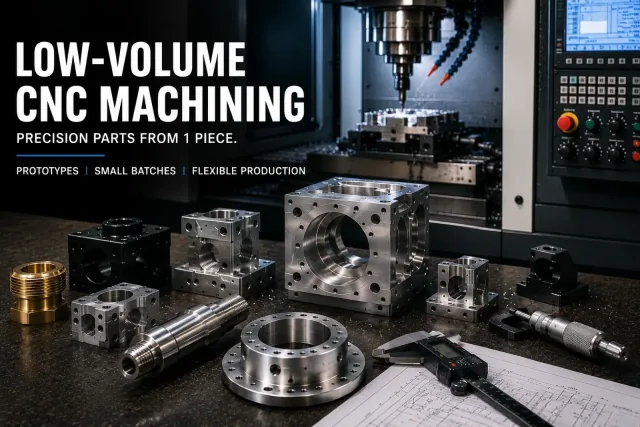
Low-volume CNC machining makes precision metal and plastic parts in small quantities — from one-off prototypes to limited production runs — without depending on molds, stamping, or mass volumes.
Unlike manufacturers optimized only for high volume, low-volume CNC machining prioritizes speed, flexibility, and fast validation. It is an ideal solution for functional prototypes, bridge production, critical spares, fixtures, tooling, and product development.
In this guide we explain how low-volume CNC machining really works, why many shops enforce high minimum order quantities, when small batches make sense, which materials and processes are most common, and how PREMSA Industries helps manufacture parts from early stages through scalable production.
- Manufacturing from 1 part — ideal for prototypes, validation, and initial production
- Small runs and low volume — flexible batches without large quantity requirements
- Fast CNC production — agile response times for urgent projects
- CNC milling and turning — precision machining for complex parts and flexible production
Why Many Companies Require High Minimum Quantities
Many CNC manufacturers are structured around repetitive, high-volume production. Their internal processes, operating costs, and machine planning depend on large orders to amortize CAM programming, setups, material purchases, and tool changes.
That is why responses like “the minimum is 100 parts,” “we do not do prototypes,” or “setup makes small quantities unviable” are so common. The problem is usually not the shop’s technical capability — it is that their operating model is designed for mass production.
However, most real industrial projects do not start with thousands of parts. Most begin with validation, functional testing, design iterations, or pilot production. At those stages, the priority is not to manufacture huge quantities: it is to get precise parts quickly so the project can move forward.
Low-volume CNC machining is focused precisely on that need: making functional parts without forcing the customer to commit to industrial runs from day one.
It is common in sectors such as industrial automation, medical devices, electronics, robotics, aerospace, automotive, and hardware development, where iteration speed and flexibility matter as much as cost per part.
Instead of depending on costly tooling or permanent molds, CNC lets you produce directly from CAD files with much faster response times and design changes that are practically immediate.
Low-volume CNC machining is frequently used for:
• functional prototypes
• product validation
• bridge production
• fixtures and tooling
• industrial spares
• custom parts
• pilot lots
• initial production before scaling
Request a quote by uploading your STEP file and receive manufacturability feedback for your project.
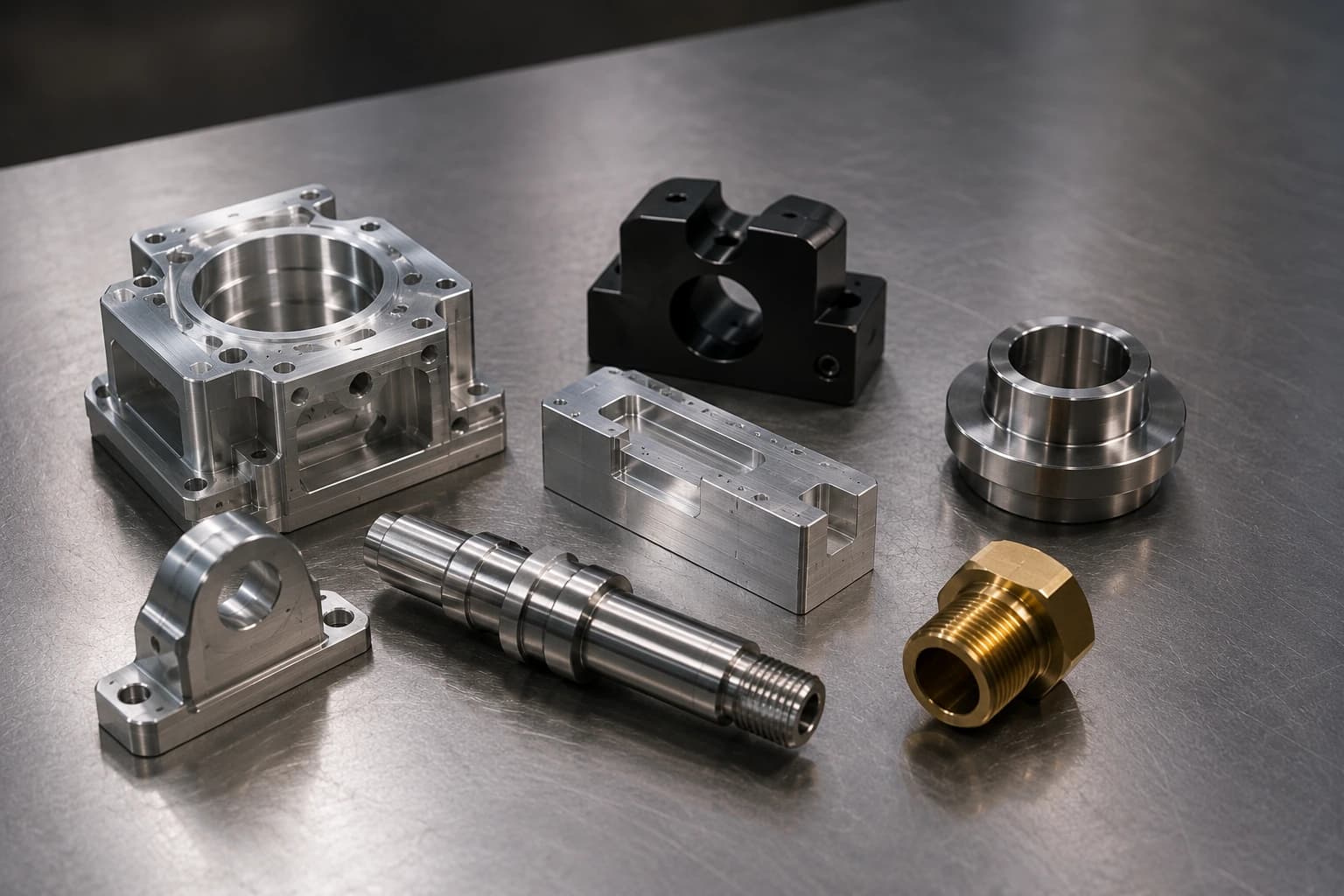
What is low-volume CNC machining?
Low-volume CNC machining is the manufacture of metal or plastic parts in reduced quantities using precision CNC processes. It typically ranges from one-off parts to small production runs, where the priority is to obtain functional components quickly without depending on molds, dedicated tooling, or mass production.
Although it uses the same technology as traditional CNC manufacturing, the focus changes completely. Instead of optimizing only for thousands of parts, low volume prioritizes flexibility, response speed, fast iterations, and lower upfront investment.
That makes it an ideal solution for functional prototypes, product validation, bridge production, industrial spares, fixtures, tooling, and initial hardware launches.
Unlike processes such as plastic injection or stamping — where tooling can take weeks and require significant investment — CNC machining lets you manufacture directly from CAD models with considerably shorter preparation times.
Design changes are also much faster. If a part needs tolerance, geometry, hole, or dimension adjustments after a physical test, changes can be implemented without rebuilding complete molds or stopping dedicated production lines.
Typical production ranges
- 1 part — functional prototypes, dimensional validation, or urgent spares
- 5 to 20 parts — assembly testing, market validation, and pilot lots
- 20 to 100 parts — initial production, repeat parts, and bridge manufacturing
- 100+ parts — transition toward repeat production before mass processes
There is no exact universal limit for defining “low volume.” Classification depends on industry type, part complexity, material, and manufacturing strategy. However, in most industrial CNC projects, low volume is usually found before fully optimized mass-production schemes.
Difference between prototype, low volume, and mass production
| Manufacturing type | Typical quantity | Main goal | Speed and flexibility |
|---|---|---|---|
| Prototype | 1–5 parts | Validate geometry, assembly, and functionality | Maximum flexibility and constant changes |
| Low volume | 5–100 parts | Initial production, pilots, and commercial validation | Balance between speed, cost, and repeatability |
| Mass production | 1,000+ parts | Minimize unit cost as much as possible | Optimized processes with less flexibility |
In many industries, low-volume CNC machining works as the intermediate stage between development and scalable production. It lets you validate the product under real conditions before committing significant capital to tooling, inventory, or mass manufacturing.
That is why it is widely used by startups, engineering departments, OEMs, industrial integrators, and companies that need to move fast without sacrificing precision or quality.
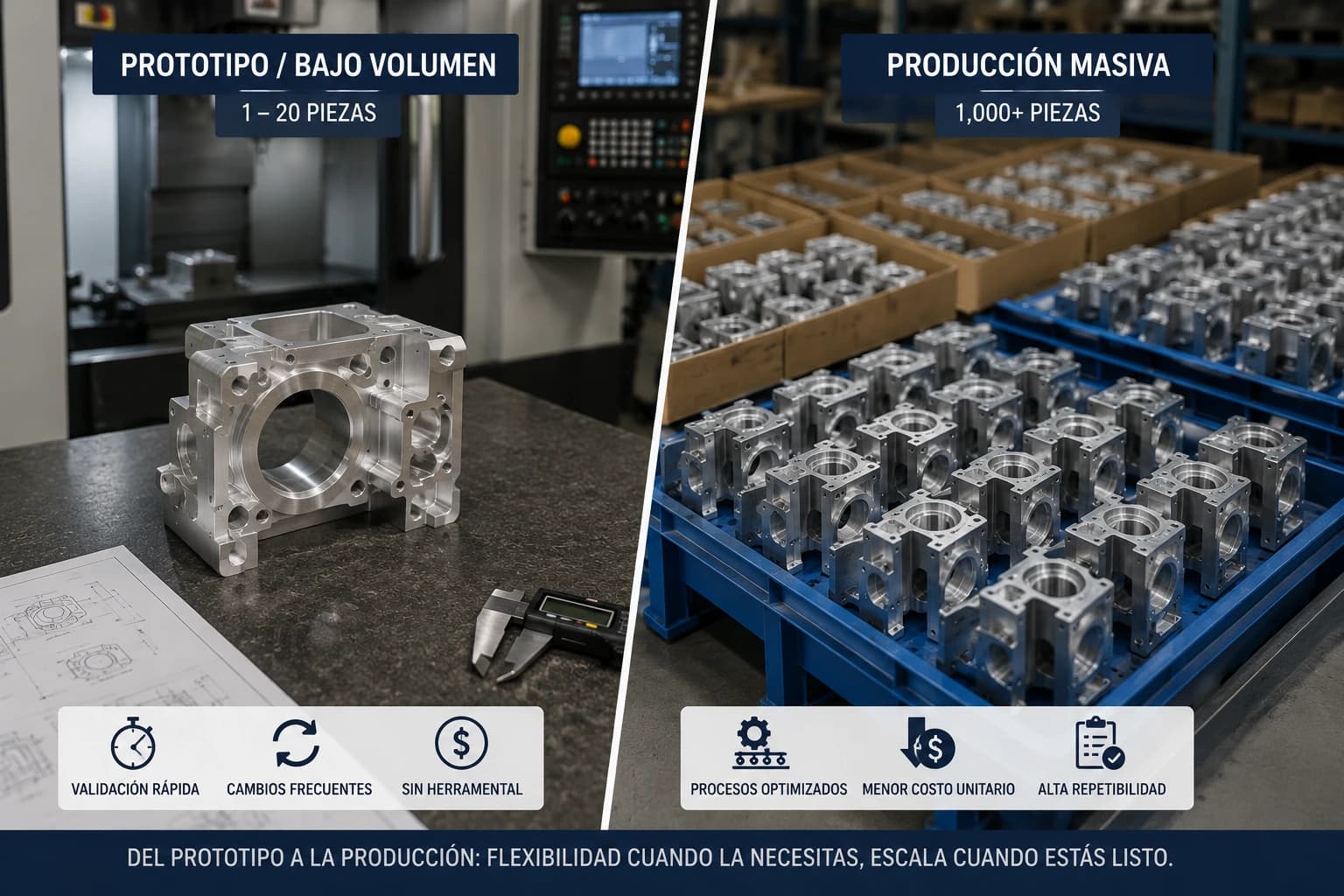
Why do many companies require high minimum quantities?
Many CNC manufacturing companies are designed around repetitive production and large volumes. Their operating costs, capacity planning, and profitability depend on orders large enough to spread programming, setups, inspection, and machine time across hundreds or thousands of parts.
That is why some shops reject small projects or require high minimum quantities even when they technically could manufacture the parts.
The problem is usually not manufacturing capability — it is that their operation is optimized for mass volume, not flexibility.
When a customer requests only 1, 2, or 10 parts, many fixed costs still exist regardless of final quantity produced.
Even on a small order, the supplier must still review drawings, prepare CAM programs, mount material, perform setups, measure first parts, and reserve machine time. On complex projects, those stages can represent more time than actual machining.
- CAM programming and preparation — toolpath creation, simulation, and validation before machining
- Setups and workholding — material alignment, tools, zeros, and first inspections
- Tool changes and offsets — dead time that impacts small lots more
- Minimum material purchase — bars, plates, and specialty materials are often bought in full sizes
- Reserved machine time — even small orders consume productive capacity
- Volume-focused planning — many shops prioritize long, repetitive runs
That is why many customers hear responses like:
— “The minimum is 100 parts.”
— “We do not handle prototypes.”
— “Setup makes small quantities unviable.”
However, modern industrial reality rarely starts with mass production from day one. Most projects go through validation, functional testing, design iterations, pilot production, or initial launches first.
In sectors such as industrial automation, medical devices, electronics, aerospace, automotive, and hardware development, manufacturing a few parts quickly can matter more than getting the lowest possible unit cost.
That is where low-volume CNC machining has the advantage. Instead of treating small orders as awkward exceptions, a low-volume specialist structures processes so small projects, prototypes, and limited runs are viable, repeatable, and fast.
At PREMSA Industries, we work on projects where customers need to:
• validate an assembly before scaling
• manufacture urgent spares
• produce pilot lots
• launch initial hardware to market
• iterate designs quickly
• make functional parts without depending on costly tooling
Request a quote and receive support for prototypes, initial production, and flexible CNC manufacturing.
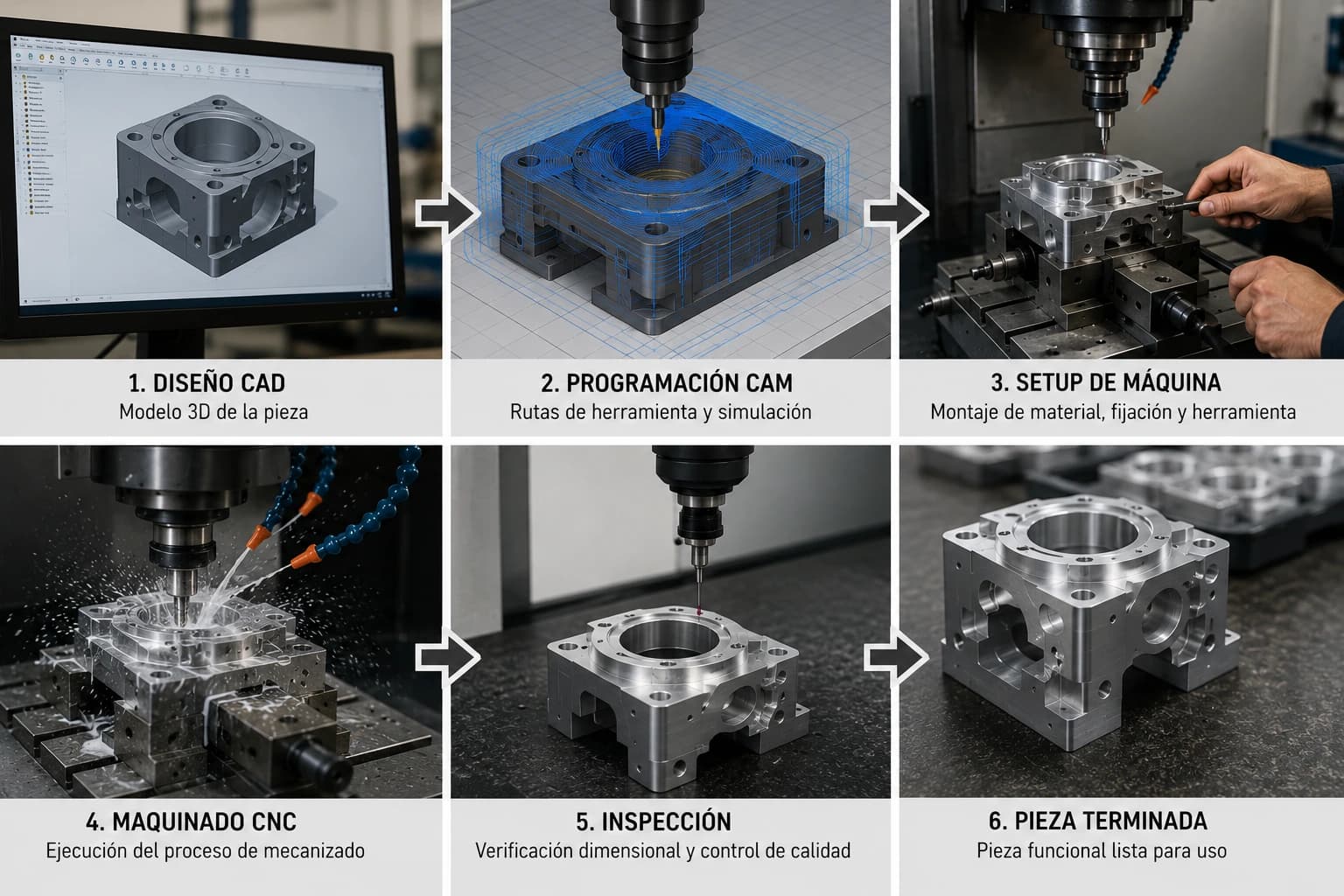
When low-volume CNC machining makes sense
Low-volume CNC machining is used across a huge variety of industries where manufacturing a few parts quickly has more value than producing thousands of components at the lowest possible cost.
From functional prototypes to initial production, this manufacturing model lets you validate products, reduce risk, and accelerate development without depending on costly tooling or mass volumes from early stages.
Functional prototypes
Manufacturing prototypes in real materials lets you validate dimensions, tolerances, strength, assemblies, and mechanical behavior before releasing production. Unlike visual models or basic 3D printing, a CNC prototype can replicate final operating conditions much more closely.
Materials such as Aluminum 6061-T6, stainless steel, or Acetal are common for validating parts that will eventually work under load, temperature, vibration, or mechanical contact.
Functional prototypes also help detect interferences, assembly issues, or dimensional adjustments before investing in permanent tooling.
Design validation and fast iterations
In product development, iteration speed is critical. Moving quickly from a CAD model to a physical part lets you correct design errors much earlier in the process.
It's common to make multiple revisions of the same part to compare geometries, thicknesses, tolerances, or assembly configurations.
With low-volume CNC, it is possible to produce several functional versions without rebuilding molds or stopping complete manufacturing processes.
Industrial spares and urgent parts
When a critical component fails, stopping a production line can cost far more than the part itself.
In many cases, waiting weeks for mass manufacturing or meeting high minimums is simply not viable. Low-volume CNC machining lets you reproduce components from drawings, physical samples, or CAD models with considerably faster response times.
This is especially useful for industrial maintenance, legacy machinery, automation, and equipment where original parts are no longer easily manufactured.
Bridge production before mass manufacturing
Many companies use low-volume CNC as an intermediate stage between prototypes and mass production.
Before investing in injection molds, specialized tooling, or dedicated lines, it is common to manufacture pilot lots to validate market, certifications, functional testing, or first customers.
These initial runs let you start sales, gather feedback, and adjust the product before committing to much larger investments.
Hardware startups and specialized products
Hardware startups rarely begin by manufacturing thousands of parts. Most need to validate design, functionality, and product acceptance before scaling.
Low-volume CNC machining lets you manufacture enclosures, structural components, mechanical parts, and custom assemblies with industrial quality even in small quantities.
It is also common in niche products, medical devices, robotics, automation, and specialized instruments where volumes are naturally lower.
Fixtures, tooling, and auxiliary tooling
Inspection fixtures, mounting plates, test nests, assembly tools, and auxiliary tooling are normally manufactured in reduced quantities because each project has specific requirements.
In these cases, the priority is usually precision, repeatability, and delivery speed more than mass production.
CNC machining lets you produce custom tooling quickly and adapt it as manufacturing or assembly processes evolve.
PREMSA Industries manufactures CNC parts for prototypes, initial production, industrial spares, and low-volume projects with fast response times and technical support for product development.
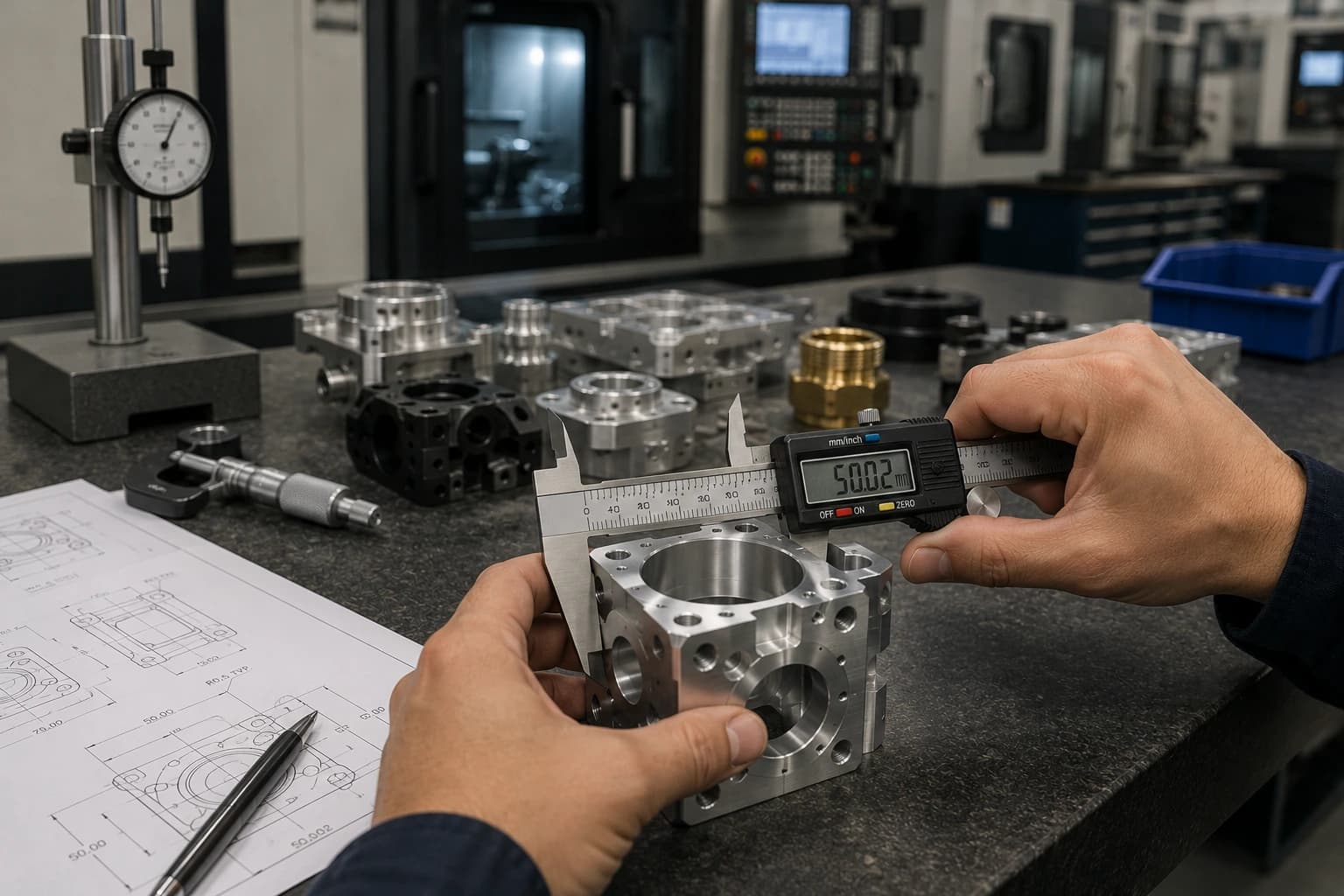
Advantages of low-volume CNC machining
Low-volume CNC machining lets you develop products, validate designs, and manufacture functional parts without depending on mass production from early stages.
For many companies, the initial priority is not the lowest possible unit cost — it is reducing risk, accelerating development, and staying flexible while the product evolves.
That is where low-volume CNC offers important advantages over processes that require molds, dedicated tooling, or high upfront investment.
- Lower upfront investment — manufacturing without depending on molds, dies, or costly tooling
- Manufacturing from a few parts — ideal for prototypes, pilots, and initial production
- Fast design iterations — changes between lots without rebuilding complete tooling
- Lower inventory risk — produce only the quantities needed
- More agile lead times — fast response for urgent projects or accelerated development
- Real production quality — tolerances, materials, and finishes similar to final production
- Faster market validation — launch products before investing in mass manufacturing
- Material flexibility — aluminum, steels, engineering plastics, and specialty materials
Unlike processes such as injection molding or stamping, CNC does not require dedicated tooling before producing the first parts.
That considerably reduces initial cost and lets manufacturing begin practically as soon as the CAD design is ready.
Dimensional changes, geometric adjustments, or new revisions are also usually much faster and more economical.
Greater flexibility during product development
In early development stages, designs change constantly.
It is common to adjust thicknesses, tolerances, holes, internal geometries, or assembly configurations after validating the first physical parts.
With CNC machining, these changes can be implemented quickly without rebuilding complete molds or stopping specialized production lines.
Fast production without compromising precision
Although low volume prioritizes flexibility, parts are still manufactured with industrial precision processes.
That means components can maintain tight tolerances, functional finishes, and industrial-grade materials even in small quantities.
For many projects, this allows validation of exactly how the final part will behave before scaling to repeat production.
Comparison versus processes with dedicated tooling
| Factor | Low-volume CNC machining | Processes with dedicated tooling |
|---|---|---|
| Upfront investment | Low; mainly setup, programming, and material | High; requires molds, dies, or specialized tooling |
| Practical minimum quantity | From 1 part | Usually requires high volumes to amortize |
| Design changes | Fast and flexible between lots | Slow and costly due to retooling |
| Time to first parts | Days or a few weeks | Weeks or months depending on tooling |
| Material flexibility | High; easy to change materials or geometries | More limited once tooling is built |
| Ideal for | Prototypes, pilots, and initial production | Stable mass production |
For these reasons, low-volume CNC machining is widely used by startups, OEMs, engineering departments, and manufacturers that need to accelerate development without taking on the financial risk of mass production from the start.
PREMSA Industries manufactures CNC parts for prototypes, bridge production, and low-volume runs using industrial materials and precision manufacturing processes.
Common materials for low-volume production
Aluminum
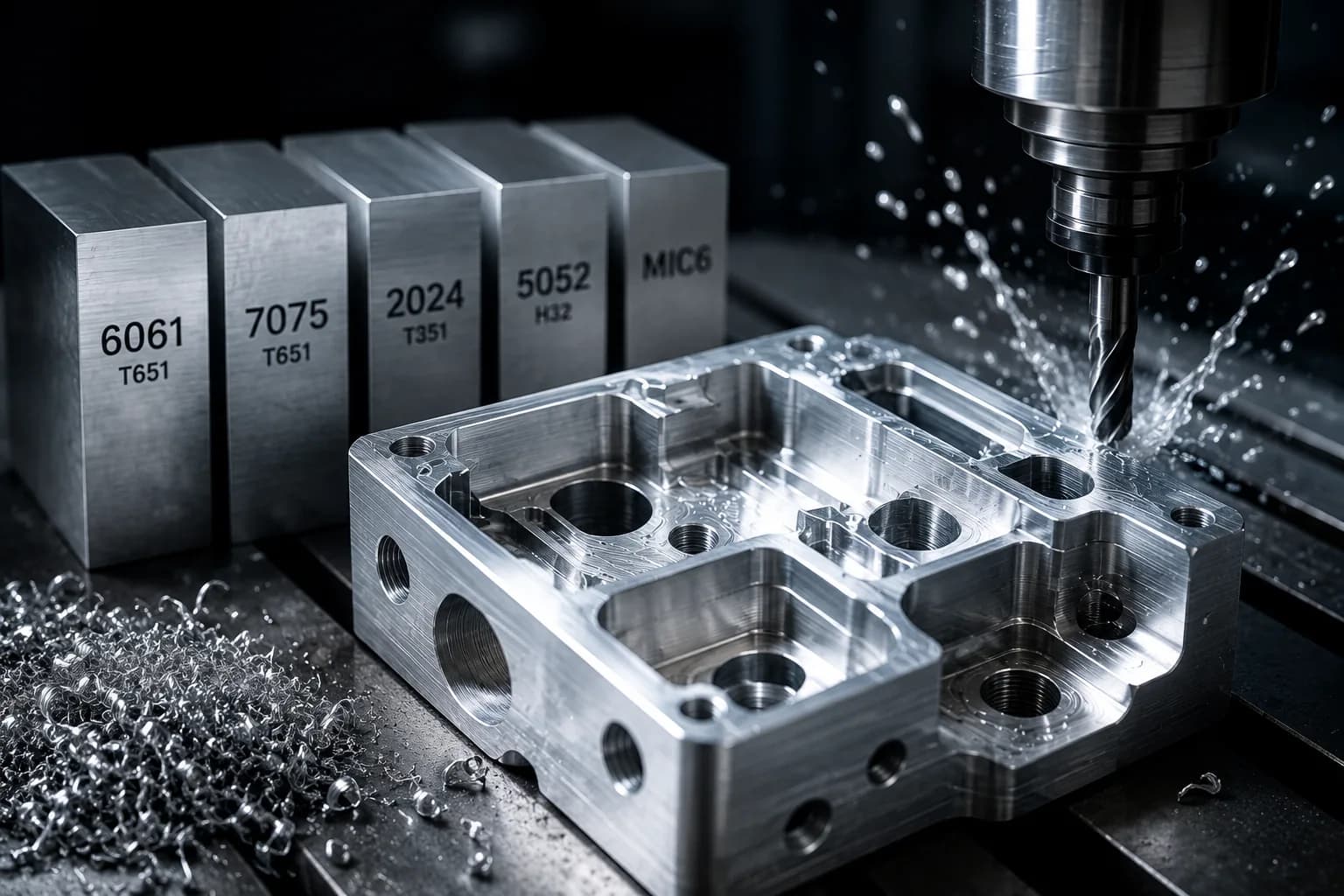
Aluminum 6061-T6: the most widely used material in CNC machining thanks to its excellent balance of strength, machinability, and cost. Ideal for functional prototypes, fixtures, structural components, and general production.
Aluminum 7075-T6: higher mechanical strength and better strength-to-weight ratio. Common in high-performance applications where the part needs greater rigidity or structural load.
Steels
1018 Steel: economical, easy to machine, and widely used for mechanical components, supports, and structural parts.
1045 Steel: higher strength and hardness than 1018; common in shafts, mechanical components, and load-bearing parts.
4140 Steel: high-strength alloy steel used in shafts, tooling, and demanding industrial components.
304 Stainless Steel: excellent corrosion and moisture resistance; widely used in industrial, sanitary, and aggressive environments.
Engineering plastics
Nylon: one of the most widely used engineering plastics in industrial manufacturing for mechanical strength, impact absorption, and good wear resistance. Common in bushings, guides, rollers, and sliding components.
Acetal: excellent dimensional stability and low friction; ideal for precision mechanical components and moving parts.
UHMW: stands out for wear resistance and very low friction; frequently used in guides and material handling.
PEEK: high-performance plastic for demanding temperature, chemical, and precision applications; considerably more expensive than other engineering polymers.
| Material | Common applications | Relative cost | Machinability |
|---|---|---|---|
| Aluminum 6061-T6 | Prototypes, fixtures, enclosures, and structural parts | $$ | Excellent |
| Aluminum 7075-T6 | High-performance components and higher-strength parts | $$$ | Good |
| 1018 Steel | Supports, mechanical parts, and structural components | $ | Excellent |
| 4140 Steel | Shafts, tooling, and load-bearing components | $$ | Good |
| 304 Stainless Steel | Corrosive, sanitary, and industrial environments | $$$ | Moderate |
| Nylon | Bushings, rollers, guides, and wear parts | $$ | Good |
| Acetal | Precision mechanical components and sliding parts | $$ | Excellent |
| UHMW | Guides, liners, and low-friction surfaces | $$ | Good |
| PEEK | High-performance and demanding-environment applications | $$$$ | Demanding |
CNC processes used in low-volume production
CNC milling
CNC milling is one of the most widely used processes in low-volume production thanks to its flexibility for complex geometries and prismatic parts.
It is frequently used for enclosures, brackets, plates, cavities, structural components, fixtures, and parts with multiple machined faces.
It is ideal for functional prototypes and small runs where fast design changes, good dimensional precision, and a wide variety of materials are required.
See CNC milling.
CNC turning
CNC turning is used to manufacture cylindrical or rotational parts with high precision and repeatability.
It is common for shafts, bushings, connectors, pins, spacers, fittings, and mechanical components where diameter and concentricity are critical.
In low-volume production, turning lets you manufacture parts quickly with excellent dimensional control even in small lots.
See CNC turning.
Multitask machining centers
Multitask centers combine milling and turning operations within the same machine.
This reduces setups, improves concentricity, and manufactures complex parts more efficiently — especially when the component requires multiple operations in different orientations.
On low-volume projects, reducing setup changes helps shorten lead times and improve consistency between parts.
See CNC mill-turn machining.
Swiss-type machining
Swiss-type machining is focused on small, high-precision parts and complex geometries.
It is widely used for medical components, connectors, electronics, miniature parts, and precision hardware where tight tolerances and excellent repeatability are required.
Thanks to close material support during cutting, this process offers great stability on long components and small diameters.
See Swiss-type machining.
Drilling and threading
Operations such as drilling, tapping, and threading are fundamental in most low- and medium-volume CNC parts.
These features are usually integrated within the main machining program or as secondary operations depending on part complexity.
Correct tool selection, thread pitch, and cutting parameters are key to ensuring repeatability and quality in mechanical components.
See drilling & threading.
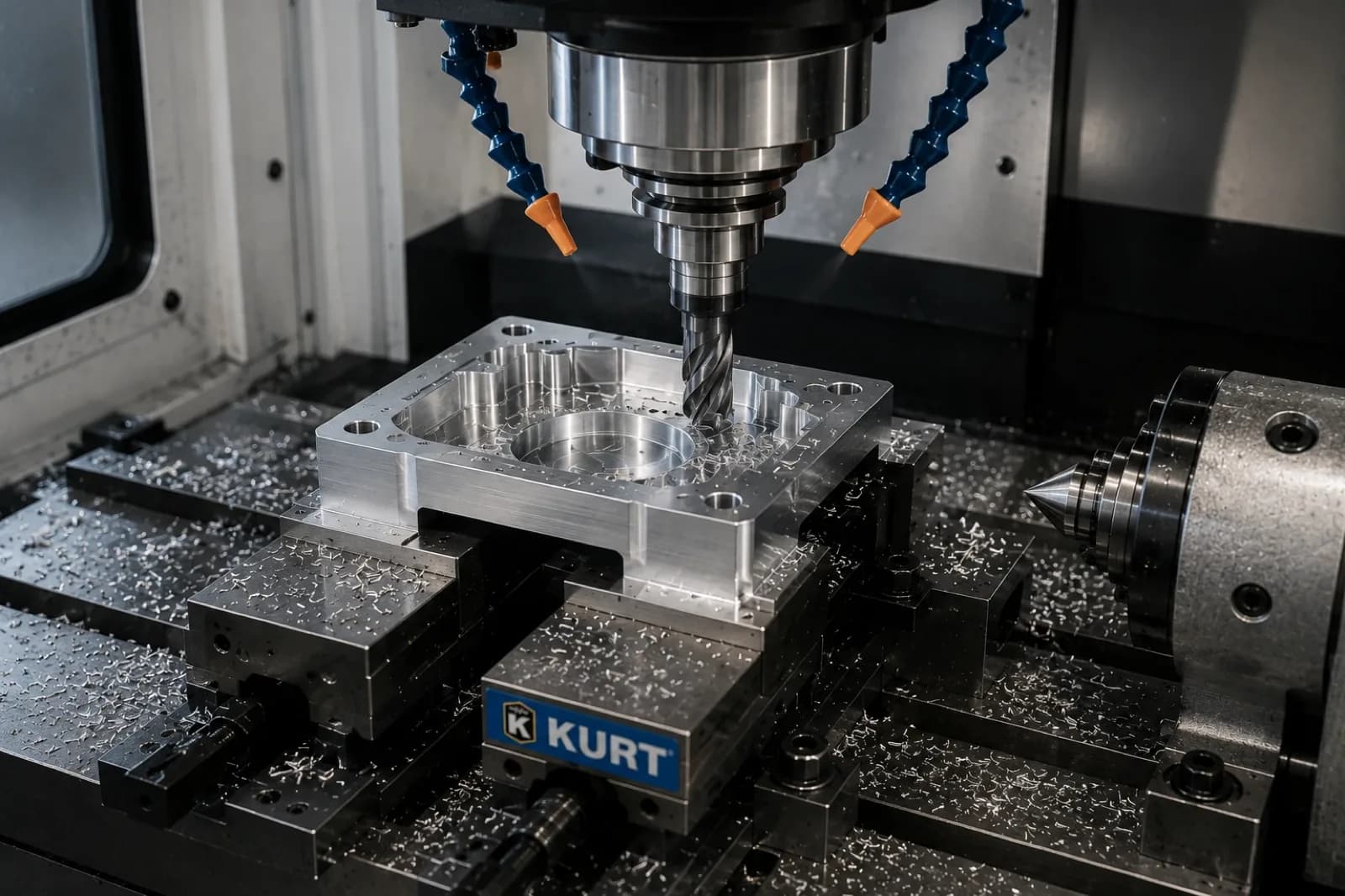
How to reduce costs in low-volume CNC production
In low-volume CNC production, cost per part will naturally be higher than in mass production. This happens because programming, setups, inspection, and machine preparation are spread across fewer parts.
However, that does not mean the project has to be unnecessarily expensive.
Much of CNC manufacturing cost depends directly on design, tolerances, material selection, and manufacturing complexity. A design optimized for manufacturability can considerably reduce machining time, setups, and material waste.
In many cases, small geometric changes can have a significant impact on machine time, tool selection, and manufacturing difficulty.
That is why optimizing design from early stages helps keep costs more controlled without compromising functionality.
- Simplify geometries — avoid extremely deep cavities, overly thin walls, or hard-to-machine details when they are not functionally necessary
- Use reasonable tolerances — apply tight tolerances only where they truly affect assembly or performance
- Select common materials — widely available materials usually reduce cost and lead time
- Keep standard internal radii — commercial tools allow faster, more efficient manufacturing
- Reduce setup changes — design parts that can be machined in fewer orientations
- Nest parts when possible — use plates or multiple configurations to reduce operational time
- Choose appropriate finishes — use secondary finishes only when they add real functional or visual value
The importance of designing for manufacturability
Many parts increase cost considerably not because of material, but because of manufacturing difficulty.
Features such as excessive tolerances, unnecessary complex geometry, deep cavities, or multiple setups can significantly increase total machining time.
Designing for manufacturability from the start helps reduce CAM time, tool changes, inspection, and secondary operations.
Factors that usually increase cost
| Factor | Cost impact |
|---|---|
| Tight tolerances on multiple dimensions | High |
| Specialty or hard-to-source materials | High |
| Unnecessary secondary finishes | Medium to high |
| Complex multi-axis geometries | High |
| Multiple setups per part | High |
| Highly complex one-off parts | Very high |
Working with a supplier that understands low-volume manufacturing also makes a big difference.
Early manufacturability review can help identify opportunities to reduce machine time, simplify operations, and improve costs before production begins.
PREMSA Industries supports low-volume CNC projects with manufacturing feedback, process selection, and optimization for prototypes, pilot lots, and initial production.
Lead times in low-volume CNC machining
One of the main benefits of low-volume CNC machining is the ability to manufacture functional parts much faster than processes that require molds or dedicated tooling.
However, lead times can vary considerably depending on material, geometric complexity, part quantity, required finishes, and available production capacity.
Simple projects manufactured in common materials such as Aluminum 6061-T6 or 1018 Steel, with as-machined finish and clear CAD files, can usually move much faster than complex parts with multiple setups, tight tolerances, or secondary processes.
External treatments such as anodizing, paint, heat treatment, or coatings usually add additional time to the production flow.
The clarity of submitted information also directly impacts response time.
Well-prepared STEP models, clear drawings, defined quantities, and complete specifications help accelerate manufacturability review, quoting, and programming.
Incomplete files or ambiguous information usually generate additional clarifications and unnecessary delays.
Factors that impact lead time
- Material availability — specialty or out-of-stock materials can extend timelines
- Geometric complexity — parts with multiple setups or tight tolerances require more time
- Part quantity — larger lots usually increase total machining time
- Secondary processes — anodizing, paint, heat treatment, and additional inspection add time
- Production load — machine availability and shop capacity affect scheduling
- CAD package quality — clear files accelerate quoting and manufacturing
On urgent projects, optimizing design and selecting common materials can help considerably reduce manufacturing times.
It is also important to work with a supplier that has processes focused on fast response and flexible production.
To go deeper on acceleration strategies and lead times, see our fast CNC machining guide.
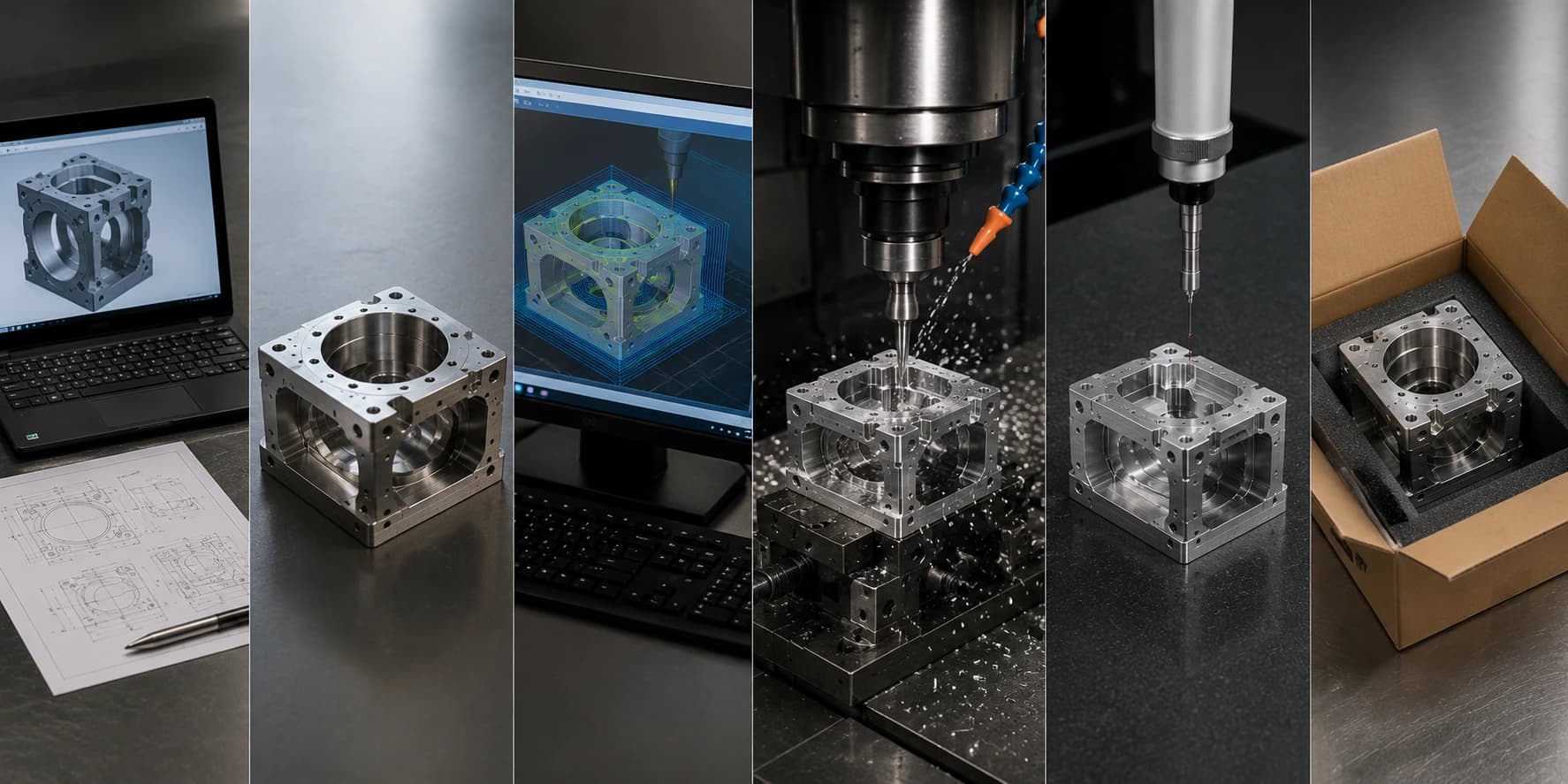
Typical production flow on low-volume projects
| Stage | Description |
|---|---|
| Quoting and initial review | Receipt of CAD files, materials, quantities, and requirements |
| Manufacturability review | Evaluation of geometries, tolerances, risks, and processes |
| CNC programming | Toolpath generation, tools, and simulation |
| Preparation and setup | Material mounting, tools, and machine alignment |
| Part machining | Milling, turning, and secondary operations |
| Dimensional inspection | Verification of critical dimensions and release |
| Packaging and shipping | Part protection and logistics to final destination |
PREMSA Industries manufactures low-volume CNC parts with a focus on fast response times, manufacturability support, and flexible production for prototypes, spares, and pilot lots.
Difference between low-volume CNC machining and mass production
Low-volume CNC machining and mass production respond to completely different needs within product development and manufacturing.
While mass production seeks to minimize unit cost through large volumes and highly optimized processes, low-volume CNC machining prioritizes flexibility, response speed, and lower initial risk.
That is why many companies use both strategies at different stages of a product lifecycle.
In early stages, manufacturing a few parts quickly is usually more important than getting the lowest possible cost.
Before investing in dedicated tooling, molds, or specialized production lines, many companies need to validate functionality, assemblies, market demand, and real product performance.
Low-volume CNC lets you advance those stages with much greater flexibility.
Comparison between low volume and mass production
| Factor | Low-volume CNC machining | Mass production |
|---|---|---|
| Design flexibility | High; allows fast changes between revisions | Limited once tooling is defined |
| Unit cost at small quantities | Higher but predictable | Very high or not viable |
| Time to first parts | Fast | Slower due to tooling and preparation |
| Need for dedicated tooling | Not required | Usually indispensable |
| Design changes | Much more flexible | Costly and slow |
| Inventory risk | Low | Higher investment in inventory and production |
| Typical volume | From prototypes to small lots | Thousands or millions of parts |
| Ideal for | Validation, pilots, and initial production | Stable high-volume production |
Mass production can offer considerably lower unit costs once the product is fully validated and stable demand exists.
However, reaching that point too early can also increase financial risk, tied-up inventory, and unnecessary tooling costs.
That is why many companies use CNC machining as a bridge between development and scalable manufacturing.
PREMSA Industries manufactures CNC parts for prototypes, pilot lots, and initial production, helping companies develop products before scaling to mass manufacturing.
How PREMSA Industries manufactures low-volume CNC parts
At PREMSA Industries we work on CNC machining projects where speed, flexibility, and iteration capability matter as much as manufacturing precision.
Many products do not start with mass production. They begin as prototypes, functional validations, pilot lots, or first commercial runs. That is why we structure our processes to manufacture low-volume CNC parts quickly, repeatably, and adaptably across different development stages.
Our workflow is designed to serve from one-off parts through small and medium production runs using industrial precision processes.
This lets us manufacture functional components in aluminum, steel, stainless steel, and engineering plastics without depending on extremely high minimum quantities or dedicated tooling from early stages.
- Manufacturing from a few parts — prototypes, spares, and initial production based on project requirements
- Flexible CNC production — small lots, pilots, and repeat low-volume parts
- Fast quoting — upload CAD files and specifications directly at request a quote
- Manufacturability review — evaluation of geometries, tolerances, and processes before production
- CNC milling and turning — manufacture of prismatic and rotational parts
- Industrial materials — aluminum, steels, stainless steel, copper, brass, and engineering plastics
- Finishes and secondary processes — anodizing, paint, treatments, and functional finishes as required
- Scalable production — transition from prototypes to repeat runs as the product evolves
Beyond manufacturing parts, we also support projects with manufacturing feedback to help reduce unnecessary complexity, improve lead times, and optimize costs from early stages.
This is especially important in product development projects where small changes can significantly impact machine time, setups, and manufacturing difficulty.
If you are still preparing models or technical documentation, our CAD file to CNC machining guide explains how to structure files and specifications to accelerate quoting and production.
Upload your CAD file and get a quote · Talk to PREMSA Industries
Frequently asked questions about low-volume CNC machining
Answers on minimum quantities, lead times, materials, CAD files, and flexible CNC production with PREMSA Industries.
- Can you manufacture from a single part?
- Yes. At PREMSA Industries we manufacture from one-off prototypes through small runs and initial production depending on project, material, and manufacturing complexity.
- What quantity is considered low volume?
- Low-volume CNC machining typically ranges from 1 part to small or medium lots used for validation, pilot production, spares, or first commercial runs.
- What materials do you handle for low-volume production?
- We manufacture parts in aluminum, steel, stainless steel, copper, brass, and engineering plastics such as Nylon, Acetal, UHMW, and PEEK. We also work with specialty materials depending on availability and application.
- What is the typical lead time?
- It depends on part complexity, material, quantity, finishes, and production load. Simple projects can move quickly once the quote is approved and technical requirements are defined.
- What files do I need to request a quote?
- We recommend sending a STEP file of the 3D model along with quantity, material, finishes, and any critical tolerances. PDF drawings help when specific dimensions or notes are important for manufacturing.
- Do you accept STEP files?
- Yes. STEP is one of the preferred formats for CNC quoting and manufacturing because it correctly preserves the solid geometry of the model.
- Can you manufacture prototypes and then repeat production?
- Yes. Many projects begin as prototypes or pilot lots and later evolve into repeat runs as the product matures or demand increases.
- What tolerances do you handle?
- Tolerances depend on geometry, material, and part function. When no special requirements exist, general manufacturing tolerances suitable for standard CNC production are usually applied.
- Is low-volume CNC machining more expensive?
- Unit cost is normally higher than in mass production because programming, setup, and inspection are spread across fewer parts. However, it is usually much more economical and flexible than investing in dedicated tooling during early stages.
- Can you manufacture industrial spares?
- Yes. Low-volume CNC machining is widely used to manufacture spares, discontinued components, and urgent parts for industrial maintenance and automation.
- What CNC processes do you use?
- Depending on the project we use CNC milling, CNC turning, mill-turn machining, drilling, threading, and other complementary processes.
- Can you ship parts outside Mexico?
- Yes. We coordinate domestic and international shipments depending on destination, urgency, and project logistics requirements.
Yes. At PREMSA Industries we manufacture from one-off prototypes through small runs and initial production depending on project, material, and manufacturing complexity.
Low-volume CNC machining typically ranges from 1 part to small or medium lots used for validation, pilot production, spares, or first commercial runs.
It depends on part complexity, material, quantity, finishes, and production load. Simple projects can move quickly once the quote is approved and technical requirements are defined.
We recommend sending a STEP file of the 3D model along with quantity, material, finishes, and any critical tolerances. PDF drawings help when specific dimensions or notes are important for manufacturing.
Yes. STEP is one of the preferred formats for CNC quoting and manufacturing because it correctly preserves the solid geometry of the model.
Yes. Many projects begin as prototypes or pilot lots and later evolve into repeat runs as the product matures or demand increases.
Tolerances depend on geometry, material, and part function. When no special requirements exist, general manufacturing tolerances suitable for standard CNC production are usually applied.
Unit cost is normally higher than in mass production because programming, setup, and inspection are spread across fewer parts. However, it is usually much more economical and flexible than investing in dedicated tooling during early stages.
Yes. Low-volume CNC machining is widely used to manufacture spares, discontinued components, and urgent parts for industrial maintenance and automation.
Depending on the project we use CNC milling, CNC turning, mill-turn machining, drilling, threading, and other complementary processes.
Yes. We coordinate domestic and international shipments depending on destination, urgency, and project logistics requirements.
Conclusion
Low-volume CNC machining lets you manufacture functional parts without depending on mass production from early stages.
Whether for prototypes, product validation, industrial spares, or initial production, this manufacturing model offers the flexibility needed to develop projects quickly while maintaining industrial precision and quality.
Unlike processes that require molds or dedicated tooling, CNC lets you iterate designs, manufacture small lots, and scale production progressively as the product evolves.
This helps reduce risk, accelerate development, and avoid unnecessary investment before the project is fully validated.
At PREMSA Industries we manufacture CNC parts for prototypes, pilot lots, and low-volume production using industrial materials and precision manufacturing processes.
Upload your CAD file and get a quote · Talk to our team for urgent projects, initial production, or special requirements.
If you are preparing or optimizing designs, see our CNC machining design guide.

Written by
Adrian Cavazos and the PREMSA Engineering Team
Adrian Cavazos, founder of PREMSA Industries, leads a manufacturing engineering team specialized in CNC turning and milling, 3D printing, and production-ready solutions. The team works closely with customers to optimize designs, improve manufacturability (DFM), and ensure reliable, scalable production from prototypes to volume manufacturing.