
A fast CNC machining quote is not only about a supplier replying quickly. Above all, it depends on the part being clearly defined from the first submission. When that does not happen, apparent speed turns into emails, clarifications, scope changes, and delays that end up costing more than waiting a few extra hours.
For engineering, procurement, and operations, the challenge is not just getting a price. The real task is validating whether the part is manufacturable, whether tolerances match function, whether the material is right for the process, and whether the quoted lead time is realistic. A useful quote does not only say how much it costs. It also reduces technical uncertainty.
At PREMSA Industries, quoting speed is tied to the quality of the technical package received and an integrated manufacturability review - not to returning a number without analyzing the file. If your goal is to request a CNC quote accurately, the starting point is almost always design and documentation, not commercial negotiation.
| Dimension | What must be clear | If missing, what happens |
|---|---|---|
| Manufacturability | Accessible geometry, radii, depths, setups | Risk-inflated price or late clarifications |
| Material and process | Exact grade, finish, secondary operations | Wrong assumptions in cost and lead time |
| Tolerances | Critical surfaces vs general surfaces | Overcost from unnecessary inspection |
| Volume and stage | Prototype, validation, or repetitive production | Poorly estimated fixturing strategy and unit cost |
| Lead time | Consistent with complexity and material | Committed dates without technical basis |
What makes a fast CNC machining quote possible
Quoting speed comes from technical clarity. If a CAD model arrives complete, with coherent geometry, defined material, specified finish, and understandable tolerances, analysis moves quickly. If any of those elements are missing, the supplier must assume, ask, or price in risk.
In CNC machining, quoting is not multiplying volume by material and machine time. Evaluation includes workholding strategy, number of setups, tool access, depth-to-diameter ratio, internal radii, secondary operations, required inspection, and the difference between prototyping and production. That is why two visually similar parts can have very different costs and lead times.
The best fast quote is not the shortest one. It is the one that arrives quickly because there was less technical friction from the start. To dive deeper into price drivers once the file is analyzed, review what affects CNC machined part cost most.
Technical clarity vs apparent speed
- Technical clarity - the supplier understands the part without guessing material, tolerances, or volume.
- Apparent speed - price arrives fast but is based on assumptions later corrected through emails and re-quotes.
- Useful quote - combines timely response with DFM observations, closed scope, and lead time consistent with process reality.
- Time to correct part - the metric that matters in real projects, not only the minute a PDF is sent.
The CAD file defines more than 50% of analysis time
In many projects, the bottleneck is not on the shop floor, but in the file. Models without geometric cleanup, outdated versions, duplicated features, or improperly closed bodies force manual review where the process should be automatic or nearly immediate.
To speed up quoting, the 3D model must represent the real final part. If there are inserts, threads, critical chamfers, stepped bores, or deep cavities, they should be modeled correctly. If an operation will be done later, that should be clarified. When the file and drawing do not match, quoting stops because the team first has to resolve which document is the source of truth.
Format, topology, and documentation package
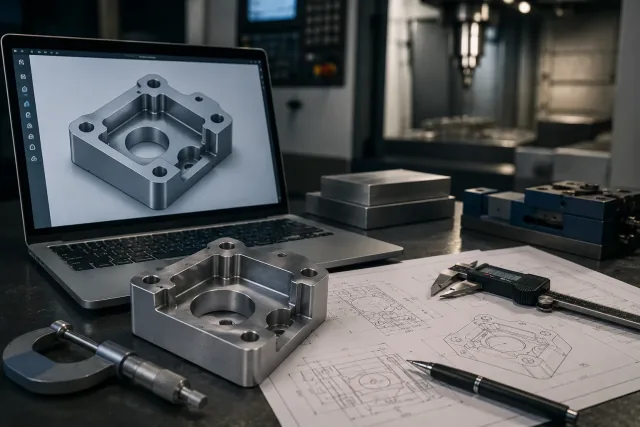
Format also matters. A well-exported STEP file usually works better for manufacturability review than a neutral file with topology errors. If the 2D drawing includes geometric tolerances, special notes, or localized finishes, it must accompany the model from the beginning. Without that, a price may come quickly, but not necessarily correctly.
The guide CAD file to CNC machining quote details formats, export practices, and the minimum package that speeds up technical review and quoting.
| File issue | Effect on quote | Recommended correction |
|---|---|---|
| Open bodies or corrupted geometry | Mandatory manual review | Repair the solid in CAD before submission |
| Outdated STEP vs PDF drawing | Stop due to document mismatch | Synchronize revision and source of truth |
| Unmodeled features (threads, chamfers) | Wrong process assumptions | Model them or annotate explicitly in the drawing |
| No material or finish in RFQ | Back-and-forth questions | Include grade, treatment, and Ra/finish target |
| Ambiguous or contradictory tolerances | Inflated risk in pricing | Use ISO 2768 + limits on critical interfaces |
What information should never be missing in a CNC RFQ
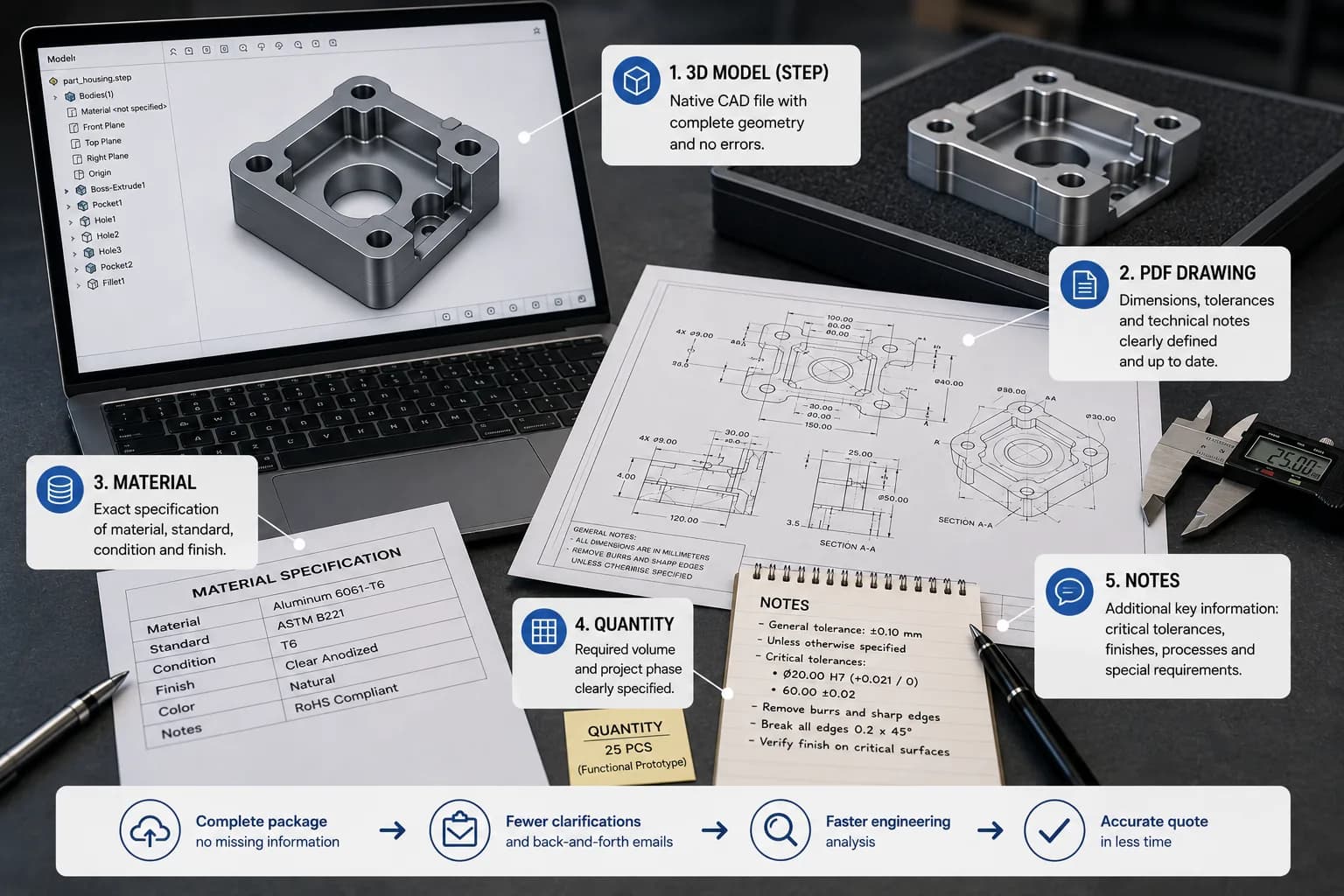
If you want real speed, the part should arrive with material, quantity, finish, critical tolerances, and intended use. You do not need to over-document everything, but you do need to remove ambiguity. A buyer can request pricing without knowing every machining detail, but someone on the team must define what is functionally critical and what is not.
Material: grade matters, not only family
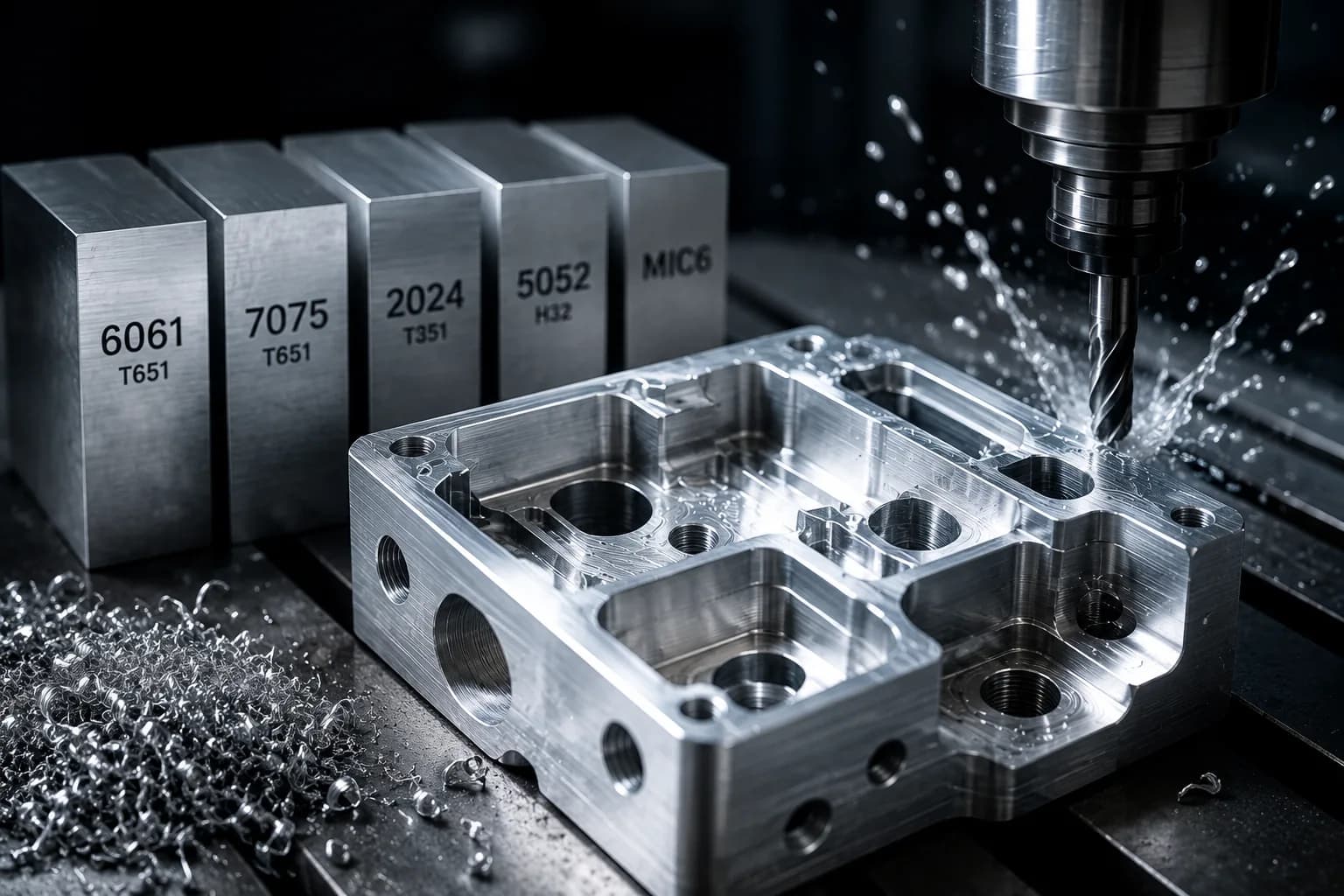
A common example is requesting aluminum without specifying grade. Quoting 6061-T6 aluminum for a standard structural part is not the same as quoting 7075-T6 for higher mechanical demands. The same applies to engineering plastics, where changing from acetal to PEEK alters cost, tooling, cutting strategy, and availability.
To compare options before sending the RFQ, review the manufacturing materials catalog and the guide on CNC machining material cost.
- 3D model - solid STEP, controlled revision, final geometry represented.
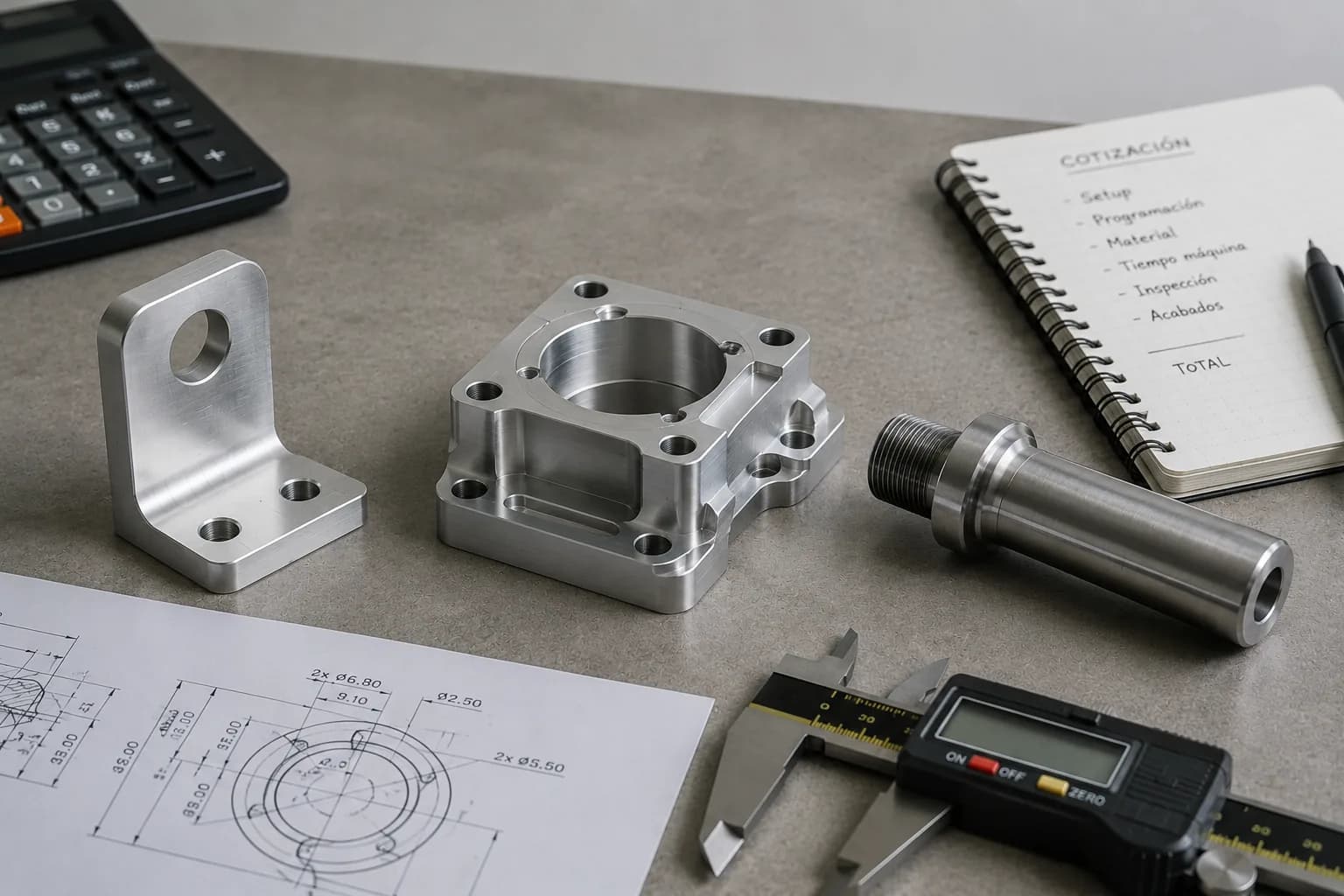
- PDF drawing - critical tolerances, GD&T, finish notes, and threads where applicable.
- Material - grade, heat treatment, or supply condition.
- Quantity and stage - prototype (1-5), validation (10-50), or repetitive production.
- Finish - as machined, anodized, passivated, Ra target, etc.
- Target date - to align lead time with real capacity and complexity.
Why a fast quote gets delayed
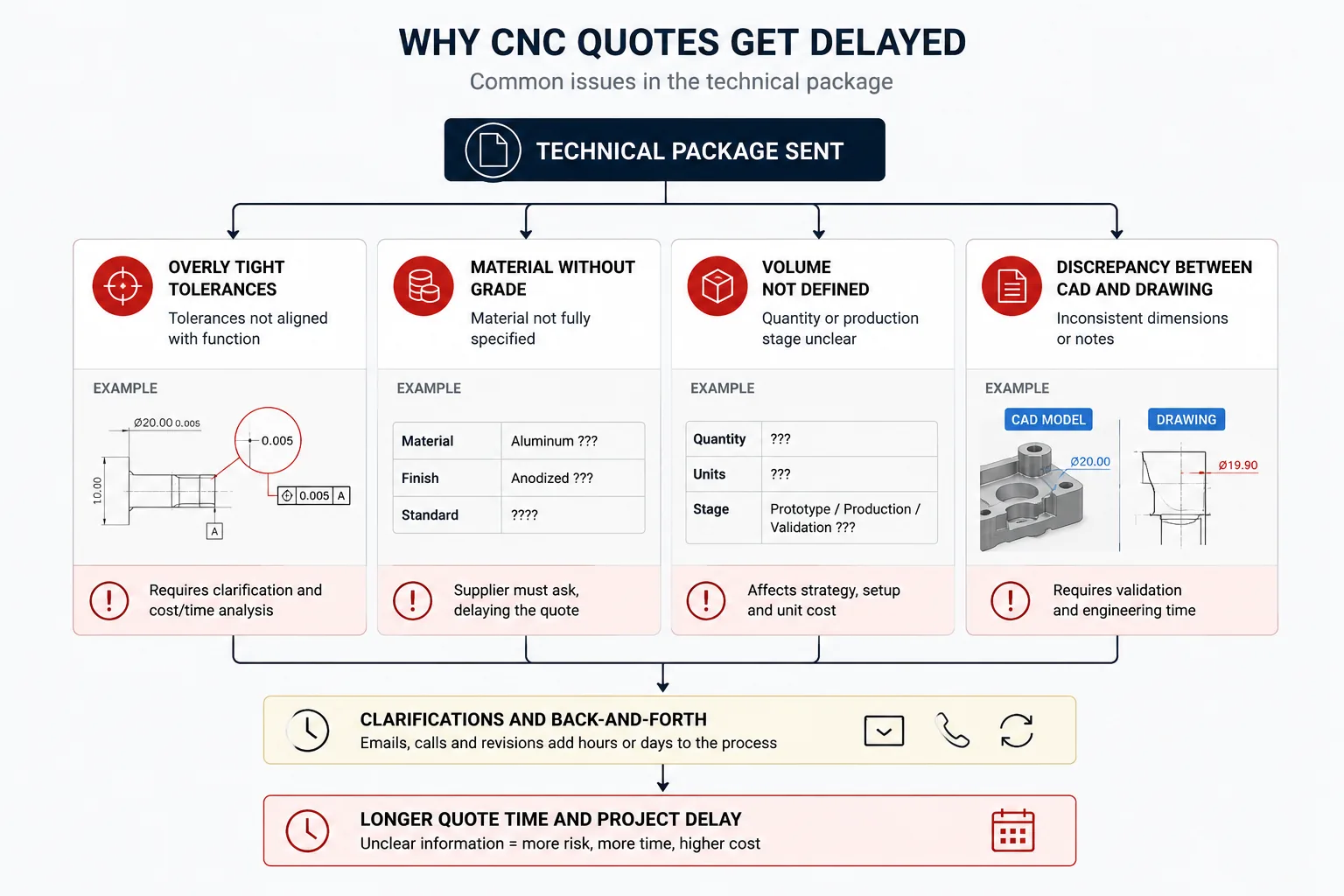
Most delays repeat the same patterns. General tolerances that are too tight, non-standard threads, thin walls, internal radii impossible for the selected tool, or deep cavities with unfavorable diameter-to-length ratios. None of this always prevents manufacturing, but it does force review of risk, cycle time, and rejection probability.
Volume and manufacturing strategy
Another frequent blocker is missing volume context. A part for 2 units is not quoted the same way as one for 500, even with identical geometry. In low volume, a strategy with more setups and less dedicated fixturing may be reasonable. In repetitive runs, design changes that reduce per-part time are often worth evaluating. Without this information, the quote remains technically incomplete.
For prototypes and short runs without inflated MOQs, low-volume CNC machining lets you quote realistic quantities.
Poorly specified surface finish
Surface finish also has major impact. Saying only "anodized" or "polished" is rarely enough. There are differences between decorative anodizing and hard anodizing, and between a standard machined finish and controlled roughness. If the requirement is unclear, the supplier has to assume process and cost.
Use the manufacturing finishes library to specify accurately without inflating scope.
| Cause | Why it slows quoting | How to avoid it |
|---|---|---|
| ±0.01 mm tolerances across the whole part | Inspection and process uncertainty | Apply critical tolerances only at interfaces |
| Special threads without justification | Non-standard tools and extended cycle time | Use metric/UNC threads where load allows |
| No declared quantity | Impossible to estimate setup vs cycle | Declare volume and project stage |
| Generic finish ("anodized") | Assumed process and cost | Specify type, thickness, or Ra |
| CAD does not match 2D drawing | Pause until source is clarified | One revision, one coherent package |
DFM: the difference between quoting fast and quoting twice
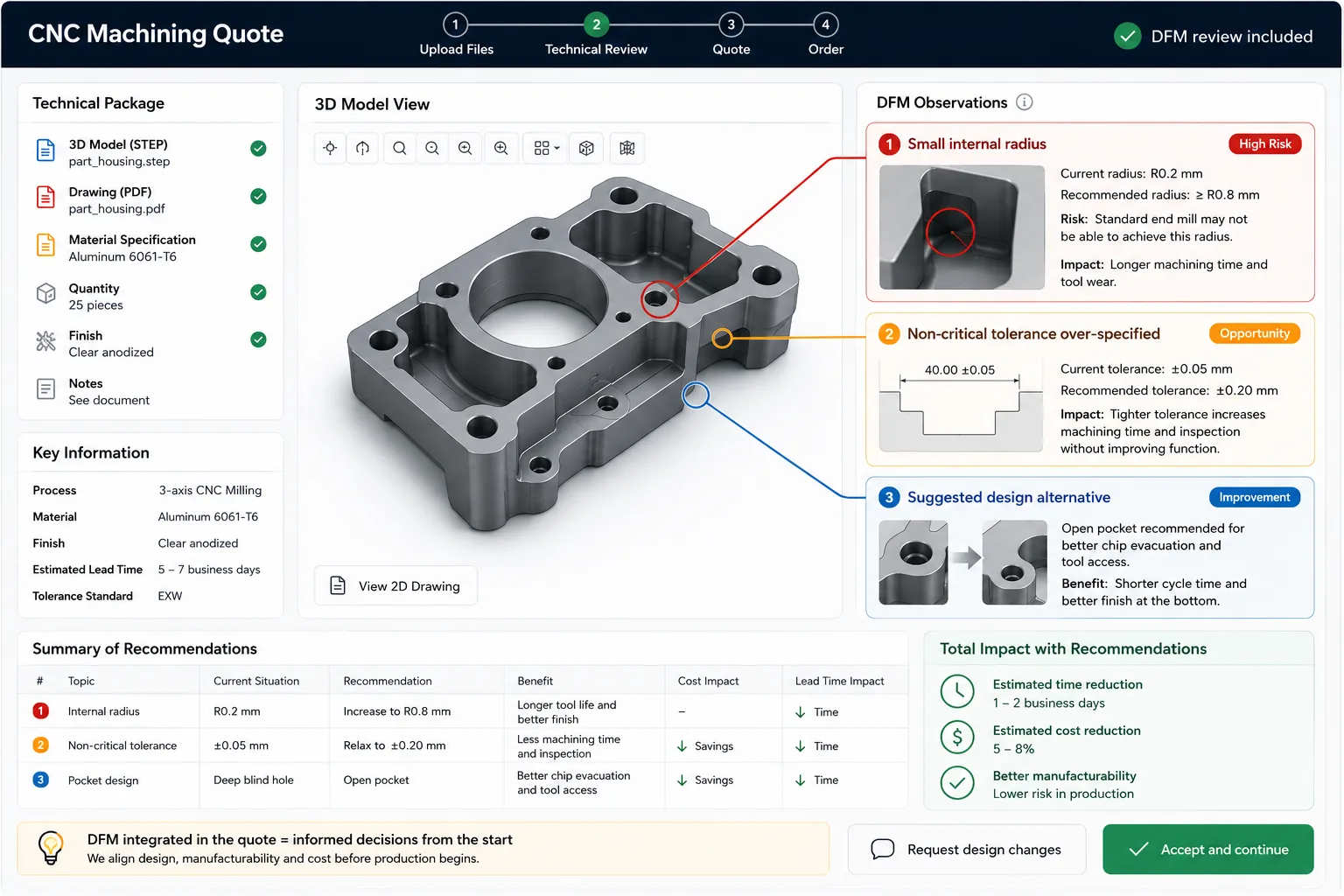
When a quote includes DFM review, the goal is not to slow the project. It is to prevent a part from reaching production with a design that unnecessarily increases machining cost or introduces dimensional risk.
This is a key point: speed does not mean accepting any geometry without challenge. A serious platform identifies issues before manufacturing. If a pocket requires an extremely long tool, if a thread is too close to an edge, or if a positional tolerance does not align with function, it is better to flag it before issuing a purchase order.
That early analysis saves total project time. Sometimes the best way to accelerate delivery is proposing a larger radius, relaxing a non-critical tolerance, or standardizing a bore. These are small CAD changes that can reduce machining hours, inspection effort, and rework. More context in DFM feedback before manufacturing and in the CNC machining design guidelines.
Quoting fast without DFM can mean quoting twice: once with optimistic assumptions and again when shop-floor reality appears in production.
What you actually buy when you request a quote
You are not buying a number. You are buying a technical interpretation of the file. If that interpretation is weak, the price may look competitive while hiding doubts that later appear as engineering changes, commercial adjustments, or production deviations.
That is why it helps to evaluate a quote with three simple questions: did the supplier understand the part, did they flag real manufacturing risks, and is the proposed lead time consistent with the process? When those three are aligned, purchasing moves forward with less friction.
To compare offers fairly - same technical baseline, not only the lowest number - use the guide on how to compare CNC machining quotes.
| Question | Positive signal | Warning signal |
|---|---|---|
| Did they understand the part? | Comments on specific features, material, and process | Price with no questions on complex geometry |
| Did they flag real risks? | DFM comments, documented assumptions | Silence on tight tolerances or deep cavities |
| Is lead time coherent? | Timeline aligned with setups, material, and finish | Aggressive delivery without validated technical scope |
How to prepare an RFQ that truly accelerates the process
If the goal is shorter response times, the request itself must be designed so analysis flows. It is not about sending more documents for the sake of it - it is about removing ambiguity in the points that most influence cost, risk, and lead time.
- Step 1 - Coherent technical package - 3D model, drawing if applicable, material, quantity, finish, critical tolerances, and target date in one revision.
- Step 2 - Separate critical from desirable - mark assembly surfaces and functional dimensions; avoid tight tolerances across the whole part as overprotection.
- Step 3 - Declare project stage - prototype, validation, or repetitive production; each stage supports different fixturing, inspection, and unit-cost decisions.
Checklist before sending the RFQ
- Solid STEP exported without geometry errors.
- PDF drawing aligned with the 3D model (same revision).
- Material with exact grade, not only generic family.
- Realistic quantity for the project stage.
- Specified finish (type, not only trade name).
- Critical tolerances identified; reasonable general tolerances elsewhere.
- Use context: assembly, load, corrosion, and temperature if applicable.
Procurement and engineering do not play the same role
Procurement usually focuses on comparability across suppliers, deadlines, and commercial conditions. Engineering focuses on feasibility, function, and risk. A fast CNC machining quote works best when both teams share the same technical package and decision criteria.
If procurement sends an incomplete RFQ to gain time, engineering will end up answering clarifications later. If engineering defines a part without manufacturability in mind, procurement receives high prices or variable offers that are hard to compare. Friction appears exactly in that middle space.
A well-structured digital workflow reduces this problem by centralizing files, DFM comments, revisions, and approved scope. At PREMSA Industries, this approach works because speed depends not only on commercial response time, but on how technical review is structured before releasing the part - whether from Monterrey or for projects across Mexico and North America.
When a quote that is too fast should raise concern
There are cases where responding in minutes is not an advantage, but a sign of shallow analysis. If a part has tight tolerances, multiple operations, special material, or secondary finish, an instant quote with no questions may omit key variables.
This does not mean fast is bad. It means speed should come with technical judgment. If the model is simple and well-defined, the price can be very fast. But if the project is complex, the right behavior is for the supplier to confirm assumptions and flag constraints. Sometimes one extra hour of review avoids several lost days later.
Best practice is speed with traceability: clear what was quoted, under which specifications, and with which process assumptions. That is what turns a purchase order into production without reinterpretation.
The right metric is not response time, but time to correct part
Many companies measure supplier efficiency by how quickly they send a price. That metric helps, but it is incomplete. What actually matters is how long the project takes to go from CAD file to a correct part that can be inspected and used.
If a quote arrives in 20 minutes but needs three corrections later, it was not truly fast. If it arrives in a few hours with clear DFM observations, defined materials, and closed scope, it likely shortens the full project timeline. In manufacturing, useful speed is always tied to technical accuracy.
Next time you request pricing, focus less on immediate numbers and more on removing friction from the file itself. That is where true speed starts. To shorten the complete timeline - not only RFQ - also review how to reduce manufacturing lead times and fast CNC machining: reduce lead time.
The fastest quote is not the one that arrives first. It is the one that lets you manufacture the correct part on the first run, with the fewest possible corrections.
Conclusion: useful speed starts in the file
A fast CNC machining quote is not a commercial trick or a timer on a supplier website. It is the result of submitting a well-defined part: clean CAD, graded material, function-aligned tolerances, clear finish, and honest volume context.
When that package arrives complete, review moves forward, price reflects the real process, lead time is credible, and production starts without reinterpretation. That is what engineering, procurement, and operations need - not just a number in a PDF.
If you are quoting your next part, start with the file. Request a quote with DFM review, pair this guide with CAD file to CNC machining quote and CNC machining tolerances guide so the response is fast because it was clear, not because it skipped what matters.
Frequently asked questions about fast CNC machining quotes
Direct answers for engineering, procurement, and operations teams that need pricing, lead time, and technical validation without unnecessary friction.
- What makes a CNC quote truly fast?
- Technical clarity from the first submission: clean STEP, aligned drawing, defined material grade, quantity, finish, and identified critical tolerances. When the supplier does not have to assume or request clarifications, analysis and response move much faster.
- What files should I send for a CNC machining quote?
- At minimum, a solid STEP model. Ideally, include a PDF drawing with critical tolerances and notes, material specification, quantity, required finish, and target date. The more complete the package, the faster and more accurate the quote.
- Why is my quote delayed even when the supplier responds quickly?
- Because apparent speed in the first number does not remove later clarifications. Common delays come from outdated CAD, drawing not matching 3D model, material without grade, undeclared volume, or ambiguous tolerances that force re-quoting.
- Is an instant quote always a good sign?
- Not always. For simple, well-defined parts it may be correct. For projects with tight tolerances, special materials, or multiple operations, an immediate price with no questions may omit variables that later appear as scope changes or delays.
- What material information should I include?
- The exact grade, not only the family. For example, 6061-T6 vs 7075-T6 aluminum, 304 vs 316 stainless, or acetal vs PEEK. Each change affects machinability, cost, tools, lead time, and stock availability.
- How does volume affect a CNC quote?
- A part for 2 units is not quoted the same way as 500 units with the same geometry. Setup is a fixed cost that dilutes with volume; fixturing, inspection, and programming strategy also change between prototype and repetitive production.
- What is DFM in the context of a quote?
- It is the manufacturability review integrated into the quote: detecting problematic radii, over-specified tolerances, costly geometry, or contradictory specifications before production release. It prevents quoting twice or building from incorrect assumptions.
- How do I align engineering and procurement in a CNC RFQ?
- By sharing the same technical package and decision criteria. Engineering defines what is functionally critical; procurement ensures the RFQ includes material, quantity, finish, and schedule. Incomplete RFQs from procurement create clarifications engineering answers too late.
- What is the right metric to evaluate a CNC supplier?
- Time to correct part - from CAD file to an inspectable, usable part - not only quote response time. A quote that arrives in 20 minutes but needs three corrections was not faster in the full project timeline.
- Does PREMSA provide fast CNC quotes with technical review?
- Yes. At PREMSA Industries, the online quote workflow integrates manufacturability review and technical validation for projects in Monterrey, Mexico, and North America - so price, process, and lead time reflect the real part, not assumptions on an incomplete CAD package.
Technical clarity from the first submission: clean STEP, aligned drawing, defined material grade, quantity, finish, and identified critical tolerances. When the supplier does not have to assume or request clarifications, analysis and response move much faster.
At minimum, a solid STEP model. Ideally, include a PDF drawing with critical tolerances and notes, material specification, quantity, required finish, and target date. The more complete the package, the faster and more accurate the quote.
Because apparent speed in the first number does not remove later clarifications. Common delays come from outdated CAD, drawing not matching 3D model, material without grade, undeclared volume, or ambiguous tolerances that force re-quoting.
Not always. For simple, well-defined parts it may be correct. For projects with tight tolerances, special materials, or multiple operations, an immediate price with no questions may omit variables that later appear as scope changes or delays.
The exact grade, not only the family. For example, 6061-T6 vs 7075-T6 aluminum, 304 vs 316 stainless, or acetal vs PEEK. Each change affects machinability, cost, tools, lead time, and stock availability.
A part for 2 units is not quoted the same way as 500 units with the same geometry. Setup is a fixed cost that dilutes with volume; fixturing, inspection, and programming strategy also change between prototype and repetitive production.
It is the manufacturability review integrated into the quote: detecting problematic radii, over-specified tolerances, costly geometry, or contradictory specifications before production release. It prevents quoting twice or building from incorrect assumptions.
By sharing the same technical package and decision criteria. Engineering defines what is functionally critical; procurement ensures the RFQ includes material, quantity, finish, and schedule. Incomplete RFQs from procurement create clarifications engineering answers too late.
Time to correct part - from CAD file to an inspectable, usable part - not only quote response time. A quote that arrives in 20 minutes but needs three corrections was not faster in the full project timeline.
Yes. At PREMSA Industries, the online quote workflow integrates manufacturability review and technical validation for projects in Monterrey, Mexico, and North America - so price, process, and lead time reflect the real part, not assumptions on an incomplete CAD package.
Related resources
To prepare clearer RFQs and shorten the path from CAD to correct part:
- Request a CNC quote - upload STEP, material, and quantities with integrated DFM review.
- CAD file to CNC machining quote - formats, export, and minimum technical package.
- DFM feedback before manufacturing - validate geometry and process before releasing the order.
- How to compare CNC machining quotes - evaluate prices on the same technical basis.
- What affects CNC machined part cost most - machine time, setup, material, and geometry.
- CNC machining tolerances guide - specify precision without inflating cost.
- Fast CNC machining: reduce lead time - shorten the complete project timeline.
- CNC online quote in Monterrey - quote from a single part without high MOQs.
- CNC machining design guidelines - DFM before RFQ.
- CNC machining in Monterrey - capabilities and local quoting.

Written by
Adrian Cavazos and the PREMSA Engineering Team
Adrian Cavazos, founder of PREMSA Industries, leads a manufacturing engineering team specialized in CNC machining, metal fabrication, and production-ready solutions. The team works closely with customers to optimize designs, improve manufacturability (DFM), and ensure reliable, scalable production from prototypes through volume manufacturing.