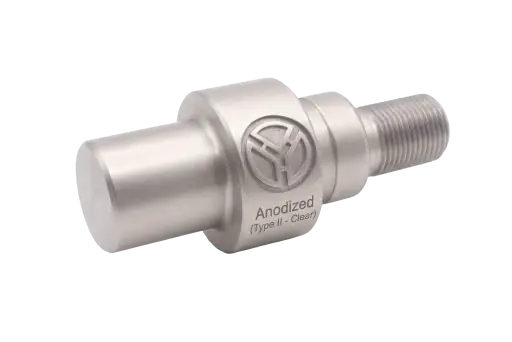
El anodizado es uno de los procesos de acabado superficial más utilizados para componentes de aluminio maquinados por CNC, ya que mejora la resistencia a la corrosión, el desempeño al desgaste, la durabilidad superficial y la consistencia cosmética en programas de prototipo y producción.
El anodizado es un proceso electroquímico de acabado superficial usado principalmente en aluminio para engrosar la capa natural de óxido en la superficie del material. Esta capa controlada mejora la resistencia a la corrosión, el desempeño al desgaste y ofrece un acabado durable y listo para producción en componentes maquinados que requieren protección y consistencia cosmética.
Como la capa anódica forma parte del aluminio y no se deposita encima como la pintura, el anodizado se utiliza ampliamente en piezas maquinadas por CNC, equipos industriales, herrajes de automatización, carcasas maquinadas, brackets y componentes de aluminio de ingeniería donde importan durabilidad, apariencia y desempeño superficial a largo plazo.
Especificaciones
Especificaciones del acabado anodizado
Características clave del anodizado relevantes para piezas maquinadas por CNC, incluyendo resistencia a la corrosión, desempeño al desgaste, comportamiento dimensional, consistencia cosmética y compatibilidad con producción en aplicaciones industriales.
Resumen del proceso de anodizado
Tipo de acabado
Recubrimiento de conversión electroquímica
Sustrato principal
Principalmente componentes de aluminio maquinados y aplicaciones no ferrosas relacionadas
Propósito principal
Mejorar resistencia a la corrosión, durabilidad superficial, desempeño al desgaste y apariencia cosmética
Apariencia típica
Mate a satinado según preparación superficial, marcas de maquinado y proceso de acabado
Opciones de color
Claro, negro, bronce, rojo, azul, dorado y otras opciones teñidas según capacidad del proceso
Tipos de proceso comunes
Anodizado sulfúrico Tipo II y anodizado duro Tipo III (hardcoat)
Comportamiento de la capa
La capa de óxido crece desde la superficie del material y penetra parcialmente el sustrato
Impacto dimensional
Puede afectar roscas, ajustes de precisión, superficies de sellado y piezas con tolerancias ajustadas
Resistencia a la corrosión
Excelente cuando se procesa y sella correctamente
Resistencia al desgaste
Buena en anodizado estándar y significativamente mayor en anodizado duro
Estabilidad UV
Generalmente estable, aunque la retención de color a largo plazo depende del tinte y del entorno
Conductividad eléctrica
Reducida en la superficie porque la capa anodizada es aislante
Materiales más compatibles
Comúnmente aplicado a componentes no ferrosos maquinados por CNC que requieren resistencia a la corrosión y consistencia cosmética
Aplicaciones típicas
Carcasas maquinadas por CNC, gabinetes, brackets, herrajes de automatización, componentes electrónicos y equipos industriales
Normas comunes
MIL-A-8625, MIL-PRF-8625 y especificaciones del cliente o de la industria relacionadas
Desempeño
Resumen de desempeño del anodizado
Comparación estandarizada de los criterios principales para seleccionar acabado en componentes industriales de aluminio.
Resistencia a la corrosión
Resistencia al desgaste
Apariencia cosmética
Flexibilidad de color
Durabilidad exterior
Compatibilidad con tolerancias ajustadas
Retención de conductividad eléctrica
Aptitud para producción
¿Listo para anodizar piezas de aluminio?
Sube tus archivos CAD o planos y recibe una cotización rápida con revisión de ingeniería para componentes maquinados y acabados.
Dónde se usa comúnmente el anodizado
El anodizado se utiliza ampliamente en programas de maquinado CNC y manufactura industrial donde los componentes requieren mayor resistencia a la corrosión, durabilidad superficial, consistencia cosmética y protección ambiental a largo plazo. Es especialmente común en piezas maquinadas expuestas a manipulación, entornos exteriores, ensamble repetido o aplicaciones visualmente críticas.
Carcasas y gabinetes maquinados por CNC
Brackets y herrajes de soporte para automatización
Cubiertas y paneles frontales electrónicos
Componentes de robótica e instrumentación
Componentes y ensambles de maquinaria industrial
Piezas para equipo médico y de laboratorio
Herrajes de soporte y estructurales no críticos en aeroespacial
Componentes maquinados visibles al consumidor
Fixtures personalizados y herramental de producción maquinado
Preguntas frecuentes
Preguntas frecuentes sobre anodizado
Preguntas comunes sobre anodizado para componentes de aluminio en programas de maquinado y producción.
Guía de Acabado
Anodizado: propiedades, comportamiento del proceso y casos de uso
El anodizado es uno de los procesos de acabado superficial más utilizados para piezas maquinadas por CNC porque mejora la resistencia a la corrosión, aumenta la durabilidad superficial y crea una apariencia limpia y controlada en componentes listos para producción. Se usa comúnmente en manufactura industrial, automatización, electrónica, robótica y productos de ingeniería donde importan protección y consistencia cosmética.
Lo esencial sobre el anodizado
No es pintura: El anodizado modifica la superficie del material al crecer una capa de óxido, en lugar de aplicar un recubrimiento encima.
Mejora la resistencia a la corrosión: Las superficies anodizadas y selladas correctamente rinden bien en muchos entornos industriales y exteriores.
Permite control cosmético: Los acabados claros y teñidos se usan ampliamente cuando se requiere función y consistencia de apariencia.
Puede afectar dimensiones: El crecimiento del óxido puede impactar zonas de ajuste de precisión, roscas y piezas con tolerancias ajustadas.
La calidad del acabado superficial importa: Marcas de maquinado, rayones y calidad de preparación suelen permanecer visibles después del anodizado.
Muy usado en producción: El anodizado es una solución de acabado escalable para programas repetitivos y componentes maquinados por CNC.
Cómo funciona el anodizado
Durante el anodizado, el componente maquinado se limpia, prepara y coloca en un proceso electrolítico donde una corriente controlada genera crecimiento de óxido en la superficie del material. Según la especificación del acabado, la superficie puede teñirse y sellarse para mejorar apariencia, durabilidad y resistencia ambiental. Como la capa de óxido se integra en la superficie, el anodizado ofrece un resultado más durable que muchos recubrimientos aplicados encima.
Flujo típico del proceso
Limpieza y desengrase
Preparación superficial y pre-acabado
Proceso electrolítico de anodizado
Teñido opcional para control de color cosmético
Sellado para mejorar resistencia a la corrosión y durabilidad
Por qué importa el pre-acabado
Rayones, marcas de maquinado y transiciones de blend pueden permanecer visibles después del anodizado
El granallado con perlas o el cepillado pueden cambiar significativamente la textura final
La condición del material y el historial de manufactura pueden influir en la consistencia final de apariencia
Fortalezas y ventajas del anodizado
Excelente protección contra corrosión: El anodizado mejora la protección superficial a largo plazo en muchos entornos industriales.
Alto valor cosmético: Crea una apariencia limpia, repetible y profesional en componentes maquinados expuestos.
Mayor durabilidad superficial: El anodizado estándar incrementa la resistencia al desgaste; el hardcoat ofrece mucha mayor durabilidad.
Sin riesgo de desprendimiento de recubrimiento: Al integrarse a la superficie, no se desprende como muchos acabados pintados.
Escalabilidad en producción: Muy usado en prototipo, bajo volumen y programas repetitivos de manufactura.
Amplia compatibilidad industrial: Común en automatización, electrónica, robótica, equipos industriales y productos de ingeniería.
Compromisos y limitaciones del anodizado
No es un proceso universal: El anodizado se asocia principalmente a componentes no ferrosos maquinados y no aplica a todas las familias de materiales.
El cambio dimensional importa: Roscas, barrenos, superficies de sellado y ajustes de precisión pueden requerir enmascaramiento o compensación de tolerancia.
La apariencia puede variar: Textura superficial, calidad de maquinado y condición del material influyen en la consistencia cosmética final.
Los defectos superficiales pueden permanecer visibles: Rayones, vibración e inconsistencias de preparación suelen notarse en el acabado final.
El aislamiento eléctrico puede ser indeseable: La capa anodizada reduce la conductividad superficial en zonas de contacto o tierra.
Consideraciones de diseño y manufactura para piezas anodizadas
Maquinado y calidad de pre-acabado
El anodizado tiende a resaltar, más que ocultar, la calidad del maquinado. Marcas de herramienta, transiciones de blend, vibración y superficies cosméticas deben revisarse desde el inicio durante DFM y cotización.
Planea intencionalmente las superficies cosméticas visibles
Usa preparación superficial consistente antes del acabado
Revisa aristas, transiciones y calidad de blend antes de liberar a producción
Tolerancias y enmascaramiento
Considera el crecimiento del óxido en zonas de ajuste de precisión
Enmascara roscas o regiones conductoras cuando sea necesario
Revisa interfaces de ensamble durante cotización y análisis de manufacturabilidad
Color y consistencia de acabado
Especifica intencionalmente acabado claro vs teñido
Mantén material y métodos de preparación consistentes para apariencia uniforme
Entiende que puede haber variación visual entre lotes
Aplicaciones comunes del anodizado
El anodizado se usa comúnmente en componentes maquinados que requieren resistencia a la corrosión, durabilidad cosmética y desempeño superficial repetible listo para producción.
Carcasas y gabinetes maquinados por CNC
Herrajes de automatización y robótica
Componentes de maquinaria industrial
Cubiertas y paneles frontales electrónicos
Piezas para equipo médico y de laboratorio
Componentes maquinados visibles al consumidor
Cuándo el anodizado es una buena elección
El anodizado suele seleccionarse cuando un proyecto requiere un acabado durable, resistente a la corrosión y visualmente controlado para piezas maquinadas por CNC, sin depender de sistemas de pintura de capa superior.
Elige anodizado cuando la resistencia a la corrosión es importante
Elige anodizado cuando la consistencia cosmética importa
Elige anodizado para componentes maquinados listos para producción
Elige anodizado cuando se requiere durabilidad superficial a largo plazo