Production-Ready Sheet Cutting

Precision
Sheet Cutting

Engineering-driven 2D cutting for brackets, panels, plates, templates, and flat components. Clean edges, repeatable accuracy, and material-efficient nesting—built for prototypes and scalable production.

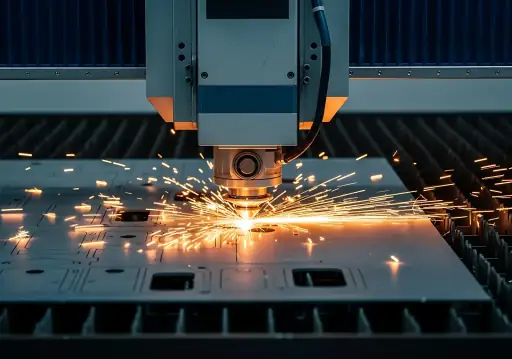
Laser cutting sheet and plate components with clean edges and repeatable profiles

Cut Tolerance

±0.005" (typ.)

Fast-Track

2–5 Days

Thickness Range

0.020"–0.500"

Sheet Cutting Services

Engineering-First Sheet Cutting for Accurate 2D Parts

PREMSA delivers sheet cutting built around repeatability and edge quality—controlled kerf, consistent feature placement, and clean profiles that match your drawing intent. We review your DXF/flat patterns early to prevent scrap from missing reliefs, feature collisions, or overly tight tolerances.

Our process is optimized for real cutting constraints: minimum feature size, edge distance rules, corner quality, heat input, and distortion risk. We focus on getting you accurate flat parts fast—while keeping cost and lead time predictable.

From rapid prototypes to production runs, PREMSA supports optional deburr/edge prep and part identification. We align inspection to the features that drive fit: hole-to-hole, hole-to-edge, mating patterns, and interface geometry.

What is Sheet Cutting?

Sheet cutting is a 2D manufacturing process that creates flat parts from sheet or plate by cutting profiles, holes, slots, and contours using laser cutting, waterjet cutting, or CNC routing depending on material, thickness, and edge quality requirements.

It is ideal for flat brackets, panels, base plates, templates, guards, shims, and mounting plates where fast turnaround, repeatable hole patterns, and clean edges matter.

The Cutting Workflow

An engineering-driven process designed to control edge quality, accuracy, and repeatability for sheet cutting parts.

1. File Intake & Scope Definition

We receive 2D drawings and DXF files and confirm part scope, quantities, materials, thickness, and delivery requirements before production planning begins.

2. Drawing & DXF Validation

Units, scale, revision control, feature intent, edge distances, and CTQ dimensions are validated to prevent errors or scrap before cutting.

3. Manufacturability Review (DFM)

Features are reviewed against process limits including minimum feature size, internal corner quality, spacing rules, and distortion risk.

4. Process Selection

The cutting method—laser, waterjet, or CNC routing—is selected based on material behavior, thickness, tolerance requirements, and edge quality expectations.

5. Cut Strategy Definition

We define kerf or tool diameter compensation, lead-ins and lead-outs, cut order, retention strategy, and quality targets for functional or cosmetic edges.

6. Cutting & Monitoring

Parts are cut using controlled parameters to maintain consistency across the batch. Heat input, taper, vibration, or chatter are actively managed depending on the selected process.

7. Edge Preparation & Secondary Ops

Deburring, edge break, or surface preparation is applied when specified to improve handling safety, fit, and readiness for downstream operations.

8. Inspection & Final Release

Critical features are inspected using calibrated tools. Parts are released only after CTQ dimensions and overall quality requirements are met.

Core Cutting Capabilities

Laser Cutting (Sheet / Plate)

High-precision 2D cutting for complex outlines, patterns, and internal features. Best for fast-turn parts requiring clean edges, tight feature placement, and repeatable accuracy on thin to medium thickness materials.

WaterJet Cutting (Sheet / Plate)

Cold-cut profile cutting for thicker plate or heat-sensitive materials. Eliminates heat-affected zones and supports demanding geometries where laser heat input or distortion is a concern.

CNC Routing (Non-Metals)

High-speed 2D cutting for plastics and non-metal sheets such as acrylic, Delrin, and boards. Ideal for panels, templates, covers, and insulated components where laser is not preferred.

2D Profile Cutting (DXF-Driven)

Contours, holes, slots, and cutouts produced from DXF/flat geometry. Process selection (laser, waterjet, or routing) is matched to material, thickness, edge quality requirements, and cost.

Thin Sheet Control

Process-specific strategies to manage distortion, chatter, or taper depending on cutting method—laser sequencing, waterjet parameters, or routing hold-down techniques.

Deburr & Edge Prep

Post-cut edge preparation to remove sharp edges, improve handling safety, and support assembly or finishing readiness without altering functional geometry.

Technical Advantages

Fast Turnaround for Flat Parts

Efficient DXF-to-cut workflow optimized for speed—ideal for prototypes, spares, and production kits.

Repeatable Hole Patterns & Profiles

Kerf compensation and controlled cutting strategies improve consistency across production runs.

Material-Efficient Nesting

Nesting optimization reduces scrap and stabilizes cost across quantity—especially on large sheet formats.

Cleaner Edges for Assembly

Edge prep options improve handling safety and help parts seat correctly against mating surfaces.

Process Matched to CTQ

We focus effort where it matters: patterns, interfaces, and functional edges—avoiding unnecessary cost drivers.

Inspection Aligned to Fit

Verification targets hole-to-hole, hole-to-edge, and interface geometry that drives real-world assembly performance.

Production Benchmarks

Cutting Capacity & Envelope

Sheet Size

Typical production sheet formats supported for cutting and nesting. Oversize formats may be reviewed case-by-case.

Up to 48" × 96" (typ.)

Thickness Range

Supported thickness depends on material type and edge quality requirements (thin sheet heat control vs plate cutting).

0.020" – 0.500"

Detail Capability

Feature capability depends on thickness, kerf, and edge distance rules. Small holes and tight corners may require review or alternate strategy.

Small features reviewed case-by-case

Complex Profiles or Tight Features?

If your parts include micro-holes, tight internal corners, dense perforation patterns, or thin-sheet warp risk, request a cut strategy assessment before release.

Tolerances & GD&T

Cut accuracy depends on material, thickness, part size, and cut strategy (kerf, pierce, sequencing, and heat input). Defining critical-to-quality (CTQ) dimensions helps control cost while protecting fit and function.

CategoryTechnical CapabilityEngineering Notes
Cut TolerancesCut tolerances depend on the selected process (laser, waterjet, or CNC routing), material type, thickness, part size, and feature density. Tight tolerances may require conservative parameters or secondary operations.

Apply tight tolerances only to CTQ features. Blanket tight tolerances increase cost without improving function.

Feature Limits & Edge Quality DriversMinimum feature size, internal corner quality, kerf or tool diameter, and edge taper vary by process. Laser, waterjet, and routing each impose different limits on holes, slots, and sharp internal corners.

Avoid features smaller than material thickness. Internal radii improve edge quality and process stability across all cutting methods.

Flatness & Process EffectsLaser cutting may introduce heat distortion on thin sheet, waterjet can introduce taper on thick plate, and routing may cause vibration or chatter if not properly supported.

Process selection and sequencing are adjusted to protect flatness and edge quality for large or thin parts.

Inspection & VerificationInspection focuses on CTQ dimensions such as hole-to-hole, hole-to-edge, pattern location, and interface geometry using calibrated measurement tools.

Provide datums and inspection notes for functional features to ensure fit and repeatability.

Baseline Standard: Commercial cutting tolerances unless CTQ is specified

Sheet & Plate Materials

Choose from production-grade metals and cuttable non-metals. Material selection impacts bendability, edge quality, corrosion resistance, electrical performance, and cosmetic finish.

Metals (Sheet / Plate)

Non Metal Materials

Surface Finishes

Surface finishing improves corrosion resistance, wear life, and cosmetic appearance. Finishes should be selected based on environment, assembly requirements, and long-term durability.

Finish Options

Sheet Cutting DFM Guidelines (DFM)

Cut part manufacturability is driven by feature sizing, edge distance rules, internal corners, and heat input. Following these DFM rules reduces scrap, improves edge quality, and increases repeatability in production.

Design FeatureRecommendation
Corner Radii, Reliefs & Process EffectsAvoid extremely sharp internal corners. Add internal radii or reliefs to improve edge quality and process stability. Heat input (laser), taper (waterjet), or tool radius (routing) must be considered.
Holes, Slots & Edge DistanceKeep holes and slots away from edges to prevent breakout, distortion, or weak ligaments. Very small features relative to thickness may require alternate process selection.
Feature-to-Feature Spacing RulesMaintain adequate spacing between features to protect edge quality and avoid overlapping heat zones, taper interaction, or tool interference.
Tabs, Notches & Part IdentificationTabs, notches, or reference marks may be used for part retention, identification, or downstream handling depending on process and material.
Threads, Countersinks & Secondary OperationsCut features are not a substitute for precision threads or countersinks. Specify when secondary drilling, tapping, or machining is required for functional interfaces.
Drawing & DXF ChecklistProvide a 2D drawing with material, thickness, finish, and CTQ dimensions. Include correct units, scale, datums, and revision control. DXF must represent final cut geometry.

Applications & Industries

Sheet Cutting Applications

Mounting Plates & Base Plates

Mounting Plates & Base Plates

Flat plates with repeatable hole patterns for fixtures, equipment mounting, and industrial frames.

Panels, Covers & Guards

Panels, Covers & Guards

Cut-to-shape panels and protective guards with clean edges and optional deburr for safe handling.

Brackets, Tabs & Flat Hardware

Brackets, Tabs & Flat Hardware

2D brackets and flat hardware for assemblies requiring fast turnaround and consistent geometry.

FAQs & Knowledge Base

Sheet Cutting FAQs

PREMSA Industries

Ready to cut production-ready sheet parts?

Upload drawings and DXFs for a cut-strategy-backed quote. We’ll review feature limits, edge distance rules, corner quality, and CTQ callouts to deliver accurate, assembly-ready flat parts.

Engineering Review: Under 2 Hours