
Sliding Headstock • Guide Bushing • Bar-Fed

Swiss-Type CNCfor Small PrecisionParts at Scale

When small diameters, long stick-out, and functional fits make conventional turning unstable, swiss-type machining keeps the cut supported. The result: reliable diameters, cleaner finishes, and feature placement that stays consistent run after run—especially on bar-fed programs with cross holes, flats, and small threads.
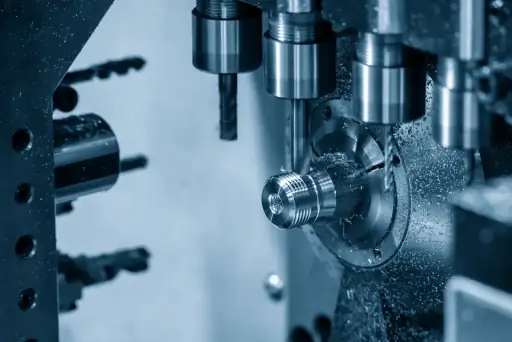
Swiss-type CNC machining small bar-fed precision parts using a guide bushing and live tooling

Stability Method

Guide-bushing supported

Prototype Window

5–15 Days

Program Volume

1M+ Units

Swiss-Type CNC Machining

Why Choose Swiss-Type at PREMSA

Swiss-type machining is built for parts where bar deflection would otherwise distort diameters, create chatter marks, or drift runout. The guide bushing supports the material close to the cut, so small features stay consistent even when the part is long relative to its diameter.

For production work, swiss-type is about predictable cycles and repeatable output. Bar feeding reduces handling, and live tooling can add cross holes, flats, and slots without sending the part to a second machine—protecting functional relationships.

Swiss-type is not “magic tolerance.” It’s a system. The best results come when we align bar condition, tool strategy, and inspection method to what actually matters—fits, runout, and feature position—without inflating cost on non-functional dimensions.

What is Swiss-Type Machining?

Swiss-type CNC (sliding headstock) machining feeds bar stock through a guide bushing. Instead of the tool reaching far out to cut a slender workpiece, the workpiece is supported and advanced as material is removed. This is why swiss excels on small diameters and long-length parts.

Many swiss machines combine turning with live tooling and a sub-spindle. That allows front-side and back-side work, plus cross features, in a single automated cycle—reducing manual flips and helping keep relationships true.

How Swiss-Type Machining Works

A bar-fed process designed around support, cutoff, and burr control.

1. Bar + Guide-Bushing Setup

We confirm bar size, straightness, and condition, then set the guide bushing to support the cut zone and prevent bar whip or diameter drift.

2. Front-Side Turning + Live-Tool Features

We run the turning ops (OD/ID/grooves) and add cross features with live tools while the part is still fully supported.

3. Sub-Spindle Pickup (When Needed)

If the design has back-side features, the sub-spindle grabs the part before cutoff so the back side can be finished without a manual flip.

4. Cutoff + Finishing + Verification

We manage cutoff burrs, apply break-edge expectations, and verify CTQs with appropriate gaging—pin/air gages, micrometers, optical/CMM when required.

Why Swiss-Type Wins for the Right Geometry

Stability on Small Diameters

Guide-bushing support reduces bending and chatter, improving consistency of diameters, runout, and finish on slender parts.

Less Handling on Production Runs

Bar feeding minimizes manual loading and part movement, which improves repeatability and reduces hidden labor cost.

Cross Features Without a Second Machine

Live tooling enables cross holes, flats, slots, and small patterns to be added without breaking datum relationships.

Back-Side Completion Without Manual Flip

Sub-spindle strategies help hold length and squareness while avoiding alignment errors from secondary setups.

Cleaner CTQ Verification

Small precision parts often benefit from functional gaging (pins/air/threads) that matches the requirement better than over-reporting every dimension.

Better Cycle Economics on Small Parts

When the design fits swiss, you can remove entire operations (secondary milling/second chucking), which often lowers true cost-per-part.

Capacity Snapshot

Swiss-Type Envelope & Output

Typical Diameter Range

Swiss-type is strongest on small diameters. Final limits depend on bar material, rigidity, and feature mix (turning vs. live tooling).

Commonly Ø 0.8–32 mm (application-dependent)

Live Tooling Features

Cross holes, flats, slots, small bolt circles, knurl patterns, and timed features can be produced inline when the design allows stable tool access.

Cross drilling + flats/slots (typical)

Bar Work & Volumes

Bar-fed programs scale efficiently when the design supports stable cutoff, manageable burrs, and realistic gaging for CTQs.

1,000,000+ Units

Not sure if your part is a swiss fit?

Send CAD + a 2D drawing and we’ll tell you if swiss-type reduces risk and cost—or if a conventional lathe/mill route is the better play.

Tolerances & GD&T for Swiss-Type

Swiss-type performance comes from stability, but the smartest prints still focus on what’s functional. Call out fits, runout, and feature position that affect assembly. Leave non-functional geometry at reasonable tolerances to protect cost and lead time.

CategoryWhat’s Typically PracticalNotes That Prevent Rework
General (Small Precision)For non-critical features, shops commonly hold around ±0.05–0.10 mm depending on size and feature type. Very small diameters may require tighter control if they are functional fits.

Don’t force blanket tight tolerances. It drives gaging cost and scrap without improving function.

Runout / CoaxialityRunout control depends on datum axis definition and how the part is completed (single-cycle vs. sub-spindle transfer). Swiss tends to be stable when the critical axis is maintained through completion.

Total runout is often the most useful callout. Define the datum axis clearly and where it is established.

Cross Features PositionCross holes/flats/slots can be held consistently when timed features are defined and tool access is realistic. Position control is strongest when features are built around a clear functional datum scheme.

Only specify angular timing when it affects function. Unnecessary clocking adds time and inspection complexity.

Threads + SeatsThread performance is best ensured with correct standard/class and functional gaging. Seats and sealing surfaces are driven by geometry plus finish—not by over-tightening everything.

State thread class and whether GO/NO-GO gaging is required. Call out finish only on sealing regions.

Surface FinishSwiss turning typically produces very consistent cylindrical finishes; live-tool features vary with tool diameter and strategy. Finish depends on material, feeds, and chip control.

Specify Ra only where it matters: seals, bearings, sliding fits, or cosmetic requirements.

Inspection StrategyUse inspection that matches the tolerance: micrometers for ODs, pins/air gages for IDs, optical/CMM for positional/form controls when required.

If you need FAI/control plan reporting, define it in the RFQ so we align lead time and cost.

Baseline Standard: General tolerances for non-CTQ; GD&T only on functional relationships

Swiss-Type Materials

We machine a wide selection of production-grade metals and engineering plastics. Don’t see your specific material? Upload your spec and our team will confirm availability and custom machinability within 24 hours.

Swiss-Type Metals

Swiss-Type Plastics

Surface Finishes

Select a finish to enhance functional performance—including corrosion resistance, wear protection, electrical conductivity, or cosmetic requirements. Need a custom specification? Upload your print or finishing spec and our team will validate process compatibility and availability.

Swiss-Type Finishing Options

Swiss-Type DFM Standards (DFM)

Designing for swiss-type is about keeping the part stable during turning, protecting critical fits, and preventing burr traps. The best designs avoid impossible tool reach and define edge-break expectations on small cross features.

Design AreaPractical Guideline
Datums & FitsDefine the functional datum axis (typically a critical OD/ID) and clearly mark CTQ fits. If function depends on runout or coaxiality, call it out. If it doesn’t, don’t add extra GD&T.
Reliefs, Cutoff & ReachPlan reliefs only when they are needed for tool clearance or thread runout. Avoid packing features too close to the cutoff area where burr control becomes difficult. Keep grooves and undercuts within realistic tool widths.
Cross Features & Burr ControlCross holes and intersecting features create burr traps on small parts. Add break-edge notes or specify deburr expectations at intersections. If a burr-free internal edge is critical, define it explicitly (otherwise it will be interpreted as standard deburr).
Slender Parts & Thin WallsSmall thin-wall tubes/sleeves can distort with aggressive cutting. Keep wall thickness reasonable, avoid long unsupported regions, and reserve tight tolerances for only what impacts function.
Threads, Grooves, SeatsFor threads, specify standard/class and whether GO/NO-GO is required. For seats, specify the geometry and finish on the functional region. Avoid over-tightening minor diameter/major diameter unless it affects assembly.
Drawing ChecklistProvide material spec, bar size preference if any, datums, CTQs, and inspection expectations. Add section views for internal passages. If you need FAI/control plan reporting, state it in the RFQ.

Applications & Industries

Swiss-Type Applications

Pins, Dowels & Micro Shafts

Pins, Dowels & Micro Shafts

Small diameters with controlled runout and consistent finishes—ideal for sliding fits, alignment, and precision assemblies.

Bushings, Sleeves & Spacers

Bushings, Sleeves & Spacers

Tight ID/OD relationships and clean internal bores; sub-spindle completion supports back-side chamfers and features.

Threaded Precision Hardware

Threaded Precision Hardware

Small external/internal threads with controlled lead-in, undercuts, and functional gaging for repeatable assembly performance.

FAQ & Swiss-Type Knowledge Base

Swiss-Type Machining FAQs

PREMSA Industries

Want a stable process for small precision parts?

Upload CAD + a 2D print and we’ll confirm if swiss-type is the right route based on stability, burr risk, CTQs, and inspection needs.

Engineering Review: Under 2 Hours