
Production-Grade Plastic Parts

Precision
Injection Molding

Injection molding built for repeatability, cosmetics, and assembly fit. DFM-first tooling, shrink/warp control, validated processing, and lot traceability—supporting engineered resins, inserts, overmolding, and scalable production runs.
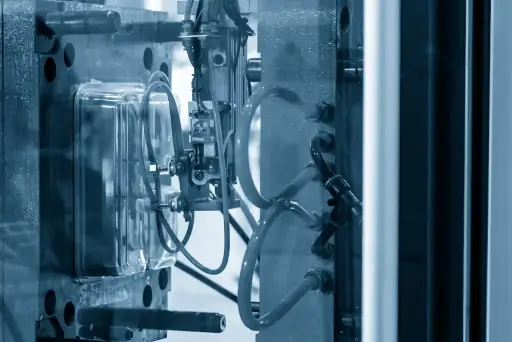
Injection molded plastic parts with controlled cosmetics, repeatable dimensions, and validated production process

Dimensional Focus

CTQ-driven

Tooling + First Samples

Typical: weeks

Production Mode

Prototype → Volume

Injection Molding Services

Why Choose PREMSA for Injection Molding

PREMSA delivers injection molding with a manufacturing-first approach: we define CTQs early (datums, fit features, sealing surfaces, cosmetic faces) and build tooling and process windows around what actually matters in assembly and field use.

We focus on the root causes of scrap and inconsistency in molded parts—shrink variation, warp, moisture sensitivity, gate/weld line placement, and ejection witness. Our workflow is designed to reduce surprises after tooling by aligning part design, resin behavior, and mold strategy from day one.

From prototype tooling to volume production, we support sampling, parameter lock, lot traceability, and secondary ops (inserts, heat staking, welding, assembly/kitting). You get parts that run consistently—not “hero samples” that fall apart in production.

What is Injection Molding?

Injection molding is a high-repeatability manufacturing process where molten thermoplastic is injected into a precision mold, cooled, and ejected as a finished part. It is ideal for parts that need consistent geometry, scalable unit cost, and controlled surface finish.

Successful molding is a balance of part design (draft, walls, ribs), resin behavior (shrink, moisture), and mold design (gating, venting, cooling, ejection). When these are aligned, injection molding produces stable parts across lots with predictable yield.

The Injection Molding Workflow

A controlled engineering process optimized for repeatability, cosmetics, and stable production yields.

1. File Intake & Requirements Definition

We review CAD + drawings and confirm resin intent, cosmetic expectations, CTQs, insert/overmold needs, compliance targets, and expected volumes.

2. DFM Review (Shrink, Draft, Walls, Gating, Ejection)

We validate draft/undercuts, wall thickness transitions, ribs/bosses, gate and vent strategy, weld line risks, and cosmetic-parting plan.

3. Tooling Strategy & Mold Design

We define cavity count, steel and wear approach, cooling layout, runner style (cold/hot), and serviceability aligned to lifecycle and cost-per-part.

4. Sampling Plan & First Article

We run initial samples to evaluate dimensions, cosmetics, sink/warp, gate vestige, and functional fit. CTQs are measured against agreed datums.

5. Process Window & Parameter Lock

We establish a stable process window (material conditioning, melt/pack/cool behavior) and lock settings for repeatability across lots.

6. Production Runs & In-Process Control

We execute lot-based production with traceability, drying/handling controls, and in-process checks targeted at CTQs and cosmetic requirements.

7. Secondary Ops & Assembly (If Needed)

Degating/deflashing, insert installation, heat staking, ultrasonic welding, labeling, and kitting are executed to reduce downstream assembly effort.

8. Inspection, Documentation & Release

We provide measurement results and release parts per the agreed plan—sampling aligned to risk, CTQs, and the maturity of the process.

Tooling, Cavities & Mold Capabilities

Prototype to Production Tooling

Tooling options aligned to your stage—faster iterations for early designs and durable molds for long-run stability.

Cavity Strategy (Cost per Part vs. Flexibility)

We size cavities to match volume targets and validation needs—balancing cycle time, yield, and future scalability.

Runner Strategy (Cold vs Hot, When Applicable)

Runner approach selected based on resin, cosmetics, gate vestige limits, and scrap sensitivity.

Cooling & Warp Control

Cooling design and cycle strategy focused on dimensional stability and flatness—especially for thin walls and large surfaces.

Side Actions & Undercut Solutions

We manage undercuts via side actions or design adjustments to protect cosmetics and keep tooling robust.

Insert Molding & Overmolding

Support for metal inserts (threads/pins/bushings) and multi-material features when the design benefits from it.

Technical Advantages

Stable Repeatability Across Lots

Parameter lock + material conditioning reduces drift in shrink and dimensions between runs.

Lower Unit Cost at Volume

Once tooling is validated, cycle-based production drives cost-per-part down with consistent throughput.

Controlled Cosmetics & Texture

Parting line, gate vestige, and ejection witness are planned around cosmetic faces—not treated as an afterthought.

Shrink/Warp Managed Up Front

DFM and mold strategy reduce late-stage surprises like sink, bowing, twist, and fit failures.

Design for Assembly Support

Snap features, bosses, sealing lands, and datum strategy are reviewed to reduce assembly time and defect rates.

Secondary Ops Integrated

Insert installation, heat staking, welding, labeling, and kitting can be combined to deliver assembly-ready parts.

Production Benchmarks

Injection Molding Capacity & Envelope

Press Selection & Shot Capacity

Press sizing and shot capacity are selected based on projected area, resin, flow length, and gating strategy—not just part volume.

Sized to part + resin

Part Size & Geometry Range

Part size feasibility depends on wall thickness, rigidity, flatness requirements, and warp sensitivity. Large flat parts may require dedicated strategies.

Reviewed by CTQ

Volume Scalability

Tooling and cavity strategy are chosen to scale from pilots to production while keeping measurement and traceability practical.

Prototype → Volume

Need help choosing resin or tooling strategy?

Send your CAD + requirements and request a molding DFM and resin review. We’ll align draft, walls, gating, cosmetics, and CTQs before you commit to tooling.

Quality & Production Standards

Injection molding quality is driven by resin behavior, moisture control, mold design, and a stable process window. Defining critical-to-quality (CTQ) features (datums, fits, sealing surfaces, functional snaps, cosmetic faces) helps control cost while protecting performance.

CategoryTechnical CapabilityEngineering Notes
Dimensional Control, Shrink & StabilityDimensional outcomes depend on resin shrink rate, wall thickness transitions, gate location, cooling uniformity, and a locked process window. CTQ features can be controlled with proper datum strategy and measurement fixtures.

Avoid over-tolerancing cosmetic-only or free surfaces. Tolerance the interfaces that drive fit and function, and define datums that match assembly reality.

Cosmetic Standards, Texture & Surface FinishCosmetics are influenced by parting lines, gate vestige, weld lines, ejection witness, and texture choice. Tool polish/texture and resin selection affect gloss, haze, and visible flow patterns.

Identify cosmetic faces and acceptable witness zones. If texture or gloss is critical, define the target standard and the “no-go” conditions upfront.

Process Validation, Lot Traceability & Control PlansRepeatability improves with validated sampling, parameter lock, drying controls, and a control plan aligned to CTQs. Lot traceability can include resin batch, color lot, and production run labeling when required.

If you need formal documentation (sampling plans, capability evidence, change control), call it out early so the build plan matches your quality system.

Drying, Moisture Sensitivity & Material HandlingMany engineering resins require controlled drying to prevent splay, brittleness, dimensional drift, and cosmetic defects. Handling strategy (sealed storage, drying time, dew point control) matters as much as the press settings.

If resin is moisture-sensitive, treat drying as a CTQ. Define allowable regrind usage and color control requirements for consistent results.

Baseline Standard: Commercial molding practices unless CTQ, cosmetic class, or validation is specified

Polymers & Materials

Polymer selection drives strength, impact performance, temperature resistance, chemical compatibility, dimensional stability, and cosmetic quality. Share your environment, load case, regulatory needs, and end-use requirements so we can recommend the best material family and grade for your program.

Commodity Polymers

Engineering Polymers

High-Performance Polymers

Elastomers (TPE / TPU)

Secondary Operations & Finishing

Beyond molding, production programs often require controlled cosmetic finishes, trimming, assembly steps, hardware installation, traceability, and packaging support to deliver production-ready parts that integrate cleanly into downstream operations.

Secondary Operations & Finishing

Injection Molding DFM Guidelines (DFM)

Strong molding outcomes come from designing for flow, shrink, ejection, and cosmetics—not just nominal geometry. These DFM rules reduce warp risk, improve appearance, and stabilize production yields.

Design FeatureRecommendation
Wall Thickness, Ribs & BossesAim for consistent wall thickness and use ribs for stiffness instead of thickening walls. Overly thick regions drive sink, long cycle times, and warp.
Draft, Undercuts & Side ActionsAdd draft on all pull surfaces and minimize undercuts. If undercuts are unavoidable, plan side actions early to protect reliability and cost.
Gating, Venting & Weld LinesGate location impacts flow, weld lines, and cosmetics. Proper venting prevents burns and short shots; weld lines should be kept away from high-stress and cosmetic zones.
Ejection, Parting Lines & Cosmetic FacesPlace ejector pins and parting lines away from cosmetic faces and sealing areas when possible. Define “acceptable witness zones” to avoid late-stage disputes.
Shrink, Warp & Datum StrategyDesign datums and tolerances around how parts actually stabilize after cooling. Large flat surfaces and long thin features are warp-sensitive and may require design or tooling strategies.
Tooling & Drawing ChecklistProvide resin intent, cosmetic class, CTQs and datums, insert/overmold details, texture/finish targets, allowable witness zones, regrind policy, and sampling/validation expectations.

Applications & Industries

Injection Molding Applications

Housings & Enclosures

Housings & Enclosures

Consistent dimensions and cosmetic surfaces for covers, shells, and protective housings.

Functional Components

Functional Components

Ribs, bosses, snaps, and interfaces designed for assembly repeatability and durability.

Handles, Grips & Overmolds

Handles, Grips & Overmolds

Ergonomic parts with texture and overmolding options for better user experience and control.

FAQs & Knowledge Base

Injection Molding FAQs

PREMSA Industries

Ready to launch stable production plastic parts?

Upload CAD and requirements for a DFM-first quote. We’ll review draft, walls, ribs/bosses, gating/venting, cosmetics, shrink/warp risk, and CTQ measurement strategy to deliver injection molded parts that run consistently at scale.

Engineering Review: Under 2 Hours