Home/Finishes/Anodizing
Production Finish

Anodizing forAluminum Industrial Parts

Anodizing is one of the most widely used aluminum finishing processes for improving corrosion resistance, surface durability, and cosmetic appearance across prototype and production programs.

Finish Overview

What is Anodizing?

Anodizing is an electrochemical surface finishing process used primarily on aluminum to thicken the natural oxide layer on the material surface. This controlled oxide layer improves corrosion resistance, enhances wear performance, and creates a stable base for decorative or functional color finishes. Because the anodic layer becomes part of the aluminum rather than sitting on top of it like paint, anodizing is a highly trusted choice for CNC machined aluminum parts, architectural hardware, industrial equipment, and production-ready components that need both protection and appearance control.

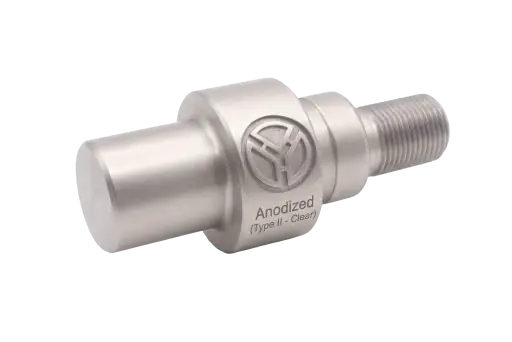
Close-up of anodized aluminum component with finished surface texture
Specifications

Anodizing Finish Specifications

Key characteristics of anodizing relevant to design, surface performance, appearance control, and production planning across aluminum components.

Anodizing Process Overview

Finish Type

Electrochemical conversion coating

Primary Substrate

Aluminum and many aluminum alloys

Main Purpose

Improve corrosion resistance, wear resistance, and cosmetic appearance

Typical Appearance

Matte to satin depending on pre-finish and alloy response

Color Options

Clear, black, bronze, red, blue, gold, and other dyed options depending on process and supplier capability

Common Process Types

Type II sulfuric anodize, Type III hardcoat anodize

Layer Behavior

The oxide layer grows from the aluminum surface and partially penetrates the substrate

Dimensional Impact

Can affect tight tolerances and threaded or precision-fit features depending on coating thickness

Corrosion Resistance

Excellent when properly processed and sealed

Wear Resistance

Good for standard anodize, higher for hardcoat anodize

UV Stability

Generally good, though color retention can vary with dye and service environment

Electrical Conductivity

Reduced at the anodized surface because the oxide layer is electrically insulating

Best Fit Materials

6061, 6063, 7075, and many other aluminum alloys, with appearance varying by alloy

Typical Applications

Machined housings, brackets, covers, electronics parts, industrial hardware, consumer products

Common Standards

MIL-A-8625 / MIL-PRF-8625 and related customer or industry specifications

Performance

Anodizing Performance Overview

Standardized comparison across major finish-selection criteria for industrial aluminum components.

Corrosion Resistance

Wear Resistance

Cosmetic Appearance

Color Flexibility

Outdoor Durability

Tight Tolerance Friendliness

Electrical Conductivity Retention

Production Suitability

Ready to anodize aluminum parts?

Upload your CAD files or drawings and get a fast, engineering-reviewed quote for machined and finished components.

Where Anodizing is Commonly Used

Anodizing is widely used on aluminum components that need a more durable, corrosion-resistant, and visually controlled surface for industrial, commercial, and engineered applications.

CNC machined housings and enclosures

Automation brackets and support hardware

Electronics covers and front panels

Consumer-facing aluminum components

Medical and laboratory equipment parts

Aerospace support and non-critical structural parts

Robotics and instrumentation hardware

Industrial machine components

Custom aluminum fixtures and assemblies

Finish FAQs

Anodizing FAQs

Common questions about anodizing for aluminum components in machining and production programs.

Ready for your Project

Finish Guide

Anodizing: Properties, Process Behavior, and Use Cases

Anodizing is one of the most important finishing options for aluminum because it improves corrosion resistance, increases surface durability, and gives parts a clean, controlled visual appearance. It is commonly paired with CNC machined aluminum components in both prototype and repeat production programs.

Key things to know about anodizing

  • It is not paint: Anodizing changes the aluminum surface itself by growing an oxide layer rather than applying a coating on top.
  • It improves corrosion resistance: Properly anodized and sealed aluminum performs well in many industrial and outdoor environments.
  • It supports cosmetic control: Clear and dyed finishes are common when teams need both function and appearance.
  • It can affect dimensions: Because anodizing adds oxide thickness, fit-critical features may require finish-aware design planning.
  • It works best on aluminum: Different alloys respond differently, so final appearance can vary by grade and manufacturing history.
  • It is widely used in production: Anodizing is a common, scalable finish for repeat programs with aluminum parts.

How anodizing works

In anodizing, the aluminum part is cleaned, prepared, and placed into an electrolytic bath where controlled current creates oxide growth on the surface. Depending on the process type, the finish may then be dyed and sealed. Because the oxide layer is integrated into the part surface, it provides a more durable result than many top-applied coatings.

Typical process flow

  • Cleaning and degreasing
  • Etching or surface preparation
  • Electrochemical anodize step
  • Optional dyeing for color
  • Sealing to improve durability and corrosion resistance

Why pre-finish matters

  • Surface scratches, tool marks, and blend lines may still show after anodizing
  • Bead blasting or brushing can change the final visual texture
  • Different alloys may produce different color response even with the same finish spec

Strengths and advantages of anodizing

  1. Excellent corrosion protection: Anodizing significantly improves aluminum performance in many service environments.
  2. Strong cosmetic value: It creates a professional and repeatable visual finish for exposed parts.
  3. Good wear performance: Standard anodizing improves surface durability, while hardcoat anodizing can provide much greater wear resistance.
  4. No risk of flaking like paint films: Because the oxide layer is part of the surface, it does not peel in the same way as topcoat finishes.
  5. Scalable for production: It is commonly used in repeat manufacturing programs for machined and fabricated aluminum components.
  6. Compatible with many industrial applications: It works well in electronics, automation, consumer products, machinery, and hardware.

Trade-offs and limitations of anodizing

  1. Aluminum-only finish: Anodizing is primarily for aluminum and does not serve as a universal finish across all materials.
  2. Dimensional change matters: Threads, bores, bearing fits, and sealing features may need masking or tolerance compensation.
  3. Appearance can vary by alloy: 6061 and 7075 do not always produce identical color or texture results.
  4. Surface defects can remain visible: Tool marks, scratches, and prep inconsistencies often show through the final finish.
  5. Electrical insulation may be a drawback: The anodized layer reduces surface conductivity, which may be undesirable in grounding or contact areas.

Design and manufacturing considerations for anodized parts

Machining and pre-finish quality

Anodizing tends to reveal rather than hide surface preparation quality. Tool marks, chatter, blend transitions, and edge conditions should be considered early, especially on cosmetic faces.

  • Plan cosmetic surfaces intentionally
  • Use consistent surface prep before finish
  • Review visible edges and blend lines before release

Tolerances and masking

  • Account for coating growth in precision-fit areas
  • Mask threads and conductive contact zones when needed
  • Review post-finish assembly interfaces during quote and DFM

Color and finish consistency

  • Specify clear vs dyed finish intentionally
  • Use consistent material and prep if appearance consistency matters
  • Understand that batch-to-batch visual variation can still occur

Common anodizing applications

Anodizing is especially valuable for aluminum components that need long-term corrosion resistance, wear improvement, or elevated visual quality in end-use environments.

  • Machined brackets and housings
  • Front panels and electronics enclosures
  • Machine covers and exposed aluminum hardware
  • Automation and robotics components
  • Consumer-facing industrial products
  • Custom aluminum fixtures and structural parts

When anodizing is a strong finish choice

Anodizing is often the best option when a program needs a clean, durable, aluminum-specific finish that improves both protection and appearance without relying on a painted topcoat system.

  • Choose anodizing when corrosion resistance is important
  • Choose anodizing when the part is aluminum and appearance matters
  • Choose anodizing when you want a durable, production-proven finish
  • Choose anodizing when painted film build or coating peel risk is undesirable