Home/Materials/2024 T3 Aluminum
Aerospace Standard

2024 T3 Aluminum forHigh-Fatigue Structural Parts

2024-T3 aluminum is renowned for its exceptional yield strength and fatigue resistance, making it a critical material for tension-critical components in the aerospace industry.

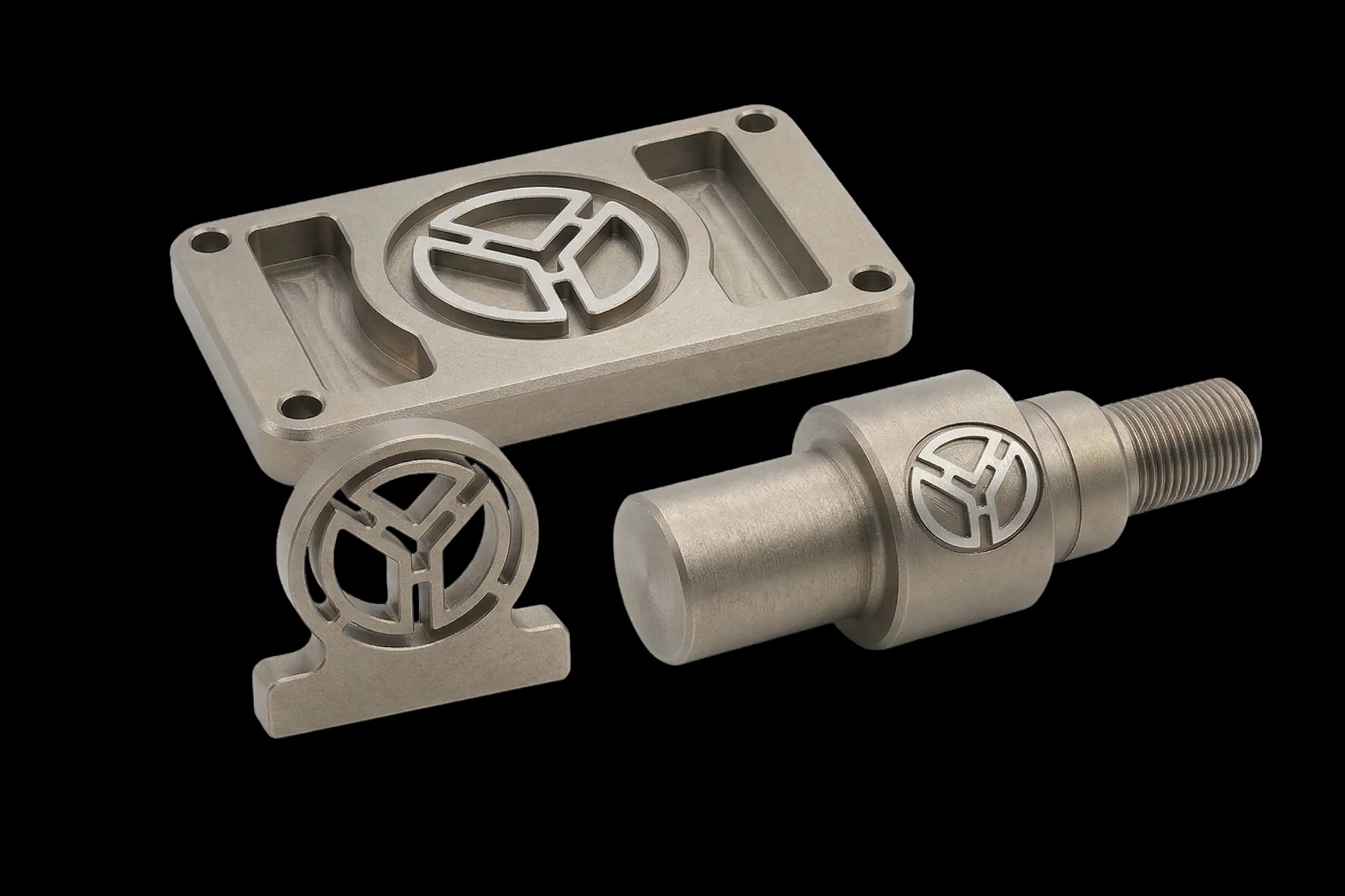
2024 T3 Aluminum aerospace structural components and machined parts
Material Overview

What is 2024-T3 Aluminum?

2024-T3 aluminum is one of the most widely used high-strength aluminum alloys in the aviation sector. Its primary alloying element is copper, which allows it to achieve high strength and excellent fatigue resistance. The T3 temper means the material has been solution heat-treated, cold worked, and naturally aged to a substantially stable condition. While it offers superior performance in tension-heavy environments, its high copper content makes it difficult to weld and more susceptible to corrosion than 6000-series alloys, often requiring cladding or anodizing for protection in CNC machining projects.

High-precision 2024 T3 aluminum aircraft components
Specifications

2024 T3 Aluminum Specifications

Engineering data for 2024-T3 aluminum, focusing on its mechanical stability and fatigue properties. Essential for aerospace engineering and structural design where high strength-to-weight ratios are mandatory.

2024-T3 Engineering Properties

Alloy Series

2000 series (Al-Cu alloy)

Temper

T3 (solution heat-treated, cold worked, and naturally aged)

Primary Characteristics

Exceptional fatigue strength, high yield strength, good machinability, poor weldability

Tensile Strength (Ultimate)

70 ksi (483 MPa)

Tensile Strength (Yield)

50 ksi (345 MPa)

Shear Strength

41 ksi (283 MPa)

Fatigue Strength

20 ksi (138 MPa)

Elongation at Break

15–18%

Brinell Hardness

120 HB

Density

2.78 g/cm³ (0.100 lb/in³)

Elastic Modulus

10,500 ksi (72.4 GPa)

Poisson’s Ratio

0.33

Thermal Conductivity

121 W/m·K

Coefficient of Thermal Expansion

22.9 µm/m·°C

Melting Range

502–638 °C (935–1180 °F)

Electrical Conductivity

30% IACS

Machinability

Excellent (Fairly easy to machine to tight tolerances)

Weldability

Poor (Generally considered non-weldable for structural use)

Corrosion Resistance

Low (Sensitive to intergranular corrosion; Alclad or anodizing recommended)

Anodizing Response

Fair (Chromic acid anodizing is common for this alloy)

Common Forms

Sheet, plate, bar, extrusions

Typical Applications

Aircraft skins, wing tension members, structural fittings, truck wheels, hardware

Material Composition

Aluminum (Al): 90.7–94.7%, Copper (Cu): 3.8–4.9%, Magnesium (Mg): 1.2–1.8%, Manganese (Mn): 0.3–0.9%

ASTM Standard

ASTM B209 / B211

Performance

2024-T3 Performance Overview

Standardized ratings for aerospace-grade applications.

Strength

Weight

Machinability

Weldability

Formability

Corrosion Resistance

Thermal Resistance

Cost Efficiency

Ready to machine 2024 T3 Aluminum parts?

Leverage the fatigue resistance of 2024 T3 for your next project. Upload your CAD files for an expert-reviewed quote.

Where 2024 T3 Aluminum is Commonly Used

Specifically chosen for its ability to withstand cyclic loading and tension, 2024 T3 is a staple in high-performance structural engineering.

Aircraft fuselage skins and wing skins

Wing tension members and spars

Structural aerospace components

High-tension fasteners and rivets

Truck wheels and transportation parts

Scientific instruments and laboratory equipment

Computer chassis and electronic components

Veterinary and orthopedic equipment

High-performance sports equipment

Material FAQs

2024-T3 Aluminum FAQs for Aerospace and Precision Manufacturing

Comprehensive technical guidance for engineering teams utilizing 2024-T3 aluminum across CNC machining and sheet metal fabrication environments.

Ready for your Project

Material Guide

2024 T3 Aluminum: Properties, Machining, and Applications

2024 T3 aluminum is a high-strength alloy primarily copper-based, widely recognized for its excellent fatigue resistance and high strength-to-weight ratio. It is a staple in the aerospace industry for fuselage skins and wing tension members. While it excels in CNC machining, it is also frequently used in precision Sheet Metal Fabrication where structural durability is paramount.

For engineering teams, 2024-T3 provides a critical advantage in applications subject to cyclical stress, bridging the gap between general-purpose alloys and the ultra-hard 7000 series.

Key manufacturing characteristics of 2024 T3 aluminum

  • High Fatigue Strength: Outstanding resistance to fatigue and crack propagation, making it the industry standard for tension-critical components.
  • Excellent Machinability: Known for producing a high-quality surface finish during CNC Milling and turning operations.
  • Cold Formability: Unlike 7075, the T3 temper allows for better forming and bending, which is ideal for complex Sheet Bending requirements.
  • Copper-Alloyed Foundation: The high copper content provides its signature strength but results in lower natural corrosion resistance compared to the 6000 series.
  • Non-Weldable: Similar to other high-strength aerospace grades, it is generally considered non-weldable and is joined via riveting or mechanical fasteners.
  • Anodizing Requirement: Due to its sensitivity to moisture, it is typically finished with Alclad coating or hard-coat anodizing for environmental protection.

Mechanical and physical properties of 2024-T3 aluminum

The T3 temper (solution heat-treated and cold worked) provides 2024 with a unique combination of high yield strength and high fracture toughness. It is often the preferred choice for structural assemblies that require more 'give' and damage tolerance than the more brittle 7075-T6.

Typical performance profile

  • Superior fatigue life under tension and vibration
  • High mechanical strength comparable to mild steels
  • Predictable grain structure for precision Swiss-Type Machining
  • Excellent strength-to-weight ratio for weight-sensitive designs

Why engineers choose it

  • Best-in-class performance for parts subjected to constant cyclic loading
  • Reliable stability during high-speed machining and Drilling & Threading
  • Proven track record in safety-critical aviation and defense structures
  • Balances high strength with better formability than many 7xxx series alloys

Strengths and advantages of 2024 T3 aluminum

  1. Tension Performance: Exceptional reliability for parts that pull, stretch, or vibrate.
  2. Manufacturing Versatility: Works equally well in CNC Mill-Turn centers and sheet metal shops.
  3. Surface Finish: Achieves a mirror-like finish when polished or precision-machined.
  4. Damage Tolerance: Less prone to sudden brittle failure than harder aluminum grades.
  5. Industry Standard: Deeply documented properties for aerospace certification and compliance.
  6. Thermal Stability: Maintains good mechanical properties at slightly elevated temperatures.

Trade-offs and limitations of 2024 T3 aluminum

  1. Corrosion Sensitivity: Requires surface protection (anodizing or cladding) to prevent pitting in outdoor or humid environments.
  2. Welding Restrictions: Fusion welding is not recommended as it creates severe loss of strength and corrosion resistance.
  3. Cost Factor: Higher price point than 6061 due to copper content and specialized heat treatment.
  4. Limited Availability: Often found in specific aerospace shapes (sheet/plate) rather than general extrusions.
  5. Galvanic Corrosion: Care must be taken when fastening to dissimilar metals to prevent electrochemical degradation.

Fabrication and machining considerations for 2024

Precision Machining Response

2024 T3 is highly favored in the machine shop because it generates consistent, manageable chips. It is ideal for high-tolerance components produced through CNC Turning and milling.

  • Allows for aggressive feed rates with high-quality carbide tooling
  • Maintains geometric integrity for thin-walled aerospace ribs and frames
  • Excellent for internal boring and high-depth Drilling & Threading

Sheet Metal and Fabrication

  • Used extensively for fuselage skins requiring precise Sheet Bending
  • Often specified in 'Alclad' form, which features a thin layer of pure aluminum for corrosion protection
  • Can be used as a high-strength chassis material for Robotics and automotive prototyping

Prototyping & Additive Manufacturing

For designs that eventually move to 2024-T3 production, engineers often utilize Prototype 3D Printing with high-strength polymers like Polycarbonate to validate complex stress paths.

Finishing and Protection

  • Chromic acid or sulfuric acid anodizing is the standard for corrosion defense
  • Bead blasting is used to prepare the surface for high-bond aerospace primers
  • Chem-film (MIL-DTL-5541) is often applied to maintain conductivity while protecting the surface

Common applications for 2024 T3 aluminum

Because of its unique fatigue resistance, 2024 T3 aluminum is the backbone of high-stress CNC machined components in modern aviation.

  • Aircraft fuselage skins and structural ribs
  • Wing tension members and spars
  • High-performance fasteners and rivets
  • Engine and transmission parts for automotive racing
  • Mobile robotics frames and articulating arms
  • Scientific instrument housings for extreme vibration
  • Aerospace hardware and mounting brackets
  • Clock and timepiece internal gears and structures

When 2024 T3 aluminum is a strong material choice

2024 is the optimal choice when the design requires a material that can withstand billions of cycles of stress without failure, particularly in aerospace and high-speed motion systems.

  • When fatigue life and fracture toughness are the primary design drivers
  • When a part needs high strength but requires some degree of cold forming
  • When weight reduction is critical in a tension-loaded environment
  • When parts are subject to high vibration and dynamic stress
  • When complying with established aerospace and defense manufacturing standards