Home/Materials/7075 T6 Aluminum
High-Strength Alloy

7075 T6 Aluminum forHigh-Stress Parts

7075-T6 aluminum is one of the strongest aluminum alloys available, offering a strength-to-weight ratio comparable to some steels, making it ideal for high-performance CNC machined components.

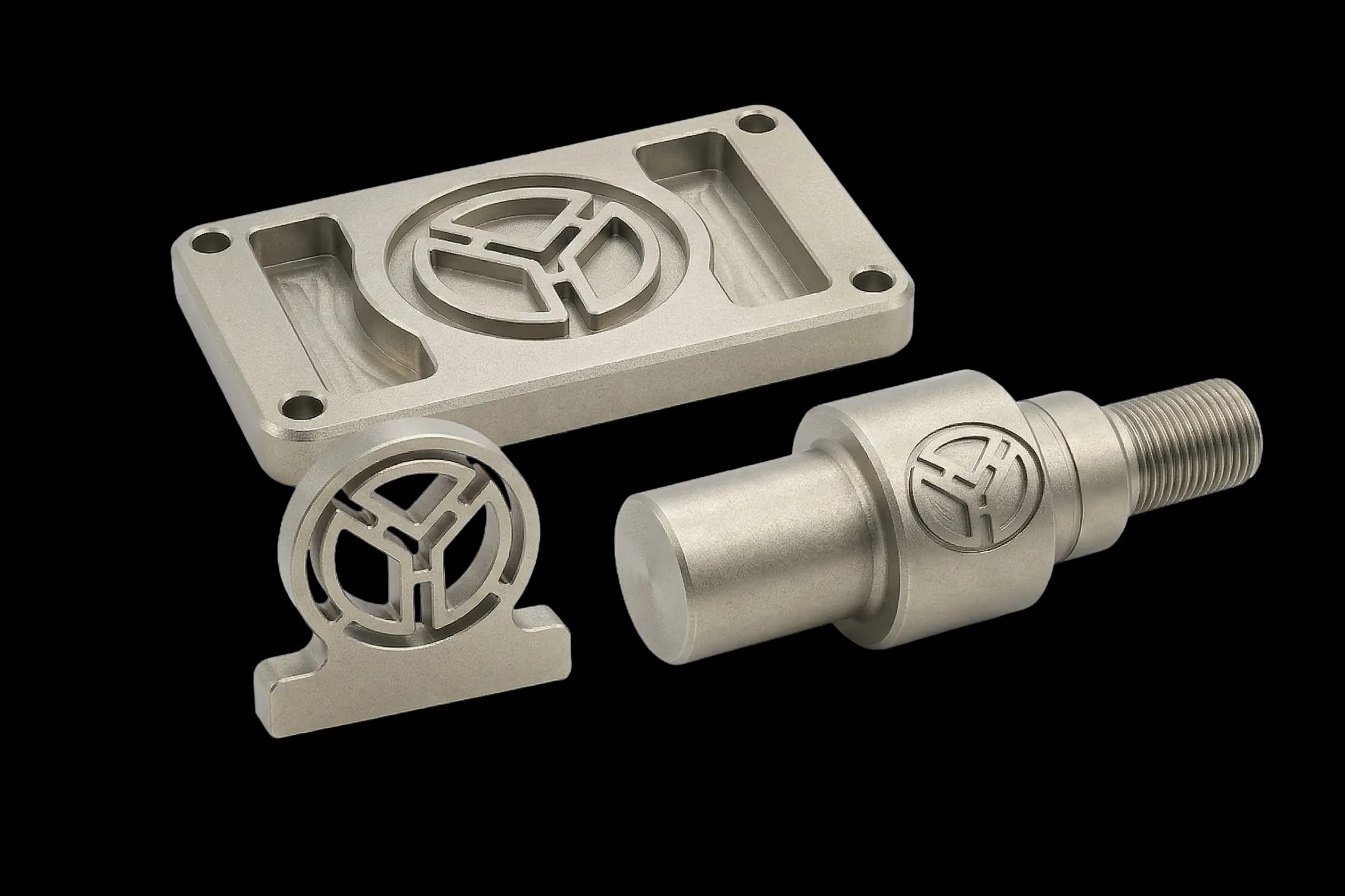
7075 T6 Aluminum aerospace components and high-strength machined parts
Material Overview

What is 7075-T6 Aluminum?

7075-T6 aluminum is a premier high-strength alloy primarily used in the aerospace and defense industries. Its main alloying element is zinc, which provides mechanical properties far superior to standard alloys like 6061. The T6 temper is achieved through solution heat-treating and artificial aging, resulting in a material with excellent fatigue strength and a high strength-to-weight ratio. While it has lower corrosion resistance than 6000-series alloys, its extreme durability makes it the go-to choice for CNC machining in applications where structural integrity and weight reduction are critical.

Precision CNC machined 7075 T6 aluminum parts for aerospace applications
Specifications

7075 T6 Aluminum Specifications

Technical data for 7075-T6 aluminum, highlighting its superior mechanical strength and performance in high-stress environments. These specifications are essential for critical engineering decisions in aerospace, defense, and high-performance tooling.

7075-T6 Engineering Properties

Alloy Series

7000 series (Al-Zn alloy)

Temper

T6 (solution heat-treated and artificially aged)

Primary Characteristics

Ultra-high strength, excellent fatigue resistance, good machinability, lower weldability

Tensile Strength (Ultimate)

83 ksi (572 MPa)

Tensile Strength (Yield)

73 ksi (503 MPa)

Shear Strength

48 ksi (331 MPa)

Fatigue Strength

23 ksi (159 MPa)

Elongation at Break

11%

Brinell Hardness

150 HB

Density

2.81 g/cm³ (0.102 lb/in³)

Elastic Modulus

10,400 ksi (71.7 GPa)

Poisson’s Ratio

0.33

Thermal Conductivity

130 W/m·K

Coefficient of Thermal Expansion

23.4 µm/m·°C

Melting Range

477–635 °C (890–1175 °F)

Electrical Conductivity

~33% IACS

Machinability

Good (Better for finishing than 6061, but more abrasive)

Weldability

Poor (Resistance welding preferred; fusion welding not recommended)

Corrosion Resistance

Average (Lower than 6061; often requires protective coating/anodizing)

Anodizing Response

Good (Used primarily for protection and wear resistance)

Common Forms

Plate, bar, forgings

Typical Applications

Aerospace structures, high-stress defense parts, racing components, high-end bicycle parts, mold tooling

Material Composition

Aluminum (Al): 87.1–91.4%, Zinc (Zn): 5.1–6.1%, Magnesium (Mg): 2.1–2.9%, Copper (Cu): 1.2–2.0%, Chromium (Cr): 0.18–0.28%

ASTM Standard

ASTM B209 / B211 / B221

Performance

7075-T6 Performance Overview

Comparison based on high-performance engineering standards.

Strength

Weight

Machinability

Weldability

Formability

Corrosion Resistance

Thermal Resistance

Cost Efficiency

Ready to machine 7075 T6 Aluminum parts?

Upload your CAD files for high-strength 7075 components. Get an engineering-reviewed quote for your most demanding projects today.

Where 7075 T6 Aluminum is Commonly Used

Designed for environments where failure is not an option, 7075 T6 is the standard for high-stress structural applications.

Aircraft fuselage and wing structures

Military and defense vehicle components

High-pressure hydraulic fittings

Precision gears and shafts

Aerospace fastener systems

High-performance racing and automotive parts

Injection mold tooling and dies

Highly stressed structural frames

Professional-grade sports equipment (climbing gear, bicycle frames)

Material FAQs

7075-T6 Aluminum FAQs for High-Performance Manufacturing

Expert technical guidance for engineering and sourcing teams utilizing 7075-T6 aluminum across CNC machining, fabrication, and additive manufacturing environments.

Ready for your Project

Material Guide

7075 T6 Aluminum: Properties, Machining, and Applications

7075 T6 aluminum is one of the highest-strength aluminum alloys available, offering a strength-to-weight ratio that rivals many structural steels. While widely utilized in CNC machining, its extreme mechanical properties make it a cornerstone for high-performance components in aerospace, defense, and high-stress industrial applications.

For engineering teams, 7075-T6 is the strategic choice when maximum fatigue resistance and structural integrity are required for weight-sensitive projects that move from Prototype 3D Printing to full-scale production.

Key manufacturing characteristics of 7075 T6 aluminum

  • Ultra-high strength: Zinc as the primary alloying element provides significantly higher tensile and yield strength than standard structural alloys.
  • Excellent fatigue resistance: Highly resistant to crack propagation, making it essential for flight-critical hardware and high-cycle automation parts.
  • Superior dimensional stability: Maintains exceptionally tight tolerances during complex Swiss-Type Machining operations.
  • High hardness: Its hardness allows for high-quality surface finishes and clean threading, though it requires robust tooling and rigid setups.
  • Mechanical joining focus: Unlike other grades, 7075 is generally not weldable; designers typically utilize high-strength fasteners or precision interference fits.
  • Finishing performance: Responds exceptionally well to Type III hard-coat anodizing, which is often required to enhance its moderate corrosion resistance.

Mechanical and physical properties of 7075-T6 aluminum

The T6 temper represents the peak of aluminum structural performance. It is the gold standard for parts that must withstand extreme loads without the density of steel. Beyond machining, its properties are critical when designing structural members for Sheet Metal Fabrication where high-stress support is needed.

Typical performance profile

  • Highest strength-to-weight ratio of the common aluminum series
  • Exceptional stiffness-to-weight ratio for rigid assemblies
  • Clean machining behavior with minimal 'gumming' of tools
  • Excellent performance in cryogenic and low-temperature environments

Why engineers choose it

  • Allows for significant weight reduction in aerospace and mobile robotics
  • Supports hyper-precise features in CNC Mill-Turn processes
  • Reliable performance in high-vibration environments
  • Standard material for highly stressed aerospace tooling and defense components

Strengths and advantages of 7075 T6 aluminum

  1. Aerospace-grade strength: Offers structural capabilities far exceeding general-purpose alloys.
  2. Precision compatibility: Supports extremely fine details and tight geometric tolerances.
  3. Weight efficiency: Provides steel-like durability at approximately one-third of the weight.
  4. Versatility across processes: Ideal for everything from Drilling & Threading to heavy-duty structural frames.
  5. Surface quality: Achieves superior aesthetic and functional finishes with proper treatment.
  6. Proven reliability: Decades of performance history in the most demanding flight and space applications.

Trade-offs and limitations of 7075 T6 aluminum

  1. Higher material cost: Investment is higher compared to commercial grades due to complex alloying and processing.
  2. Limited formability: Not ideal for aggressive Sheet Bending or deep drawing; better suited for machined-from-billet parts.
  3. Non-weldable: Thermal joining significantly degrades its mechanical properties; mechanical assembly is required.
  4. Environmental sensitivity: Requires protective coatings like anodizing to prevent stress-corrosion cracking in marine environments.
  5. Tooling wear: Due to its hardness, it can be more abrasive on cutting tools than softer aluminum grades.

Fabrication and machining considerations for 7075

Advanced Machining Behavior

7075 is a 'short-chip' material, making it excellent for high-speed CNC Milling and CNC Turning. It breaks chips easily, preventing bird-nesting and tool damage.

  • Supports high-speed spindle rates for efficient cycle times
  • Ideal for complex Swiss-Type components with intricate internal features
  • Provides stable behavior for long-run production batches

Structural & Sheet Considerations

  • Small radius bends should be avoided in Sheet Metal Fabrication to prevent cracking
  • Threaded inserts and mechanical fasteners are the preferred method for assembly
  • Often used as a base plate or structural frame for Plastic Injection Molding tools

Prototyping & Hybrid Manufacturing

When validating 7075 designs, engineers may start with Prototype 3D Printing to verify fit before committing to high-cost 7075 stock for final production.

Finishing

  • Hard-coat Anodizing (Type III) is recommended for wear and corrosion protection
  • Bead blasting creates a uniform, matte finish for industrial aesthetics
  • Chemical film (Alodine) provides corrosion resistance while maintaining electrical conductivity

Common applications for 7075 T6 aluminum

Due to its uncompromising strength, 7075 T6 aluminum is the preferred material for high-performance CNC machined components across elite industries.

  • Aerospace fuselages and wing spars
  • High-performance suspension and automotive racing components
  • Defense-grade structural assemblies and gearboxes
  • Cryogenic vessel supports and valve bodies
  • High-stress automation grippers and robotic arms
  • Surgical instrument housings and medical scaffolds
  • High-end sporting equipment (mountaineering, cycling)
  • Mold plates for high-pressure injection molding

When 7075 T6 aluminum is a strong material choice

7075 is the right choice when the primary objective is to maximize strength and minimize weight without compromising the safety or longevity of the part.

  • When structural strength is the absolute priority over cost
  • When parts are subject to high vibration or cyclical mechanical stress
  • When tight tolerances must be maintained in high-speed manufacturing
  • When weight reduction is critical for energy efficiency or flight
  • When moving into high-end production for aerospace or defense