Home/Materials/Stainless Steel 17-4 PH
Production Material

Stainless Steel 17-4 PH forHigh-Strength Precision Components

17-4 PH stainless steel is a precipitation-hardening alloy designed for applications requiring high strength, excellent mechanical properties, and good corrosion resistance. It is widely used in CNC machining, CNC turning, and CNC mill-turn for critical industrial and aerospace components.

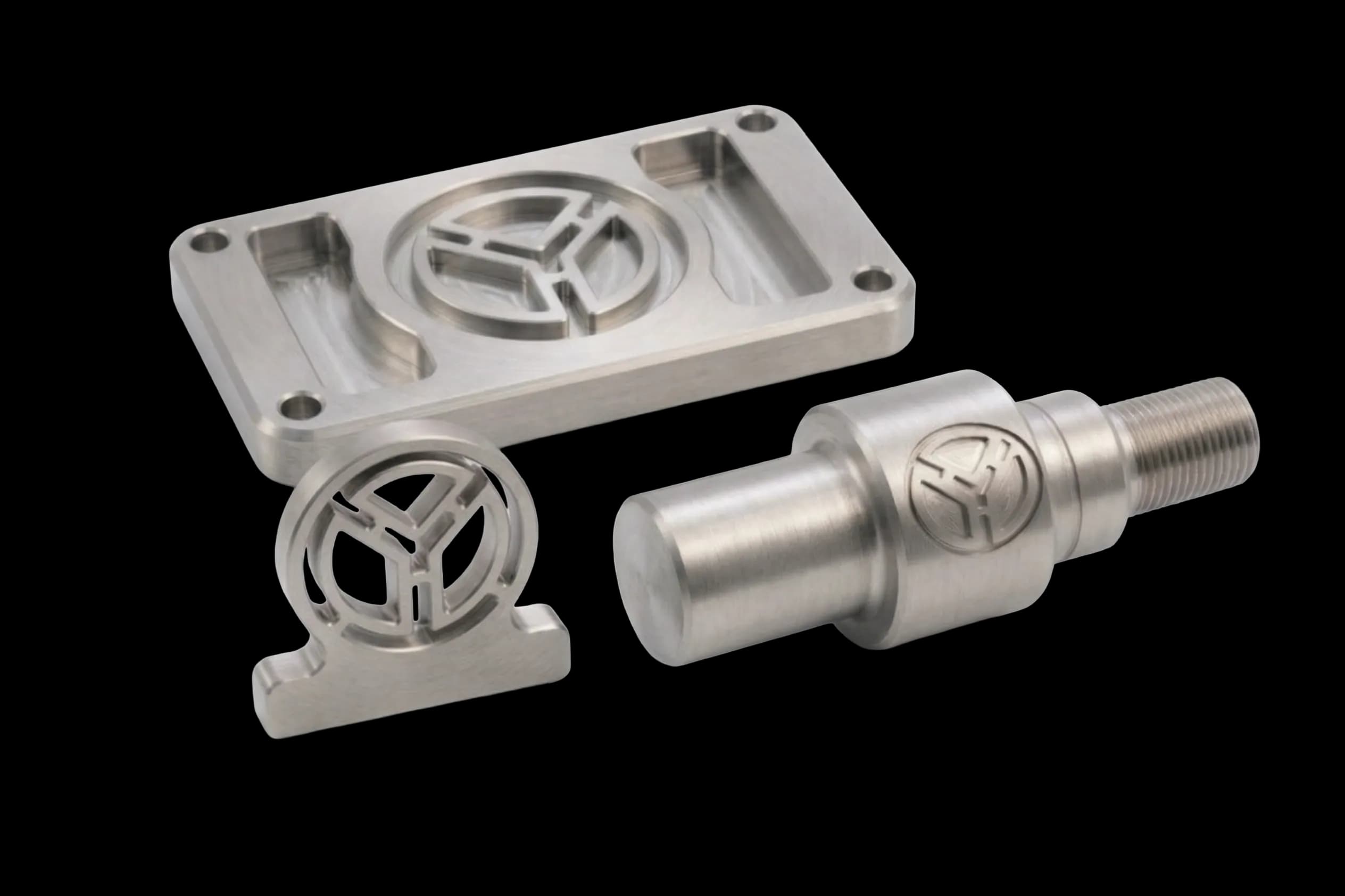
17-4 PH stainless steel bar stock and precision machined high-strength components
Material Overview

What is Stainless Steel 17-4 PH?

Stainless Steel 17-4 PH (also known as Grade 630) is a precipitation-hardening stainless alloy that combines high strength, good corrosion resistance, and excellent mechanical properties. Unlike austenitic grades such as Stainless Steel 304 or Stainless Steel 316, 17-4 PH can be heat treated through aging processes (such as H900, H1025, H1150 conditions) to achieve very high strength levels while maintaining dimensional stability. It is widely used in CNC machining and precision manufacturing for aerospace, energy, medical, and high-performance industrial components.

17-4 PH stainless steel machined components and high-strength precision parts
Specifications

Stainless Steel 17-4 PH Specifications

Engineering-grade properties of 17-4 PH stainless steel, including mechanical, physical, and heat treatment characteristics relevant to high-strength and precision applications. This data supports material selection for components requiring strength, toughness, and corrosion resistance.

17-4 PH Stainless Steel Engineering Properties

Alloy Type

Precipitation Hardening Stainless Steel (17Cr-4Ni)

Primary Characteristics

High strength, heat-treatable, good corrosion resistance, excellent dimensional stability, good fatigue resistance

Tensile Strength (Ultimate)

150–200 ksi (1030–1380 MPa) depending on heat treatment

Tensile Strength (Yield)

130–170 ksi (895–1170 MPa)

Elongation at Break

5–15% (varies by condition)

Hardness

Up to ~44 HRC (H900 condition)

Density

7.75 g/cm³ (0.280 lb/in³)

Elastic Modulus

28,000 ksi (193 GPa)

Poisson’s Ratio

0.27

Thermal Conductivity

18.3 W/m·K

Coefficient of Thermal Expansion

10.8 µm/m·°C

Melting Range

1400–1440 °C (2550–2625 °F)

Machinability

Good (best in solution-annealed condition before aging)

Formability

Moderate

Weldability

Good (post-weld heat treatment often required)

Corrosion Resistance

Good (comparable to 304 in many environments, but below 316)

Heat Treatment

Precipitation hardening via aging (H900, H1025, H1150, etc.)

Magnetic Properties

Magnetic

Common Forms

Bar, plate, sheet, forgings

Typical Applications

Aerospace components, shafts, gears, valves, pump parts, fasteners, tooling, high-strength structural components

Material Composition

Iron (Fe): balance, Chromium (Cr): 15–17.5%, Nickel (Ni): 3–5%, Copper (Cu): 3–5%, Niobium (Nb): 0.15–0.45%

ASTM Standard

ASTM A564 / A693

Performance

Material Performance Overview

Standardized comparison across key engineering and manufacturing criteria.

Strength

Weight

Machinability

Formability

Weldability

Corrosion Resistance

Thermal Resistance

Cost Efficiency

Ready to machine 17-4 PH stainless steel parts?

Upload your CAD files and get a fast, engineering-reviewed quote. From high-strength machined components to precision production runs, we support demanding programs.

Where Stainless Steel 17-4 PH is Commonly Used

17-4 PH stainless steel is widely used in applications requiring high strength, fatigue resistance, and dimensional stability. It is especially common in precision machined and load-bearing components.

Aerospace structural and engine components

High-strength shafts and gears

Valve and pump components

Oil and gas equipment

Medical and surgical devices

Fasteners and high-load hardware

Industrial tooling and fixtures

Precision CNC machined parts

High-performance mechanical assemblies

Material FAQs

Stainless Steel 17-4PH in CNC Machining and High-Strength Applications

Key considerations for engineering and sourcing teams working with 17-4PH stainless steel in machining, heat treatment, and high-performance production environments.

Ready for your Project

High-Strength Precipitation Hardening Steel

Stainless Steel 17-4 PH: The Ultimate Synergy of Hardness and Corrosion Resistance

Stainless Steel 17-4 PH (AISI 630) is a martensitic, precipitation-hardening stainless steel that represents the peak of versatile metallurgy. By utilizing copper additions, this alloy can be heat-treated at low temperatures to achieve immense tensile strength and hardness while maintaining corrosion resistance comparable to Stainless Steel 304.

At PREMSA Industries, we specify 17-4 PH for mission-critical components in aerospace, medical, and defense sectors. It is a premier choice for CNC machining when a project demands a material that is significantly tougher than standard stainless grades without sacrificing the ability to survive in corrosive environments.

Key manufacturing characteristics of 17-4 PH

  • Precipitation Hardening: Can be hardened to various 'Conditions' (e.g., H900, H1025, H1150) through a simple, low-temperature aging process.
  • Exceptional Strength: Offers a yield strength up to 1100-1300 MPa (160-190 ksi) in the H900 condition.
  • Superior Corrosion Defense: Unlike many high-strength steels, it resists atmospheric corrosion and many organic chemicals almost as well as the 300-series.
  • Dimensional Stability: The low-temperature heat treatment minimizes scaling and distortion, allowing for high-precision machining before final hardening.
  • Excellent Fatigue Resistance: Its fine-grained structure provides high endurance limits for parts subject to cyclic loading and vibration.
  • High Hardness: Easily reaches 40-45 HRC, making it resistant to surface wear and galling in mechanical assemblies.

Mechanical and physical properties of 17-4 PH

The defining characteristic of 17-4 PH is its adaptability. It is generally supplied in 'Condition A' (annealed), where it is most machinable. After CNC milling, it is aged to the desired strength level. It is frequently selected over Stainless Steel 410 when higher toughness and better corrosion resistance are required.

Typical performance profile

  • Highest strength-to-weight ratio in the standard stainless steel category
  • Magnetic in all conditions, useful for specialized sensor housing
  • Retains high strength at temperatures up to 315°C (600°F)
  • Very low distortion during the aging (hardening) cycle
  • Superior resistance to stress corrosion cracking compared to 400-series martensitic grades

Why engineers choose it

  • Ideal for structural aerospace components like gears, bolts, and engine parts
  • The standard for high-performance pump shafts and offshore valve components
  • Preferred for surgical instruments that require extreme rigidity and sharpness
  • Eliminates the need for the complex, high-heat quenching required by other tool steels

Strengths and advantages of 17-4 PH

  1. Versatile Mechanicals: A single alloy can be tailored for maximum hardness or maximum impact toughness.
  2. Corrosion Reliability: Outperforms almost all other high-strength martensitic stainless steels in salt spray and chemical tests.
  3. Machining Efficiency: Can be fully machined in the annealed state, with only a final low-temp age required to reach full strength.
  4. Weldability: Unlike 420 or 440C, it can be welded using standard methods with minimal risk of cracking.
  5. Wear Resistance: Excellent for load-bearing surfaces and high-pressure fluid environments.
  6. Cost-Effective Processing: Low-temperature hardening reduces energy costs and lead times compared to vacuum heat-treating.

Trade-offs and limitations of 17-4 PH

  1. Machining Difficulty: Harder to cut than Stainless Steel 303; requires high-torque machines and rigid setups.
  2. Directional Properties: Mechanical properties can vary slightly based on the 'grain' direction of the original forged bar or plate.
  3. Temperature Limits: Not recommended for continuous service above 315°C, as it can lose toughness over long periods.
  4. Hole Feature Sensitivity: Small, deep-drilled holes require high-precision chip management to avoid tool breakage.
  5. Cost: The specialized chemistry (Nickel, Copper, Niobium) makes it more expensive than standard 304 or 410.

Fabrication and machining considerations for 17-4 PH

Machining behavior

17-4 PH is tough and generates significant heat. For high-volume CNC turning, we use specialized carbide inserts to maintain dimensional accuracy.

  • Best results are achieved by machining in 'Condition A' and then hardening
  • Heavy chip loads are used to stay beneath the work-hardened layer
  • High-pressure coolant is vital for heat dissipation and tool life

Heat Treatment (Aging)

The aging process is predictable and yields consistent results across large production batches.

  • H900: Max strength and hardness (approx. 45 HRC)
  • H1150: Improved ductility and impact toughness (approx. 33 HRC)
  • H1150-M: Optimized for maximum toughness and resistance to stress corrosion

Joining and Finishing

  • Can be passivated or electropolished to enhance its natural corrosion resistance
  • Accepts nitriding for even higher surface hardness in high-friction apps
  • Welding is highly effective; post-weld aging is recommended to uniform the properties

Common applications for Stainless Steel 17-4 PH

17-4 PH is the 'heavy-duty' workhorse for high-precision CNC machined components.

  • Aerospace structural parts, gears, and engine mounts
  • High-pressure valve stems, gates, and internal pump shafts
  • Nuclear reactor components and waste containers
  • Surgical hardware and orthopedic instrument handles
  • Subsea offshore equipment and oil field hardware
  • Turbine blades and compressor components
  • High-strength fasteners and aerospace-grade bolts
  • Chemical processing equipment subject to high mechanical stress

When Stainless Steel 17-4 PH is the right material choice

Select 17-4 PH when your project requires a metal that is as strong as a structural alloy steel but as durable as a stainless steel.

  • When the part requires high hardness (40+ HRC) but must remain stainless
  • When structural failure due to fatigue or corrosion is a major safety concern
  • When a simplified heat-treatment process is needed to reduce lead times
  • When high-pressure fluid handling requires a material that won't gall or erode
  • When transitioning from a lower-strength stainless (like 304) to meet higher mechanical loads