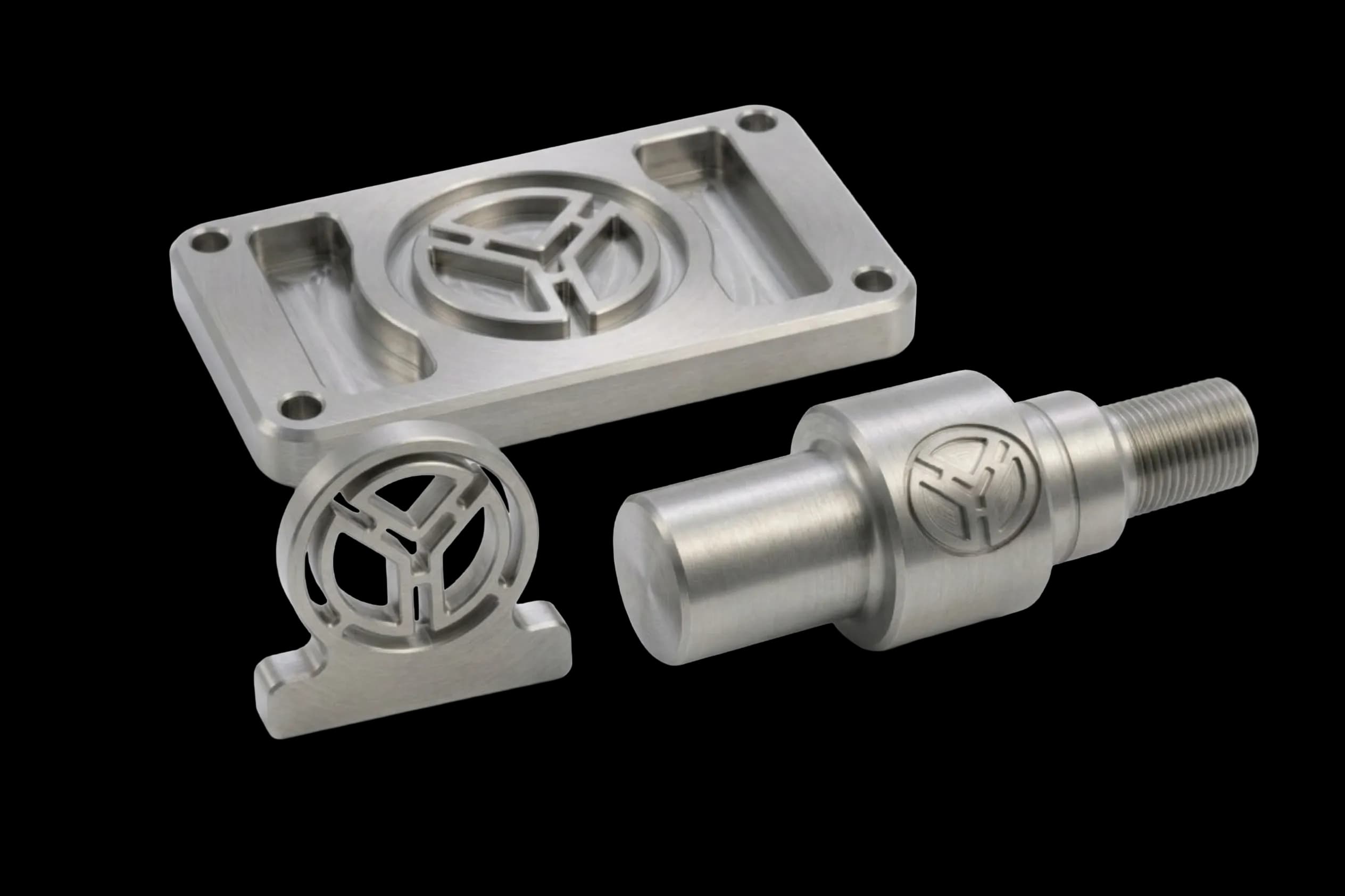
Material GuideTitanium Grade 2: Properties, Machining, and Corrosion-Resistant Applications
Titanium Grade 2 is a commercially pure titanium alloy widely used in industrial applications that require excellent corrosion resistance, good strength-to-weight ratio, and high reliability in aggressive environments. It is one of the most commonly used titanium grades outside of aerospace alloys, especially in chemical processing, marine, and medical industries.
For engineering and sourcing teams, Titanium Grade 2 is typically selected when corrosion resistance and durability in harsh environments are more critical than maximum strength. It is used across CNC machining, sheet metal fabrication, and welded assemblies where long-term performance and material stability are essential.
Key manufacturing characteristics of Titanium Grade 2
- Commercially pure titanium: Grade 2 contains no significant alloying elements, offering excellent corrosion resistance and formability.
- Outstanding corrosion resistance: Performs exceptionally well in seawater, chlorides, acids, and chemical environments.
- Excellent strength-to-weight ratio: Stronger than many steels on a weight basis while being significantly lighter.
- Good weldability: One of the most weldable titanium grades when proper shielding and process control are used.
- Moderate machinability: More difficult to machine than steels or aluminum, but easier than Titanium Grade 5.
- Non-magnetic and biocompatible: Suitable for medical and sensitive applications.
- High resistance to oxidation: Performs well in elevated temperature environments compared to many metals.
Mechanical and physical properties of Titanium Grade 2
Titanium Grade 2 is designed for corrosion resistance and durability rather than maximum strength. It provides a balance of moderate strength, excellent toughness, and exceptional resistance to environmental degradation, making it ideal for long-life applications in harsh conditions.
Typical performance profile
- Moderate strength compared to alloyed titanium grades
- Excellent corrosion resistance in aggressive environments
- Good ductility and formability
- Lower hardness than Grade 5 titanium
- High toughness and resistance to cracking
- Excellent fatigue resistance in corrosive environments
Why engineers choose it
- To maximize corrosion resistance in harsh environments
- To reduce maintenance and replacement cycles
- To ensure long-term reliability in chemical or marine applications
- To provide biocompatible material for medical components
- To balance performance with easier fabrication compared to stronger titanium alloys
Strengths and advantages of Titanium Grade 2
- Exceptional corrosion resistance: One of the best-performing metals in aggressive chemical and marine environments.
- Lightweight with good strength: Provides strong performance with reduced weight compared to steels.
- Excellent weldability: Easier to weld than many other titanium alloys when proper shielding is used.
- Good formability: Suitable for forming, bending, and shaping operations.
- Biocompatibility: Commonly used in medical and healthcare applications.
- Non-magnetic properties: Ideal for sensitive electronic and medical environments.
- Long service life: Performs reliably over long periods with minimal degradation.
Trade-offs and limitations of Titanium Grade 2
- Lower strength than Grade 5 titanium: Not ideal for high-load structural aerospace applications.
- More expensive than steel or aluminum: Higher material and processing cost.
- Difficult machining: Generates heat quickly and requires careful tooling and parameters.
- Requires specialized tooling: Lower thermal conductivity increases tool wear during machining.
- Surface galling risk: Requires proper lubrication and cutting strategies.
- Limited availability compared to common metals: Longer lead times in some supply chains.
- Overkill for non-corrosive environments: May not be cost-effective when corrosion resistance is not required.
Fabrication and machining considerations for Titanium Grade 2
Machining behavior
Titanium Grade 2 is commonly machined using CNC milling, CNC turning, and drilling and threading, but requires careful process control due to heat concentration and tool wear.
- Low thermal conductivity causes heat buildup at the cutting edge
- Requires sharp tooling and controlled cutting speeds
- Benefits from high-quality coolant application
- Lower cutting speeds compared to steel or aluminum
- Critical to avoid work hardening and tool failure
Forming and fabrication
Titanium Grade 2 is more formable than higher-strength titanium alloys and is often used in sheet metal fabrication.
- Good ductility supports bending and forming operations
- Requires attention to springback in precision parts
- Commonly used in sheet and plate applications
- Suitable for complex formed geometries
Welding and joining
Titanium Grade 2 offers excellent weldability, but requires strict control of shielding gas to prevent contamination.
- Requires inert gas shielding (argon) during welding
- Sensitive to oxygen, nitrogen, and contamination at high temperatures
- Produces strong, reliable weld joints when properly processed
- Common in pressure vessels and chemical equipment
Finishing
- Naturally corrosion resistant without coating
- Can be polished for cosmetic or functional purposes
- Surface treatments may improve wear resistance
- Typically used without painting or plating
- Maintains clean appearance over time in harsh environments
Common applications for Titanium Grade 2
Titanium Grade 2 is widely used in applications where corrosion resistance, durability, and long-term reliability are critical.
- Chemical processing equipment
- Marine components and offshore systems
- Heat exchangers and piping systems
- Medical devices and implants
- Desalination equipment
- Industrial tanks and vessels
- Energy and power generation components
- Components for medical, energy, industrial, and electronics & semiconductors applications
When Titanium Grade 2 is a strong material choice
Titanium Grade 2 is often the right choice when corrosion resistance, durability, and long-term performance outweigh cost and machining difficulty.
- When parts are exposed to aggressive chemical or marine environments
- When corrosion resistance is critical to performance
- When long service life is required with minimal maintenance
- When weight reduction is beneficial but extreme strength is not required
- When welding and fabrication are part of the process
- When biocompatibility is required
- When replacing stainless steel in highly corrosive environments