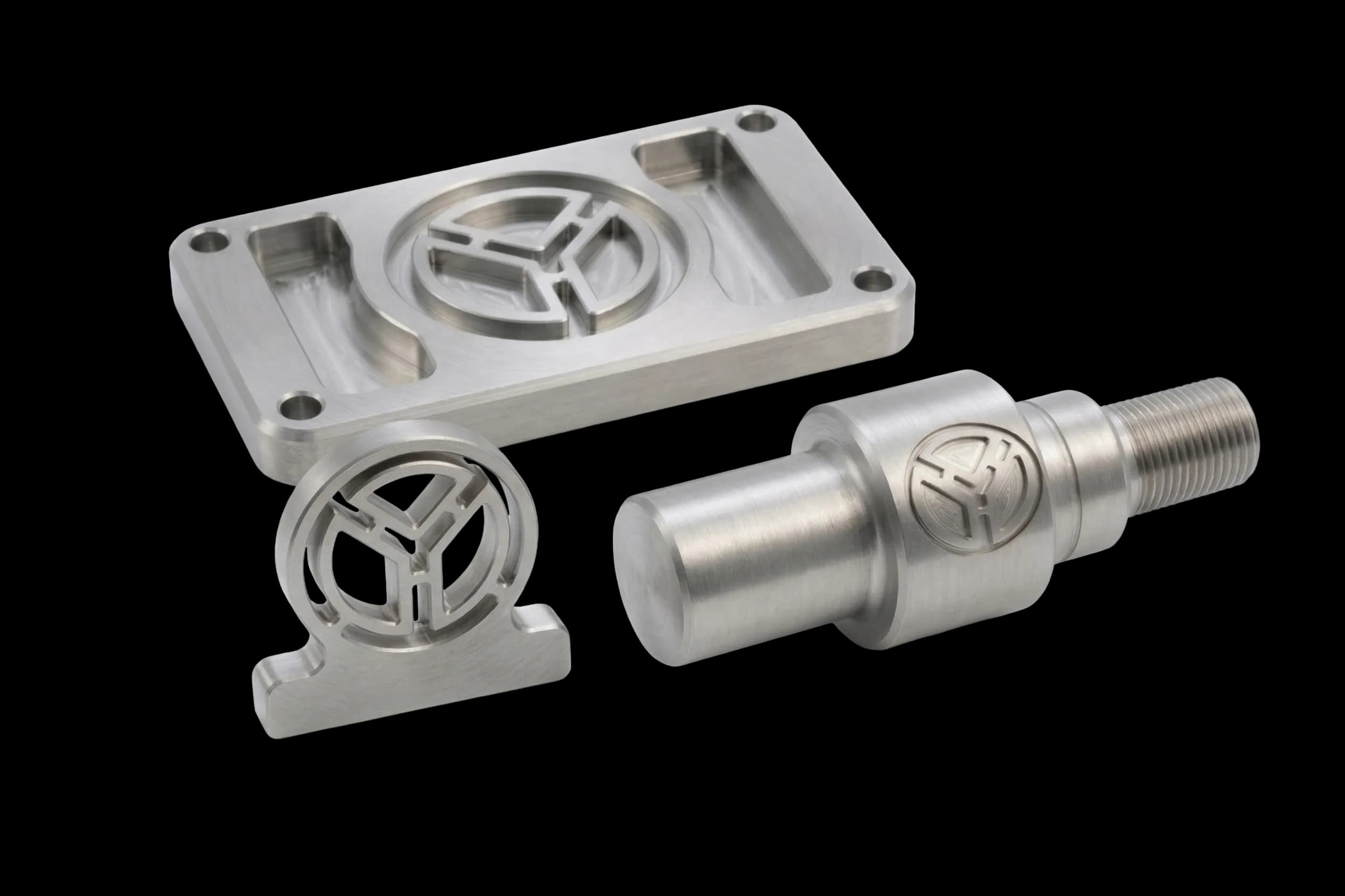
Material GuideTool Steel A2: Properties, Heat Treatment, and Precision Tooling Applications
A2 tool steel is an air-hardening, cold-work tool steel widely used in industrial manufacturing for tooling, dies, fixtures, and wear-resistant components. It is valued for its combination of good wear resistance, dimensional stability during heat treatment, and relatively easier machinability compared to more abrasion-resistant tool steels such as Tool Steel D2.
For engineering and sourcing teams, A2 is typically selected when a part requires controlled hardness, repeatable heat treatment response, and long-term dimensional stability. It is commonly used in CNC machining prior to heat treatment, followed by grinding or finishing processes to achieve final tolerances in tooling and precision applications.
Key manufacturing characteristics of Tool Steel A2
- Air-hardening tool steel: A2 hardens through air cooling, reducing distortion compared to oil-hardening grades and improving dimensional stability in finished parts.
- Good wear resistance: It offers solid abrasion resistance for cold-work applications, making it suitable for tooling and contact surfaces.
- Balanced machinability (pre-hardening): Easier to machine in the annealed condition than higher-carbon, high-chromium tool steels like Tool Steel D2.
- Dimensional stability during heat treatment: A key advantage of A2 is reduced warping and size change compared to many other tool steels.
- Good toughness for a tool steel: It provides better impact resistance than more brittle grades, making it useful in tooling that sees moderate shock.
- Requires heat treatment for final properties: Most A2 parts are machined soft and then hardened to achieve performance.
- Limited corrosion resistance: Despite chromium content, it is not a stainless steel and requires protection in humid or corrosive environments.
Mechanical and physical properties of Tool Steel A2
A2 is typically used in applications where hardness, wear resistance, and dimensional control after heat treatment are critical. It sits between more machinable, lower-performance steels and highly wear-resistant but brittle grades, offering a practical balance for tooling programs.
Typical performance profile
- High hardness after heat treatment (commonly 57–62 HRC range depending on application)
- Good wear resistance for cold-work tooling applications
- Better toughness than high-carbon, high-chromium grades like D2
- Good dimensional stability during hardening
- Moderate machinability in annealed condition
- Low corrosion resistance compared to stainless steels
Why engineers choose it
- To balance wear resistance and toughness in tooling applications
- To reduce distortion during heat treatment compared to oil-hardening steels
- To maintain tight tolerances in hardened components
- To support repeatable tooling performance in production environments
- To provide longer tool life compared to general-purpose carbon steels
Strengths and advantages of Tool Steel A2
- Excellent dimensional stability: Air hardening minimizes distortion, making it ideal for precision tooling and tight-tolerance components.
- Good balance of wear resistance and toughness: A2 avoids the brittleness of more wear-focused tool steels while still offering solid durability.
- Reliable heat treatment response: Consistent hardening behavior supports repeatable tooling performance.
- Better machinability than high-wear grades: Easier to machine than D2 in the annealed state, improving pre-hardening production efficiency.
- Strong performance in cold-work applications: Suitable for forming, cutting, and wear-contact tooling.
- Versatile for multiple tooling types: Used across dies, punches, fixtures, and industrial tooling systems.
- Supports secondary finishing processes: Works well with grinding, EDM, and polishing after hardening.
Trade-offs and limitations of Tool Steel A2
- Not corrosion resistant: Requires coating, oiling, or controlled environments to prevent rust.
- Requires heat treatment: Final properties depend heavily on proper hardening and tempering processes.
- Not as wear-resistant as D2: In highly abrasive environments, Tool Steel D2 may offer longer life.
- More difficult to machine after hardening: Requires grinding or EDM for final geometry once hardened.
- Higher cost than mild steels: More expensive than general-purpose steels like Steel 1018.
- Thermal treatment distortion still possible: Although reduced, distortion must still be managed in precision components.
- Limited suitability for high-temperature applications: Primarily designed for cold-work tooling, not elevated temperature service.
Fabrication and machining considerations for Tool Steel A2
Machining behavior
A2 is typically machined in its annealed condition using CNC milling, CNC turning, and drilling and threading. After machining, parts are heat treated and then finished to final dimensions.
- Machined before hardening for efficiency and tool life
- Supports complex geometries prior to heat treatment
- Requires finishing processes after hardening for tight tolerances
- Works well in fixture and tooling production workflows
Heat treatment workflow
Heat treatment is central to A2 performance. Parts are typically hardened through air quenching and then tempered to achieve the required balance of hardness and toughness.
- Air hardening reduces distortion compared to oil quenching
- Tempering adjusts final hardness and toughness balance
- Process control is critical for dimensional accuracy
- Often followed by grinding or finishing operations
Finishing and secondary operations
- Commonly ground after heat treatment for precision tolerances
- Compatible with EDM for intricate geometries
- Can be polished for tooling surfaces
- May be coated (e.g., PVD) for enhanced wear resistance
- Surface treatments can extend tool life in production environments
Welding and repair
A2 is not typically selected for welded structures, but repair welding may be possible in tooling applications with proper procedures.
- Requires controlled welding procedures if repair is needed
- Preheating and post-heat treatment may be required
- Alternative repair methods such as grinding or insert replacement are often preferred
Common applications for Tool Steel A2
A2 is widely used for tooling and wear-resistant components where dimensional stability and controlled hardness are critical.
- Punches and dies for cold forming
- Blanking and forming tools
- Shear blades and cutting tools
- Injection molding inserts and tooling components
- Industrial fixtures and precision jigs
- Wear plates and guide components
- Automation tooling and end-of-arm tooling
- Components for manufacturing, automotive, aerospace & defense, and industrial applications
When Tool Steel A2 is a strong material choice
A2 is often the right choice when a project requires controlled hardness, dimensional stability after heat treatment, and reliable tooling performance in production environments.
- When tooling requires both wear resistance and toughness
- When dimensional stability after hardening is critical
- When parts will be machined before heat treatment and finished afterward
- When moderate-to-high wear resistance is needed without extreme brittleness
- When production tooling must maintain consistent performance over time
- When grinding or EDM finishing will be used after hardening
- When a balance between machinability and performance is required