Home/Materials/C110 Copper
High Conductivity

C110 ETP Copper forElectrical & Thermal Parts

C110 Electrolytic Tough Pitch (ETP) copper is the standard for conductivity, offering 101% IACS electrical rating and exceptional heat transfer for high-performance industrial applications.

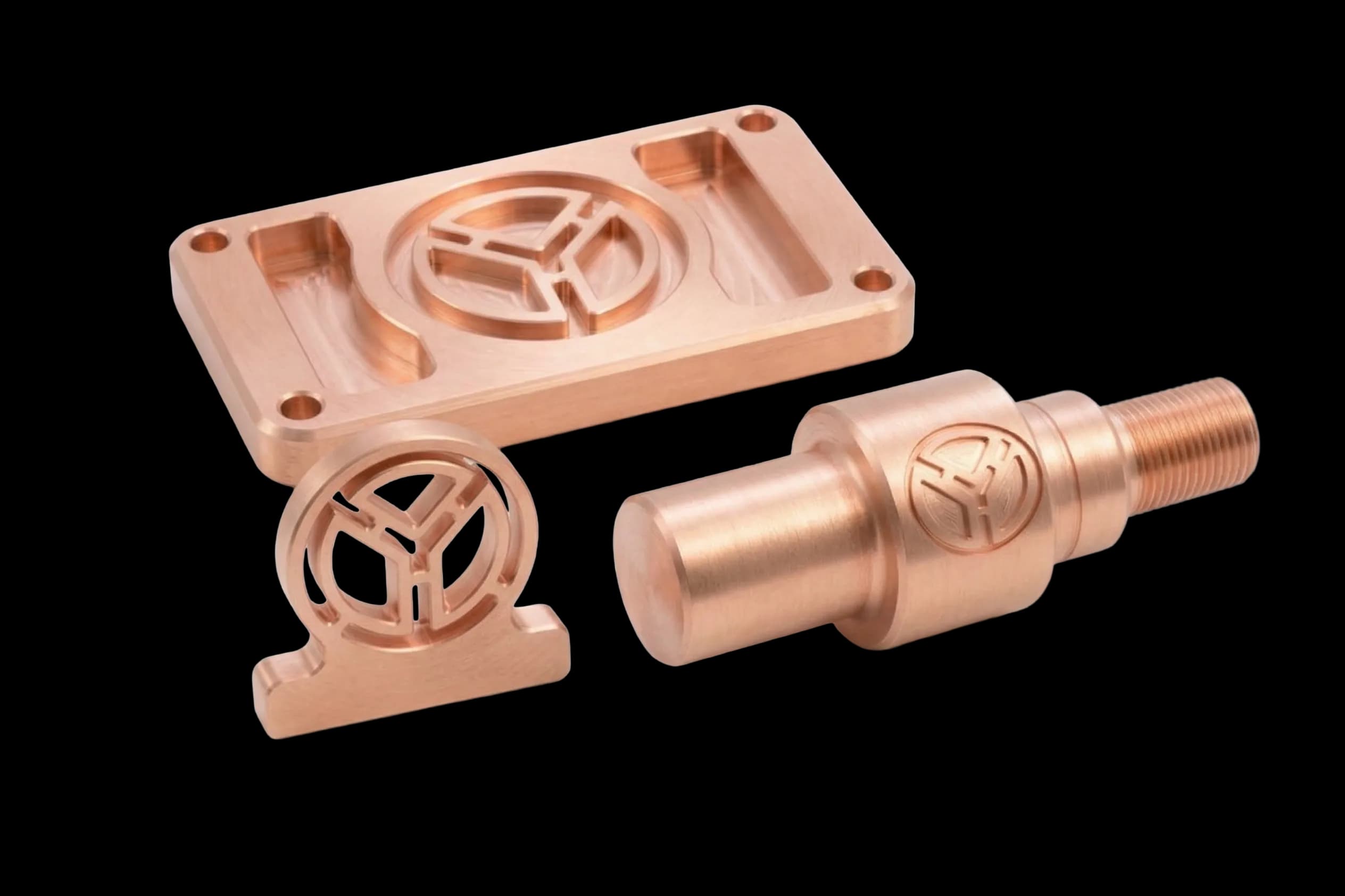
C110 Copper components and bus bars for electrical and thermal management
Material Overview

What is C110 Copper?

C110 copper, also known as Electrolytic Tough Pitch (ETP) copper, is a 99.9% pure copper grade used extensively in electrical and electronic applications. It is prized for its nearly perfect electrical and thermal conductivity, only surpassed by silver. While it is more challenging for CNC machining than aluminum due to its ductility and 'gummy' nature, C110 is the gold standard for power distribution components, heat sinks, and telecommunications hardware where efficiency in energy transfer is non-negotiable.

Precision CNC machined C110 copper bus bars and heat sinks
Specifications

C110 Copper Specifications

Technical data for C110 ETP copper. This material is defined by its extreme conductivity and excellent corrosion resistance in diverse environments.

C110 Engineering Properties

Material Type

Electrolytic Tough Pitch (ETP) Copper

Purity

99.90% Copper (min)

Primary Characteristics

Highest electrical conductivity (101% IACS), superior heat transfer, excellent ductility

Tensile Strength (Ultimate)

32–42 ksi (221–290 MPa)

Tensile Strength (Yield)

10–36 ksi (69–248 MPa)

Elongation at Break

20–40%

Rockwell Hardness

40–90 HRF (depending on temper)

Density

8.89 g/cm³ (0.321 lb/in³)

Elastic Modulus

17,000 ksi (117 GPa)

Poisson’s Ratio

0.33

Thermal Conductivity

391 W/m·K (≈ 226 BTU/ft·hr·°F)

Coefficient of Thermal Expansion

16.9 µm/m·°C

Melting Point

1083 °C (1981 °F)

Electrical Conductivity

101% IACS (Standard)

Machinability

Fair (20% rating; requires specific geometry and high-lubrication)

Weldability

Fair (Soldering and brazing are excellent; oxyacetylene not recommended)

Corrosion Resistance

Excellent (Resistant to marine and industrial atmospheres)

Plating & Surface Finish

Excellent for Tin, Silver, Gold, and Nickel plating

Common Forms

Bar, sheet, strip, plate, wire

Typical Applications

Bus bars, electrical connectors, heat sinks, transformer components, telecommunications

Standards

ASTM B133, B187, B152

Performance

C110 Copper Performance Overview

Ranked against other industrial metals for conductivity and workability.

Electrical Conductivity

Thermal Conductivity

Machinability

Corrosion Resistance

Formability

Weldability (Brazing)

Strength

Cost Efficiency

Ready to machine C110 Copper parts?

Get high-conductivity components with professional CNC machining. Upload your CAD files today for an engineering-reviewed quote.

Where C110 Copper is Commonly Used

Critical in industries where power and heat must be moved with minimal loss.

High-current bus bars and switchgears

Heat sinks for high-performance computing

Transformer and motor winding components

Electrical terminals and connectors

Telecommunications hardware

Plumbing and industrial heat exchangers

Architectural finishes and roofing

Gaskets and industrial fasteners

Antimicrobial surfaces in healthcare settings

Material FAQs

Copper C110 FAQs for Electrical and Thermal Manufacturing

Expert technical guidance for engineering teams utilizing C110 ETP Copper for high-conductivity components and precision industrial applications.

Ready for your Project

High Electrical Conductivity

Copper C110: The Gold Standard for Electrical & Thermal Applications

Copper C110, also known as Electrolytic Tough Pitch (ETP) copper, is the most widely used grade for electrical components due to its extraordinary conductivity. With a minimum purity of 99.9%, it offers the highest electrical and thermal transfer rates of any engineering metal.

At PREMSA Industries, we specialize in the precision CNC Machining of C110, overcoming its natural ductility to deliver clean, burr-free components for high-power electronics and advanced cooling systems.

Why C110 is Critical for High-Power Projects

  • Unrivaled Conductivity: Boasts an 101% IACS rating, making it the top choice for electrical busbars, connectors, and power distribution.
  • Thermal Management Powerhouse: Dissipates heat significantly faster than aluminum, essential for high-density CPUs and power inverters.
  • Natural Antimicrobial Properties: Inherently kills bacteria and viruses on contact, making it ideal for high-touch medical and food surfaces.
  • Superior Ductility: Can be easily formed into complex shapes via Metal Stamping without sacrificing electrical integrity.
  • Excellent Corrosion Resistance: Naturally develops a protective patina that resists atmospheric and water corrosion.
  • Reliable Joining: Highly compatible with soldering and brazing, ensuring low-resistance connections in complex assemblies.

C110 vs. Other Alloys: Efficiency over Structural Strength

While Aluminum 1100-H14 is a lightweight conductor, Copper C110 is selected when space is limited and maximum current density is required. It is the heavy-duty choice for industrial energy systems.

The Strategic ROI

  • Reduces energy loss in electrical systems, lowering long-term operational costs
  • Enables smaller, more compact designs for cooling blocks and heat sinks
  • Maintains high salvage value due to the recyclability of pure copper
  • Prevents system overheating, extending the lifespan of sensitive electronics

Overcoming Machining Challenges

  • Our specialized CNC Milling techniques prevent the 'smearing' common with soft copper
  • Supports high-precision Drilling & Threading for secure electrical terminations
  • Expertise in maintaining surface purity to ensure maximum contact conductivity

Performance Strengths for Energy & Cooling

  1. Maximum Current Density: Carries more power in less space than aluminum.
  2. Thermal Speed: The fastest way to move heat away from a critical source.
  3. Malleability: Ideal for intricate Sheet Metal Fabrication of electrical enclosures.
  4. Joining Versatility: The preferred material for high-reliability soldered assemblies.
  5. Sustainability: 100% recyclable without any loss in performance.
  6. Aesthetic Versatility: Can be polished for high-end architectural or consumer hardware.

Design Limitations to Keep in Mind

  1. Weight Factor: Significantly heavier than aluminum; consider this for aerospace or portable applications.
  2. Machining Difficulty: C110 is 'gummy'; it requires advanced tooling and experienced operators to avoid burrs.
  3. Cost Volatility: Pure copper is a premium commodity and more expensive than aluminum or steel.
  4. Oxidation: Will darken over time if not sealed or plated (tin or silver plating is common for electrical use).
  5. Structural Use: Not a structural metal; avoid using C110 for load-bearing frames or high-impact parts.

Advanced C110 Fabrication at PREMSA Industries

Precision Electrical Components

We specialize in the production of high-tolerance busbars and custom connectors. Our Swiss-Type Machining is perfect for small, intricate copper contacts.

  • Burr-free Drilling & Threading for bolt-on power terminals
  • Clean edges on stamped copper plates for high-voltage isolation
  • Mirror-finish milling for maximum surface contact in heat blocks

Prototyping Thermal Solutions

Validate your cooling designs with Prototype 3D Printing before committing to C110. We help you refine flow paths in heat sinks before final metal production.

  • Test assembly fit with SLS models
  • Fast transition from thermal simulation to precision-machined copper

Finishing & Plating

  • Tin or Silver plating to prevent oxidation and improve solderability
  • Electropolishing for medical-grade surface cleanliness
  • Clear coating to preserve the 'new copper' look for architectural parts

High-Value Applications for C110

Wherever energy or heat must be moved efficiently, C110 is the core of premium CNC machined components.

  • Electrical busbars, switchgear, and terminals
  • High-performance CPU and GPU liquid cooling blocks
  • Transformers, motors, and high-frequency waveguides
  • Medical device components requiring antimicrobial surfaces
  • Electromagnetic shielding (EMI/RFI) for sensitive sensors
  • Industrial heat exchangers and condenser plates
  • Renewable energy inverters and battery connectors
  • Architectural accents and high-end consumer electronics

Is C110 Copper Right for Your Project?

If your priority is electrical efficiency or heat dissipation, C110 is the most effective material investment you can make.

  • When electrical conductivity is the primary performance requirement
  • When rapid heat transfer is needed to protect sensitive components
  • When parts require intricate forming or Metal Stamping
  • When the application involves medical or sterile environments
  • When building high-reliability energy distribution hardware