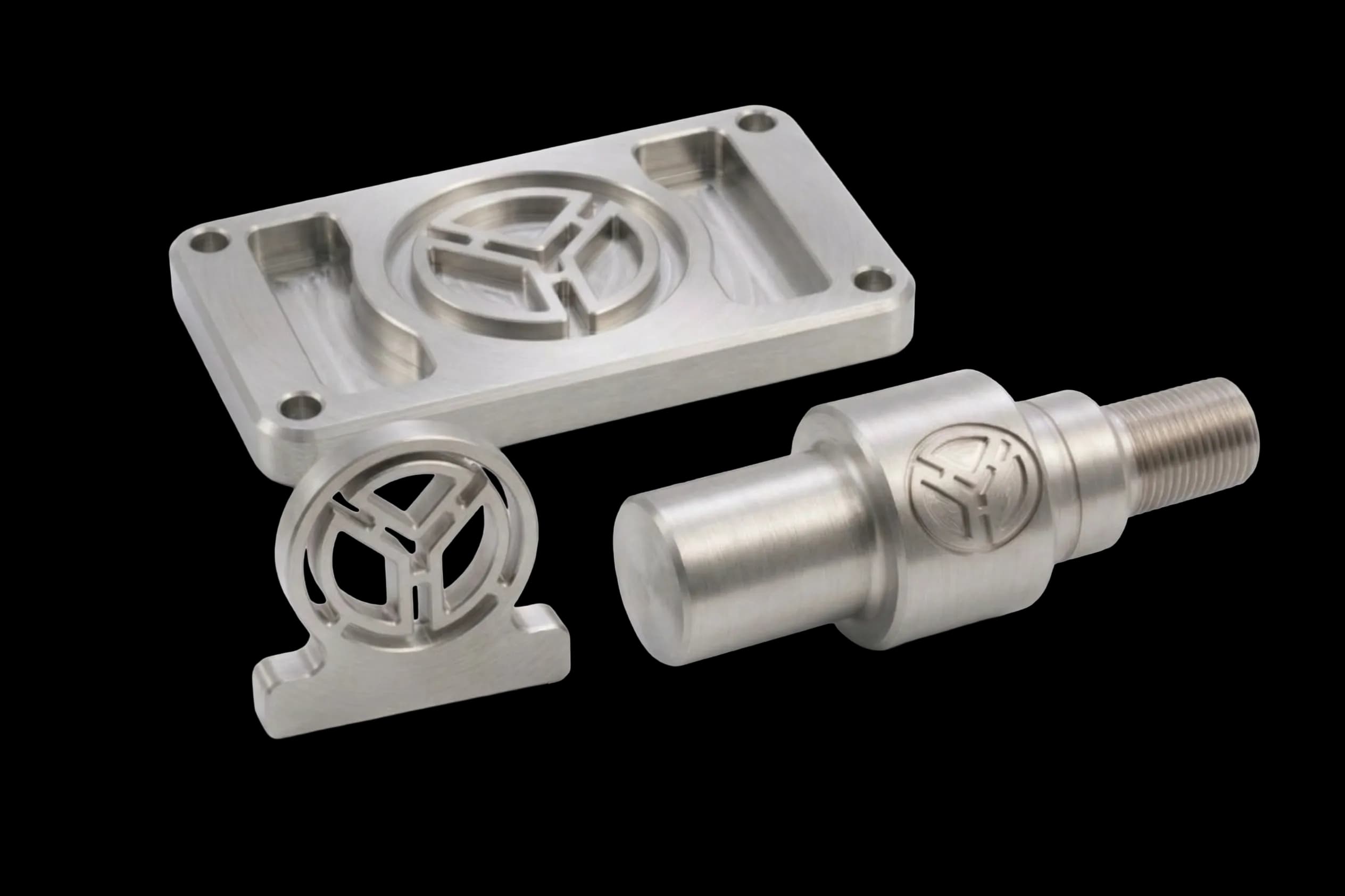
The Universal Stainless StandardStainless Steel 304: Superior Versatility, Corrosion Resistance, and Strength
Stainless Steel 304 is the most widely used austenitic stainless steel in the world, valued for its exceptional resistance to oxidation and its robust mechanical properties. Composed of approximately 18% chromium and 8% nickel, it provides a dependable barrier against corrosive elements in a vast array of industrial and consumer environments.
At PREMSA Industries, we utilize SS 304 for projects demanding high structural integrity and long-term durability. While it requires more specialized expertise in CNC machining than free-machining grades, its ability to be welded, formed, and cleaned makes it the benchmark for food, medical, and architectural applications.
Key manufacturing characteristics of SS 304
- Excellent Corrosion Resistance: Highly resistant to rust in most atmospheric conditions and freshwater environments due to its high chromium content.
- High Ductility and Toughness: Can be significantly deformed without fracturing, making it ideal for parts that require both strength and some level of flexibility.
- Superior Weldability: One of the easiest stainless steels to weld using standard techniques like TIG (GTAW) and MIG (GMAW).
- Hygienic Surface Properties: Its non-porous surface resists bacterial growth and is easy to sanitize, a critical requirement for food and medical sectors.
- Non-Magnetic Performance: In its annealed state, it is non-magnetic, which is vital for electronic enclosures and sensitive instrumentation.
- Cryogenic Suitability: Maintains excellent mechanical properties and toughness even at extremely low temperatures.
Mechanical and physical properties of Stainless 304
SS 304 is often chosen when the environmental conditions are too harsh for carbon steel but don't require the extreme marine-grade protection of Stainless Steel 316. It offers a higher strength-to-weight ratio than many aluminum alloys while providing better heat resistance than Stainless Steel 303.
Typical performance profile
- High tensile strength and excellent impact resistance
- Low thermal conductivity compared to aluminum, requiring careful heat management during cutting
- Retains structural integrity at elevated temperatures up to 870°C
- Significant work-hardening rate, which can be utilized to increase part strength
- Outstanding aesthetic appeal with various brushed or polished finishes
Why engineers choose it
- Standardized availability and well-documented performance data
- Excellent for complex assemblies requiring both machined parts and welded frames
- Cost-effective alternative to high-nickel superalloys for moderate corrosive service
- Ideal for food-grade equipment, laboratory hardware, and chemical containers
Strengths and advantages of SS 304
- Broad Chemical Compatibility: Resists most oxidizing acids and household chemicals.
- Structural Reliability: Offers high yield strength for load-bearing components.
- Versatile Fabrication: Can be readily stamped, machined, and joined.
- Ease of Sanitization: The preferred material for the pharmaceutical and dairy industries.
- Longevity: Components typically enjoy a long service life with minimal maintenance.
- Aesthetic Finish: Naturally bright finish that can be electropolished to a mirror shine.
Trade-offs and limitations of Stainless 304
- Machining Difficulty: More prone to work-hardening than Stainless Steel 303; requires rigid setups and high-torque machinery.
- Pitting in Chlorides: Vulnerable to localized corrosion (pitting) in warm chloride environments or salt-water spray.
- Intergranular Corrosion: Welding can cause chromium carbide precipitation unless low-carbon versions (304L) or proper post-weld treatments are used.
- Thermal Expansion: Higher rate of thermal expansion than carbon steels, which must be accounted for in tight-tolerance assemblies.
- Cost: More expensive than standard carbon steels and most aluminum alloys.
Fabrication and machining considerations for SS 304
Machining behavior
SS 304 is known for being 'gummy' and tough. Successful CNC milling requires constant chip evacuation and sharp, coated tools to prevent the material from hardening ahead of the cut.
- Requires lower cutting speeds and higher feed rates than carbon steel
- Heavy, constant feeds are necessary to stay 'under' the work-hardened layer
- Use of high-quality sulfur-free coolants is recommended for best results
Welding and Joining
This grade is the standard for welded stainless assemblies. It does not require post-weld annealing for many thin-section applications.
- Excellent results with laser welding for precision instruments
- Highly compatible with resistance welding for sheet metal components
- Low carbon (304L) variants available for heavy-gauge welded structures
Surface Treatment
- Passivation is essential after machining to restore the protective oxide layer
- Electropolishing provides the ultimate surface for medical-grade cleanliness
- Bead blasting creates a uniform, non-reflective matte finish
Common applications for Stainless Steel 304
SS 304 is found in virtually every industry due to its balance of cost and performance in CNC machined components.
- Food processing equipment (vats, pipes, and mixers)
- Laboratory and chemical handling equipment
- Medical device components and surgical tools
- Heat exchangers and pressure vessel linings
- Architectural trim, railings, and hardware
- Automotive exhaust manifolds and trim
- Aerospace fuel system components
- Springs, nuts, bolts, and heavy-duty fasteners
When Stainless Steel 304 is the right material choice
Choose SS 304 when you need a 'one-size-fits-most' stainless steel that offers a balance of strength, weldability, and corrosion resistance.
- When the part must resist rust in standard atmospheric or indoor environments
- When the component requires extensive welding or forming
- When hygienic or sanitary properties are a regulatory requirement
- When a non-magnetic material with high strength is needed
- When a long-lasting, aesthetically pleasing metal finish is desired