Home/Materials/Stainless Steel 420
Production Material

Stainless Steel 420 forHardened & Wear-Resistant Components

420 stainless steel is a martensitic alloy used for applications requiring high hardness, wear resistance, and heat-treatable strength. It is commonly used in CNC machining, CNC turning, and precision components where edge retention and mechanical durability are more important than maximum corrosion resistance.

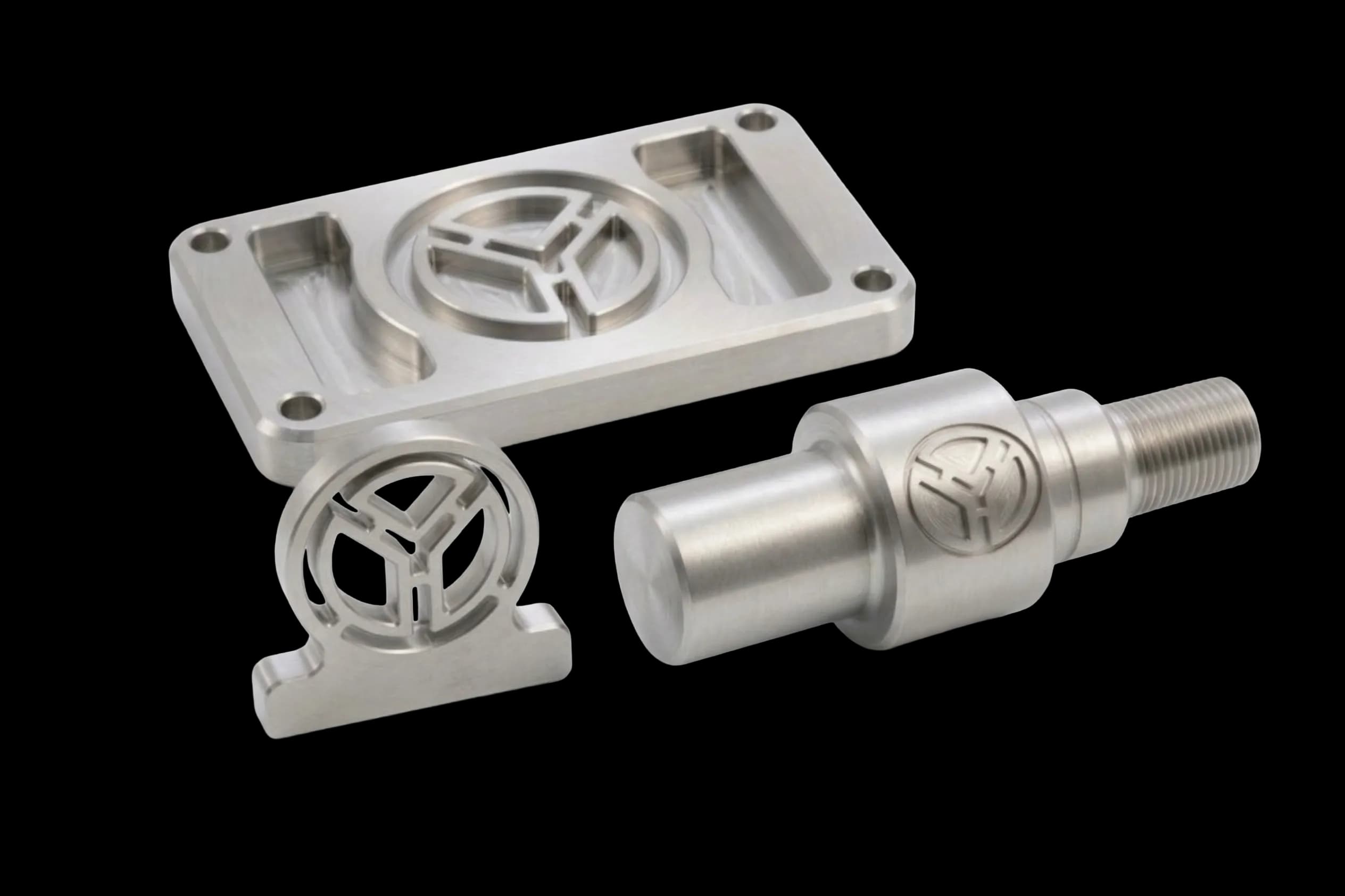
420 stainless steel bar stock and hardened machined components for industrial manufacturing
Material Overview

What is Stainless Steel 420?

Stainless Steel 420 is a higher-carbon martensitic stainless alloy that can be hardened by quenching and tempering to achieve substantially higher hardness than grades such as Stainless Steel 410. It contains a minimum of about 12% chromium, which provides moderate corrosion resistance, while the higher carbon content improves hardness and wear performance after heat treatment. Compared to austenitic grades such as Stainless Steel 304 or Stainless Steel 316, 420 is selected less for fabrication and corrosion resistance and more for hardened components, cutting edges, valve parts, and wear-prone mechanical applications.

420 stainless steel hardened components and precision machined parts
Specifications

Stainless Steel 420 Specifications

Engineering-grade properties of 420 stainless steel, including mechanical, physical, and heat treatment characteristics relevant to hardened parts, wear-resistant components, and machined industrial applications. This data supports material selection where hardness and strength matter more than high-end corrosion performance.

420 Stainless Steel Engineering Properties

Alloy Type

High-Carbon Martensitic Stainless Steel

Primary Characteristics

Heat-treatable, high hardness, good wear resistance, good strength, moderate corrosion resistance

Tensile Strength (Ultimate)

≈ 700 MPa (102 ksi) minimum in annealed bar; significantly higher in heat-treated condition

Tensile Strength (Yield)

≈ 440 MPa (64 ksi) minimum in annealed bar

Elongation at Break

≈ 20% minimum in annealed condition

Hardness

Up to about 50 HRC after heat treatment

Density

7.74 g/cm³ (0.280 lb/in³)

Elastic Modulus

200 GPa (29,000 ksi)

Poisson’s Ratio

0.27

Thermal Conductivity

24.9 W/m·K at 100 °C

Coefficient of Thermal Expansion

10.3 µm/m·°C

Specific Heat

460 J/kg·K

Melting Range

1450–1510 °C (2640–2750 °F)

Machinability

Good in annealed condition; more difficult after hardening

Formability

Limited to moderate; lower than austenitic stainless grades

Weldability

Limited; generally requires preheat and post-weld heat treatment

Corrosion Resistance

Moderate; best when hardened and polished, but lower than 304 and 316

Heat Treatment

Can be hardened by quenching and tempering

Common Forms

Bar, plate, sheet, forgings

Typical Applications

Cutlery, surgical instruments, valve parts, pump shafts, wear components, molds, knives, hand tools

Material Composition

Iron (Fe): balance, Chromium (Cr): 12.0–14.0%, Carbon (C): 0.15–0.40%, Manganese (Mn): ≤1.0%, Silicon (Si): ≤1.0%, Phosphorus (P): ≤0.04%, Sulfur (S): ≤0.03%

ASTM Standard

ASTM A240 / A276

Performance

Material Performance Overview

Standardized comparison across key engineering and manufacturing criteria.

Strength

Weight

Machinability

Formability

Weldability

Corrosion Resistance

Wear Resistance

Cost Efficiency

Ready to machine 420 stainless steel parts?

Upload your CAD files and get a fast, engineering-reviewed quote. From hardened wear components to precision machined parts, we support durable production programs.

Where Stainless Steel 420 is Commonly Used

420 stainless steel is widely used in applications requiring hardness, wear resistance, and the ability to heat treat the material for improved edge retention or surface durability. It is especially common in hardened mechanical and cutting-related components.

Cutting tools and blades

Knife components and edge-holding parts

Surgical and dental instruments

Valve parts and pump shafts

Wear-resistant bushings and sleeves

Industrial hand tools

Molds and dies for moderate service

Hardened fasteners and mechanical parts

Precision machined heat-treated components

Material FAQs

Stainless Steel 420 in CNC Machining and Hardened Wear Applications

Key considerations for engineering and sourcing teams working with 420 stainless steel in machining, heat treatment, and high-hardness production environments.

Ready for your Project

High-Carbon Martensitic Steel

Stainless Steel 420: Maximum Hardness, Edge Retention, and Wear Resistance

Stainless Steel 420 is a high-carbon martensitic stainless steel that offers the highest hardness of the 12% chromium family. Unlike austenitic grades, SS 420 can be hardened through heat treatment to reach up to 50 HRC, making it ideal for applications requiring extreme abrasion resistance and sharp cutting edges.

At PREMSA Industries, we leverage SS 420 for precision industrial tools and medical components. It provides a unique bridge between the corrosion resistance of stainless steel and the high-strength mechanical properties typically found in alloy tool steels. It is a preferred choice for CNC machining when the final part must endure high contact stress without deforming.

Key manufacturing characteristics of SS 420

  • Extreme Hardenability: Capable of reaching high Rockwell C hardness (up to 50-52 HRC) through quenching and tempering.
  • Superior Edge Retention: The high carbon content allows for the creation of razor-sharp edges that remain durable under repeated use.
  • Magnetic Properties: Like all martensitic steels, it is strongly magnetic, which is useful for specialized electronic or automated sorting applications.
  • Moderate Corrosion Resistance: Provides good resistance to the atmosphere, fresh water, and mild acids when fully hardened and surface-polished.
  • High Tensile Strength: Once heat-treated, it offers exceptional load-bearing capacity and resistance to mechanical fatigue.
  • Excellent Polishing Response: Can be ground and polished to a mirror finish, which simultaneously improves its corrosive defense.

Mechanical and physical properties of Stainless 420

SS 420 is defined by its ability to be transformed via heat. In its annealed state, it is relatively easy to machine, but its true value is realized after hardening. It is generally selected over Stainless Steel 304 when surface hardness and wear life are more critical than maximum chemical resistance.

Typical performance profile

  • Highest hardness in the 400-series family (excluding specialized grades like 440C)
  • Good thermal conductivity compared to 300-series stainless steels
  • Higher carbon content (min 0.15%) compared to 410, leading to greater strength
  • Maintains stable properties at temperatures up to 425°C (800°F)
  • Non-deforming during standard quenching processes when properly handled

Why engineers choose it

  • Required for surgical instruments that must remain sharp after sterilization
  • Ideal for industrial pump shafts and needle valves subject to high friction
  • Best-in-class for high-strength fasteners that require some corrosion protection
  • Standard for plastic injection molds due to its hardness and polishability

Strengths and advantages of SS 420

  1. Exceptional Wear Resistance: Outperforms 304 and 316 in sliding contact and abrasive environments.
  2. Tunable Ductility: Tempering allows engineers to balance hardness against the risk of brittleness.
  3. Excellent Machine-to-Hardness Ratio: Machines well in the annealed state before becoming extremely tough post-heat treat.
  4. Mirror Finishing: Responds better to high-luster polishing than almost any other stainless grade.
  5. Cost-Effective High Strength: Provides tool-steel performance with the added benefit of being stainless.
  6. Atmospheric Resilience: Resists rust in domestic and industrial environments effectively.

Trade-offs and limitations of Stainless 420

  1. Lowest Corrosion Resistance in Family: Corrosion resistance is lower than 410 and significantly lower than Stainless Steel 316.
  2. Condition-Dependent Protection: Maximum corrosion resistance is only achieved when the material is fully hardened and polished.
  3. Poor Weldability: High carbon content makes it prone to cracking; requires extensive pre-heating and post-weld annealing.
  4. Brittleness: If not tempered correctly, high hardness can lead to sudden fracture under impact loading.
  5. Not for Marine Use: Should not be used in chloride-rich or saltwater environments.

Fabrication and machining considerations for SS 420

Machining behavior

SS 420 is typically processed in the annealed state. Our CNC turning experts recommend rigid setups to handle its toughness.

  • Produces cleaner, less 'stringy' chips than 304 stainless
  • Requires specialized grinding or EDM (Electrical Discharge Machining) if modifications are needed after hardening
  • Constant feed rates are necessary to prevent glazed surfaces

Heat Treatment & Hardening

The 'Quench and Temper' cycle is what defines this material's utility.

  • Hardening: Heat to 980-1035°C followed by oil or air quenching
  • Tempering: Performed between 150-370°C to achieve desired toughness
  • Avoid tempering between 425-600°C due to 'temper brittleness' and reduced corrosion resistance

Finishing

  • Grinding is often used after heat treatment to achieve final tolerances
  • Passivation is essential to ensure a clean, oxide-rich surface
  • Polishing to a high luster is recommended for medical and food-contact parts

Common applications for Stainless Steel 420

SS 420 is a staple for high-wear CNC machined components across the medical and industrial sectors.

  • Surgical and dental instruments (scalpels, forceps, probes)
  • Needle valves and high-pressure pump components
  • Plastic injection molds and die inserts
  • Shear blades, industrial knives, and cutters
  • Hardened fasteners and high-torque screws
  • Ball bearings and valve seats
  • Hand tools and high-end cutlery
  • Gauges and precision measurement hardware

When Stainless Steel 420 is the right material choice

Select 420 when your project requires a metal that can be 'as hard as a tool' while remaining stainless.

  • When the part requires a razor-sharp cutting edge or high surface hardness
  • When wear resistance is more important than extreme chemical corrosion defense
  • When the component must be magnetic for sensing or latching
  • When parts will be polished to a mirror finish for medical or aesthetic use
  • When a cost-effective alternative to expensive tool steels is required for mild environments