Home/Materials/Bronze C51000
Production Material

C51000 Phosphor Bronze forPrecision Formed & Electrical Components

C51000 phosphor bronze is widely used for applications requiring high fatigue resistance, excellent corrosion resistance, and good formability. It is commonly used in Sheet Metal Fabrication, springs, and electrical components rather than heavy CNC machining.

C51000 phosphor bronze sheet and precision formed components for industrial applications
Material Overview

What is C51000 Phosphor Bronze?

C51000 phosphor bronze is a copper-tin alloy with a small addition of phosphorus, designed to provide excellent fatigue resistance, good electrical conductivity, and strong corrosion performance. Compared to aluminum alloys, it is less commonly used for heavy CNC machining and more frequently applied in metal stamping and sheet forming processes. Its combination of strength, elasticity, and wear resistance makes it ideal for springs, electrical contacts, connectors, and precision mechanical components.

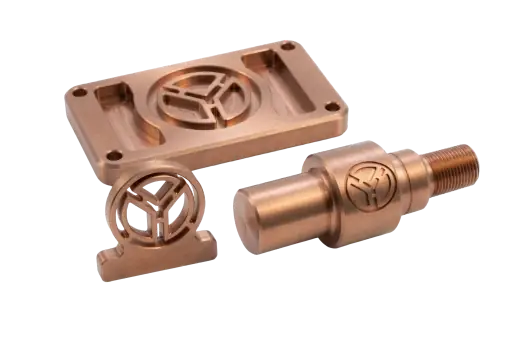
C51000 phosphor bronze sheet and formed spring components
Specifications

C51000 Phosphor Bronze Specifications

Engineering-grade properties of C51000 phosphor bronze, including mechanical, physical, and electrical characteristics relevant to forming, stamping, and precision component production. This data supports material selection and performance evaluation in spring-loaded and conductive applications.

C51000 Engineering Properties

Alloy Type

Phosphor Bronze (Cu-Sn-P alloy)

Primary Characteristics

Excellent fatigue resistance, good corrosion resistance, good electrical conductivity, high wear resistance

Tensile Strength (Ultimate)

60–85 ksi (415–585 MPa) depending on temper

Tensile Strength (Yield)

45–75 ksi (310–515 MPa)

Elongation at Break

10–30% (varies with temper)

Hardness

Rockwell B 70–95 (varies by temper)

Density

8.8 g/cm³ (0.318 lb/in³)

Elastic Modulus

16,000 ksi (110 GPa)

Poisson’s Ratio

0.34

Electrical Conductivity

≈ 15% IACS

Thermal Conductivity

≈ 60 W/m·K

Melting Range

950–1020 °C (1740–1870 °F)

Formability

Excellent (well suited for bending, forming, and stamping)

Machinability

Moderate (not optimized for high-speed CNC machining)

Weldability

Limited (typically joined via soldering or brazing)

Corrosion Resistance

Excellent (especially in marine and industrial environments)

Common Forms

Sheet, strip, foil, wire

Typical Applications

Springs, electrical connectors, terminals, switch components, diaphragms, wear plates

Material Composition

Copper (Cu): ~94–96%, Tin (Sn): ~4.2–5.8%, Phosphorus (P): 0.03–0.35%

ASTM Standard

ASTM B103 / B139

Performance

Material Performance Overview

Standardized comparison across key engineering and manufacturing criteria.

Strength

Weight

Machinability

Formability

Fatigue Resistance

Corrosion Resistance

Electrical Conductivity

Cost Efficiency

Ready to manufacture C51000 bronze parts?

Upload your CAD files and get a fast, engineering-reviewed quote. From stamped components to formed assemblies, we support production programs.

Where C51000 Phosphor Bronze is Commonly Used

C51000 phosphor bronze is widely used in applications requiring fatigue resistance, spring properties, and reliable electrical performance. It is especially common in formed and stamped components rather than fully machined parts.

Electrical connectors and terminals

Precision springs and spring contacts

Switch components and relay parts

Battery contacts and conductive elements

Diaphragms and flexible components

Wear plates and bushings

Marine hardware and corrosion-resistant components

Stamped and formed metal parts

Electronic and semiconductor hardware

Material FAQs

Bronze C51000 FAQs for CNC Machining

Common questions from engineering and sourcing teams working with C51000 phosphor bronze in CNC machining, electrical components, and precision manufacturing environments.

Ready for your Project

Spring Quality & Fatigue Resistance

Phosphor Bronze C51000: The Engineering Choice for Elasticity and Wear

Phosphor Bronze C51000 (Grade A 5%) is a premier copper alloy distinguished by its exceptional toughness, fatigue resistance, and high electrical conductivity. By adding tin and phosphorus to the copper matrix, this alloy achieves a superior elastic modulus, making it the industry standard for springs, diaphragms, and electrical connectors that must maintain tension over millions of cycles.

At PREMSA Industries, we utilize specialized CNC machining workflows to transform C51000 into high-performance components that demand a precise balance of mechanical spring force and corrosion resilience.

Key manufacturing characteristics of C51000 Bronze

  • Exceptional Fatigue Life: Capable of enduring repetitive stress cycles without work-hardening to the point of failure, ideal for 'living' mechanical parts.
  • High Elasticity: Exhibits a superior spring-back quality, making it the preferred choice for electrical contacts and pressure-sensing bellows.
  • Low Friction & High Wear Resistance: The phosphorus content creates a refined grain structure that resists galling and abrasion in metal-to-metal contact.
  • Excellent Corrosion Resistance: Highly resilient against salt water, industrial chemicals, and atmospheric oxidation, outperforming standard brass alloys.
  • Superior Solderability: Offers a clean, high-energy surface that bonds exceptionally well with lead-free and leaded solders in electronics assembly.
  • Stable Machinability: Provides a predictable response during CNC turning, allowing for the production of intricate connectors with high surface finish requirements.

Mechanical and physical properties of C51000 Bronze

C51000 is often selected when a project requires more durability and spring tension than standard brass, yet needs better electrical performance than steel. While more specialized than general-purpose alloys, it provides a critical solution when compared to heavier-duty options like Bronze C93200 or high-strength Bronze C95400.

Typical performance profile

  • High tensile strength coupled with excellent cold-formability
  • Low magnetic permeability, suitable for sensitive medical and aerospace instruments
  • High thermal conductivity for heat-sensitive electrical terminals
  • Excellent resistance to stress-corrosion cracking
  • Maintains mechanical properties at cryogenic temperatures

Why engineers choose it

  • Reliable spring performance that does not 'set' or lose tension over time
  • Higher reliability in harsh environments than standard copper or brass
  • Combines structural strength with the ability to conduct high electrical current
  • Works well for intricate stamped or machined components requiring tight tolerances

Strengths and advantages of C51000 Phosphor Bronze

  1. Spring-tempered durability: Offers high yield strength that supports long-term elastic deformation.
  2. Marine and chemical resilience: Outstanding performance in salt-spray and acidic industrial environments.
  3. Optimized chip formation: Its consistent hardness allows for efficient CNC milling and high-speed production.
  4. Anti-galling properties: Naturally resists 'welding' to other metals under pressure, extending the life of moving parts.
  5. Non-sparking nature: Safe for use in hazardous environments where combustible gases or liquids are present.
  6. Excellent surface finish: Accepts plating (Gold, Silver, or Nickel) with high adhesion levels for critical contact areas.

Trade-offs and limitations of C51000 Bronze

  1. Higher material cost: Phosphorus and tin content make it a premium choice compared to basic brass or C110 copper.
  2. Weldability constraints: While it can be brazed or soldered easily, standard MIG/TIG welding is more difficult due to the phosphorus content.
  3. Lower conductivity than pure copper: Approximately 15% IACS, making it less ideal for high-power busbars than C110 Copper.
  4. Sensitivity to ammonia: Can be susceptible to stress corrosion if exposed to high concentrations of ammonia or mercury.
  5. Tool wear: Slightly more abrasive on cutting tools than free-machining brass alloys.

Fabrication and machining considerations for C51000

Machining behavior

C51000 is a 'tough' material that requires rigid setups. It produces small, manageable chips and is highly compatible with precision CNC machining services.

  • Requires sharp, high-quality carbide tooling to maintain finish quality
  • Excellent for high-speed Swiss-type machining of small electronics pins
  • Stable behavior in tapping and threading operations

Spring and contact geometry

  • Ideal for 'thin-feature' machining where part flexibility is a design requirement
  • Supports high-precision milling of intricate flexure patterns
  • Dimensional stability is excellent after stress-relieving processes

Joining and Finishing

C51000 is the gold standard for parts that require secondary soldering or brazing. Its oxide layer is easily managed with standard fluxes.

  • Exceptional results in automated soldering lines
  • Responds well to electroless nickel plating for extreme wear applications
  • Bead blasting provides a uniform, professional matte aesthetic

Common applications for Phosphor Bronze C51000

Due to its unique elastic and conductive properties, C51000 is a staple in CNC machined components for high-reliability sectors.

  • Electrical spring contacts and terminals
  • Diaphragms and bellows for pressure sensing
  • Switch parts and relay components
  • Bushings and bearings for aerospace equipment
  • Fasteners and washers for marine hardware
  • Medical instrument flexures
  • Clutch disks and wear plates
  • Electronic shielding and connector pins

When C51000 Bronze is the right material choice

Select C51000 when your design requires a metal that can flex millions of times, resist salt-water corrosion, and maintain high-precision tolerances.

  • When mechanical spring force must be maintained throughout the part's life
  • When a non-magnetic, non-sparking structural metal is required
  • When parts will be exposed to corrosive industrial or marine fluids
  • When superior solderability is required for electronic assemblies
  • When upgrading from brass to a material with significantly better fatigue life