
Home/Materials/Stainless Steel 316L
Production Material

Stainless Steel 316L forWelded & Corrosion-Resistant Components

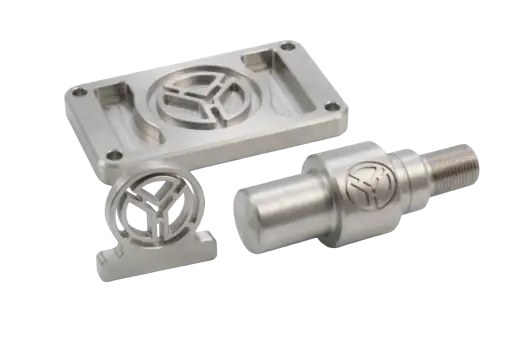
316L stainless steel is a low-carbon molybdenum-bearing austenitic alloy widely used for applications requiring excellent corrosion resistance, strong weldability, and dependable fabrication performance. It is commonly used in sheet metal fabrication, tube fabrication, and CNC machining for demanding industrial and commercial components.

316L stainless steel sheet, tube, and welded corrosion-resistant industrial components
Material Overview

What is Stainless Steel 316L?

Stainless Steel 316L is the low-carbon version of 316 stainless steel, developed to reduce carbide precipitation during welding and improve resistance to intergranular corrosion in welded sections. It combines the molybdenum-enhanced corrosion resistance of 316 with improved weldability for fabricated assemblies, tanks, tubing, and corrosion-critical components. Compared to Stainless Steel 304L, 316L typically offers stronger resistance in chloride-containing and more chemically aggressive environments. It is widely used across sheet metal fabrication, tube bending, welded structures, and moderate CNC machining applications where corrosion resistance and fabrication reliability are critical.

316L stainless steel fabricated parts, tubing, and welded corrosion-resistant assemblies
Specifications

Stainless Steel 316L Specifications

Engineering-grade properties of 316L stainless steel, including mechanical, physical, and corrosion characteristics relevant to fabrication, welding, and industrial service in aggressive environments. This data supports material selection for welded assemblies, tanks, tubing, enclosures, and corrosion-resistant process components.

316L Stainless Steel Engineering Properties

Alloy Type

Low-Carbon Molybdenum-Bearing Austenitic Stainless Steel

Primary Characteristics

Excellent corrosion resistance, excellent weldability, improved resistance to sensitization after welding, good formability

Tensile Strength (Ultimate)

70 ksi (485 MPa) minimum

Tensile Strength (Yield)

25 ksi (170 MPa) minimum

Elongation at Break

40% minimum

Hardness

Rockwell B 95 max / Brinell 217 HB max

Density

8.00 g/cm³ (0.289 lb/in³)

Elastic Modulus

28,000 ksi (193 GPa)

Poisson’s Ratio

0.30

Thermal Conductivity

16.3 W/m·K

Coefficient of Thermal Expansion

15.9–16.0 µm/m·°C

Specific Heat

500 J/kg·K

Melting Range

1370–1400 °C (2500–2550 °F)

Machinability

Moderate (lower than 303, requires appropriate tooling, feeds, and chip control)

Formability

Good to excellent (suitable for bending, forming, and many fabricated shapes)

Weldability

Excellent (preferred over 316 when welding and sensitization resistance are priorities)

Corrosion Resistance

Excellent (stronger chloride and chemical resistance than 304/304L in many environments)

Common Forms

Sheet, plate, bar, tube, pipe

Typical Applications

Welded tanks, tubing, process equipment, marine hardware, food equipment, heat exchangers, brackets, corrosion-resistant assemblies

Material Composition

Iron (Fe): balance, Chromium (Cr): 16–18%, Nickel (Ni): 10–14%, Molybdenum (Mo): 2–3%, Carbon (C): ≤0.03%, Manganese (Mn): ≤2.0%, Silicon (Si): ≤1.0%, Phosphorus (P): ≤0.045%, Sulfur (S): ≤0.03%

ASTM Standard

ASTM A240 / A276 / A312

Performance

Material Performance Overview

Standardized comparison across key engineering and manufacturing criteria.

Strength

Weight

Machinability

Formability

Weldability

Corrosion Resistance

Thermal Resistance

Cost Efficiency

Ready to manufacture 316L stainless steel parts?

Upload your CAD files and get a fast, engineering-reviewed quote. From welded fabrications to machined components, we support corrosion-resistant production programs.

Where Stainless Steel 316L is Commonly Used

316L stainless steel is widely used in applications requiring corrosion resistance, reliable weldability, and long-term performance in more demanding service environments. It is especially common in welded and fabricated components exposed to moisture, chlorides, or process chemicals.

Welded tanks and storage vessels

Chemical and process equipment

Marine hardware and fittings

Tubing and pipe systems

Heat exchangers

Food and beverage processing equipment

Pump and valve components

Architectural components in corrosive environments

General-purpose corrosion-resistant welded assemblies

Material FAQs

Stainless Steel 316L in CNC Machining and Welded Corrosion-Resistant Applications

Key considerations for engineering and sourcing teams working with 316L stainless steel in machining, fabrication, and corrosion-critical production environments.

Ready for your Project

The Marine-Grade Welding Standard

Stainless Steel 316L: Maximum Corrosion Protection and High-Integrity Weldability

Stainless Steel 316L is the extra-low carbon version of the 316 molybdenum-bearing austenitic stainless steel. By reducing carbon content to below 0.03%, this alloy effectively prevents carbide precipitation during welding, ensuring that the joints remain as corrosion-resistant as the base metal itself.

At PREMSA Industries, we utilize SS 316L for critical underwater, medical, and chemical processing components. It is the premier choice for CNC machining when parts must endure prolonged exposure to saltwater, chlorides, or acidic vapors while requiring high-strength welded assembly.

Key manufacturing characteristics of SS 316L

  • Exceptional Pitting Resistance: The addition of molybdenum provides superior defense against salt spray, brine, and industrial chemicals.
  • Superior Weldability: Eliminates the risk of 'weld decay' (intergranular corrosion), making it ideal for heavy-gauge welded structures without post-weld annealing.
  • Medical & Food Safety: Highly biocompatible and inert, meeting the strict sanitization requirements of the pharmaceutical and food industries.
  • High Cryogenic Toughness: Maintains excellent mechanical properties and impact resistance in sub-zero and cryogenic environments.
  • Non-Magnetic Performance: Remains strictly non-magnetic in the annealed condition, essential for sensitive electronics and MRI-compatible hardware.
  • Aesthetic Permanence: Resists 'tea staining' and surface oxidation far better than Stainless Steel 304 in coastal environments.

Mechanical and physical properties of Stainless 316L

SS 316L is chosen when environmental failure is not an option. While it shares the same high-durability profile as standard 316, the 'L' grade provides the specific security needed for welded systems. It is often preferred over Stainless Steel 303 despite higher machining costs due to its vastly superior chemical resilience.

Typical performance profile

  • High tensile strength with excellent elongation and formability
  • Enhanced resistance to crevice corrosion in low-oxygen environments
  • Low thermal conductivity requires aggressive lubrication during cutting
  • Maintains structural integrity at intermittent temperatures up to 870°C
  • Resistant to a wider range of chemicals than standard 300-series alloys

Why engineers choose it

  • Mandatory for subsea and offshore oil/gas equipment
  • Standard for pharmaceutical cleanroom hardware and surgical implants
  • Ideal for large-scale welded manifolds that cannot be heat-treated post-fabrication
  • Provides the lowest life-cycle cost in highly aggressive atmospheric conditions

Strengths and advantages of SS 316L

  1. Maximum Weld Integrity: Provides the safest results for components requiring TIG, MIG, or laser welding.
  2. Marine Reliability: The industry standard for salt-water immersion and coastal exposure.
  3. Chemical Inertness: Resists sulfuric, acetic, and phosphoric acids, as well as high-concentration brines.
  4. Sanitary Excellence: Extremely smooth surface finish potential minimizes bacterial entrapment.
  5. Ductility: Allows for complex cold-forming, bending, and swaging operations.
  6. Sustainability: 100% recyclable with high scrap value and low long-term maintenance needs.

Trade-offs and limitations of Stainless 316L

  1. Machining Complexity: Known for 'gumminess' and work-hardening; requires specialized tooling and slower feeds than Stainless Steel 303.
  2. Premium Cost: Higher nickel and molybdenum content makes it more expensive than 304 or 304L.
  3. Lower Hardness: Cannot be hardened by heat treatment; hardness must be achieved through cold-working.
  4. Tool Wear: Requires high-quality carbide tools with specific coatings (like TiAlN) to prevent material smearing.
  5. Thermal Expansion: High expansion coefficient requires careful tolerance planning for high-heat assemblies.

Fabrication and machining considerations for SS 316L

Machining behavior

Machining 316L requires rigidity and precision. Our CNC milling process focuses on heavy chip loads to prevent the tool from rubbing and hardening the part.

  • Requires high-pressure coolant to manage heat and facilitate chip breaking
  • Dwell times must be eliminated to prevent localized work-hardening
  • Ideal for Swiss-type machining of small, complex medical components

Finishing and Passivation

Post-machining surface treatments are critical to ensure the 'stainless' properties are fully realized.

  • Electropolishing is the gold standard for achieving a mirror-like, ultra-hygienic finish
  • Chemical passivation is mandatory to remove surface iron and restore the oxide layer
  • Supports high-definition laser marking for medical part tracking

Joining Techniques

  • Excellent for high-integrity silver brazing and vacuum brazing
  • The preferred grade for vacuum-tight hermetic seals
  • Maintains ductility in the heat-affected zone after welding

Common applications for Stainless Steel 316L

SS 316L is essential for high-performance CNC machined components in the world's most demanding sectors.

  • Subsea sensors, valves, and manifold connectors
  • Surgical instruments and orthopedic orthopedic implants
  • Pharmaceutical mixing blades and high-purity piping
  • Boat propellers, cleats, and underwater hardware
  • Chemical storage vessel liners and pressure gauges
  • Semiconductor high-vacuum chambers
  • Brewery and dairy fermentation equipment
  • Heavy-duty marine-grade fasteners

When Stainless Steel 316L is the right material choice

Select 316L when your design requires the ultimate balance of salt-water protection and the ability to be welded without losing its corrosive defense.

  • When the component will be permanently submerged in seawater or exposed to salt air
  • When the assembly requires welding and will be used in a corrosive environment
  • When the part is intended for human implantation or high-purity pharma use
  • When structural reliability at cryogenic or elevated temperatures is required
  • When long-term corrosion resistance is more important than initial machining cost