Production Material

HDPE forDurable Industrial Plastic Components

HDPE (High-Density Polyethylene) is a versatile thermoplastic used for machined and fabricated parts that require chemical resistance, impact strength, and cost-effective performance.

HDPE material stock and machined industrial plastic components
Material Overview

What is HDPE?

HDPE (High-Density Polyethylene) is a durable and cost-effective thermoplastic known for its excellent chemical resistance, impact strength, and low moisture absorption. It is commonly used in CNC machining, CNC milling, and CNC turning for simple, functional components that do not require tight tolerances or high stiffness. Because it is widely available in sheet form, HDPE is also frequently processed through sheet cutting for liners, panels, and fabricated parts used in industrial, chemical, and material-handling environments.
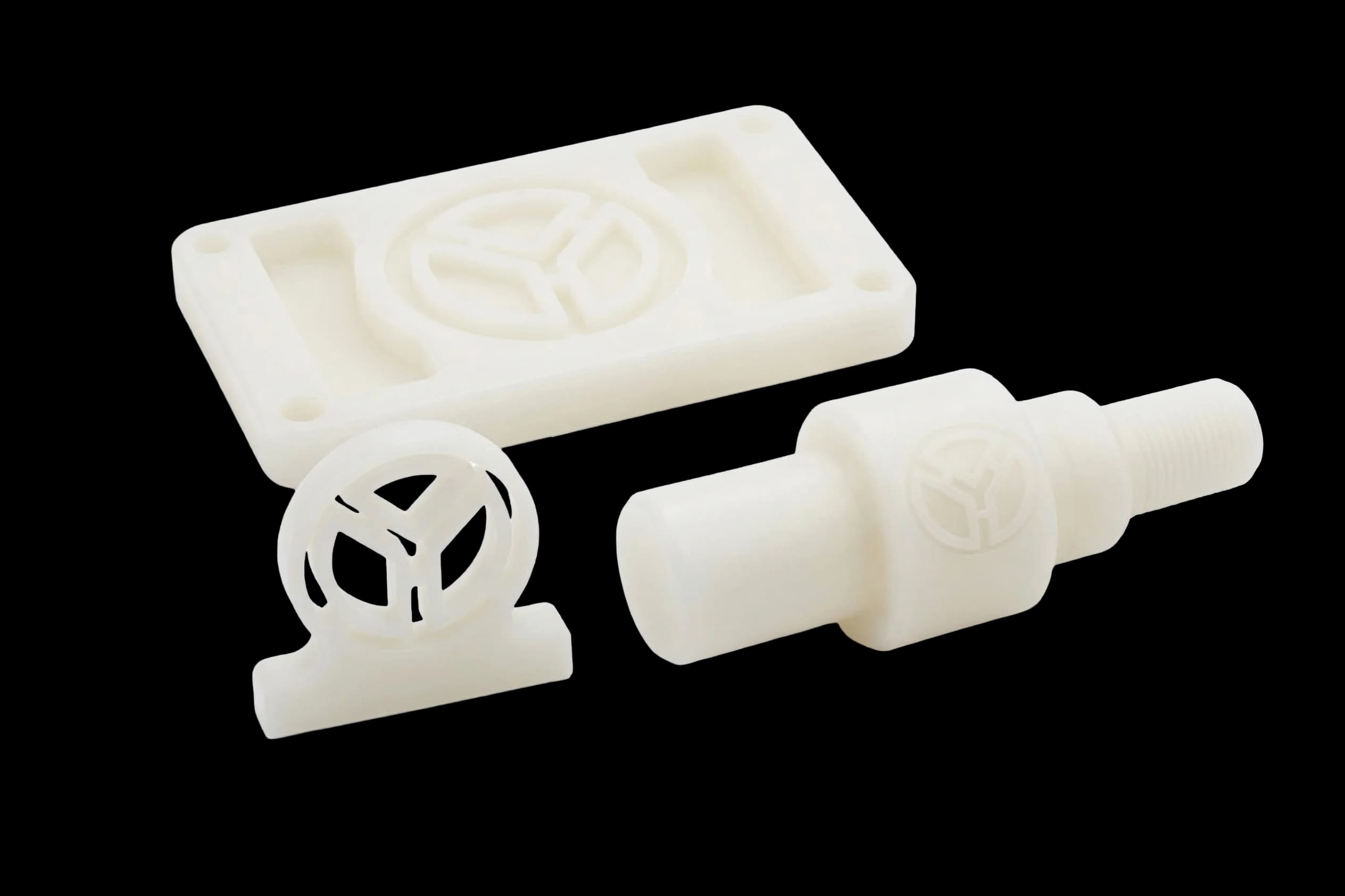
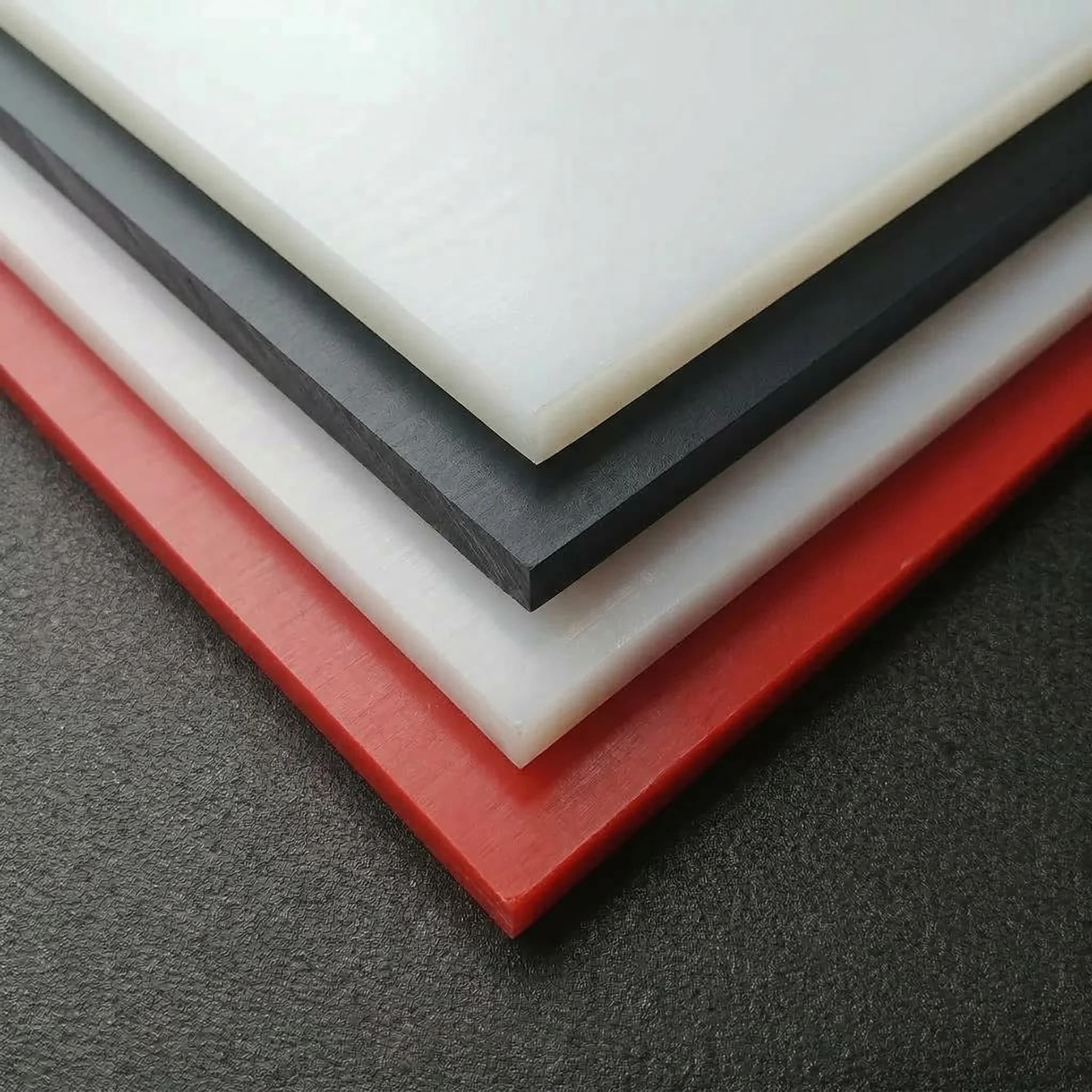
Machined and fabricated HDPE components
Specifications

HDPE Specifications

Engineering-grade properties of HDPE, including mechanical, physical, and chemical characteristics relevant to machining, fabrication, and industrial applications. This data supports material selection for parts requiring durability, chemical resistance, and cost efficiency.

HDPE Engineering Properties

Material Type

Semi-crystalline thermoplastic (polyethylene)

Primary Characteristics

Excellent chemical resistance, high impact strength, low friction, flexible, cost-effective

Tensile Strength (Ultimate)

3,000–4,500 psi (20–31 MPa)

Yield Strength

2,500–3,500 psi (17–24 MPa)

Elongation at Break

500–700%

Impact Resistance

Excellent (very high toughness)

Hardness

Shore D55–D70

Density

0.94–0.97 g/cm³ (lightweight)

Elastic Modulus

100,000–200,000 psi (0.7–1.4 GPa)

Coefficient of Friction

Low

Water Absorption

Very low

Moisture Sensitivity

Minimal

Continuous Service Temperature

~80–90 °C (176–194 °F)

Melting Point

~130 °C (266 °F)

Thermal Conductivity

~0.45 W/m·K

Machinability

Good (soft material; may require support to maintain tolerances)

Chemical Resistance

Excellent (resistant to acids, bases, and many solvents)

UV Resistance

Moderate (can degrade without stabilization)

Weldability

Excellent (plastic welding supported)

Common Forms

Sheet, rod, plate

Typical Applications

Liners, tanks, cutting boards, wear strips, guards, industrial panels

Performance

Material Performance Overview

Standardized comparison across key engineering and manufacturing criteria.

Strength

Weight

Machinability

Impact Resistance

Dimensional Stability

Chemical Resistance

Thermal Resistance

Cost Efficiency

Ready to produce HDPE parts?

Upload your CAD files and get a fast, engineering-reviewed quote. From prototypes to production, we help you move faster.

Where HDPE is Commonly Used

HDPE is widely used in industrial environments where durability, chemical resistance, and cost efficiency are more important than structural rigidity or tight tolerances.

Chemical tanks and liners

Industrial panels and guards

Wear strips and sliding surfaces

Food processing components

Water and fluid handling systems

Cutting surfaces and boards

Material handling components

Outdoor and corrosion-resistant applications

General-purpose machined plastic parts

Material FAQs

HDPE FAQs for Manufacturing and Production

Common questions from engineering, sourcing, and product development teams working with HDPE across fabrication, machining, and production environments.

Ready for your Project

Material Guide

HDPE: Properties, Machining, and Applications

HDPE (high-density polyethylene) is a widely used thermoplastic known for its chemical resistance, impact toughness, and cost efficiency. It is commonly processed through CNC machining services and sheet cutting, and is also used in plastic part production for high-volume applications.

For engineering and sourcing teams, HDPE is often selected for industrial components exposed to moisture, chemicals, or repeated impact, especially where cost, durability, and ease of fabrication are more important than structural stiffness.

Key manufacturing characteristics of HDPE

  • Excellent chemical resistance: Performs well in environments with acids, bases, and industrial fluids.
  • High impact toughness: Maintains durability under repeated impact and mechanical abuse.
  • Low friction surface: Suitable for sliding applications and wear components.
  • Easy to machine and cut: Works well in CNC machining services and sheet cutting.
  • Low moisture absorption: Maintains performance in wet or humid environments.
  • Cost-effective material: One of the most economical engineering plastics for industrial use.

Mechanical and physical properties of HDPE

HDPE is typically selected for durability, chemical resistance, and cost efficiency rather than stiffness or high-load structural performance. Compared to materials like acetal or nylon, HDPE offers better impact resistance and chemical stability but lower rigidity and strength.

Typical performance profile

  • High impact resistance even at low temperatures
  • Low stiffness compared to engineering plastics
  • Excellent chemical and moisture resistance
  • Low coefficient of friction
  • Stable performance in harsh industrial environments

Why engineers choose it

  • Performs well in corrosive or wet environments
  • Cost-effective for large or high-volume components
  • Good for wear surfaces and protective elements
  • Easy to fabricate and machine into custom parts

Strengths and advantages of HDPE

  1. Outstanding chemical resistance: Ideal for tanks, liners, and fluid-handling components.
  2. Impact durability: Resists cracking and damage under repeated use.
  3. Low moisture absorption: Maintains performance in outdoor and washdown environments.
  4. Machining flexibility: Can be processed efficiently using CNC machining services.
  5. Food-safe options available: Commonly used in food processing and packaging equipment.
  6. Cost efficiency: Provides reliable performance at a lower material cost than many engineering plastics.

Trade-offs and limitations of HDPE

  1. Low stiffness: Not suitable for load-bearing or high-precision structural applications.
  2. Creep under load: Deforms over time under constant stress.
  3. Poor adhesion: Difficult to bond using adhesives due to low surface energy.
  4. Limited temperature resistance: Not suitable for elevated temperature environments.
  5. Surface softness: Can scratch or deform more easily than harder plastics.

Fabrication and machining considerations for HDPE

Machining behavior

HDPE machines easily in CNC milling and CNC turning, but its softness requires careful parameter control to maintain accuracy.

  • Material can deform under clamping pressure
  • Sharp tools improve surface finish
  • Heat buildup is generally low but should still be managed

Sheet processing

HDPE is commonly supplied in sheet form and processed through sheet cutting for panels, liners, and wear components.

  • Efficient for flat or plate-based designs
  • Waterjet and CNC routing are commonly used
  • Minimal edge finishing required in many applications

Wear and sliding applications

  • Performs well in low-load sliding contact
  • Often used in guides, rails, and wear strips
  • Reduces noise and friction in mechanical systems

Joining and assembly

  • Typically joined using mechanical fasteners
  • Welding is possible with proper plastic welding techniques
  • Adhesive bonding is generally not reliable

Common applications for HDPE

HDPE is widely used in industrial environments where chemical resistance, durability, and cost efficiency are critical.

  • Chemical tanks and liners
  • Wear strips and sliding components
  • Food processing equipment parts
  • Industrial panels and guards
  • Fluid handling and piping components
  • Marine and outdoor components
  • Protective covers and housings

When HDPE is a strong material choice

HDPE is often the right choice when durability, chemical resistance, and cost efficiency are more important than stiffness or precision.

  • When parts are exposed to chemicals or moisture
  • When impact resistance is more important than rigidity
  • When cost constraints are a key factor
  • When large components need to be fabricated from sheet
  • When working in food-safe or hygienic environments