Home/Materials/Plywood
Fabrication Material

Plywood forPanels & Structural Fabrication

Plywood is a versatile engineered wood panel used for fabricated components, prototypes, and structural panel applications requiring strength, dimensional stability, and cost efficiency.

Plywood panels and CNC cut fabricated components for industrial use
Material Overview

What is Plywood?

Plywood is an engineered wood panel made by bonding multiple thin wood veneers with alternating grain directions, creating a material with good strength, stiffness, and dimensional stability relative to many other wood-based sheet products. It is widely used in sheet cutting and fabrication workflows for panel-based parts, crates, fixtures, displays, and structural assemblies, and can also be processed through CNC machining for routing, profiling, drilling, and custom cut features. Because of its layered construction, plywood is commonly selected for prototypes, industrial panels, and general-purpose fabricated components where strength and versatility are more important than ultra-smooth surface finish.

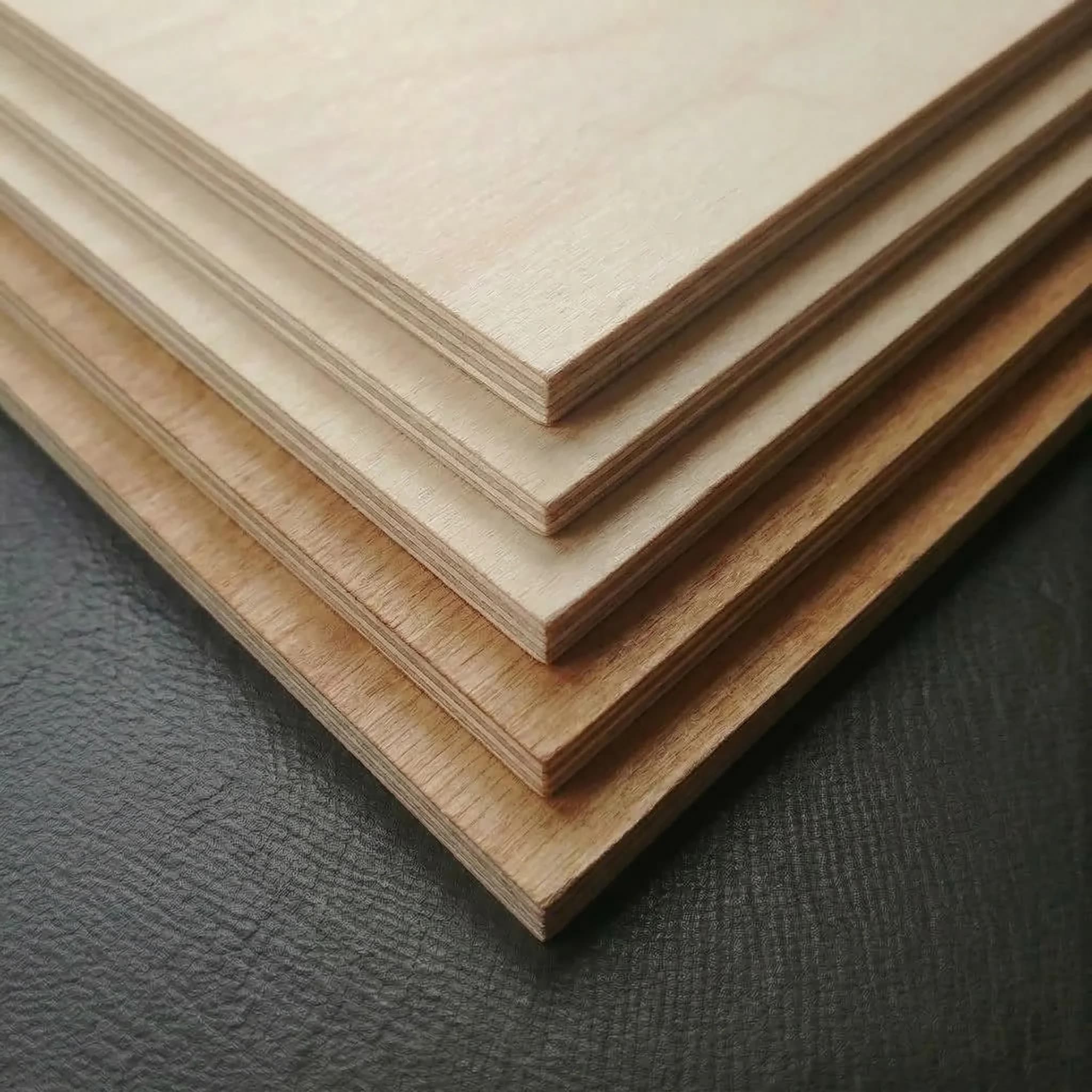
CNC cut plywood panels and fabricated structural components
Specifications

Plywood Specifications

Material properties of plywood, including structural, physical, and fabrication-related characteristics relevant to CNC cutting, routing, and panel-based applications. This data supports material selection for components requiring strength, versatility, and cost-effective fabrication.

Plywood Material Properties

Material Type

Engineered wood panel made from laminated wood veneers

Primary Characteristics

Good strength-to-weight ratio, dimensional stability, versatile, cost-effective

Density

Typically 500–700 kg/m³ (varies by species and grade)

Bending Strength

Moderate to high depending on thickness, veneer species, and construction

Stiffness

Good for panel and structural applications

Impact Resistance

Better than MDF and hardboard in many applications

Dimensional Stability

Good (cross-laminated construction helps reduce warping)

Surface Finish

Varies by grade; smoother in cabinet and finish grades

Moisture Resistance

Moderate to good depending on adhesive system and grade

Water Resistance

Exterior and marine grades provide improved resistance

Machinability

Good (suitable for cutting, routing, and drilling; splintering may require process control)

Fastener Holding

Good

Edge Quality

Moderate (layered core visible after cutting)

Thermal Resistance

Low to moderate (not for high-temperature applications)

Common Forms

Sheets, panels in multiple grades and thicknesses

Typical Applications

Panels, crates, fixtures, displays, enclosures, structural mockups

Performance

Material Performance Overview

Standardized comparison across key fabrication and material criteria.

Strength

Weight

Machinability

Surface Finish

Dimensional Stability

Moisture Resistance

Structural Utility

Cost Efficiency

Ready to produce plywood components?

Upload your CAD files and get a fast, engineering-reviewed quote. From prototypes to production, we help you move faster.

Where Plywood is Commonly Used

Plywood is widely used in applications where panel strength, fabrication versatility, and cost efficiency are important. It is especially common in prototyping, industrial fixtures, packaging, and structural panel-based assemblies.

Crates and industrial packaging

Prototyping panels and structural mockups

Fixtures and jigs for manufacturing

Display structures and retail elements

Cabinetry and panel assemblies

Machine enclosures and non-metal housings

Architectural and exhibition components

Backers, partitions, and support panels

General-purpose fabricated wood components

Material FAQs

Plywood FAQs for Manufacturing and Fabrication

Common questions from engineering, sourcing, and product development teams working with plywood across panel fabrication, structural applications, and industrial production environments.

Ready for your Project

Material Guide

Plywood: Properties, Machining, and Applications

Plywood is an engineered wood product made from multiple layers of wood veneer bonded together with alternating grain direction. This cross-laminated structure provides improved strength, stiffness, and dimensional stability compared to other wood-based materials. Plywood is commonly processed through CNC machining services and sheet cutting, especially for structural panels, enclosures, and industrial components.

For engineering and sourcing teams, plywood is often selected when a project requires a balance of structural performance, cost efficiency, and large-format fabrication, particularly in applications where MDF or hardboard lack sufficient strength.

Key manufacturing characteristics of plywood

  • Cross-laminated construction: Alternating grain layers improve strength and dimensional stability.
  • Higher structural strength: Stronger and more load-capable than MDF or hardboard.
  • Good machinability: Processes well in CNC machining services and routing operations.
  • Sheet-based material: Commonly processed through sheet cutting for panel applications.
  • Available in multiple grades: Structural, marine, and furniture-grade variants for different applications.
  • Better moisture resistance than MDF: Some grades perform well in outdoor or humid environments.

Mechanical and physical properties of plywood

Plywood is typically selected for structural performance and durability. Compared to MDF and hardboard, it offers significantly better strength and load-bearing capability. Compared to engineered plastics, it provides lower consistency but greater cost efficiency for large structural panels.

Typical performance profile

  • High strength-to-weight ratio for wood-based materials
  • Good stiffness and load-bearing capability
  • Improved dimensional stability compared to solid wood
  • Moderate moisture resistance depending on grade
  • Variable surface quality depending on veneer grade

Why engineers choose it

  • Provides structural support in panel form
  • Cost-effective for large assemblies and enclosures
  • Suitable for fixtures, crates, and industrial structures
  • Performs better than MDF in load-bearing applications

Strengths and advantages of plywood

  1. Structural capability: Suitable for load-bearing panels and assemblies.
  2. Dimensional stability: Cross-grain structure reduces warping and movement.
  3. Versatile fabrication: Compatible with CNC machining workflows.
  4. Moisture resistance options: Marine and exterior grades improve durability.
  5. Large-format availability: Ideal for panel-based designs and assemblies.
  6. Cost efficiency: Provides structural performance at a lower cost than many alternatives.

Trade-offs and limitations of plywood

  1. Variable material quality: Performance depends on grade and veneer quality.
  2. Surface inconsistency: Not as smooth or uniform as MDF or hardboard.
  3. Moisture sensitivity (standard grades): Can degrade if not properly sealed.
  4. Edge finishing required: Exposed layers may need treatment or sealing.
  5. Not suitable for precision tolerance parts: Less consistent than plastics or metals.

Fabrication and machining considerations for plywood

Machining behavior

Plywood can be processed using CNC milling and routing operations for structural and panel-based components.

  • Machines well with proper tooling
  • Grain direction and layers affect cutting behavior
  • Tool wear may increase due to adhesive layers

Sheet processing

Plywood is primarily used in sheet form and processed through sheet cutting for structural panels and assemblies.

  • Efficient for large panels and enclosures
  • Common in crates, fixtures, and structural frames
  • Minimal finishing required for functional parts

Joining and assembly

  • Compatible with mechanical fasteners and adhesives
  • Supports structural assemblies
  • Edge reinforcement may improve durability

Finishing

  • Can be painted, sealed, or laminated
  • Surface preparation improves finish quality
  • Sealing improves moisture resistance

Common applications for plywood

Plywood is widely used in applications requiring structural support, large panels, and cost-efficient fabrication.

  • Structural panels and enclosures
  • Industrial crates and packaging
  • Jigs and fixtures
  • Furniture and cabinetry
  • Construction and architectural components
  • Large-format prototypes
  • Equipment bases and supports

When plywood is a strong material choice

Plywood is often the right choice when structural strength, panel size, and cost efficiency are more important than surface finish or precision.

  • When load-bearing capability is required
  • When working with large panels or structures
  • When cost-effective structural material is needed
  • When durability is required beyond MDF or hardboard
  • When parts are used in industrial or construction environments