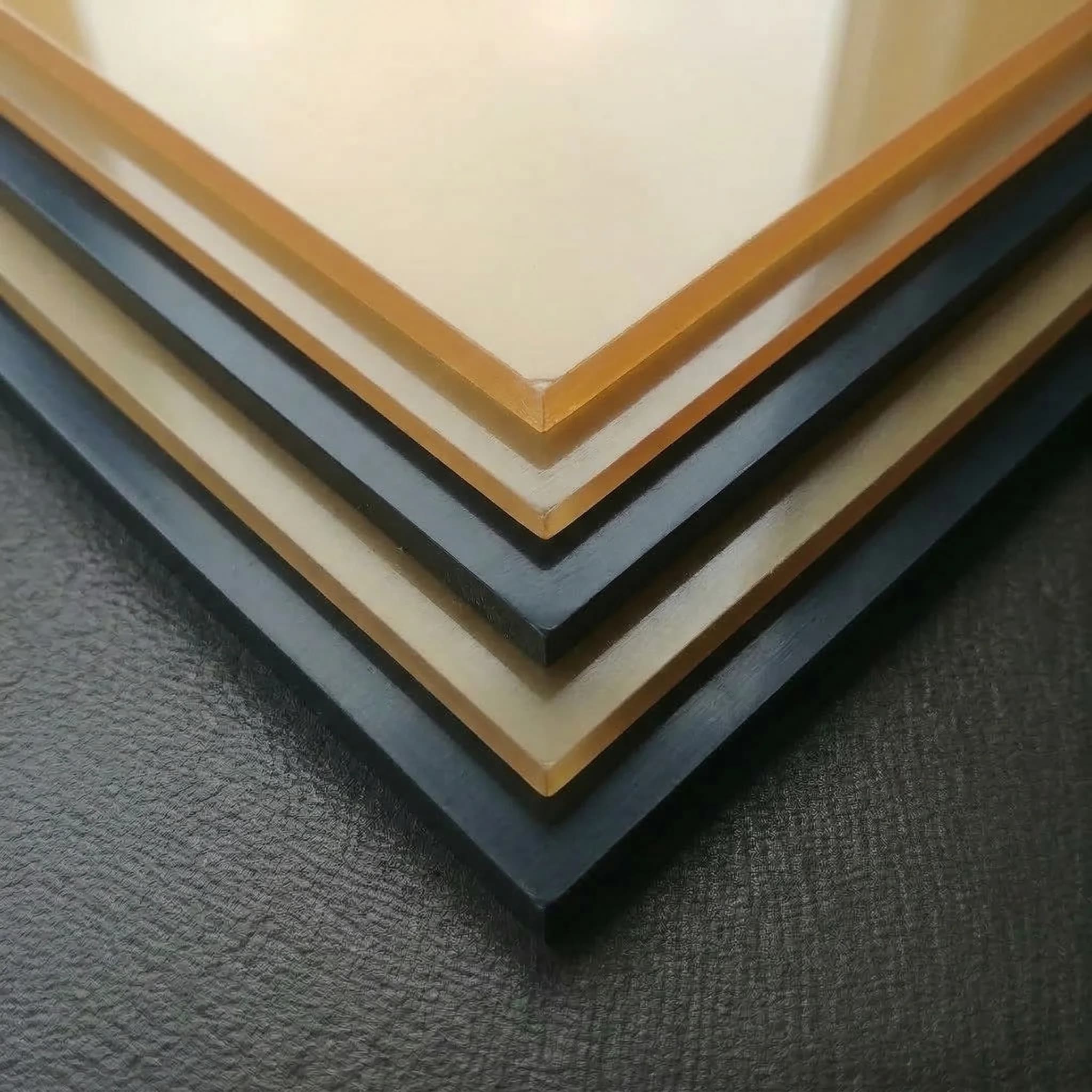
Material GuideULTEM (PEI): Properties, Machining, and High-Temperature Applications
ULTEM (polyetherimide, PEI) is a high-performance thermoplastic used in demanding applications requiring high temperature resistance, flame retardancy, and mechanical strength. It is commonly processed through CNC machining services, 3D printing services, and specialized plastic part production for engineered components.
For engineering and sourcing teams, ULTEM is often selected when applications require consistent performance under heat, electrical insulation, and compliance with flame and safety standards, especially in aerospace, medical, and electronics industries.
Key manufacturing characteristics of ULTEM
- High temperature resistance: Maintains mechanical performance at elevated temperatures.
- Flame retardant material: Naturally meets many flame, smoke, and toxicity requirements.
- Good mechanical strength: Stronger and more rigid than many standard thermoplastics.
- Electrical insulation properties: Widely used in electronic and electrical systems.
- Dimensional stability: Performs reliably in precision components under thermal load.
- Multi-process compatibility: Suitable for CNC machining services and additive manufacturing processes.
Mechanical and physical properties of ULTEM
ULTEM is typically selected for high-temperature and regulated environments. Compared to PEEK, it offers slightly lower chemical resistance but improved processability and cost efficiency. Compared to polycarbonate, it provides significantly higher heat resistance and better long-term mechanical stability.
Typical performance profile
- High strength and stiffness across elevated temperatures
- Excellent flame resistance and low smoke generation
- Good dimensional stability under thermal load
- Strong electrical insulation properties
- Stable performance in demanding industrial environments
Why engineers choose it
- Meets aerospace and medical regulatory requirements
- Performs in high-temperature electrical environments
- Suitable for structural and insulating components
- Provides a balance between performance and cost vs ultra-high-end materials
Strengths and advantages of ULTEM
- High thermal performance: Maintains properties where many plastics soften or fail.
- Flame retardancy: Meets strict safety and compliance requirements.
- Mechanical reliability: Suitable for load-bearing and structural components.
- Electrical insulation: Performs well in electronic and electrical applications.
- Dimensional stability: Supports precision parts under temperature variation.
- Manufacturing flexibility: Compatible with CNC machining workflows and additive manufacturing.
Trade-offs and limitations of ULTEM
- Higher cost than standard plastics: More expensive than materials like ABS or polycarbonate.
- Lower chemical resistance than PEEK: Not suitable for extremely aggressive chemical environments.
- Brittleness compared to some plastics: Less impact-resistant than materials like polycarbonate.
- Processing complexity: Requires controlled manufacturing conditions.
- Not always necessary: Over-specified for general-purpose applications.
Fabrication and machining considerations for ULTEM
Machining behavior
ULTEM can be processed using CNC milling and CNC turning for high-performance components requiring precision and repeatability.
- Produces stable chips with proper tooling
- Supports tight tolerances in engineered parts
- Heat management improves surface quality
Additive manufacturing
ULTEM is widely used in 3D printing services, particularly in aerospace and high-performance prototyping.
- Used in high-end FDM systems for functional parts
- Suitable for lightweight structural components
- Enables rapid iteration in regulated industries
Thermal and electrical applications
- Maintains insulation properties under heat
- Suitable for electronic housings and connectors
- Performs in high-temperature environments
Production considerations
ULTEM is also used in specialized plastic part production for applications requiring regulatory compliance and repeatability.
- Used in aerospace, medical, and electronics sectors
- Requires controlled processing conditions
- Often selected for certified applications
Common applications for ULTEM
ULTEM is widely used in industries where high temperature performance, safety compliance, and reliability are critical.
- Aerospace interior components
- Electrical connectors and housings
- Medical device components
- High-temperature fixtures and tooling
- Semiconductor equipment parts
- Lightweight structural components
- Flame-rated industrial parts
When ULTEM is a strong material choice
ULTEM is often the right choice when high temperature performance, flame resistance, and mechanical stability are required in regulated or demanding environments.
- When parts must meet flame or safety standards
- When operating in high-temperature environments
- When electrical insulation is required under load
- When working in aerospace, medical, or electronics applications
- When performance and compliance are more important than cost