Material GuidePolypropylene (PP): Properties, Processing, and Applications
Polypropylene (PP) is a widely used thermoplastic known for its excellent chemical resistance, fatigue performance, and cost efficiency. It is commonly processed through plastic part production, particularly injection molding, as well as sheet cutting and CNC machining services for custom or low-volume components.
For engineering and sourcing teams, polypropylene is often selected for applications requiring chemical resistance, flexibility, and long-term durability under repeated use, especially in environments where moisture and corrosion are concerns.
Key manufacturing characteristics of polypropylene
- Excellent chemical resistance: Performs well against acids, bases, and a wide range of industrial chemicals.
- Outstanding fatigue resistance: Ideal for living hinges and components subjected to repeated flexing.
- Low density: Lightweight material suitable for weight-sensitive applications.
- Good processability: Highly efficient in injection molding for high-volume production.
- Low moisture absorption: Maintains performance in wet and humid environments.
- Flexible material behavior: Offers more flexibility than many rigid thermoplastics.
Mechanical and physical properties of polypropylene
Polypropylene is typically selected for chemical resistance, flexibility, and fatigue performance rather than high strength or stiffness. Compared to HDPE, it offers better fatigue resistance and hinge performance, while compared to acetal or nylon, it provides lower stiffness but improved chemical durability.
Typical performance profile
- Moderate strength with relatively low stiffness
- Excellent resistance to chemical exposure
- Very good fatigue performance under repeated flexing
- Low friction surface properties
- Stable performance in moisture-rich environments
Why engineers choose it
- Ideal for parts exposed to chemicals or washdown conditions
- Performs well in flexible and hinge-based designs
- Cost-effective for high-volume molded components
- Widely used in industrial and consumer applications
Strengths and advantages of polypropylene
- Chemical resistance: Suitable for tanks, containers, and fluid-handling systems.
- Fatigue durability: Performs exceptionally well in living hinges and repetitive flexing applications.
- Lightweight material: Reduces overall component weight in assemblies.
- Molding efficiency: Highly compatible with injection molding for scalable production.
- Moisture resistance: Maintains properties in humid or wet environments.
- Cost efficiency: One of the most economical plastics for large production volumes.
Trade-offs and limitations of polypropylene
- Low stiffness: Not suitable for rigid structural applications compared to acetal.
- Creep under load: Deforms over time under constant stress.
- Poor adhesion: Difficult to bond using adhesives due to low surface energy.
- Limited temperature resistance: Not suitable for high-temperature environments.
- Surface softness: Prone to scratching and deformation under load.
Fabrication and machining considerations for polypropylene
Molding behavior
Polypropylene is most commonly used in injection molding due to its flow characteristics and ability to form complex geometries efficiently.
- Supports thin-wall and high-volume production
- Excellent for integrated hinge and snap-fit designs
- Stable and repeatable in controlled molding environments
Machining behavior
Polypropylene can be processed using CNC milling and other CNC machining services, typically for prototypes or low-volume parts.
- Material softness can affect dimensional accuracy
- Requires careful clamping to avoid deformation
- Sharp tooling improves finish quality
Sheet processing
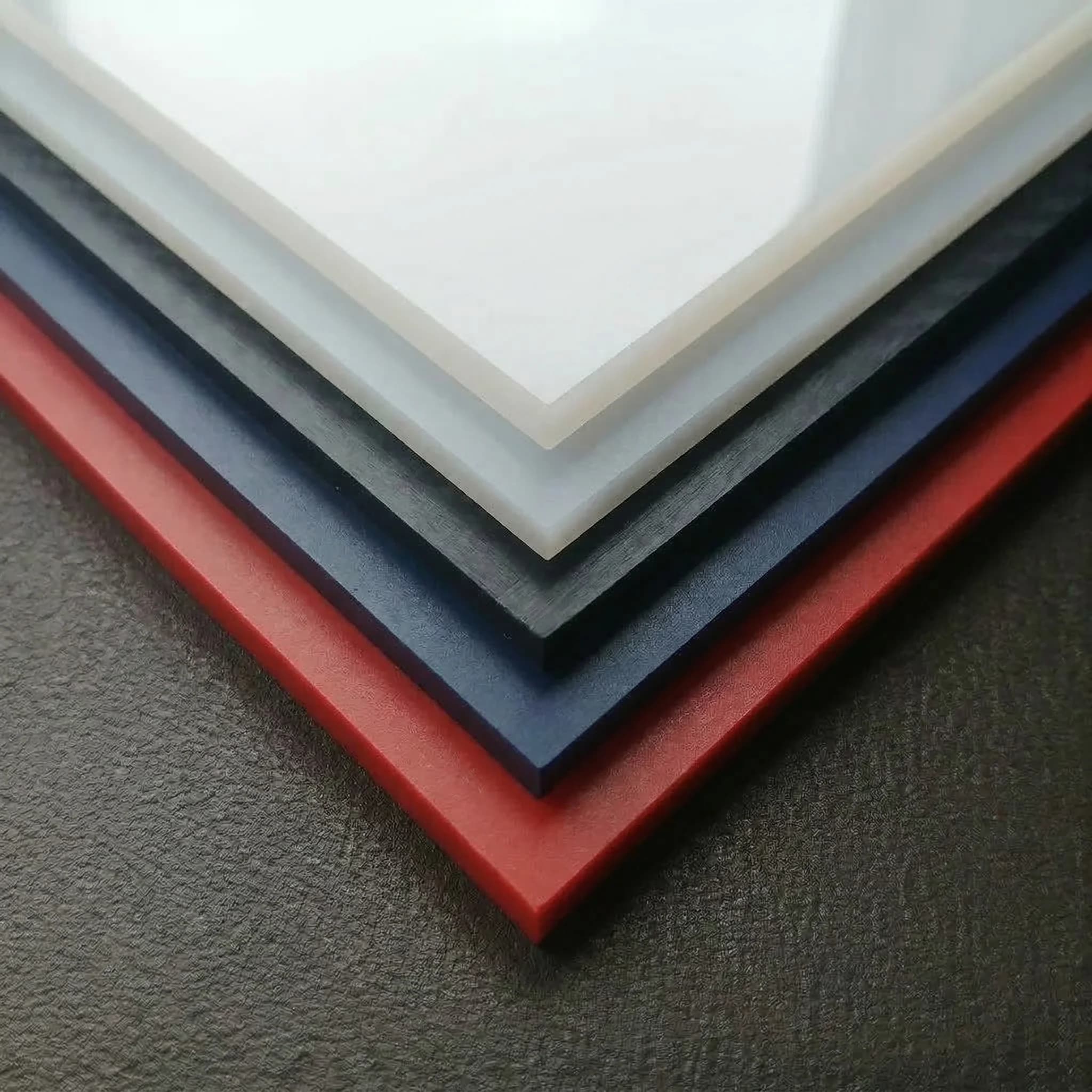
Polypropylene is available in sheet form and can be processed through sheet cutting for fabricated components.
- Common in panels, liners, and fabricated assemblies
- Waterjet and CNC routing are frequently used
- Minimal finishing required for functional parts
Joining and assembly
- Typically assembled using mechanical fastening
- Plastic welding is commonly used for joining
- Adhesive bonding is generally not reliable
Common applications for polypropylene
Polypropylene is widely used in applications requiring chemical resistance, flexibility, and cost efficiency.
- Chemical containers and tanks
- Living hinges and flexible components
- Industrial liners and panels
- Automotive interior components
- Packaging and storage systems
- Fluid handling components
- Consumer and industrial plastic parts
When polypropylene is a strong material choice
Polypropylene is often the right choice when chemical resistance, flexibility, and cost efficiency are more important than stiffness or high-load performance.
- When parts are exposed to chemicals or moisture
- When repeated flexing or hinge performance is required
- When high-volume injection molding is needed
- When lightweight and cost-effective materials are preferred
- When bonding is not required and mechanical assembly is acceptable