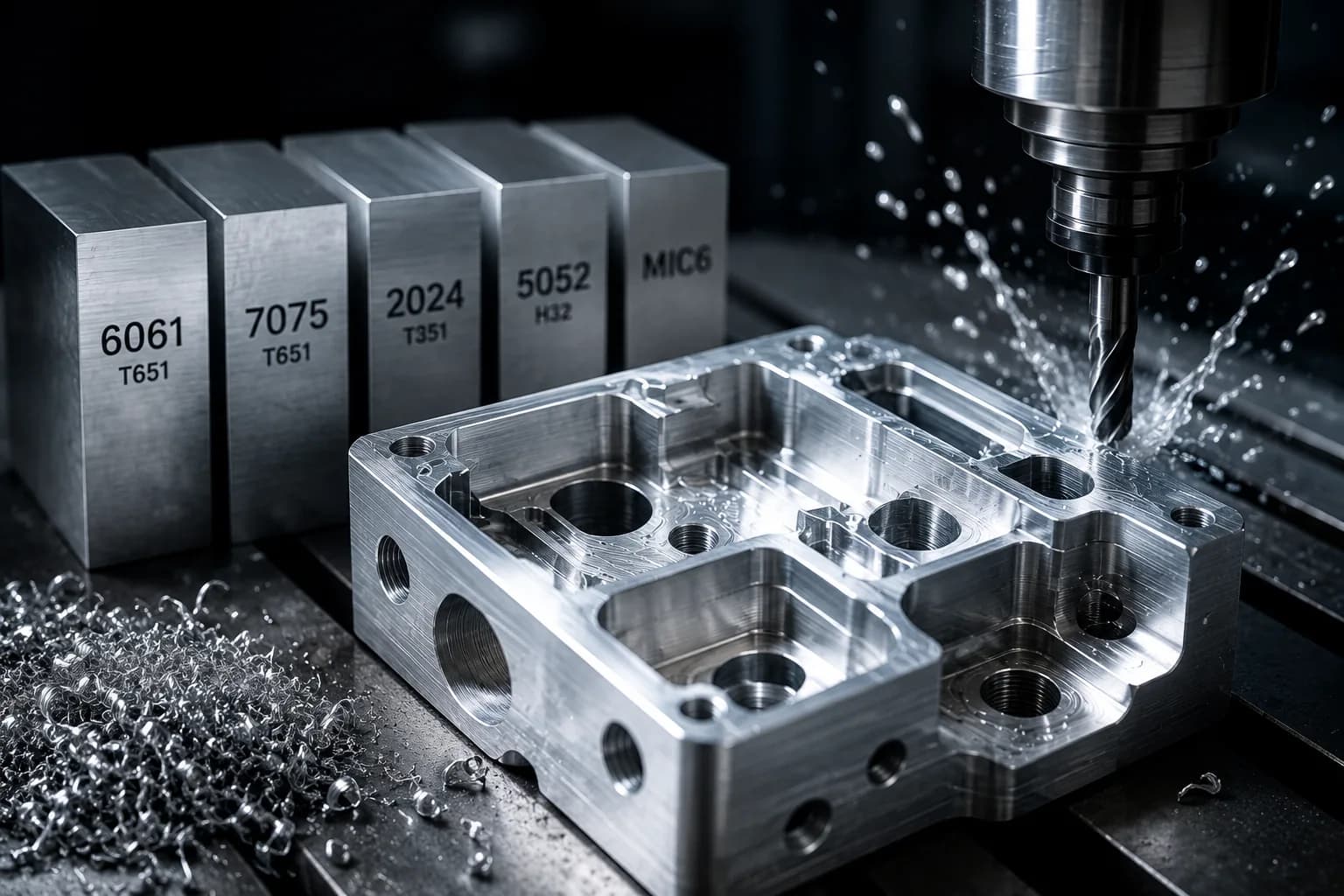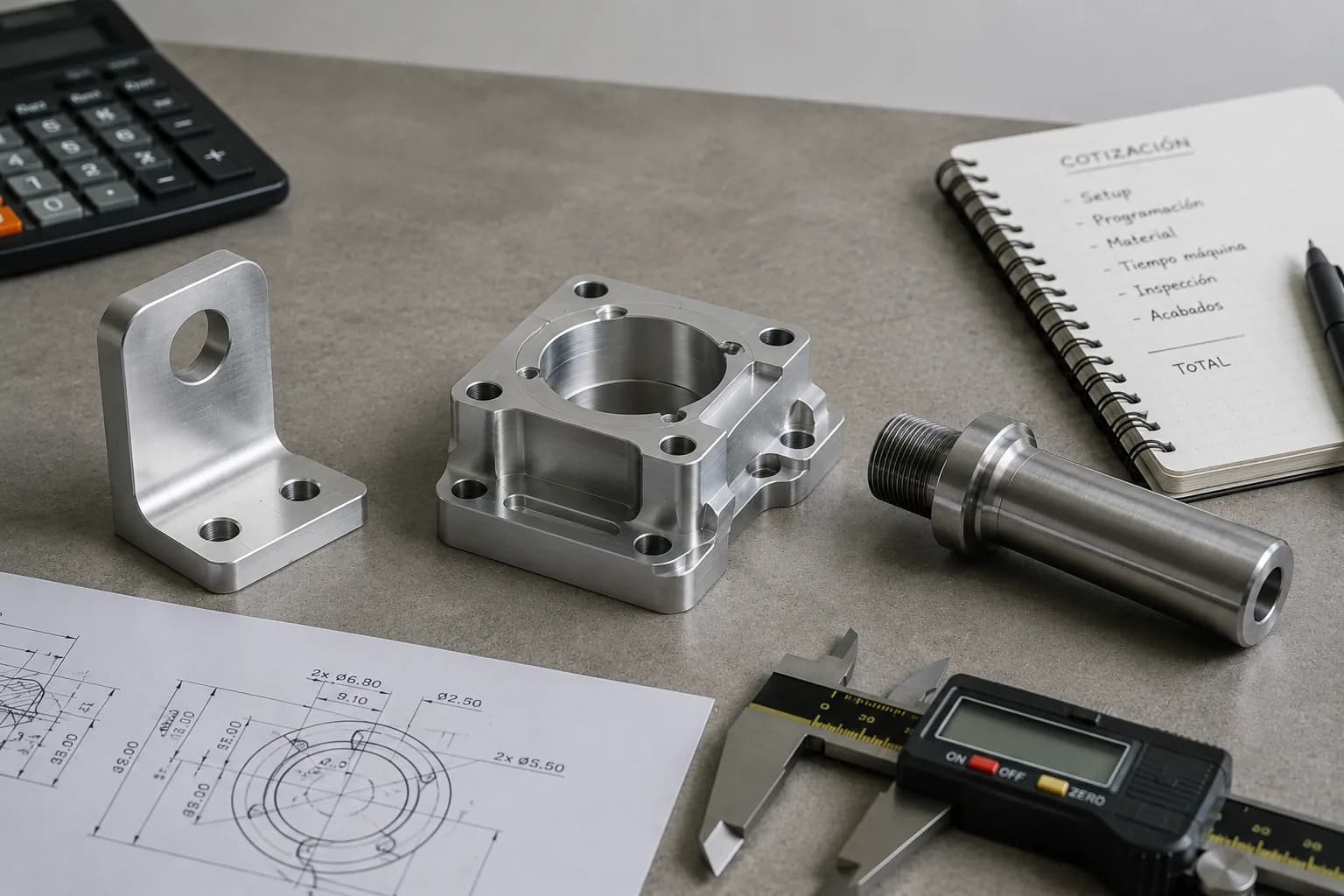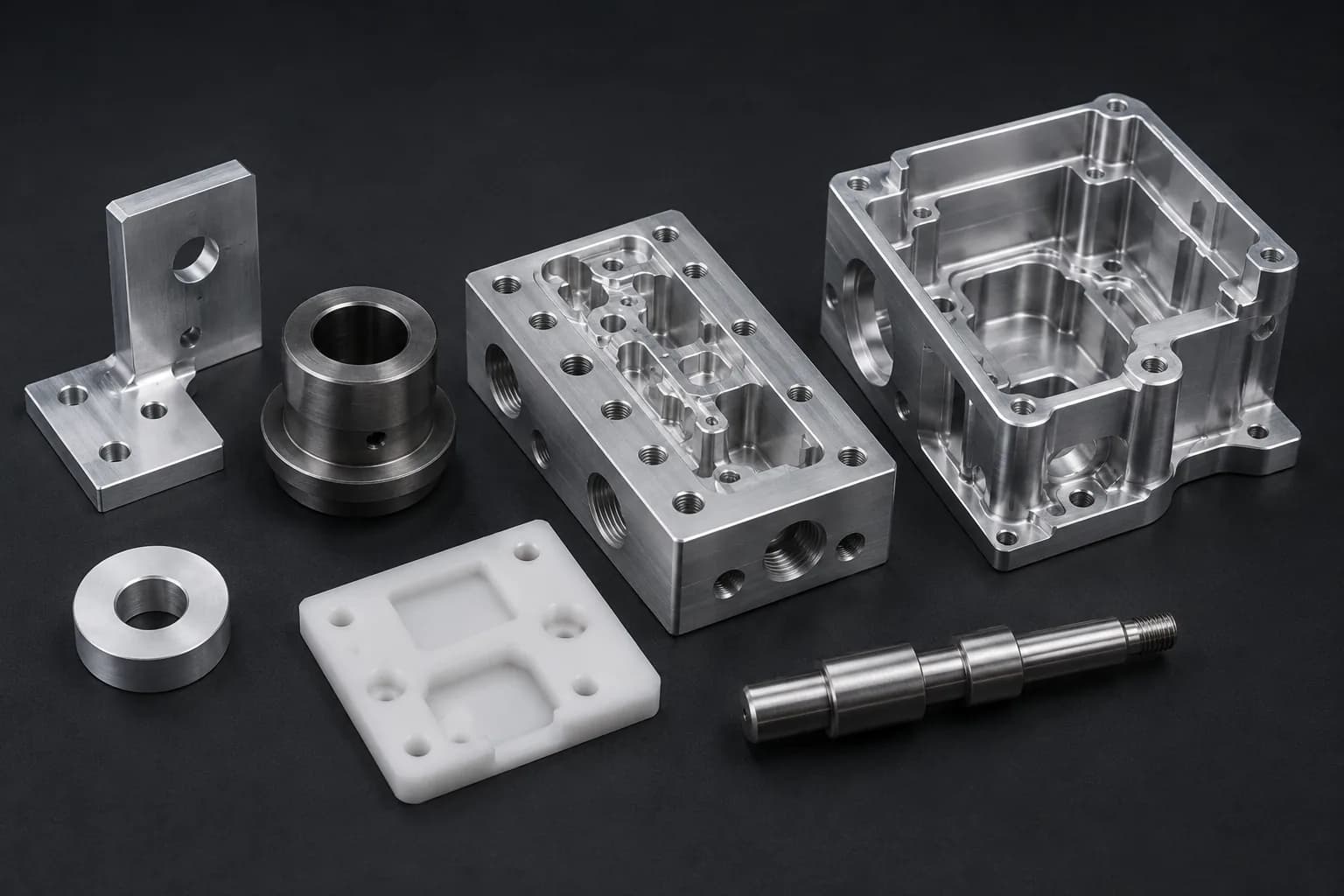


Monterrey has established itself as one of the main manufacturing centers in Mexico, with supply chains focused on the automotive, aerospace, medical, electronics and industrial automation industries. If you are looking for CNC machining in Monterrey to validate prototypes, manufacture precision parts or scale repeatable production, it is important to work with a supplier that combines technical capacity, industrial materials, quality control and reliable delivery times.
At PREMSA Industries we offer CNC machining services for prototypes and production: 3 to 5-axis CNC milling, CNC turning, mill-turn, Swiss-type machining, drilling and threading. We manufacture components in aluminum, stainless steel, titanium, brass and engineering plastics for high-precision industrial applications, with engineering support, dimensional inspection and online quoting.
If you want a complementary technical view, review our CNC machining services guide for Monterrey industry and our Monterrey CNC machining page, where we break down process scope, response times, and supplier criteria by project type.
Why is Monterrey a key center for CNC machining?
Monterrey has become one of the main manufacturing hubs in Mexico and North America, driven by automotive, aerospace, medical, electronics and industrial automation industries that demand high precision components and reliable supply chains. The region of Nuevo León concentrates OEMs, Tier 1 companies, integrators, machinery manufacturers and specialized suppliers that require CNC machining in Monterrey for prototypes, low-volume production and repeatable manufacturing of critical parts.
This industrial ecosystem has accelerated the need for suppliers capable of offering CNC machining services with close tolerances, industrial finishes, dimensional inspection and competitive delivery times. From components machined in aluminum and stainless steel to complex parts manufactured using CNC milling, CNC turning or mill-turn processes, companies look for manufacturing partners who can maintain quality, repeatability and technical support throughout the production cycle.
In addition to its industrial capacity, Monterrey offers strategic advantages for advanced manufacturing: logistics infrastructure, proximity to the United States, availability of industrial materials and a solid network of suppliers specialized in precision engineering and manufacturing. This has made the city a key point for companies that need to accelerate product development, reduce delivery times and scale production of CNC components with greater efficiency.
Manufacturing industry in Monterrey
Monterrey's industrial strength has driven a constant demand for precision CNC machining for critical manufacturing, automation and product development applications. National and international companies depend on suppliers capable of manufacturing repeatable components, close tolerances and ready-to-assemble parts for multiple industrial sectors.
- Automotive: manufacturing of brackets, fixtures, powertrain components, parts for assembly lines, tooling and machined components for high-volume industrial production.
- Aerospace and defense: complex components in aluminum, titanium and stainless steel with strict requirements for precision, repeatability, traceability and dimensional inspection.
- Industrial and machinery: housings, adapters, machined plates, axles, structural components and replacement parts for industrial equipment and manufacturing systems.
- Electronics and appliances: heatsinks, enclosures, machined aluminum components, precision hardware and parts for electromechanical integration.
- Robotics and automation: manufacturing of light and rigid components for automated systems, tooling, end effectors, precision brackets and critical mechanical interfaces.
- Medical devices: machined parts for medical equipment, inspection fixtures, precision components and functional prototypes for validation and development.
- Energy and petroleum: wear and corrosion resistant components made of engineered materials for demanding industrial applications.

Industrial ecosystem of Nuevo León
The industrial ecosystem of Nuevo León has established itself as one of the most advanced in Mexico for precision manufacturing, product development and industrial production oriented to North America. The region concentrates global OEMs, Tier 1 companies, industrial parks, engineering centers and a highly specialized network of manufacturing, materials, surface treatments, inspection and industrial logistics suppliers.
For companies that require CNC machining in Monterrey, this infrastructure represents an important advantage throughout the manufacturing process: faster access to industrial materials, efficient coordination between suppliers, more agile response times and supply chains prepared for prototypes and repeatable production. From high-precision machined components to assembly-ready parts, Nuevo León's manufacturing environment facilitates faster, more scalable manufacturing processes.
In addition to its industrial capacity, Monterrey maintains a strategic logistics connection with the United States and other international markets, allowing it to optimize delivery times and export processes for CNC components, tooling and industrial parts. For engineering, purchasing and supply chain teams, this reduces friction in technical reviews, design changes, prototype validations and production escalation.
Advantages of working with CNC suppliers in Monterrey
Working with suppliers specialized in CNC machining in Monterrey offers important advantages for companies that need to accelerate product development, reduce delivery times and maintain more efficient technical communication during prototyping and production processes. Thanks to its industrial infrastructure, logistical proximity to the United States and high concentration of advanced manufacturing, Monterrey has become a strategic point for industrial supply chains oriented to North America.
- Faster response times: Less operational friction and more competitive lead times compared to international suppliers or longer supply chains.
- Direct technical communication: more efficient coordination between purchasing, engineering and manufacturing in Spanish and English for design reviews, engineering changes and prototype validation.
- National manufacturing aligned with nearshoring: More agile integration with regional supply chains and production focused on North America.
- Engineering and DFM support: recommendations for manufacturability, geometry optimization, realistic tolerances and proper selection of industrial materials.
- Increased flexibility for prototyping and production: Ability to iterate parts quickly before scaling to repeatable production or low-volume manufacturing.
- Access to multiple industrial processes: integration of CNC machining, finishing, dimensional inspection and secondary processes within the same manufacturing ecosystem.
- Better traceability and quality control: more consistent inspection, dimensional validation and technical monitoring throughout the manufacturing process.
Nearshoring and industrial growth in Mexico
The growth of nearshoring in Mexico has accelerated demand for suppliers capable of manufacturing industrial components with faster delivery times, regional supply chains, and greater responsiveness for prototyping and production. Companies in the automotive, aerospace, electronic, medical and industrial automation sectors are moving part of their manufacturing to Mexico to reduce dependence on distant suppliers and improve operational stability.
Within this environment, Monterrey has become one of the main centers for advanced manufacturing and precision CNC machining, thanks to its industrial infrastructure, availability of technical talent and logistical proximity to the United States. This allows companies to accelerate prototype validations, reduce supply times and scale repeatable production without compromising quality, traceability or dimensional control.
CNC machining in Monterrey plays a key role in this transition towards regional supply chains, allowing the manufacturing of everything from functional prototypes and bridge production to industrial components ready for continuous production. For engineering and supply chain teams, this represents greater operational flexibility, faster response times and more efficient integration between design, manufacturing and inspection.
CNC machining services available
The manufacturing capacity of a CNC supplier directly impacts the quality, repeatability and scalability of a part throughout its production cycle. From prototype validation to repeatable production of industrial components, having adequate processes allows you to reduce setups, improve tolerances and maintain more consistent delivery times.
At PREMSA Industries we integrate multiple CNC machining services for projects in Monterrey, Mexico and production oriented to North America: CNC milling, CNC turning, mill-turn, Swiss type machining, drilling and threading, working aluminum, stainless steel, titanium, brass and engineering plastics for high precision industrial applications.
CNC Milling Services
CNC milling is one of the most widely used processes for manufacturing precision mechanical components with complex geometries, multiple machined faces and close tolerances. This process allows prismatic parts and three-dimensional surfaces to be manufactured using high-precision machining centers capable of operating in 3, 4 and 5-axis configurations.
In CNC machining projects in Monterrey, CNC milling is widely used for functional prototypes, tooling, fixtures, housings, machined plates and industrial components that require high repeatability and consistent finishes. Depending on the geometric complexity and production volume, different axis configurations allow reducing setups, improving precision and optimizing manufacturing times.
- 3-axis CNC milling: ideal for main faces, pockets, drilling, slots and general mechanical geometries in prototypes and production.
- 4-Axis CNC Milling: Allows additional indexing to machine multiple faces and reduce repositioning on complex prismatic parts.
- 5-axis CNC milling: used for complex contours, three-dimensional surfaces, aerospace components, impellers and geometries that are difficult to manufacture using conventional setups.
- Greater precision and repeatability: Reduction in cumulative errors thanks to fewer setup changes and better geometric control.
- Multi-material compatibility: aluminum, stainless steel, titanium, brass, copper and engineering plastics for demanding industrial applications.
- Common industrial applications: functional prototypes, fixtures, structural components, machined plates, automation parts, medical devices and repeatable production parts.
Among the most used materials for CNC milling, 6061-T6 stands out for its excellent relationship between strength, weight and machinability, as well as 304 stainless steel, widely used in industrial applications that require corrosion resistance, durability and high-quality finishes. Depending on the application, it is also common to machine titanium, brass, copper, and engineering plastics for functional components and industrial production.
CNC Turning Services
CNC turning is one of the most used processes to manufacture high-precision cylindrical components with close tolerances and excellent dimensional repeatability. This process allows parts to be machined through the controlled rotation of the material while cutting tools perform roughing, finishing, drilling, grooving and threading operations.
Within CNC machining projects in Monterrey, CNC turning is widely used to manufacture shafts, bushings, adapters, threaded components, hydraulic connections, precision parts and mechanical components that require concentricity, consistent surface finishes and critical dimensional control. When a part is primarily rotationally symmetric, turning usually offers greater manufacturing efficiency and better production times compared to other processes.
- Critical diameters and close tolerances: Precise control of concentricity, circularity and functional dimensions for high precision mechanical components.
- Industrial threads and preparation for assembly: manufacturing of metric, UNF, UNC threads and preparations for inserts, hydraulic connections and specialized mechanical components.
- Repeatable and stable production: ideal for continuous production batches thanks to consistent processes and dimensional monitoring during manufacturing.
- Uniform surface finishes: Excellent quality machined surfaces for functional components and assembly-ready parts.
- Integration of secondary operations: drilling, grooving, chamfering, cutting and complementary operations within the same setup to improve efficiency.
- Common industrial applications: shafts, bushings, spacers, connectors, adapters, hydraulic components, automotive parts and precision industrial components.
Among the most used materials for CNC turning stand out C360 brass, recognized for its excellent machinability and consistent surface finishes, as well as 4140 steel, widely used in mechanical components that require greater resistance, hardness and structural performance. Depending on the application, it is also common to machine aluminum, stainless steel, and engineering plastics for functional parts and industrial production.
Multitasking CNC Machining
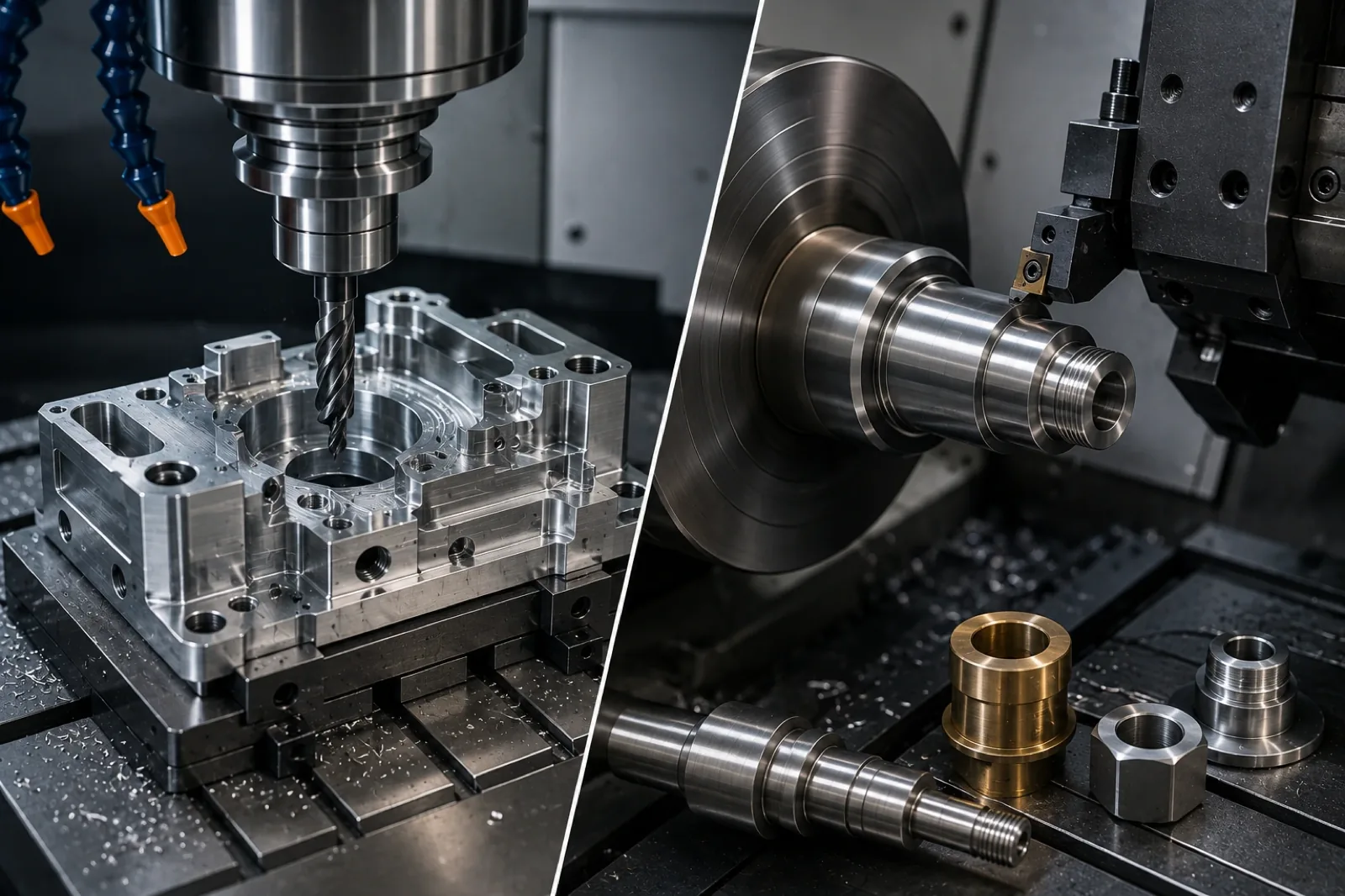
Multi-task CNC machining combines milling and turning operations within the same machine to manufacture complex components with greater precision and fewer setup changes. This type of manufacturing is especially useful for parts that integrate cylindrical and prismatic geometries in a single component, allowing multiple features to be machined without the need to relocate the part between processes.
Within CNC machining projects in Monterrey, multitasking centers help reduce error accumulation, improve concentricity between features and optimize production times for complex industrial components. By reducing re-assembly and handling of parts, dimensional repeatability and consistency between production batches is also improved.
Multitask machining is widely used for aerospace components, medical devices, automotive parts, hydraulic connections, mechanical adapters, and industrial components that require high geometric precision and multiple integrated operations.
Swiss-Type Machining
Swiss-type machining is designed to manufacture small, high-precision components with excellent dimensional stability and consistent surface finishes. Unlike other turning processes, the material advances through a guide close to the cutting point, reducing vibration and improving performance in small diameters and long pieces.
This process is widely used to manufacture connectors, pins, medical components, electronic parts, automation components and precision hardware that require tight tolerances and high repeatability. Within precision CNC machining applications, Swiss-type machining allows the production of complex parts with multiple integrated operations, reducing manufacturing times and improving consistency between batches.
Thanks to its stability and precision, Swiss machining is ideal for materials such as stainless steel, titanium, brass and special alloys used in medical, aerospace and electronic industries.
Drilling & Threading
Drilling and tapping operations are essential for mechanical components that require precise assembly, repeatable fastening and compatibility with industrial fasteners. These processes include precision drilling, metric and NPT threading, insert preparation, and repeatable holemaking for prototyping and production.
Within CNC machining projects in Monterrey, drilling & threading operations are used to manufacture parts with critical holes, threaded connections, mechanical assemblies and industrial components that require consistent tolerances and precise alignment between features. Depending on the application, operations such as countersinks, spot drilling, thread milling and preparation for helical inserts can also be integrated.
The integration of drilling and threading processes within CNC centers allows maintaining better geometric precision, reducing setup times and ensuring dimensional repeatability in continuous production.
| CNC process | Common applications | Main advantage |
|---|---|---|
| CNC milling | Housings, machined plates, fixtures, molds, structural components and complex prototypes | Fabrication of complex 3D geometries and multi-side machining in 3, 4 and 5 axes |
| CNC turning | Shafts, bushings, fittings, adapters, connectors and precision cylindrical components | High efficiency and repeatability for parts of revolution with tight tolerances |
| Multi-task machining (Mill-Turn) | Parts with integrated cylindrical and prismatic geometries | Fewer setups and better precision between machined features |
| Swiss type machining | Pins, connectors, medical components, electronic parts and precision hardware | Excellent stability and precision in small diameters and long parts |
| CNC drilling and tapping | Assembly components, critical holes, threaded connections and preparation for inserts | Efficient integration of holemaking and threading within the CNC manufacturing flow |
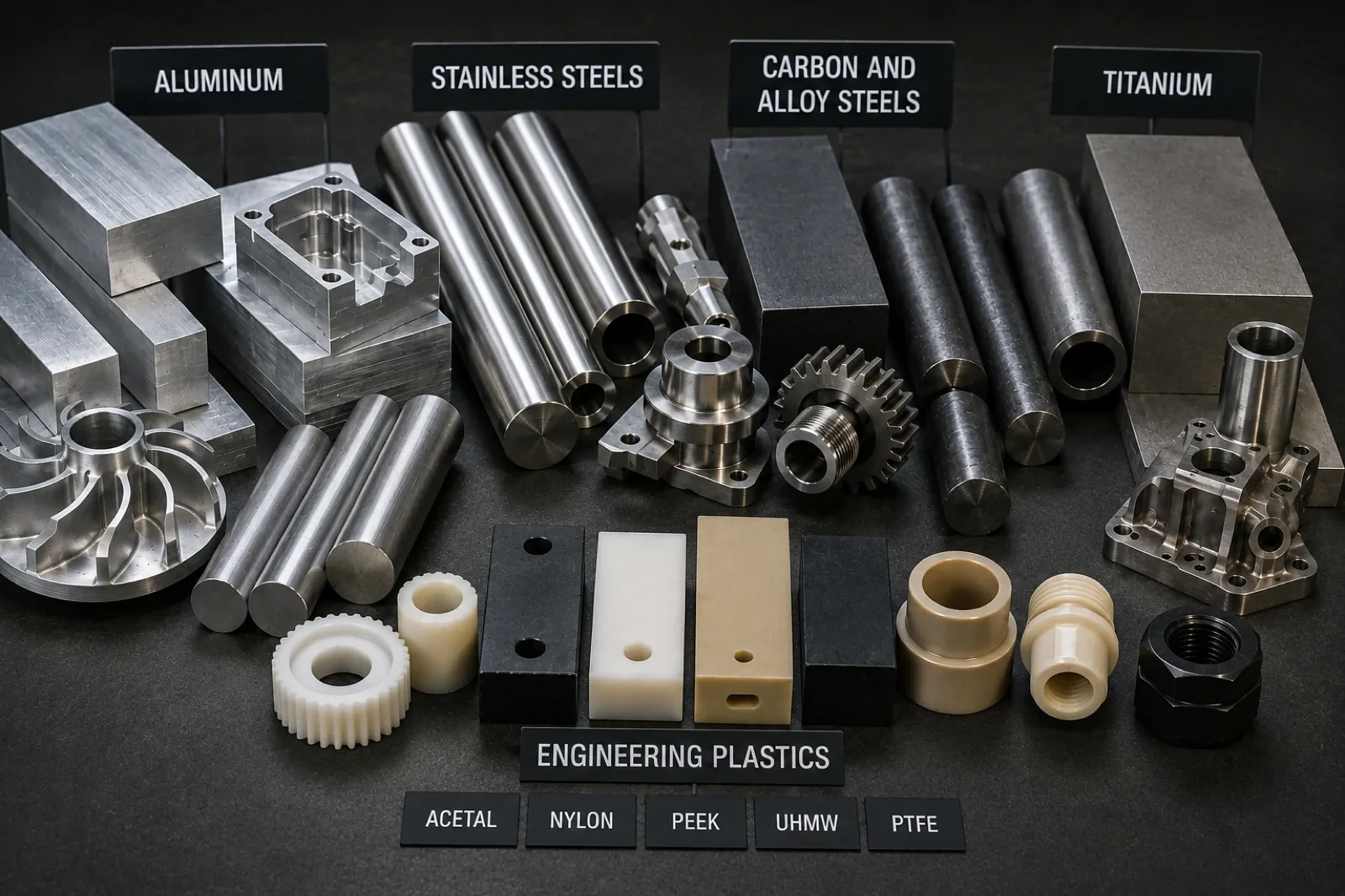
Common materials for CNC machining
The selection of material directly influences the manufacturing cost, machining times, surface finishes, weight and mechanical performance of a part. Within CNC machining projects in Monterrey, different industries require specific materials depending on factors such as resistance, corrosion, dimensional stability, weight or operating conditions.
From functional prototypes to repeatable industrial production, choosing the right material helps optimize manufacturability, improve performance and reduce unnecessary costs during the manufacturing process.
Aluminum
Aluminum is one of the most used materials in CNC machining thanks to its excellent relationship between weight, strength and machinability. Alloys such as Aluminum 6061-T6, Aluminum 7075-T6 and MIC6 plates are widely used for functional prototypes, industrial components, automation, fixtures and aerospace applications.
Its ease of machining allows for faster production times, good surface finishes and complex geometries with high precision.
Stainless Steels
Stainless steels are widely used in applications requiring corrosion resistance, durability, and mechanical performance in demanding industrial environments. Materials such as 304 Stainless Steel, 316 Stainless Steel and 17-4PH Stainless Steel are common in medical, food, chemical, electronic and automation industries.
Within precision CNC machining projects, these materials allow the manufacturing of functional components, structural parts and industrial equipment with excellent mechanical resistance and dimensional stability.
Carbon and alloy steels
Carbon steels and alloy steels offer a strong combination of mechanical strength, machinability and competitive cost for industrial applications. Materials such as 1018 Steel, 1045 Steel and 4140 Steel are widely used for axles, tooling, structural components, mechanical adapters and loaded parts.
Depending on the application, these materials can also receive heat treatments and secondary processes to improve hardness, wear resistance and mechanical performance.
Titanium
Titanium is used in applications where reduced weight, mechanical strength and corrosion resistance are critical factors. Materials such as Titanium grade 2 and Titanium grade 5 are common in aerospace components, medical devices, and high-performance industrial applications.
Due to its mechanical properties and thermal behavior during cutting, machining of titanium requires controlled manufacturing strategies to maintain precision, stability, and optimized production costs.
Engineering Plastics
Engineering plastics make it possible to manufacture lightweight, wear-resistant components with excellent dimensional stability for multiple industrial applications. Materials such as Acetal, Nylon, PEEK, UHMW and PTFE are widely used for guides, bushings, insulators, automation components and parts where metal does not represent the best solution.
Within CNC machining projects in Monterrey, these materials offer important advantages such as weight reduction, lower friction, chemical resistance and better performance in specific movement or insulation applications.
| Material | Main advantage | Common applications |
|---|---|---|
| 6061-T6 Aluminum | Excellent machinability, low weight and good resistance | Functional prototypes, automation, fixtures and general production |
| 7075-T6 Aluminum | High mechanical resistance with low weight | Aerospace components, tooling and structural parts |
| 304 stainless steel | Corrosion resistance and good durability | Food industry, medical, electronics and industrial applications |
| 316 stainless steel | Greater chemical resistance and corrosive environments | Medical equipment, outdoor and marine or chemical applications |
| 1018 steel | Affordable cost and good machinability | Mechanical components, plates, supports and industrial production |
| 4140 steel | High mechanical resistance and hardness | Axles, tooling, loaded components and transmission |
| Brass C360 | Excellent machinability and surface finish | Fittings, connectors, electrical components and precision parts |
| Grade 5 Titanium | High resistance with low weight | Aerospace, medical and high performance industrial applications |
| Acetal | Low friction and dimensional stability | Bushings, guides, automation components and technical parts |
| Nylon | Wear resistance and good impact absorption | Rollers, insulators, guides and industrial components |
CNC Prototypes vs CNC Production
Within CNC machining in Monterrey projects, manufacturing requirements change significantly depending on whether a part is in the prototype or production stage. Factors such as quantity, tolerances, inspection, delivery times and manufacturing strategy directly impact the cost, repeatability and efficiency of the process.
Manufacturing a single component to validate a design is not the same as producing hundreds of repeatable parts for industrial integration or continuous assembly. Correctly defining the project stage allows you to optimize materials, setups, machining times, dimensional inspection and secondary processes to maintain an adequate balance between speed, precision and cost.
Rapid prototypes
CNC prototypes allow you to validate geometries, assemblies and functional performance using real materials and manufacturing processes representative of production. Unlike other prototyping methods, CNC machining allows functional parts to be manufactured with precise tolerances, industrial finishes and mechanical properties close to the final product.
Within product development processes, rapid prototyping helps reduce risks before production, detect manufacturing problems and accelerate engineering iterations.
- Validation of assemblies and geometries: verification of mechanical interfaces, tolerances and compatibility between components before production.
- Functional tests with real materials: manufacturing of parts in aluminum, stainless steel, titanium or engineering plastics to evaluate real mechanical performance.
- Rapid design iterations: agile modifications based on physical testing and manufacturability feedback (DFM).
- Risk reduction before production: early detection of dimensional problems, interferences or assembly difficulties.
- Accelerated product development: faster cycles between design, validation and manufacturing for engineering teams and industrial startups.
- Representative production processes and finishes: possibility of including anodizing, bead blast, threading, inserts and secondary operations from early stages.
Low volume production
Low-volume CNC production is an ideal solution for companies that need to manufacture functional parts in a repeatable manner without making large investments in dedicated molds, dies or tooling. Within CNC machining projects in Monterrey, this model is widely used for bridge production, pilot launches, market validations and initial production before scaling to larger volumes.
low-volume manufacturing allows you to maintain design flexibility while manufacturing batches consistent with real production materials and processes. Thanks to validated CNC programs, in-process dimensional controls and repeatable manufacturing strategies, it is possible to obtain parts with good geometric stability and faster delivery times.
This approach also facilitates engineering adjustments, design changes, and incremental product optimization before committing to higher-investment production processes.
Volume production
When a project scales into continuous production, the priority shifts from validation and flexibility to operational efficiency, dimensional repeatability, and manufacturing stability. Within production CNC machining processes, factors such as dedicated fixtures, clamping strategies, cycle optimization, statistical control and consistent inspection play a critical role in maintaining quality between batches.
CNC volume production enables repeatable components to be manufactured with controlled tolerances and standardized processes for industrial applications, automation, medical devices, aerospace and automotive manufacturing. As quantities increase, optimizing setup times, tool paths and manufacturing sequences becomes essential to reduce costs and improve production capacity.
Working with the same supplier from prototype stages to production helps reduce risk during scale-up, as the accumulated knowledge about geometries, materials, tolerances and functional requirements allows for a more stable transition towards repeatable manufacturing.
Tolerances and precision in CNC machining
Precision in CNC machining does not mean always using the tightest possible tolerance, but rather applying the appropriate level of precision for the actual functioning of the part. Over-specifying tolerances increases machining, inspection times and manufacturing costs; while tolerances that are too open can cause assembly, performance or component rejection problems.
Within CNC machining projects in Monterrey, correctly defining tolerances, surface finishes and dimensional requirements helps optimize manufacturing, reduce unnecessary costs and maintain consistency during production.
Standard tolerances (ISO 2768)
For non-critical characteristics, general tolerances under ISO 2768 allow you to simplify technical drawings, reduce inspection complexity and speed up quoting and manufacturing processes. This approach is widely used in industrial components where certain dimensions do not directly affect the performance of the part.
Reserving close tolerances only for functional surfaces, mechanical fits or critical features helps improve manufacturing times and keep costs more competitive without compromising performance.
Tight tolerances
In critical industrial applications it is possible to work with tolerances of ±0.001 inches (approximately ±0.025 mm), depending on factors such as geometry, part size, material and stability during machining. This level of precision typically requires more controlled manufacturing strategies, specific tooling, and more rigorous dimensional inspection processes.
As tolerances become tighter, machining times, dimensional validation, and possible secondary finishing or fine-tuning operations also increase.
Surface finishes
Surface finishes directly influence the appearance, corrosion resistance, wear and functional performance of a machined part. Within precision CNC machining projects, it is important to define surface roughness (Ra), treatments and finishes required from the quoting stage to ensure that the manufacturing process meets the needs of the application.
Among the most common finishes are anodized, sandblast, powder coating, polishing, passivation and industrial surface treatments used to improve aesthetics, chemical resistance or corrosion protection. The selected finish also impacts delivery times, manufacturing cost, and subsequent inspection or assembly processes.
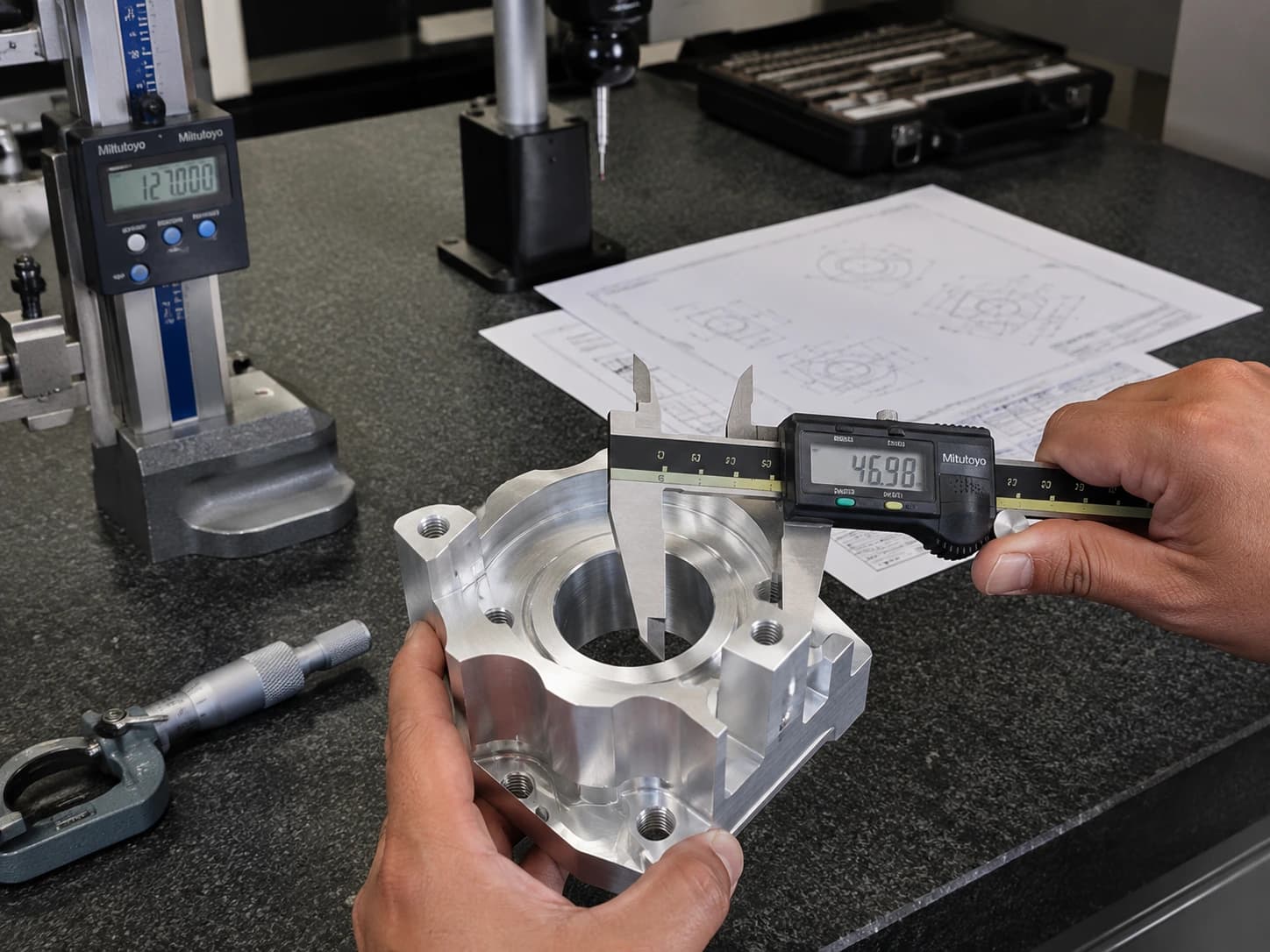
Dimensional inspection
Dimensional inspection is a fundamental part of precision CNC machining processes, especially in critical components where tolerances, adjustments and repeatability directly affect the performance of the part. Validating dimensions during and after machining helps maintain batch-to-lot consistency, reduce rejects, and ensure compatibility during assembly.
Depending on the geometric complexity and requirements of the project, different instruments and measurement methods allow verifying critical dimensions, positions, diameters and functional characteristics before releasing production.
- Manual inspection instruments: calipers, micrometers, altimeters and measurement tools for dimensional validation of critical characteristics.
- Coordinate measurement machine (CMM): used for inspection of complex parts, geometric validation and high precision dimensional reports.
- In-process inspection: Continuous dimensional verification to maintain repeatability and stability during production.
- Dimensional reports upon request: documentation of critical measurements for traceability, prototype validation and quality requirements.
- Critical tolerance control: validation of concentricity, positions, diameters, perpendicularity and functional geometries.
- Support for demanding industries: inspection aimed at medical, aerospace, industrial automation and precision manufacturing components.
Industries that use CNC machining in Monterrey
Monterrey's manufacturing industry encompasses highly specialized sectors that require components machined with precision, repeatability and reliable delivery times. From automotive lines and industrial automation to medical devices and aerospace manufacturing, CNC machining allows you to manufacture functional parts for prototyping, validation and continuous production.
The industrial diversity of the region requires suppliers capable of working with different materials, tolerances, surface finishes and inspection processes for increasingly demanding industrial applications.
Automotive industry
The automotive industry in Monterrey demands machined components with high repeatability and fast response times for assembly lines, automation and product development. Precision CNC machining is used to manufacture fixtures, brackets, adapters, mechanical components, tooling and functional parts for industrial integration.
The need to maintain continuous production and consistent tolerances makes CNC machining a key process for automotive suppliers and regional industrial manufacturing. See automotive industry.
Aerospace and defense industry
The aerospace and defense sectors require lightweight components, high-performance materials and manufacturing processes with strict dimensional control. Materials such as aluminum and titanium are widely used to manufacture structural components, complex machined parts and functional prototypes using CNC milling and multitasking processes.
Within aerospace projects, traceability, dimensional inspection and repeatability are fundamental factors throughout the manufacturing process. See aerospace and defense.
medical devices
Medical device manufacturing requires corrosion-resistant materials, controlled finishes, and precise tolerances for functional components and specialized equipment. *CNC machining in Monterrey* allows us to manufacture parts in stainless steel, titanium and engineering plastics for medical applications, inspection fixtures, prototypes and precision components.
Dimensional stability and quality control are especially important in this sector due to the functional and regulatory requirements of the medical industry. See medical sector.
Robotics and automation
The growth of industrial automation in Monterrey has driven a high demand for machined components for robotic cells, production lines and automated systems. The precision CNC machining processes allow the manufacturing of brackets, adapters, structural bases, tooling and mechanical components used in industrial integration.
The speed of manufacturing prototypes and functional parts is also key for automation companies that need to validate designs and reduce implementation times. See robotics.
Electronics
The electronics industry uses *CNC machining* to manufacture heatsinks, housings, machined aluminum components, and precision hardware for electromechanical integration. The ability to maintain consistent tolerances and clean surface finishes is critical for high-precision electronic components and industrial systems.
Depending on the application, anodizing, etching and secondary operations may also be used to improve performance and final appearance.
Industrial equipment and machinery
The manufacturing of industrial machinery and equipment requires robust components, replacement parts and repeatable manufacturing for production lines, industrial maintenance and automation. CNC machining services allow us to manufacture axes, machined plates, housings, adapters, structural components and critical parts for continuous operation.
In Monterrey, this type of manufacturing is widely used in industrial plants, machinery integrators and advanced production companies that need functional components with reliable delivery times.
What files do you need to quote CNC machining?
An accurate quote depends directly on the quality and clarity of the information sent from the beginning of the project. Within CNC machining processes in Monterrey, having complete files helps reduce review times, avoid manufacturing errors and accelerate response times for prototypes and production.
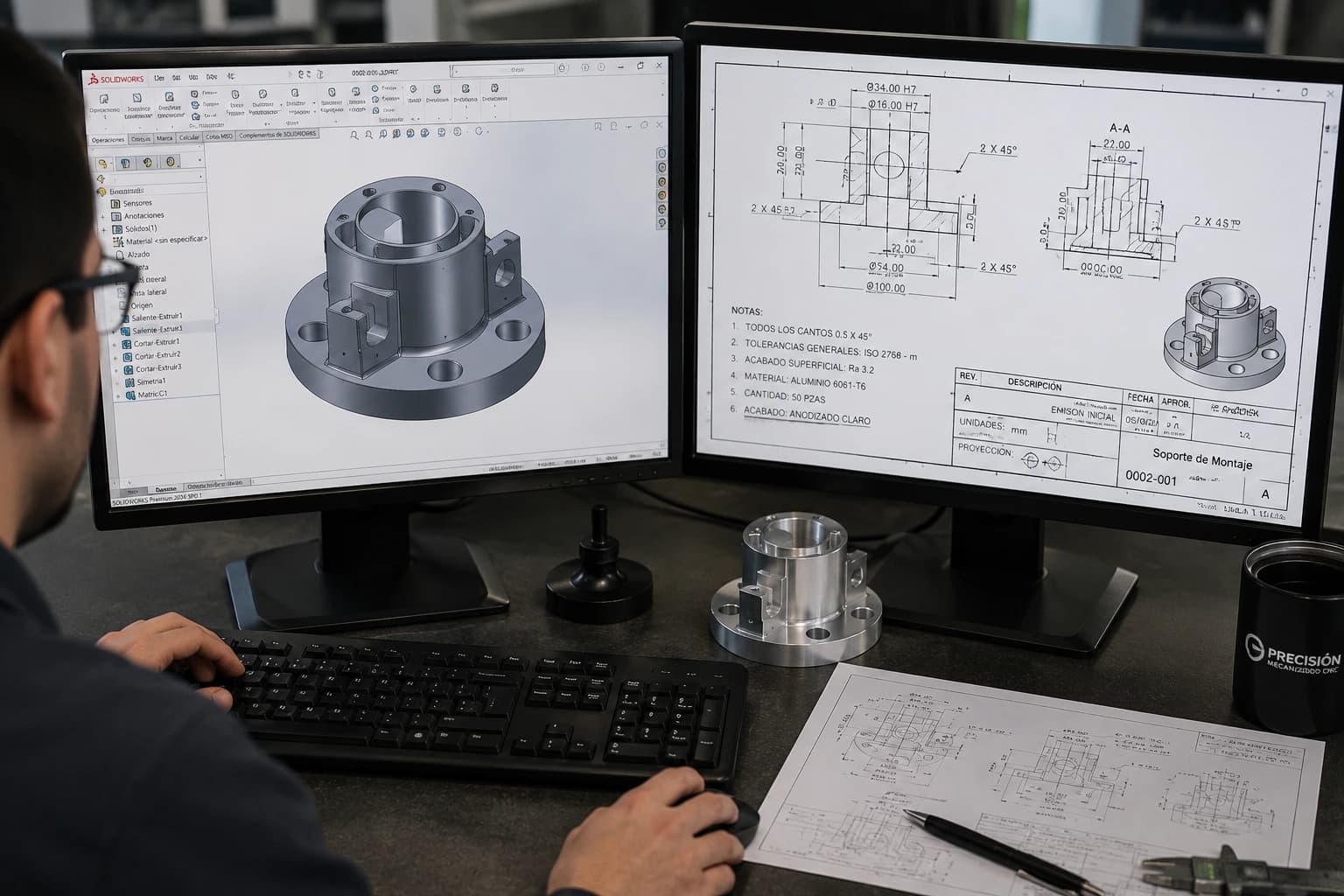
Sending CAD models, technical drawings and clear specifications allows you to evaluate manufacturing, define machining strategies, validate tolerances and prepare a more accurate quote from the first review. This also reduces rework, technical questions and delays during production.
Accepted CAD files
CAD models are the basis for analyzing geometries, tolerances, tool accessibility and manufacturing complexity within CNC machining projects. Using well-built, robust and compatible formats facilitates programming, technical review, and tool path generation processes.
- STEP / STP: Most recommended format for exchanging 3D models between different CAD platforms.
- SLDPRT (SolidWorks): ideal when the project was designed directly in SolidWorks and maximum geometric compatibility is required.
- Parasolid (.x_t / .x_b): Widely used to preserve complex surfaces and precise geometries.
- IGES: useful option for certain legacy models or when there is no STEP file available.
- Solid and complete 3D models: help detect interferences, validate machinability and reduce errors during CNC programming.
- Updated design versions: Maintaining correct revisions avoids manufacturing issues and rework during production.
technical drawings
Although the 3D model contains much of the geometry, technical drawings remain essential for communicating critical tolerances, finishes, assembly specifications and functional requirements. Within precision CNC machining projects, a clear drawing helps reduce ambiguities and maintain better dimensional control during manufacturing and inspection.
- PDF with tolerances and critical notes: functional dimensions, fits, important geometries and inspection specifications.
- Threads, inserts and special operations: Clear definition of metric threads, NPT, helical inserts and assembly characteristics.
- Material and surface finish: specify materials, anodizing, powder coating, heat treatments or cosmetic requirements.
- Quantity and stage of the project: indicate whether it is a prototype, pilot production or repeatable manufacturing.
- Drawing revision: Maintaining revision control helps avoid manufacturing with incorrect versions.
- Inspection requirements: indicate if dimensional reports, validation of critical tolerances or additional documentation are needed.
Important information for quoting
Within CNC machining projects in Monterrey, an accurate quote depends not only on the CAD model, but also on technical information that allows evaluating manufacturing, machining times, inspection and secondary processes. Correctly defining these points from the beginning helps reduce delays, avoid changes during production and optimize costs before manufacturing.
The more complete the project information, the faster the manufacturing process can be validated and an appropriate strategy prepared for prototyping or production.
| Project information | Why is it important |
|---|---|
| Material and quantity | Allows you to calculate raw material cost, manufacturing time and production scalability |
| Tolerances and surface finish | They impact machining times, inspection strategies and subsequent processes |
| Required delivery time | Helps prioritize scheduling, machine availability and production capacity |
| Threads, inserts and special operations | They define tools, additional processes and manufacturing complexity |
| Inspection requirements | They allow planning dimensional validation, reports and quality control |
| Project stage | Manufacturing a functional prototype is not the same as repeatable production or pilot production. |
| Finishes and treatments | Anodizing, painting, heat treatments or cosmetic processes affect cost and time |
| Manufacturing feedback | Helps optimize geometries and reduce costs before starting production |
At PREMSA Industries we review machinability before production to detect optimization opportunities in geometries, internal radii, cavity depth, tool accessibility, unnecessarily close tolerances and manufacturing strategies. This analysis helps reduce costs, improve production times, and maintain more stable parts during the CNC machining process.
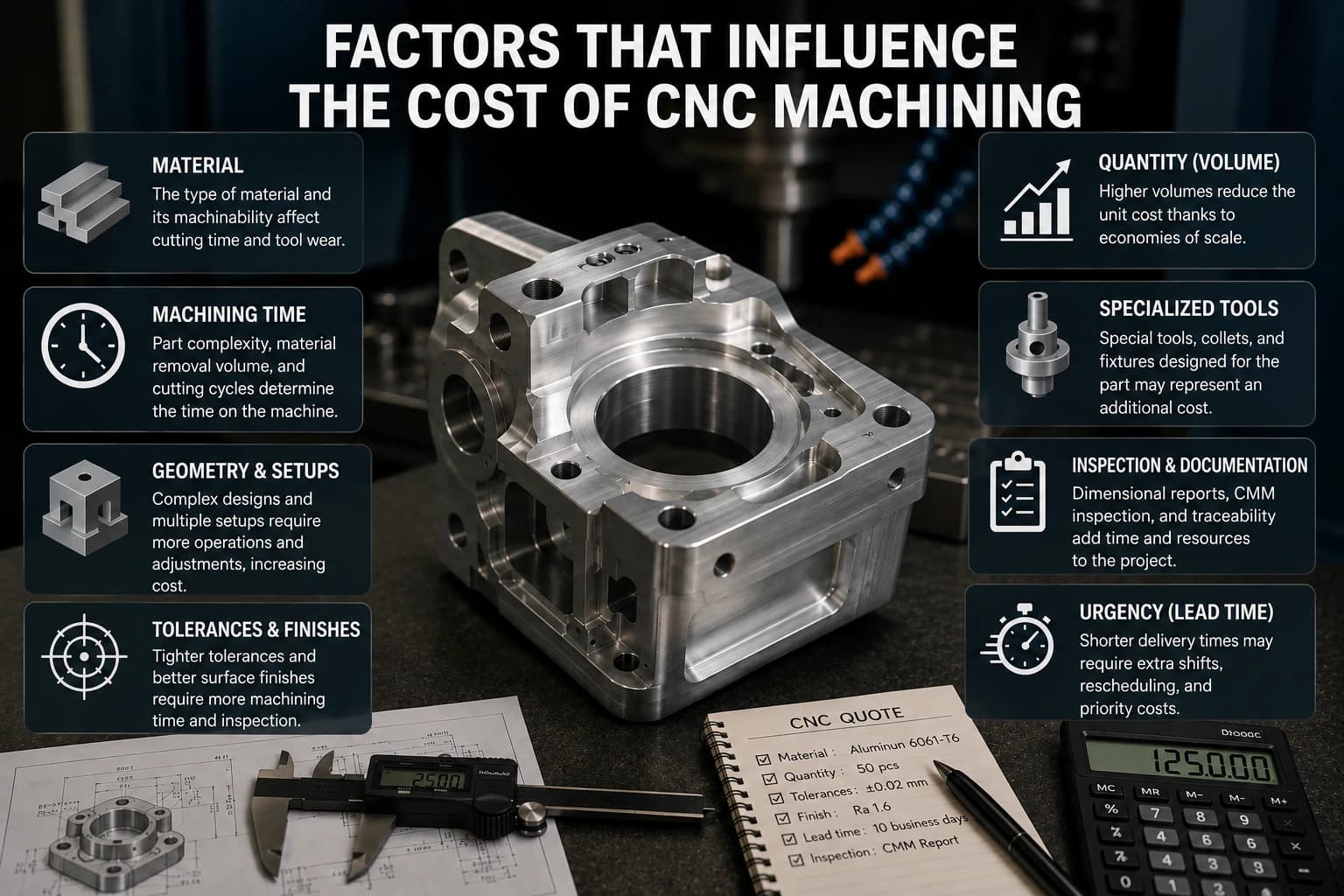
Factors that affect the cost of CNC machining
The cost of a machined part depends on multiple variables related to material, geometry, manufacturing time and quality requirements. Within CNC machining projects in Monterrey, understanding these factors helps to make better design decisions, optimize manufacturability and reduce unnecessary costs before starting production.
Not all parts require the same level of precision, inspection or manufacturing complexity. Correctly adjusting tolerances, finishes and processes allows you to maintain a better balance between performance, delivery time and final cost.
For a more detailed analysis on prices, timing and optimization strategies, also see our article on cost of CNC machining.
- Material and machinability: Materials such as aluminum tend to machine faster than titanium or hardened steels, directly impacting manufacturing time and tool wear.
- Machining time: Complex geometries, deep cavities and greater volume of material removed increase machine hours and production cost.
- Geometric complexity and number of setups: Parts with multiple faces, critical tolerances or difficult access require more operations and advanced manufacturing strategies.
- Close tolerances and surface finishes: Critical dimensions and high quality finishes require more controlled machining processes and additional inspection.
- Quantity of pieces: Manufacturing larger volumes allows you to distribute setup times and improve production efficiency.
- Dedicated tooling and devices: Certain productions require special fixtures, tools or additional preparation to improve repeatability.
- Dimensional inspection and documentation: dimensional reports, geometric validation and traceability increase inspection and quality control time.
- Delivery time required: Urgent projects or accelerated production may require machine prioritization, special scheduling, or processes out of standard sequence.
- Secondary processes and finishes: Anodizing, powder painting, heat treatments, engraving or additional assemblies impact total manufacturing cost and time.
- Manufacturability Optimization: Adjusting internal radii, cavity depths, thicknesses and tolerances helps reduce complexity and improve machining efficiency.
Lead times for CNC machining in Monterrey
Delivery times in CNC machining projects in Monterrey depend on factors such as geometric complexity, material availability, required finishes and production volume. Correctly defining priorities, tolerances and requirements from the beginning helps reduce delays and improve manufacturing planning.
In industrial projects, optimizing response times is key to accelerating prototype validations, maintaining continuous production and reducing risks within the supply chain.
rapid prototypes
CNC prototypes typically handle faster response times due to smaller quantities and more flexible manufacturing processes. Depending on the complexity of the part, material and inspection requirements, many projects can be quoted, scheduled and manufactured in just a few business days once files are approved.
Submitting complete CAD models, clear drawings, and specifications defined from the start helps expedite technical review, CNC programming, and production preparation.
Production
In repeatable production or larger batches, delivery times depend on capacity planning, tooling preparation, material availability and optimization of manufacturing processes. As volume increases, it also becomes more important to coordinate machine scheduling, dimensional inspection, and secondary processes.
Sharing production forecasts and future needs helps plan manufacturing capacity, ensure material availability, and maintain more stable deliveries during continuous production.
Factors that delay deliveries
There are multiple variables that can impact manufacturing and delivery times within CNC machining projects. Detecting these factors from the quotation stage helps reduce risks and improve production planning.
- Material availability: Special, imported or low-turnover materials can extend supply times.
- External Finishes and Processes: Anodizing, powder coating, heat treatments or secondary processes may add additional days to the total manufacturing time.
- Geometric complexity: Parts with multiple setups, deep cavities or difficult geometries require greater programming and machining time.
- Extremely close tolerances: Critical dimensions increase inspection, validation and adjustment times during production.
- Engineering changes during manufacturing: Design modifications after programming may generate delays and rework.
- Production volume and machine capacity: Large batches require more detailed planning to maintain consistency and reliable delivery times.
How to speed up delivery times
Reducing delivery times in CNC machining projects in Monterrey does not depend solely on machine capacity. The quality of the information sent, the manufacturability of the part and the clarity of the technical requirements directly influence the speed of quoting, programming and production.
Making correct decisions from the design stage helps reduce unnecessary revisions, avoid rework, and optimize manufacturing times for prototypes and production.
- Send clean and complete CAD models: Solid and correctly exported STEP files facilitate CNC programming and technical review.
- Use realistic tolerances: Applying ISO 2768 on non-critical dimensions helps reduce machining and inspection complexity.
- Request machinability feedback from early stages: Detecting small radii, deep cavities or difficult geometries avoids delays during production.
- Define materials and finishes from the beginning: Later changes may affect availability, programming and delivery times.
- Avoid design changes during manufacturing: Maintaining controlled revisions reduces rework and reprogramming.
- Share real project priorities: Identifying urgent parts allows you to plan production and manufacturing sequence more efficiently.
| Project stage | Typical time | Considerations |
|---|---|---|
| Quote and technical review | Hours to 1–2 business days | Depends on file clarity and geometric complexity |
| Simple CNC prototype | 2–7 business days | Applicable for common materials and standard geometries |
| Complex prototypes | 1–3 weeks | May include inspection, finishes and multiple setups |
| Repeatable production | Depending on volume and capacity | Quantity, tooling and production planning influence |
| Secondary processes | Variable additional time | Anodizing, painting, heat treatments and specialized inspection |
How to choose a CNC machining company in Monterrey
Choosing a supplier of CNC machining in Monterrey goes far beyond comparing prices per piece. Technical capacity, manufacturing stability, communication and quality control directly impact delivery times, repeatability and operational risk during production.
A supplier with real experience in precision manufacturing can help not only manufacture a part, but also optimize processes, reduce manufacturing problems and scale production more stably. Especially in industrial projects, working with a reliable CNC shop reduces risks related to delays, dimensional inconsistencies and quality problems.
Before selecting a CNC machining company, it is important to evaluate technical experience, available processes, inspection capabilities, and level of engineering support. This is especially relevant when working with critical components, close tolerances, or repeatable production.
- Technical experience in your industry: Manufacturing parts for industrial automation is not the same as manufacturing medical components or aerospace applications.
- Actual manufacturing capabilities: validate if the supplier has CNC milling, turning, multi-task machining, Swiss-type machining and secondary processes necessary for the project.
- Quality control and dimensional inspection: review availability of measuring instruments, validation processes and ability to generate dimensional reports.
- Clear communication with engineering: The ability to resolve technical questions quickly reduces errors and accelerates production.
- Reliable delivery times: More important than promising speed is maintaining realistic dates and constant monitoring of the project.
- Scalability from prototype to production: Working with a supplier capable of accompanying the growth of the project helps reduce risks during scaling.
- Manufacturability feedback: An experienced CNC shop can detect opportunities to reduce costs and improve efficiency before production.
- Ability to work multiple materials: Aluminum, stainless steel, titanium and engineering plastics require different machining strategies.
- Transparency in quotes and processes: Clarity in scope, inspection, finishes and times helps avoid later problems during manufacturing.
- Support for finishes and secondary processes: anodizing, painting, heat treatments, engraving and assemblies can impact project timing and coordination.
Advantages of working with PREMSA Industries
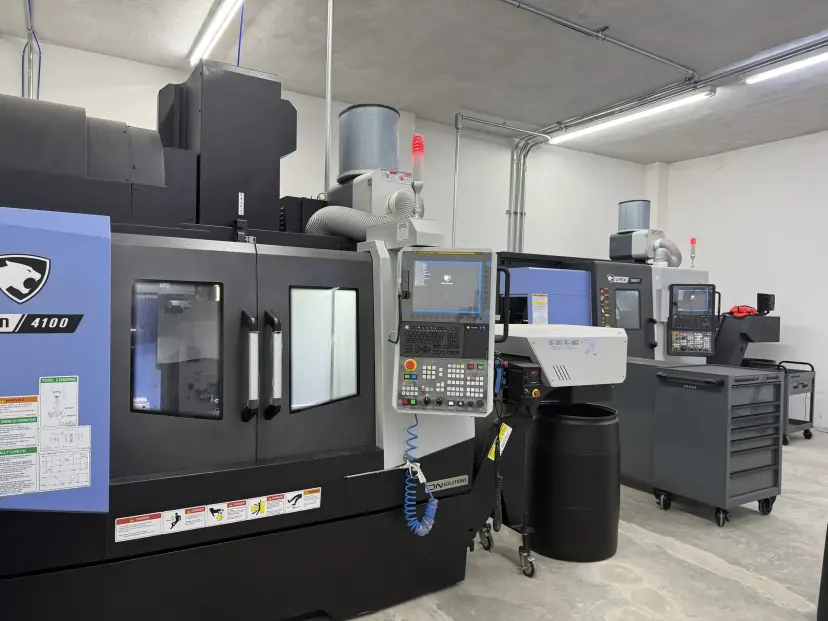
- Prototyping and production within the same manufacturing flow: from initial validation to repeatable manufacturing with continuous technical support.
- Integrated manufacturing capabilities: CNC machining, sheet metal fabrication, 3D printing, secondary processes and on-demand industrial manufacturing.
- Wide catalog of industrial materials: aluminum, stainless steel, titanium, brass, alloy steels and engineering plastics for multiple applications.
- Secondary finishes and processes: anodizing, powder painting, surface treatments, engraving, inspection and complementary operations.
- Technical support and manufacturing feedback: recommendations to optimize geometries, tolerances and processes before production.
- Quality control and dimensional inspection: validation of critical characteristics, dimensional reports and monitoring of functional tolerances.
- Flexible manufacturing for prototypes and production: ability to manufacture from unique pieces to repeatable batches according to project needs.
- Quick attention and efficient technical review: processes aimed at reducing response times and accelerating project validation.
- Online quote and CAD file upload: digital flow for review of parts, materials and manufacturing requirements.
- National and international shipments: support for industrial projects within Mexico and supply chains oriented to North America.
Request a quote for CNC machining
If you are looking for CNC machining in Monterrey for prototypes, repeatable production or precision industrial components, a clear and well-defined quote is the first step to accelerate manufacturing and reduce response times.
At PREMSA Industries you can request a quote by sending CAD files, technical drawings and project specifications for engineering review and manufacturing validation. Our workflow is designed to help engineering, purchasing, and product development teams get clearer technical feedback, manufacturing recommendations, and manufacturing timelines early on.
We work on prototype projects, pilot production and repeatable manufacturing for clients in Monterrey, Mexico and supply chains oriented to North America.
- Upload CAD files and technical drawings: Compatibility with STEP, SolidWorks, Parasolid, PDF and other industrial formats.
- Receive manufacturability feedback: recommendations to optimize geometries, tolerances and processes before production.
- Define materials, finishes and technical requirements: aluminum, stainless steel, titanium, engineering plastics and secondary processes.
- Specifies tolerances, threads and dimensional inspection: clear alignment between engineering, manufacturing and quality control.
- Scale from prototypes to repeatable production: Flexible capacity for one-off parts, pilot batches, and industrial production.
- Technical support during the project: manufacturing monitoring, process validation and production coordination.
- Quote oriented to real manufacturing: evaluation of times, complexity and manufacturing strategy for each project.
- National and international shipments: support for industrial projects within Mexico and export-oriented production.
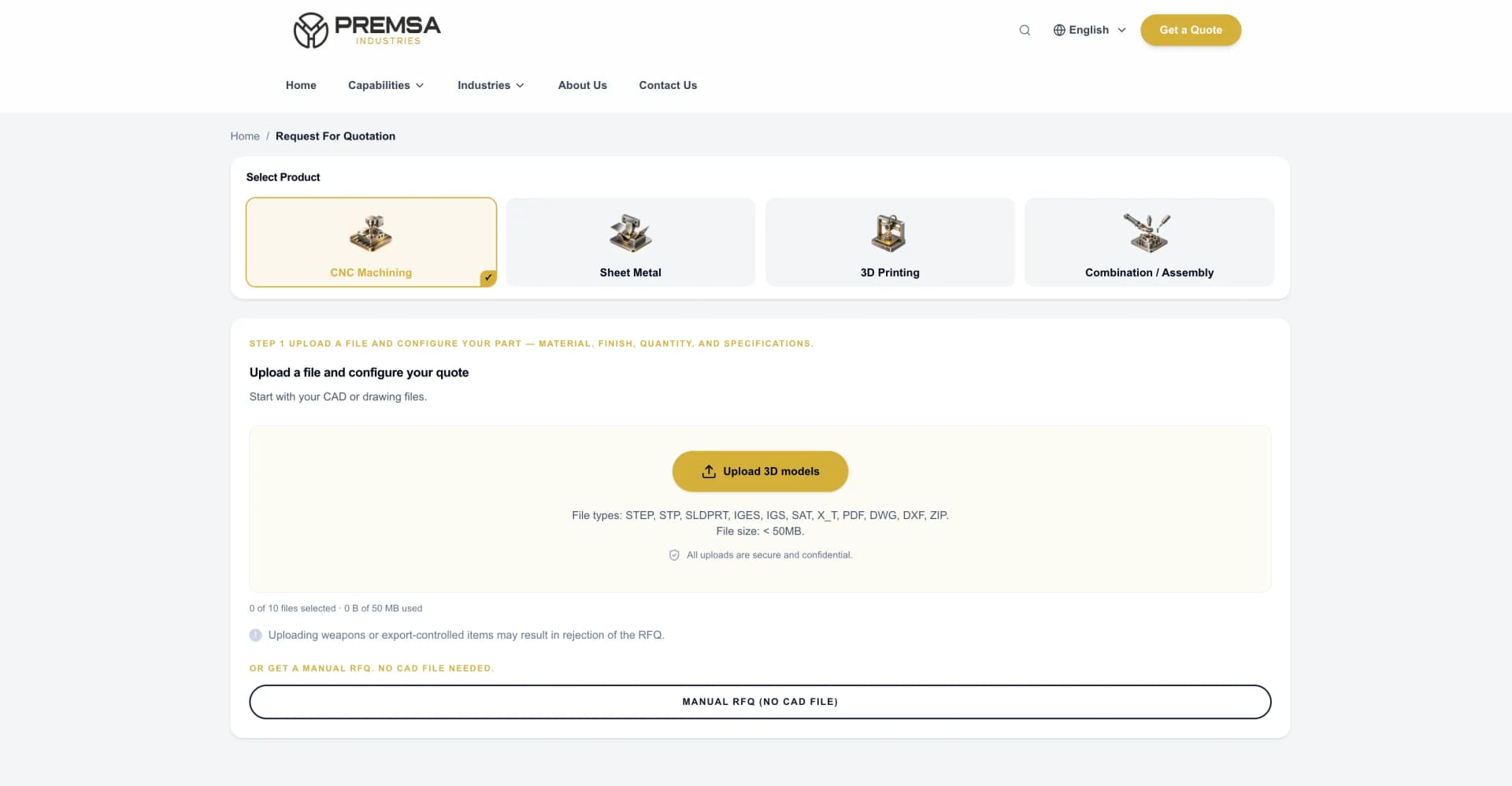
Are you looking for CNC machining in Monterrey for prototypes, pilot production or repeatable manufacturing? Request your quote and receive technical review, manufacturability feedback, and support for precision industrial projects in Mexico and North America. If you are still comparing options, you can also read our Monterrey CNC services analysis and the Monterrey CNC machining overview.
If you are preparing or optimizing designs, see our CNC machining design guide.
Frequently asked questions about CNC machining in Monterrey
Quick responses on costs, materials, delivery times, prototypes and production for CNC machining projects in Monterrey and throughout Mexico.
- How much does CNC machining cost in Monterrey?
- The cost depends on factors such as material, geometric complexity, machining time, tolerances, finishes, quantity and required delivery time. It does not cost the same to manufacture a simple prototype in aluminum as it does a precision component in titanium with advanced dimensional inspection. For an accurate quote, we recommend sending CAD files and complete project specifications.
- What materials can they machine?
- We work aluminum, carbon steels, alloy steels, stainless steels, titanium, brass, copper and engineering plastics such as acetal, nylon, UHMW, PTFE and other industrial materials used in precision manufacturing.
- Do you manufacture CNC prototypes?
- Yes. We manufacture functional prototypes for design validation, assemblies, mechanical testing and product development using real materials and representative production processes.
- Do you handle repeatable production?
- Yes. We can manufacture from one-off parts and pilot production to repeatable batches and continuous industrial production using validated programs, inspection processes and optimized manufacturing strategies.
- What is the typical delivery time?
- It depends on the complexity of the part, material, quantity and secondary processes required. Some simple prototypes can be manufactured in a few business days when the material is available and the files are complete.
- What file formats do you accept for quotes?
- We primarily accept STEP/STP files. We also recommend including a PDF technical drawing with tolerances, finishes and critical notes.
- What finishes do you offer?
- Depending on the material and application, we offer finishes such as anodizing, sandblasting, powder coating, passivation, surface treatments and other secondary industrial processes. You can also consult our finishes section.
- What tolerances can you handle?
- We work from general tolerances under ISO 2768 to tight tolerances for critical applications, depending on geometry, material and functional requirements of the project.
- Do you perform dimensional inspection?
- Yes. We use measuring instruments and dimensional inspection processes to validate critical characteristics. We can also generate dimensional reports upon request.
- Can you send parts outside of Monterrey?
- Yes. We manufacture projects for clients in Monterrey and send parts throughout Mexico, in addition to working with supply chains oriented to North America and export.
- Do you offer engineering and manufacturing support?
- Yes. We review machinability before production and provide recommendations related to geometries, tolerances, internal radii, tool accessibility and cost optimization.
- What industries do you serve?
- We work on projects for the automotive, aerospace, industrial automation, robotics, medical devices, electronics and precision industrial manufacturing sectors.
The cost depends on factors such as material, geometric complexity, machining time, tolerances, finishes, quantity and required delivery time. It does not cost the same to manufacture a simple prototype in aluminum as it does a precision component in titanium with advanced dimensional inspection. For an accurate quote, we recommend sending CAD files and complete project specifications.
We work aluminum, carbon steels, alloy steels, stainless steels, titanium, brass, copper and engineering plastics such as acetal, nylon, UHMW, PTFE and other industrial materials used in precision manufacturing.
Yes. We manufacture functional prototypes for design validation, assemblies, mechanical testing and product development using real materials and representative production processes.
Yes. We can manufacture from one-off parts and pilot production to repeatable batches and continuous industrial production using validated programs, inspection processes and optimized manufacturing strategies.
It depends on the complexity of the part, material, quantity and secondary processes required. Some simple prototypes can be manufactured in a few business days when the material is available and the files are complete.
We primarily accept STEP/STP files. We also recommend including a PDF technical drawing with tolerances, finishes and critical notes.
Depending on the material and application, we offer finishes such as anodizing, sandblasting, powder coating, passivation, surface treatments and other secondary industrial processes. You can also consult our finishes section.
We work from general tolerances under ISO 2768 to tight tolerances for critical applications, depending on geometry, material and functional requirements of the project.
Yes. We use measuring instruments and dimensional inspection processes to validate critical characteristics. We can also generate dimensional reports upon request.
Yes. We manufacture projects for clients in Monterrey and send parts throughout Mexico, in addition to working with supply chains oriented to North America and export.
Yes. We review machinability before production and provide recommendations related to geometries, tolerances, internal radii, tool accessibility and cost optimization.
We work on projects for the automotive, aerospace, industrial automation, robotics, medical devices, electronics and precision industrial manufacturing sectors.

Written by
Adrian Cavazos and the PREMSA Engineering Team
Adrian Cavazos, founder of PREMSA Industries, leads a manufacturing engineering team specialized in CNC machining, metal fabrication, and production-ready solutions. The team works closely with customers to optimize designs, improve manufacturability (DFM), and ensure reliable, scalable production from prototypes to volume manufacturing.