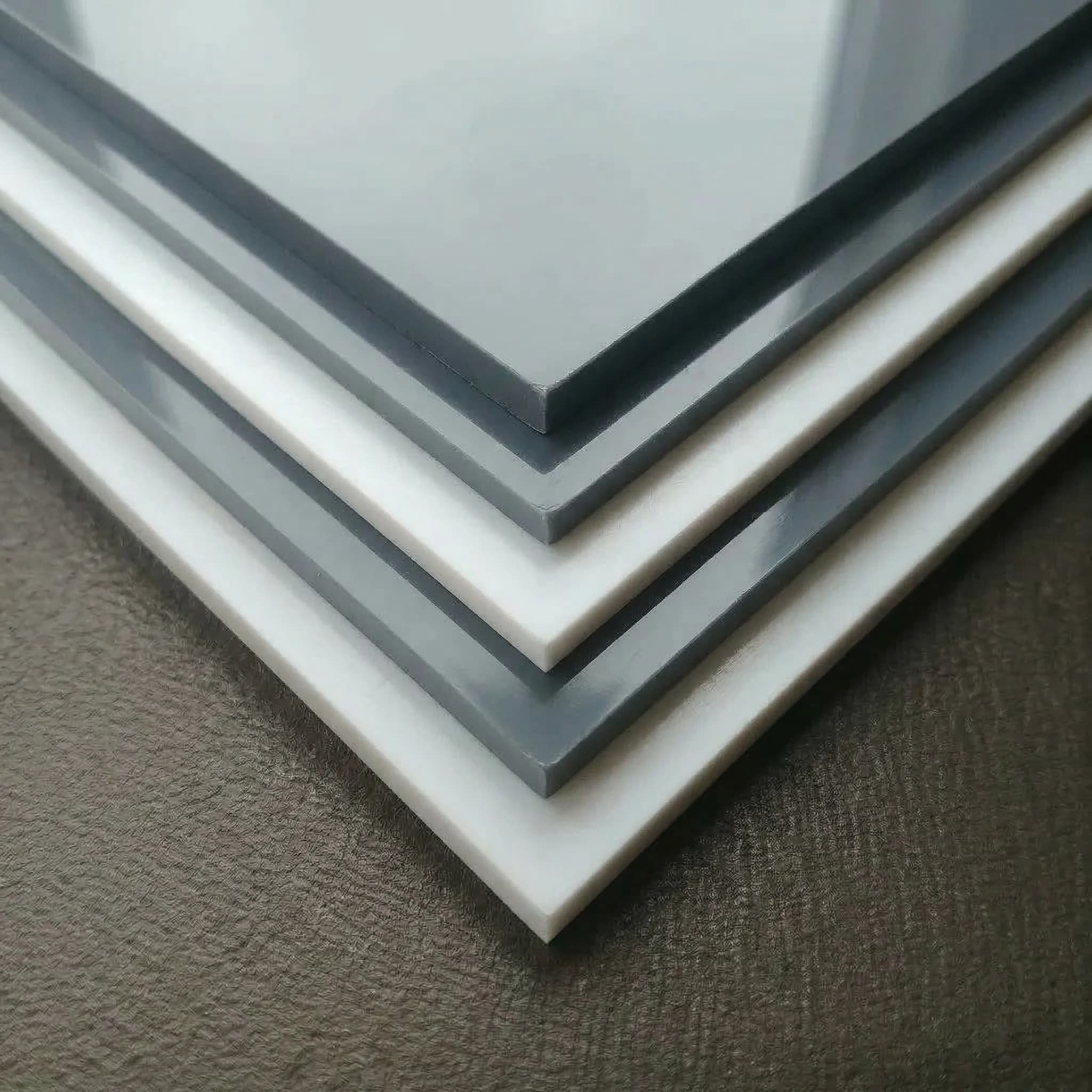
Material GuidePVC: Properties, Machining, and Applications
PVC (polyvinyl chloride) is a widely used thermoplastic known for its excellent chemical resistance, electrical insulation properties, and cost efficiency. It is commonly processed through CNC machining services, sheet cutting, and plastic part production, particularly in industrial and construction-related applications.
For engineering and sourcing teams, PVC is often selected for components exposed to chemicals, moisture, or electrical systems, especially when cost, durability, and corrosion resistance are more important than high mechanical strength.
Key manufacturing characteristics of PVC
- Excellent chemical resistance: Performs well against acids, bases, and corrosive fluids.
- Good electrical insulation: Widely used in electrical and electronic applications.
- Rigid and stable material: Offers better stiffness than materials like HDPE or polypropylene.
- Easy to machine and fabricate: Suitable for CNC machining services and sheet cutting.
- Low moisture absorption: Maintains performance in humid or wet environments.
- Cost-effective material: One of the most economical plastics for industrial use.
Mechanical and physical properties of PVC
PVC is typically selected for chemical resistance, rigidity, and electrical performance rather than high mechanical strength. Compared to acetal or nylon, it offers lower strength but better chemical stability and lower cost. Compared to ABS, it provides improved chemical resistance and rigidity.
Typical performance profile
- Moderate strength with relatively high rigidity for a thermoplastic
- Excellent resistance to chemicals and corrosion
- Good electrical insulation properties
- Low moisture absorption
- Stable performance in industrial environments
Why engineers choose it
- Ideal for corrosive or chemical-exposed environments
- Cost-effective solution for industrial components
- Widely used in piping, panels, and electrical systems
- Reliable material for general-purpose industrial applications
Strengths and advantages of PVC
- Chemical durability: Performs well in aggressive industrial environments.
- Electrical insulation: Suitable for electrical enclosures and components.
- Good rigidity: Provides more structural stability than many commodity plastics.
- Machining compatibility: Works well in CNC machining services.
- Moisture resistance: Maintains properties in wet and outdoor environments.
- Cost efficiency: Offers reliable performance at a low material cost.
Trade-offs and limitations of PVC
- Lower impact resistance: More brittle than materials like polycarbonate.
- Limited temperature resistance: Not suitable for elevated temperature environments.
- Lower mechanical strength: Not ideal for load-bearing structural applications.
- Potential brittleness: Can crack under impact or stress concentration.
- Not ideal for dynamic wear: Performs worse than UHMW or acetal in friction applications.
Fabrication and machining considerations for PVC
Machining behavior
PVC can be processed using CNC milling and CNC turning, making it suitable for custom and low-volume parts.
- Machines cleanly with standard tooling
- Sharp tools improve edge quality
- Avoid excessive heat to prevent deformation
Sheet processing
PVC is widely used in sheet form and processed through sheet cutting for panels and fabricated components.
- Common in panels, enclosures, and structural boards
- Waterjet and CNC routing are frequently used
- Minimal finishing required for many applications
Joining and assembly
- Can be bonded using adhesives or solvent welding
- Mechanical fastening is also common
- Supports welded assemblies in piping systems
Electrical and chemical applications
- Widely used in electrical insulation systems
- Suitable for chemical tanks and piping
- Performs well in corrosive industrial environments
Common applications for PVC
PVC is widely used in industrial and commercial applications requiring chemical resistance, electrical insulation, and cost efficiency.
- Piping and fluid handling systems
- Electrical enclosures and insulation components
- Industrial panels and boards
- Chemical tanks and containers
- Protective covers and housings
- Construction and infrastructure components
- General-purpose industrial parts
When PVC is a strong material choice
PVC is often the right choice when chemical resistance, rigidity, and cost efficiency are more important than impact strength or high-performance mechanical properties.
- When parts are exposed to chemicals or corrosive environments
- When electrical insulation is required
- When cost is a primary constraint
- When rigid, stable components are needed
- When working in wet or outdoor environments